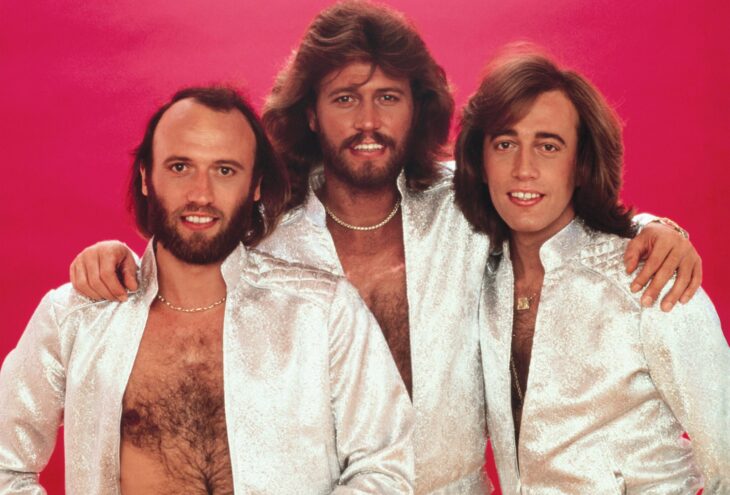
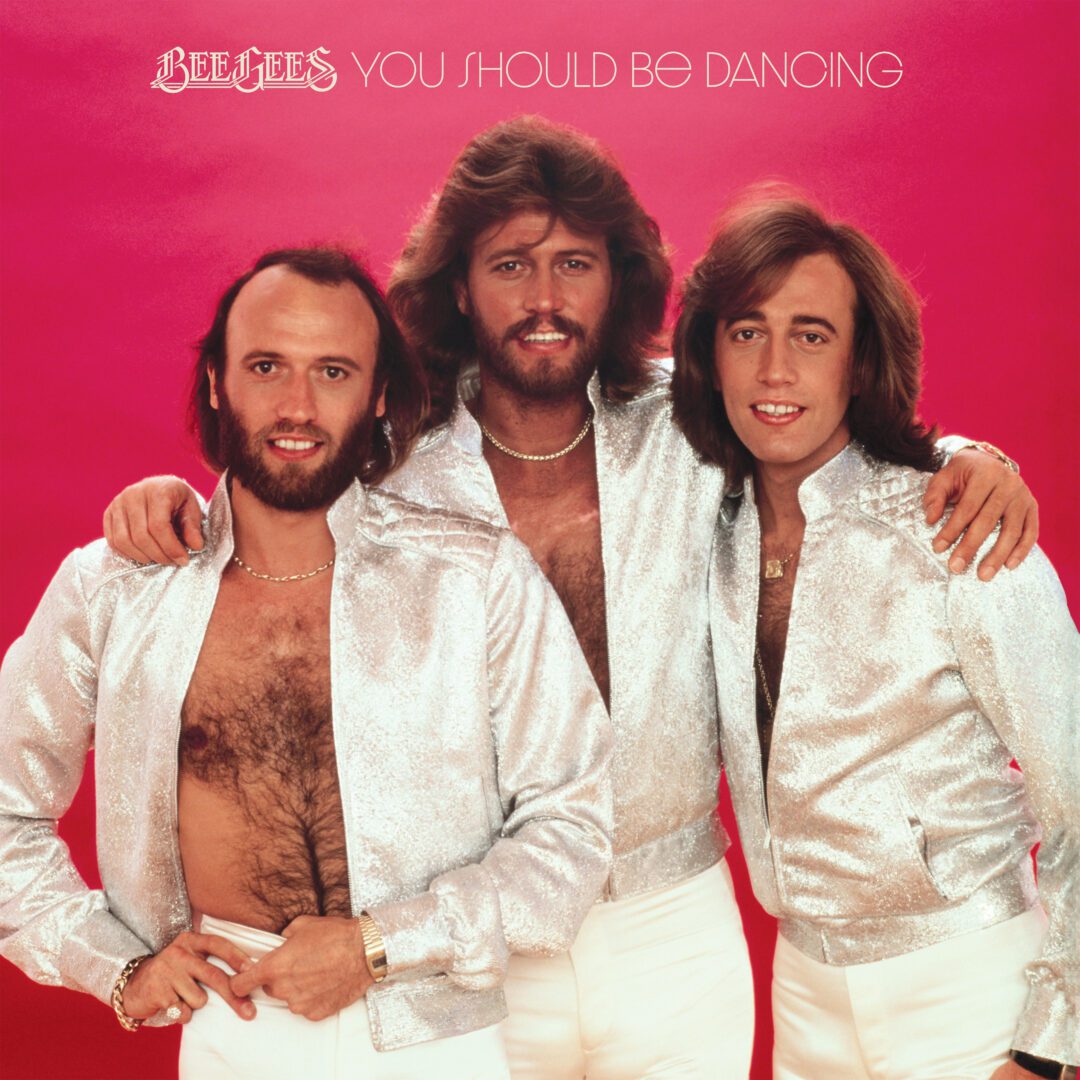
UMe has announced the release of a new limited-edition box set by one of the biggest and most beloved acts in popular music history, the Bee Gees.
Out February 27, You Should Be Dancing is a four-disc collectors’ item featuring the highly sought-after original 12-inch versions of some of Barry, Robin and Maurice Gibb’s most iconic dancefloor-fillers, plus previously unreleased extended versions of five further Gibb brothers’ classics. Additionally, the set also includes the previously hidden 90’s UK club hit, Decadance, as well the long-awaited physical debut of SG Lewis’s viral 2021 remix of More Than A Woman.
Limited to just 1,000 units, the You Should Be Dancing box set will be a prized possession for music fans the world over.
You Should Be Dancing boasts the 12-inch versions of the Bee Gees’ era-defining late 70s masterworks Stayin’ Alive, More Than A Woman, Night Fever, and You Should Be Dancing.
The brothers’ signature R&B-influenced sound is also represented with the inclusion of unreleased extended versions of the smash hits Jive Talkin’, Nights On Broadway, Tragedy, and Love You Inside Out. Elsewhere, there’s the group’s thrilling original take on Yvonne Elliman’s 1978 global chart-topper If I Can’t Have You, the pre-Saturday Night Fever funk of the US top 20 Boogie Child, and the fan-favorite album track You Stepped Into My Life.
Bridging the gap in the Bee Gees’ astonishing multi-decade career is the inclusion of SG Lewis’s TikTok-conquering Paradise Edit of More Than A Woman, pressed on vinyl for the very first time as part of this collection. And rounding out the set is the group’s ultra-rare update of their own You Should Be Dancing, reimagined as the bonus track Decadance for the brothers’ 1993 album Size Isn’t Everything. Previously only available outside of the US, Decadance is featured in both its original incarnation as well as the Ben Liebrand Vocal Mix.
The Bee Gees’ impact on popular music and popular culture is undeniable, both as performers as well as songwriters with no less than 21 different Gibb-written songs topping either the US or the UK charts going back to the 1960s. Add to that global record sales approaching a quarter-of-a-billion, nine GRAMMY® Awards, over a dozen Ivor Novello awards, the only songwriters to place five songs simultaneously in the US Billboard top 10, Kennedy Center honors, a knighthood for Barry Gibb, Brit and American Music Awards lifetime achievements and secured spots in the Rock and Roll Hall of Fame®, Songwriters Hall of Fame®, and Vocal Group Hall of Fame®, and a picture is painted of why this band of brothers have long been such an extraordinary phenomenon.
That record-breaking legacy continues into the 21st Century with over 26-million monthly listeners on Spotify, including a staggering near two billion total streams for the band’s signature blockbuster, Stayin’ Alive. Most recently, SG Lewis’ Paradise Edit of More Than A Woman clocked north of 115 million Spotify streams, boosting the original’s popularity to where it’s now also closing in on a billion streams.
TRACKLISTING LP 1 A1: You Should Be Dancing B2: Boogie Child B3: You Stepped Into My Life LP 2 A1: Stayin’ Alive A2: If I Can’t Have You B1: Night Fever B2: More Than A Woman LP 3 A1: Jive Talkin’* A2: Nights On Broadway* B1: Tragedy* B2: Love You Inside Out* LP 4 A1: More Than A Woman - SG’s Paradise Edit B1: Decadance B2: Decadance - Ben Liebrand Vocal Mix
“I see the Bee Gees in the tradition of the great songwriting teams of the 20th century–Goffin/King, Lennon/McCartney, Fagen/Becker,” summarized writer and novelist Daniel Weizmann in a 2002 email communication.
“Had they merely been a singing group, an ‘Aussie boy band that went disco’ as they’re sometimes portrayed with scorn, then half of Western civilization wouldn’t know at least three Bee Gees songs by heart. They wrote as they sang, with gusto, subtext, heart, and surprise. And when they cast a foreigner’s shocked innocent eye on the urban chaos of ’70s NYC, they captured modern times for all time–it was magical.
“Give them vanguard credit, too–when the whole culture seemed to gravitate West, the Bee Gees had the good sense to go East, to Miami, with Arif Mardin, and embrace dance music. Only the deepest respect for the genre could have allowed them to pull it off as they did. Like Teena Marie, (and unlike so many other blue-eyed soulsters) the Bee Gees disco actually made it to the dance floor.
“Not bad for three lads raised on the Isle of Man. In the five years that followed Main Course, it seemed like every other white rock act tried to make a disco record–some more cringe-worthy than others, very few as natural.
“Legend has it that the brothers wrote most of the material for a low-budget movie called Tribal Rights of the Saturday Night, for which they only had the roughest idea of a plotline, in under a week, holed up in the village of Hérouville in France. Can you imagine the task being handed to any other songwriting team? I’m guessing the results would have been disastrous. But because the Bee Gees had the spirit of dance music, of hustle, of the New York Times effect on man, deep in their blood, they brought the whole operation to life.
‘‘Sometimes super fame has this embalming effect. Like Elizabeth Taylor and Michael Jackson, the very real artistry gets lost in the shuffle, the phenomenon takes over. But the Bee Gees continued to write unforgettable hooky, moving songs.It’s no wonder so many idiots hated them. They were that good.”
“Any list of the greatest groups in music history has to include the Bee Gees: their harmonies, the sheer quality and quantity of their songs,” stressed author David Leaf, currently an adjunct professor, UCLA Herb Alpert School of Music in a 2020 interview I conducted with him.
“I’ve been a fan since 1967 and so fortunate to have worked with them writing their authorized biography, creating the retrospective packages for the Grammy tribute to the group and, probably best of all, being entrusted to tell their story in the feature documentary, This Is Where I Came In.”
I spoke with Leaf in 2020 and asked about the authorized biography he wrote on the Bee Gees.
“When my Brian Wilson biography, The Beach Boys and The California Myth, was still in galleys, in spring 1978, Jay Levy, an executive at RSO Records (the Bee Gees label then), read it because they were looking for somebody to write the authorized biography of the Bee Gees.
“I got the job and flew to Miami that summer to begin work on it. I spent time interviewing all three Bee Gees, their wives, Robert Stigwood, Andy Gibb and their parents, wrote the book and it came out in 1979. Throughout the rest of the century, I worked with the Bee Gees on various projects, including, perhaps most significantly, their Rock and Roll Hall of Fame induction,” underscored Leaf.
In the January 21, 1978 issue of the now defunct Melody Maker, I interviewed the Bee Gees for an article, How The Bee Gees Captured America. In the seventies I saw the group in concert, with an orchestra in 1971, and at The Midnight Special NBC television show tapings in Burbank, California.
“One of the reasons for the Bee Gees’ success,” explained Robin Gibb at their rented Benedict Canyon home, “is that we’ve never used music as soap box,” he underlined.
“Music, I’ve always believed, can take you away from reality and you have the option to identify with the music. Something happens when people are bound together through a song.
“Like, ‘How Deep is Your Love.’ Personalities are examined in that tune, but female or male aren’t even mentioned. It has universal connotations and it clicks with everyone. Before we cut that song, we knew we could fuse some of our own personalities into the track. Love is an anchor, it’s a foundation. Not all our songs are light and breezy. I’ve said it before, but we write our songs. We’re not interpreters. Ten years ago, most music was a social outcry, and we never subscribed to that pattern. We didn’t jump on trends and we’ve seen a lot of them the last decade. Flower power. Glitter… I think the Bee Gees have always realized that there is so much love to bring out in songs that it is a catalyst to bring people together.”
“Maurice is singing harder parts, falsettos,” offered Barry Gibb. “Before, we played it safe and strict. We used the orchestra as a cushion. It was beautiful, but we weren’t taxing our abilities. When I look back at the days when we toured with 30 pieces, I know we were on display and opposed to communicating with the audience. Going to a bigger band and leaving the orchestra at home was a logical extension. We didn’t want to cling on to something that didn’t make us feel comfortable. I think our stage act improved 100 per cent. The orchestra was beautiful, but restrictive at times.
“I think the kids and younger people want to open up a bit more at concerts. We’re now more self-contained on stage and I really dig working with our band. Looking back, the orchestra did colour many of our songs. But at times we might have overused the strings and some of our work became mushy. Strings are beautiful tools to work with. They can break your heart.”
During my handful of group interviews with the Bee Gees, in 1978 I visited the set of Sgt. Pepper’s Lonely Hearts Club Band which Michael Schultz directed.
I spent part of the entire afternoon walking around the yellow brick road at the fabled Metro-Goldwyn-Mayer movie studio in Culver City with Barry Gibb and Peter Frampton, who also appeared in the film.
Del Shannon, Bobby Womack, George Benson, Helen Reddy, Johnny Rivers, Minnie Riperton, Mark Lindsay, Jack Bruce, Monte Rock III, Al Stewart, John Mayall, Alan White, Jose Feliciano, Tina Turner, Peter Noone, Carol Channing, Keith Carradine, Etta James, Leif Garrett, Sha-Na-Na, the Paley Brothers, Kim Fowley, Margaret Whiting, Gwen Verdon and others appeared in a celebrity-driven finale conducted by George Martin.
It was the last movie to be made at M-G-M under the guidance of the studio’s existing management.
A security guard at the Metro-Goldwyn-Mayer main entrance lot gate recognized me from the nearby El Marino elementary school we had attended in Culver City. He handed me an all-access pass and parking permit for a space once reserved for Elvis Presley when he did Speedway.
On his lunch break my childhood friend insisted on taking me on a tour inside the M-G-M universe, including the dressing rooms of Judy Garland, Clark Gable and Frank Sinatra. We both marveled at a huge lobby poster of director Alfred Hitchcock’s North by Northwest, starring Cary Grant, Eva Marie Saint, and James Mason.
On the M-G-M lot, I asked Maurice Gibb about their last studio album, Children of the World, which yielded the hit single ‘You Should Be Dancing’. The LP was much harder-sounding than its predecessor, Main Course.
“We wanted an album that was more nervous,” underlined Maurice. “We felt Main Course was a little too varied. There were too many directions. We wanted to take the R&B flavour in Main Course a step further with Children of the world. We are always trying to establish a direction. Groups should have guidelines, but also be open for experimentation. When we did Mr. Natural we didn’t have a positive direction. We were thrashing about and some good things came out of that album.”
All three Gibbs were quick to credit Arif Mardin, producer of Mr. Natural and Main Course, for showing them new studio tricks and techniques.
“Our studio tactics had become lazy,” admitted Barry. “We had to own up and Jerry Wexler recommended Arif.”
They had some meetings with producers Thom Bell and Richard Perry but nothing came out of these discussions.
“Arif was incredible to work with,” disclosed Robin, “especially with Maurice. He changed our style of recording. We would start with one instrument and build up from there, as opposed to all playing at once. It is a clearer process.”
“Arif was a producer and a referee. He organized sound around a creative base,” Maurice acknowledged.
When the Gibbs recorded Main Course, they knew of previous problems and the result was three hit singles. Olivia Newton-John covered “Come On Over,” “Fanny (Be Tender with My Love)” was a huge hit in the US and “Jive Talkin’” was another at the top of the hit parade. “Nights on Broadway” was a top ten smash.
There was charted R&B airplay for “Jive Talkin’” and some compared the Bee Gees to the Average White Band, another Mardin-produced group.
“I can’t believe what a rush we’re all in. Things have never been better,” exclaimed Barry.
“We were nervous wrecks at the end of the Sixties: touring, recording, promotion. I was living in Eaton Square and my neighbors must have thought I was a bit freaky. I can remember a time when I walked out of my front door and there were six cars and they all belonged to me. That’s madness,” he confessed.
“I feel very close to my family. We are all living in this house and planning for the future. There was an adjustment period five years ago, but all the little hassles and hang-ups have disappeared. We began to relate to each other as brothers.
“We don’t want to sit on our laurels. We knew we always had a lot more to offer to people than they thought we had. Right now, the family is throbbing. No one is looking out for himself and all are looking in.
“We’re working faster and I feel I can write a song in a minute with Maurice and Robin. I’m really happy that people are acknowledging our influence on popular music. You have no idea what a thrill it is to have a top five single in England. With all the new wave and punk rock out, I would have thought something like ‘How Deep Is Your Love’ wouldn’t have a chance. We always kept going forward and we’re getting stronger every day.”
“We’ve never been inclined to follow other people’s ideas,” reinforced Robin. “If anybody’s gonna follow an idea they’re gonna follow ours. Even though the Beatles influenced a lot of our music, we never aimed to follow what they were doing. We’re still very young as far as I’m concerned and there’s a lot of work around the corner, like films. In a way, we’re just starting.
“We’ve been through all the stages, struggling, and then hitting it big, we’ve split and re-formed, had number ones, toured the world. Of course, we want to continue improving in all areas, but our main concern now is strong albums.”
Robin has changed over the last few years. He appears more confident and far from the insecure figure that toured the US in the last part of the sixties.
“I know what people think of me,” he sighs. “I used to be very insecure. There was a lot of pressure around me and I had trouble coping with initial stardom and touring. That’s changed, as I’ve come from this boy-to-man period the last five years. A new era has started. I feel great about the people around me. I know the Bee Gees have touched people. I can see that by our fan mail and questions fans ask when they want me to sign an autograph. The most typical question we receive through the post is ‘When are you visiting again?’”
(Harvey Kubernik is the author of 20 books, including 2009’s Canyon Of Dreams: The Magic And The Music Of Laurel Canyon, 2014’s Turn Up The Radio! Rock, Pop and Roll In Los Angeles 1956-1972, 2015's Every Body Knows: Leonard Cohen, 2016's Heart of Gold Neil Young and 2017's 1967: A Complete Rock Music History of the Summer of Love.
Sterling/Barnes and Noble in 2018 published Harvey and Kenneth Kubernik’s The Story Of The Band: From Big Pink To The Last Waltz. In 2021 they wrote Jimi Hendrix: Voodoo Child for Sterling/Barnes and Noble.
Otherworld Cottage Industries in 2020 published Harvey’s Docs That Rock, Music That Matters. His Screen Gems: (Pop Music Documentaries and Rock ‘n’ Roll TV Scenes) was published on February 6, 2026 by BearManor Media.
Harvey spoke at the special hearings in 2006 initiated by the Library of Congress held in Hollywood, California, discussing archiving practices and audiotape preservation.
In 2017, he appeared at the Rock & Roll Hall of Fame in Cleveland, Ohio, in its heralded Distinguished Speakers Series, and as a panelist where he discussed the forty-fifth anniversary of The Last Waltz at the Grammy Museum in Los Angeles in 2023.
During 2025, Kubernik was interviewed in the Siobhan Logue-written and -directed documentary The Sound of Protest,airing on the Apple TVOD TV broadcasting service. The film also features Smokey Robinson, Hozier, Skin (Skunk Anansie), Two-Tone's Jerry Dammers, Angélique Kidjo, Holly Johnson, David McAlmont, Rhiannon Giddens, and more.
Harvey was an interview subject along with Iggy Pop, the Beach Boys’ Bruce Johnston, Love’s Johnny Echols, the Bangles' Susanna Hoffs, Victoria, Debbi Peterson, and founding members of the Seeds for director/producer Neil Norman’s documentary The Seeds: Pushin' Too Hard. In summer 2026, the GNP Crescendo company will release it on DVD/Blu-ray.
Kubernik is a featured interview in the Alex Rotaru directed documentary Elvis, Rocky and Me: The Carol Connors Story that premiered in January 2026 at the 37th Palm Springs International Film Festival. She was Elvis Presley’s lover, and Rocky Balboa’s lyricist. The twice Academy Award nominated songwriter’s career is captured in interviews with friends Dionne Warwick, Dianne Warren, Bill Conti, Talia Shire, David Shire, Barbi Benton, Mike Tyson and Irwin Winkler. Her songwriting credits include the Rip Chords 1964 hit “Hey Little Cobra,” and Billy Preston & Syreeta Wright duet “With You I’m Born Again.” During 1977, Carol Connors co-wrote “Gonna Fly Now (Theme from Rocky”).