Many jazz heads have been waiting a while for this item. To me, it’s akin to the various configurations MCA Records/Universal Music Enterprises over the last half century have reissued of the Who’s Live at Leeds. Hardcore Fans of Miles Davis can now relax.
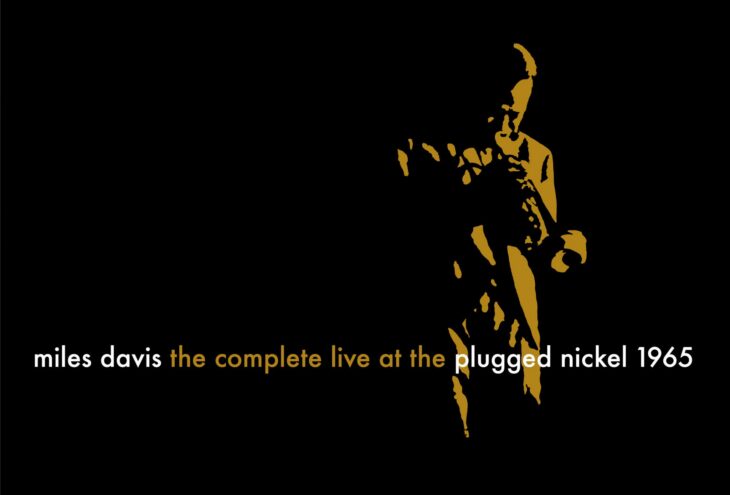
Sixty years after Miles Davis and his Second Great Quintet detonated expectations across seven sets in a basement club in Chicago, The Complete Live at the Plugged Nickel 1965 is out as a definitive physical edition—available now via Columbia Records and Legacy Recordings, the catalog division of Sony Music Entertainment. Widely hailed as one of the most illuminating live documents in jazz history, the complete Plugged Nickel performances capture Davis alongside Wayne Shorter, Herbie Hancock, Ron Carter, and Tony Williams at a moment when the band’s language was mutating in real time—elastic, volatile, and eerily telepathic.
Originally issued in 1995 as a limited-edition Mosaic Records LP box set and out of print for nearly three decades, The Complete Live at the Plugged Nickel 1965 is now available as a 10LP box set and 8CD box set, cut from digital and presented in deluxe packaging. The 10LP edition recreates the Mosaic musical presentation while expanding the story for a new era: a newly designed slipcase houses ten individual LP jackets and a 40-page booklet featuring new liner notes by Syd Schwartz and classic contextual writing by Bob Blumenthal, alongside archival photography and production credits that underscore the set’s stature as a cornerstone in Davis’ recorded legacy.
The performances themselves are a study in controlled risk. In December 1965, the quintet arrived at the Plugged Nickel with a well-worn repertoire—standards, ballads, blues—and proceeded to turn it inside out. Across “My Funny Valentine,” “Stella By Starlight,” “Walkin’,” “So What,” “All Blues,” and more, the group bends tempo, fractures form, and reassigns roles mid-phrase, making even familiar material feel newly dangerous. Schwartz’s new notes explore the band’s radical spirit and the mythic aura surrounding the engagement, writing, “The Plugged Nickel tapes don’t just capture great performances. They document a band revolutionizing improvisation in real time, welcoming surprise, discarding certainty, and turning ‘wrong’ notes into revelations.”
Today, it stands not only as a towering achievement of modern improvisation, but as an essential chapter in the story of Miles Davis as a bandleader: restless, rigorous, and always in pursuit of the next sound.
As an early pillar of the Miles Davis Centennial year, the release marks 100 years since Davis’ birth in 1926 and helps set the tone for a global celebration of an artist whose influence continues to intensify across music, style, art, and culture. In addition to the 10LP and 8CD box sets, one blistering complete set—Live at the Plugged Nickel: December 23, 1965 – Second Set—was previously released as a standalone 2LP edition for Record Store Day Black Friday and remains available now as an entry point into the larger collection.
“The music on The Complete Plugged Nickel Recordings of Miles Davis,” suggests writer, poet and painter Dr. James Cushing, “is equal in quality to any other work Miles did with the ‘second great quintet’ during the whole 1964-68 period — E.S.P., Miles Smiles, Nefertiti, Sorcerer. Yes, it’s that good. But what makes it stand out from those brilliant albums is the juxtaposition of the exploratory, mysterious vibe that Shorter, Hancock, Carter and Williams sustain throughout and the familiarity of the group’s repertory here. Except for one tune, each setlist is drawn entirely from 1952 (“Yesterdays”) to 1961 (“No Blues”). One reads the setlist, notes the presence of ‘Oleo,’ ‘If I Were a Bell’ and ‘Walkin’,’ remembers the Prestige recordings and, unavoidably, feels certain expectations. The 1965 Quintet joyously obliterates all of those expectations by treating these chestnuts as new compositions, almost as works-in-progress. Familiar melody lines are stated with brief cubist gestures, and the soloists, Shorter especially, erect and deconstruct one original melody line after another. Davis is on fire throughout, whether open or muted, and there are several moments when Williams drops out so we can all enjoy an impressionist Hancock-Carter duet.
“Miles’ Plugged Nickel recordings have been a part of my life since 1982, when Columbia issued eight of the thirty-seven cuts on a double LP. Today, the music sounds just as startling, unpredictable, and thrilling as it did four decades ago. It’s the surprise that keeps on surprising. And just in case it makes a difference, my reference recording is the Japanese Sony 7CD boxed edition from 1992. I don’t know how much remastering, remixing, etc., has gone into this 2025 Centennial reissue, but the music was originally recorded well, and every presentation of it I’ve heard sounds fine.”
“1965 began with wind in Davis's sails, leading his formidable new quintet into the studio to record E.S.P., another dramatic new direction in music,” underscores musician and author Kenneth Kubernik. “But then... an ominous silence. Slowly word developed that Miles's fragile frame brought him to ground; first hip surgery, then a broken leg, then another hip procedure which led to crippling pain, fitful recovery and the scrubbing of a summer's worth of concerts and festival performances. It wasn't until November that he resurfaced on an East Coast club circuit that his return to physical and mental form became public. A long-standing commitment to spending the holidays in Chicago with family facilitated the Plugged Nickel booking.
“Two nights over a two-week stand are exhaustively documented in the now iconic box set, a profile of Miles rehabilitating himself on the bandstand. His sound volleys between a pinched, rusty wheeze, redolent of his Birdland bebop days and jagged spitfire bursts as raw as his aching body, punctuated by drop shots of that lambent, orphan yowl that his fans desperately crave. And, while Miles was on the DL, the rest of the group kept busy getting their "new thing" together. Tony Williams labeled it ‘anti-music... like whatever somebody expects you to play, that's the last thing you play.’ It was an exhortation to abandon the comfort zone they'd long inhabited, the clamorous '60s imposing its will on players to transgress, take it ‘out.’ We hear this protean sound-shifting throughout, a liberating heedlessness to the book, sustained by a questing nervous energy, foisted upon an audience ill-prepared for the challenge set before it.
“Miles was adamant that nothing be recorded, even though Producer Teo Macero had enlisted the full remote taping services from Columbia Records. It got testy (Herbie waited over a decade before he listened to it, wary of what went down). Thankfully cooler heads prevailed and listeners are all the beneficiaries of these timeless, mercurial moments, hips - not lips - be damned.”
“No jazz group has ever taken the use of pre-existing formats (head arrangements, soloist and rhythm) and materials (composed melodies, chord or modes, rhythms) to such heights of sophistication and simultaneous invention,” emphasized writer and author Richard Williams in his blog The Blue Moment in a 2026 review of the 2025 collection.
“Ambition was one factor. Davis wanted, as usual, to stay ahead of the competition, and these four young musicians (Williams had left his teens only 10 days earlier) provided not just the fuel but the fire. In return, he set them free. They could go anywhere they wanted. What mattered was that everything they played was the result of listening and responding, not just of moving with the currents but setting up crosscurrents and rip tides and making radical choices between them.
“It worked because they were all virtuosi, all innovators, all repositories of the jazz history of their instruments but intent on taking the next step. Where that step took them was to the ultimate iteration of the evolution of small-combo jazz as it had been known for half a century. In their four years together, they achieved something that, in its field, would never be bettered.
“They were, in the very best sense, making it up as they went along: creating music on the fly, discovering themselves, testing the limits, exploring the music’s inherent elasticity, living on the leading edge, leaning way over it with no safety net, and exhibiting the ultimate in the improviser’s ideal of relaxed concentration. Pure exhilaration, then and now, from start to finish, and utterly essential.”
(Harvey Kubernik is the author of 20 books, including 2009’s Canyon Of Dreams: The Magic And The Music Of Laurel Canyon, 2014’s Turn Up The Radio! Rock, Pop and Roll In Los Angeles 1956-1972, 2015's Every Body Knows: Leonard Cohen, 2016's Heart of Gold Neil Young and 2017's 1967: A Complete Rock Music History of the Summer of Love.
Sterling/Barnes and Noble in 2018 published Harvey and Kenneth Kubernik’s The Story Of The Band: From Big Pink To The Last Waltz. In 2021 they wrote Jimi Hendrix: Voodoo Child for Sterling/Barnes and Noble.
Otherworld Cottage Industries in 2020 published Harvey’s Docs That Rock, Music That Matters. His Screen Gems: (Pop Music Documentaries and Rock ‘n’ Roll TV Scenes) was published on in February 2026 by BearManor Media.
Harvey spoke at the special hearings in 2006 initiated by the Library of Congress held in Hollywood, California, discussing archiving practices and audiotape preservation.
In 2017, he appeared at the Rock & Roll Hall of Fame in Cleveland, Ohio, in its Distinguished Speakers Series and discussed the forty-fifth anniversary of The Last Waltz at the Grammy Museum in Los Angeles in 2023.
During 2025, Kubernik was interviewed in the Siobhan Logue-written and -directed documentary The Sound of Protest,airing on the Apple TVOD TV broadcasting service. The film also features Smokey Robinson, Hozier, Skin (Skunk Anansie), Two-Tone's Jerry Dammers, Angélique Kidjo, Holly Johnson, David McAlmont, and Rhiannon Giddens).