Ed Cherney
Company: Ed Cherney
Clientele: Wynonna Judd, Bob Dylan, the Rolling Stones
Contact: edcherney.com
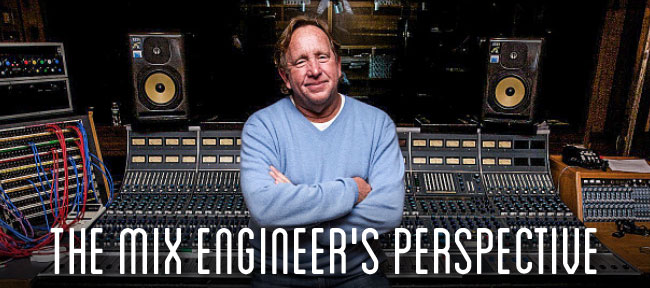
Mix engineer Ed Cherney launched his career in Chicago just after college. He was bound for law school, but some musician friends waylaid him and he became their roadie. One night when the sound guy went MIA, Cherney was tapped to step in. When the band went into Chicago’s P.S. Recording Studios to lay down some demos, he says that’s when “I got hit by the lightning bolt.” He started as an intern with Chicago’s Paragon Studios and has since won several Grammys, Tec Awards and even an Emmy. Cherney has worked alongside greats such as Quincy Jones, Phil Ramone and Bruce Swedien.
Aside from budgets, what are some of the biggest challenges that you face today?
Way more people have wanted to succeed as a recording engineer or producer than could ever do it. The only place you could record was a studio and it was kind of a gatekeeper. Now anyone with a laptop and a keyboard has an entire studio at their fingertips. That’s been good and bad. It changed everything, just like the industrial revolution did.
How important is it for a mixer to be mindful of mastering issues and considerations?
I see guys that work in Logic or Ableton and their music has never left their laptop. For them, mastering might not be as important. But I rely on it to get competitively loud and to put a good EQ curve [on a mix].
How closely do you work with a mastering engineer, and at what point does that happen?
Very closely, but it often depends. It’s rare now that I work on a whole album. Usually it’s a song or two or a single. Then I send it to the label and they use the mastering engineer that they want. There are certain people I’ve used for a long time. Doug Sax was my engineer of choice before he passed. Now I use Eric Boulanger, Doug’s protégé.
Do you ever have to explain to a client why an element of a mix could present a challenge for a mastering engineer?
Not in a long time. When we cut to vinyl, there were certain things––the amount of low end in particular. Maybe you had to shape the bass a little differently if you wanted the low frequencies to pop. I was always willing to push the technology before we had to limit anybody’s idea.
The number of formal engineering education programs seems to increase constantly. Why are there so many?
Because there’s a demand. There aren’t as many professional recording studios and the way engineers came up was by serving an apprenticeship: starting at the bottom. That doesn’t exist as much anymore. Another reason is that as an artist now you need to know how the technology works; you need to know how to engineer, mix and arrange.
A number of online music players (Spotify, YouTube, Apple Music) employ loudness normalization. Are you mindful of this when mixing?
No. If I can get a great mix and a great balance, it’ll translate to everything––eight-dollar earbuds, five-hundred-dollar headphones or laptop speakers. If I do it right, [loudness normalization] won’t mess with my balances.
How does automated mastering compare to mastering done by an engineer? Is it a serious threat?
It’s not to anyone who’s serious about their music. It’s a viable thing and I understand that people doing their records themselves may use it. With mastering, there isn’t one size fits all. You want to add a certain personality to your record and today there isn’t any automated algorithm that can do that.
Many artists want to get their stuff in film or on TV. Are there any special considerations for mixing for those mediums?
I might mix a song that lends itself to more cinematic things: a little more echo, reverb or the shape. I may mix a little darker to stay out of the dialogue‘s way.
It’s been said that monitor setup is the most important tool. What do you use? How has your setup evolved?
I’m a proponent of good speakers. They’re my eyes and ears to the world. In my studio I like to turn it up, especially when an artist or producer comes in. I’ve got an old pair of KRK E8’s that I use when I track in other studios. In my room now I have a pair of ATC 45’s. They’re the greatest speakers I’ve ever had.
What contributes to the truest sound?
Perception. We have the propensity to make it work by changing the perception. If there’s no low end in your speakers, you figure out a way to get the shape of it and make it work everywhere.