 Maor Appelbaum
Company: Maor Appelbaum Mastering
Clientele: Faith No More, Yes, Meat Loaf
Contact: maorappelbaum.com
Maor Appelbaum began his self-led engineering training while living in Israel. He soon learned that his talents were best suited to mastering and moved to California. There he worked with Grammy nominee Sylvia Massy (Red Hot Chili Peppers, Tool). He later relocated to Los Angeles and launched Maor Appelbaum Mastering. In addition to mixing alongside Massy, he’s also worked with producers Mike Clink and Matt Wallace, among others.
Aside from budgets, what are some of the biggest challenges that you face today?
There are limitations when the mix isn’t balanced well. People assume I don’t get bad stuff because I’m not cheap and that would act as a filter. It doesn’t always. Today the possibilities are bigger and you have to be open to work with things that aren’t always consistent. There’s less of a gatekeeper now.
How do you help clients communicate what they want from you?
The first thing I do is have a conversation about what they’re looking for and what they’re not looking for. Sometimes what they’re not looking for is more important than what they are, because perhaps you’re dealing with a client who’s had a bad experience somewhere else. I can work by intuition as long as we can communicate to ensure the client is happy with the results. In some cases they want changes and I can accommodate those.
A number of online music players employ loudness normalization. Are you mindful of this when mastering? Does it create unique challenges?
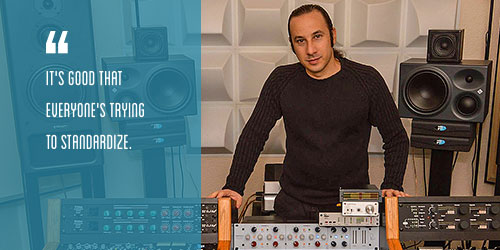
It’s good that everyone’s trying to standardize. New material gets lowered, but you have to remember that such volumes only appear to be right when it’s on a system that’s been normalized. If you deliver a minus 14 or 16, clients will play it on their computer and it’s going to sound low. Unless all the systems have normalization, you’re still going to have clients asking for tracks to be louder.
Because of multiple platforms (Spotify, YouTube, Apple Music, etc.), do you sometimes give artists more than one master? Or do you try to give them one pass that will sound good universally?
The problem with multiple masters is that if you make one that’s lower in terms of limiting, clients might like the sound or tone of the loud one. Having one that works the best is the ideal choice. You can always print alternate versions.
How does automated mastering compare to mastering done by an engineer? Is it a serious threat?
Currently it’s not, but possibly in the future. If automated cost the same as hiring an engineer, most people would go with the engineer because they can have a discussion about what they want. The fact that it’s way cheaper is what makes automated a threat. Is it getting better? Maybe if they’ve integrated feedback or their algorithms have improved. But with [engineered] mastering, you’re still dealing with artistic elements.
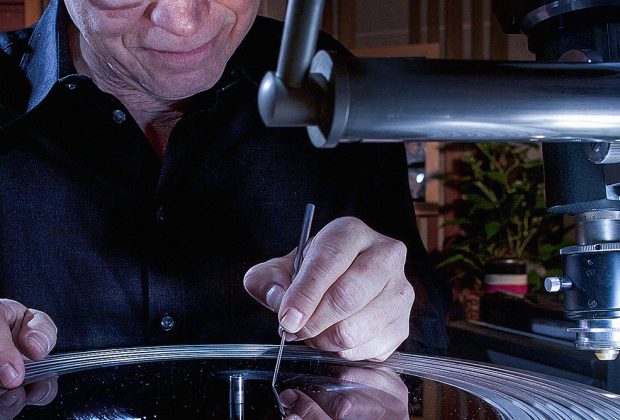
What happens with vinyl reissues? Are they always mastered for vinyl? Some of them don’t sound like they have been.
A lot of what’s released now is being transferred to vinyl. Back in the day, there were vinyl masters. Now it’s usually a digital master that’s translated to a vinyl transfer. Some of the releases are specifically mastered for vinyl.
Many artists want to get their stuff in film or on TV. Are there any special considerations for mastering for those mediums?
If the music is done like placement music, master it like a song. Try to think of it visually. If it’s a movie vibe, I make it as cinematic sounding as I can.
What’s your monitor setup? How has it evolved?
I have a digital-to-analog converter that’s connected to my mastering console––a Maselec MTC-1X. That’s hooked up to a Bryston 4B SST Squared amp and then to the PMC IB1S monitor––my main three-way speaker. I also have smaller speakers... Neumann KH 310’s, KRK V4S4’s and Reftone monitors.
What contributes to the truest sound?
The sum of the parts. A good monitoring system. Power conditioning is important. I have a rack of Furman regulator power conditioners and balancers. It’s not just one thing. You also want a good digital-to-analog converter, amp and transfer console: cables and amps. Everything adds but it also subtracts differently. You want the least subtraction possible in the system.