 Maria Triana
Company: Battery Studios
Clientele: Bob Dylan, Miles Davis, Aretha Franklin
Contact: batterystudios.com
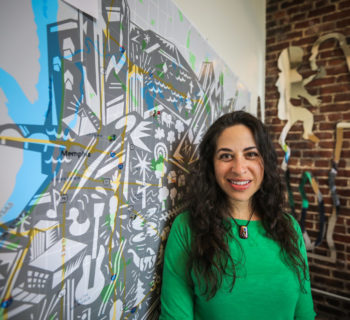
Maria Triana got her start when she enrolled in Boston’s Berklee College of Music to study audio engineering. After graduation, she knew that mastering represented her true calling and made the 200 mile hop to New York. There she worked in some of the city’s most notable sound factories including the five-story Sony Music Studios, where she mastered alongside fellow Mastering Roundtable interviewee Vlado Meller. Following Sony’s closure in 2007, Triana joined Battery Studios, which is on the site of legendary studio The Record Plant.
Aside from budgets, what are some of the biggest challenges today?
There are so many resolutions and people want different things: vinyl, Mastered for iTunes, CDs and even MP3’s. I sometimes wish we could find a standard. We might get to that, but there’s a difference between all of those formats and it’s sometimes difficult to explain that to clients.
Mastering is a technical pursuit that many artists may not always grasp. What are the best ways to communicate with artists to give them what they want?
At the beginning, I point out what I think I’ll be working on. Not the mistakes, but what I think we can do to improve the mix. Then I’ll have a conversation about what they’re expecting and what they want. I may ask for a sonic reference––an album or artist that they like.
How do you help clients communicate what they want from you?
They’ll use abstract words rather than technical terms. Through the years, you start to understand what they want and how they’re asking for it. It’s all trial and error. I’ll start to work on something and they’ll listen to it. We might go back and work on something else and then return to it. If they want changes, we’ll redo it.
The number of formal engineering education programs seems to increase constantly. Why are there so many? Are they worth it?
It’s irresponsible for these programs to take money from students and not be able to place them. I was lucky that I got to work in a big studio, but how many are there now? Many people come out of school thinking that they’re an engineer, and when they start working they realize that this is something they have to learn with people, not just by themselves in a room with a teacher. It’s a craft. We’re losing the art of recording, in a sense.
How should people new to the field approach formal engineering programs?
When I was in school, there wasn’t a mastering program. What helped me to think technically was learning about signal flow and then applying it in the studio.
A number of online music players employ loudness normalization. Are you mindful of this when mastering? Does it create unique challenges?
For all of them, it’s kind of different. But I’m mindful not to get caught up in the loudness war and to be dynamic. Once you’re dynamic, even though the files will get compressed, they’ll still have a life to them.
How does automated mastering compare to mastering done by an engineer? Is it a serious threat?
Maybe that works if someone is trying to sell a track and they just want to show it. But artists want their tracks to sound good and not just be normalized. There’ll still be a market for mastering [engineers]. Each has an idea of how they want sound to be and that’s why you choose a [specific] mastering engineer: because you like their sound. That also allows artists to have input. An algorithm doesn’t.
What happens with vinyl reissues? Are they always mastered for vinyl?
We get the tapes and a reference. Hopefully we have a good pressing for comparison. But each is going to be different. Some people might think that [records] sound different because they might not have the pressing that was used for the mastering session. What we do is compare it to the tape and match what was done for vinyl. Then we create the files for vinyl. Usually the tape sounds better than the vinyl. It varies.
Many artists want to get their stuff in film or on TV. Are there any special considerations for mastering for those mediums?
It’s the same thing as delivering files for Mastered for iTunes or any digital format: it’s compression. It will get compressed. You just have to be mindful of your work so it will replicate correctly.
It’s been said that monitor setup is the most important tool. What do you use? How has your setup evolved?
I have near-fields. I use them every day and at home. The fact that I use the same room, the same setup, always allows me to get control of the sound.
What contributes to the truest sound?
The actual sound of the room: how it’s been isolated and the placement of your speakers. The overall room design. A small speaker move can make a big difference.