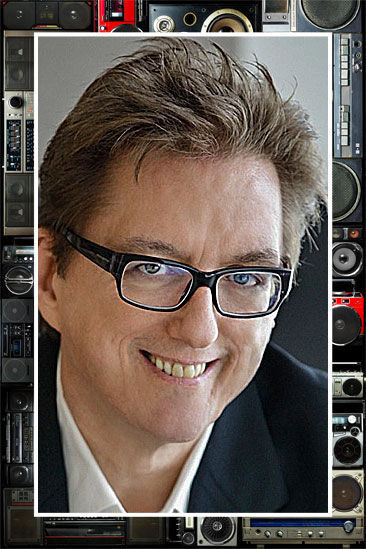
 SKY DANIELS
Program Director - KCSN Los Angeles
Triple A format
Daniels’ career runs the gamut of the music industry. After his early radio career took him to stations in Pittsburgh, Detroit, and Chicago, he transitioned to become a major record label executive at Universal Music and Sony Music. After years of peddling his wares for record labels, Daniels returned to radio, taking the reigns at KCSN in Los Angeles.
In your opinion, what’s the biggest benefit an artist gets from radio airplay?
We’ve realized, in most cases now, the days of any radio station selling 100,000 copies of an album in a market are over. It’s just not happening anymore. So now what we’ve come to realize is that the best thing we can do as a service to the musicians is try to build a live base.
When does most of your music evaluation take place?
We have a seven-hour music meeting every week. Which should tell you that we take it pretty seriously. And that music meeting, there’s a reason why it goes seven hours. We are listening, evaluating, looking, comparing, then looking at what we are playing and supporting. (For example) “do we have 20 indie-pop, soft, female singer-songwriters that we’re playing right now? Well, we’re starting to get monochromatic at this moment. We need some energy.”
When you’re choosing songs for airplay, does it matter whether an artist is signed or unsigned?
If we hear a great song, I don’t care who it is. I don’t care if they’re signed, unsigned. I don’t care if anybody else in the world is playing them. We don’t care. If we hear a truly great song, we’re gonna jump on it.
Given KSCN’s unique situation–– being a non-commercial station with studios located on the Cal State Northridge campus––what’s a common misconception that people have about it?
We are a self-sustaining, professional radio station. We don’t take money from the university. We raise our own funds. We are self-supporting. You’re not talking about college radio here. You’re talking about a non-com, triple a radio station. Once in a while we get the “Well, can’t you just play whatever you want whenever you want” kind of thing. Well, we could. We could do anything we want. But if we did, we wouldn’t make any money and we’d go out of business!
What’s the difference between radio and streaming sites, when talking about their ability to “break” a band?
A radio station is a push medium. We have 500,000 listeners and we advocate the adoption of a song to 500,000 people. Streaming has, depending on which site it is, which channel or playlist, whatever categorization they do, they may have anywhere from 10,000 to 500,000 followers. And it’s a pull medium. One person at a time gets to decide if they like this or want it or not.
So you don’t see streaming usurping radio’s power any time soon?
You know, it makes me laugh. For everyone who says that radio is dead, it’s funny how I watch Apple Music, Amazon Music, Spotify, and everyone else say, “Well, we’re going to do Apple Radio. We’re going to do Amazon Radio.” It’s like, really? So you’re going to curate songs, you’re going to have them in a playlist, and you’re going to rotate the records just like...what’s that dead medium? Oh yeah, radio. The difference being, we already have an established audience that listens to us for our curation, for our vouching for these artists. Because they respect what we do.
How does being in a major market affect your decision making?
Coming from the label side like I do, I know the undue influence that Los Angeles, or a New York, or Nashville radio station can have. Because those are the power centers for the music industry. If you’re (in one of those markets) you’re going to have what I respectfully say is an undue influence because the executives from the top to the bottom are listening to that radio station in their offices, in their cars, at their home, on their way to shows, and if they hear something they like on their label on our airwaves, it validates your commitment to that artist. We’re blessed to be in one of those markets where we know real decision makers on the music industry side are making decisions. Be it concert promoters, be it label owners, be it pundits. We know and we accept the responsibility. •