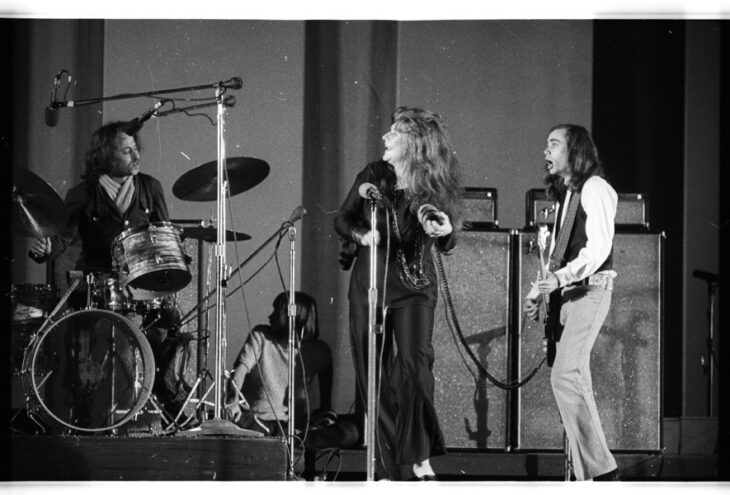
Equal parts hellfire and holy water, the earth-scorching prowess of Janis Joplin, the Queen of Psychedelic soul, continues to light the way for generations of genre-transcendent greats exactly sixty years since she first stepped into the spotlight during the arcadian summer of 1966 at the apex of San Francisco's countercultural movement.
Celebrating the late Pearl legend's diamond anniversary, Morrison Hotel Gallery proudly presents Piece of My Heart. Featuring previously unreleased works courtesy of The Janis Joplin Estate Archive (available exclusively at Morrison Hotel Gallery) and career-defining imagery by Henry Diltz, David Gahr, Elliott Landy, Daniel Kramer, Amalie R. Rothschild, Ethan Russell, Ken Regan, Guy Webster, John Byrne Cooke, Leigh Wiener, Thomas Monaster, Ray Andersen, Sam Faba and Margorie Alette, this bi-coastal exhibition opens in West Hollywood on Thursday August 6th, 2026 and in New York City on Thursday, August 20th, 2026 with special guest host MHG founding photographer and counterculture icon in his own right Henry Diltz.
Henry Diltz is a music photographer who has shot more than 250 album covers and thousands of publicity shots in the ‘60s and ‘70s, including the iconic Morrison Hotel cover for The Doors. Other artists, whose fly-on-the-wall style portraits he’s known for, include musical legends such as the Eagles, Neil Young, Crosby Stills & Nash, Jackson Browne, America, Steppenwolf, James Taylor, Jimi Hendrix, The Monkees and David Cassidy. He was the official photographer at the Woodstock festival in August 1969. His work has appeared in The New York Times, Los Angeles Times, LIFE, People, Rolling Stone, High Times and Billboard.
A musician in the 1960s, Diltz never set out to take some of the most iconic photos of our era – it just happened. Fresh from a globetrotting childhood, he attended colleges in Munich, West Point and Honolulu, where he became known as a musician and founding member of the Modern Folk Quartet. Phil Spector produced one of their last singles. This led to many friendships with emerging recording artists in the California rock communities of the ‘60s and ‘70s.
Today, his extensive archive is handled by Henry Diltz Photography. He continues to document the music scene from his base in Southern California. Diltz is a partner in, and is exclusively published and represented by, the Morrison Hotel Gallery, which specializes in fine-art rock photography. “I am amazed at the accumulation of images that has resulted, simply by doing what I love to do, day after day after day,” he says. “It’s a result of being with countless people over the years, waiting at the sidelines for the moment to happen. Photography has been my passport, and I have arrived in the present, where I have always been, camera in hand. There! That says it best for me!
“At the Monterey International Pop Festival in June, 1967, Janis was just totally on fire and sang with every ounce of emotion she had. I’d never seen intensity on a stage before. I also saw her in 1969 at Woodstock and the Hollywood Bowl on my birthday. It never occurred to me back in the ‘60s and ‘70s when I was really shooting all these things that it would ever be an archive and that it would be a piece of social history. That’s what it has turned out to be. And that was a total accident. The thought never occurred to me.”
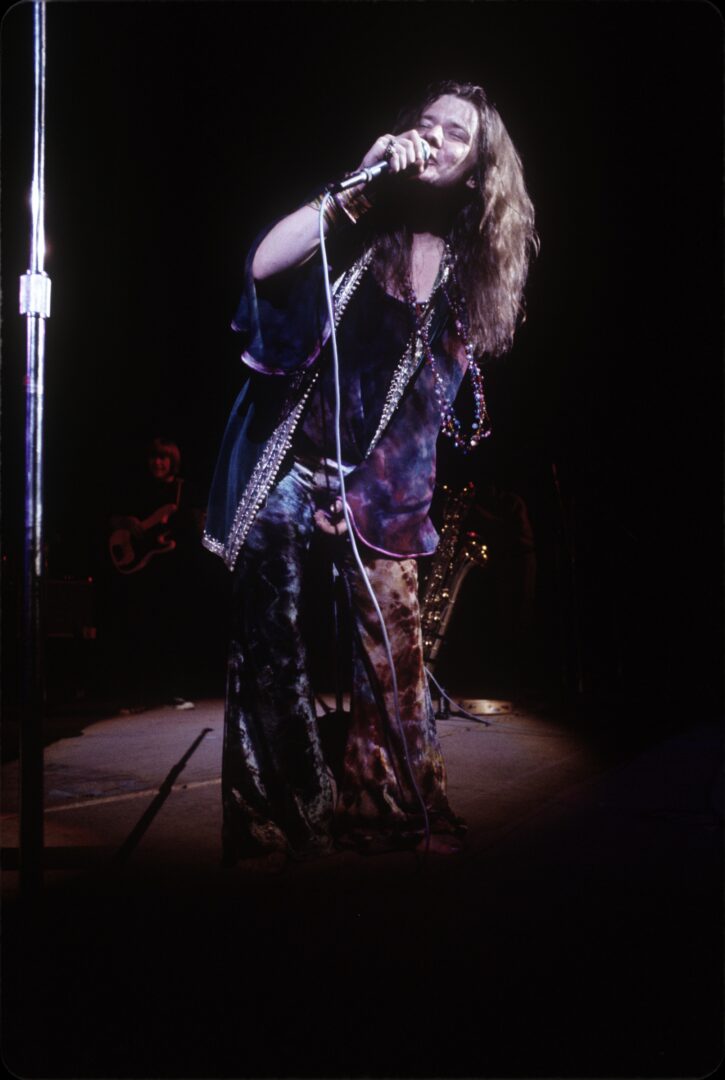
“If Janis was merely a high-octane blues wailer, she would still be great but she wouldn't be a legend. What makes her persona so arresting is what's underneath but never out of view: the Plain Jane All American girl, the homely daughter of a Texaco engineer. Without her flower power garb and her blistering, lurching body language onstage, without her projection, she could be any girl from Anytown, USA. The shy one sitting in the back of class unnoticed, trying in vain to camouflage her acne.
“So, when you watch her perform, you're not just watching a singer. You're watching a transformation of epic proportions. If what Alfred Alder says is true, that there is no such thing as talent, only pressure, then Janis was content under extreme pressure. She brought the full force of her outsiderness, her anonymousness right up through her kishkes. It's poignant and heroic that she blazed the trail for the Wilson sisters, Stevie Nicks, and a zillion other glamorous beauties that followed.”
----Daniel Weizmann, novelist. The Last Songbird (A Pacific Coast Highway Mystery)
On Friday, June 20, 1969, at a rock festival, Newport ‘69 at Devonshire Downs in Northridge, California, I witnessed a lineup of the Jimi Hendrix Experience, the Don Ellis Orchestra, Albert King, the Ike & Tina Turner Revue, Spirit, the Edwin Hawkins Singers, Joe Cocker, Taj Mahal and Southwind.
Free spirit Janis Joplin was a special invited stage guest.
Janis greeted the adoring crowd with an energetic directive, “Keep on rockin’ people!” She was met with an ovation from 30,000 people in the audience savoring their collective worship moment in the San Fernando Valley.
Janis Joplin possessed “the tools of conquest,” as writer/host and narrator Rod Serling suggested in his 1959-1963 CBS-television series, The Twilight Zone.
In 2016, Joplin was chronicled in the American Masters premiere of director Amy J. Berg’s documentary Janis: Little Girl Blue, and the DVD and Blu-ray from FilmRise followed.
2017 was the 50th anniversary edition of director D.A Pennebaker’s Monterey Pop that capturedJoplin’s 1967 star turn
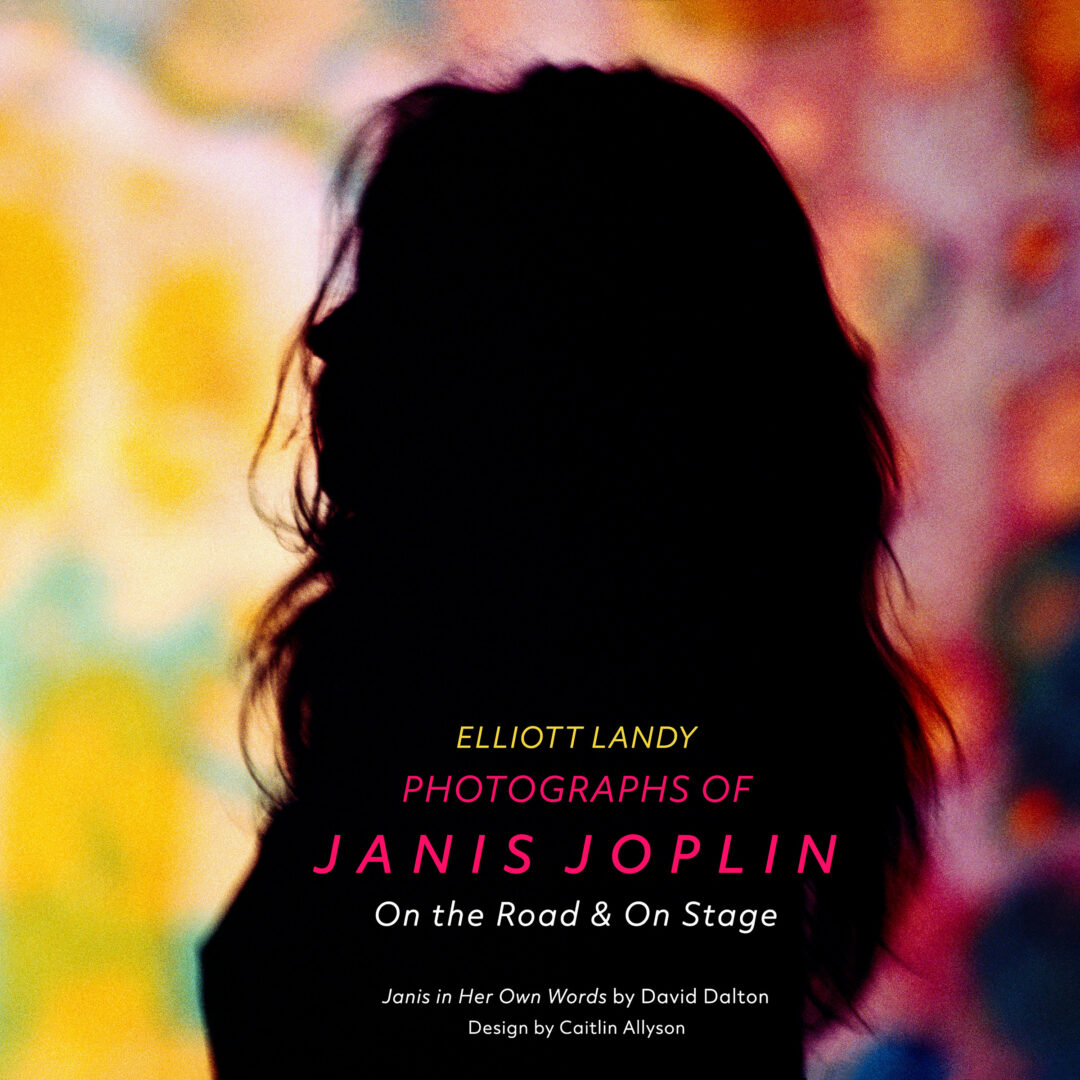
A 196-page book of Elliott Landy’s photographs, Janis Joplin On The Road & On Stage ––featuring 129 photos of both his iconic and many never-before-seen images of Janis was published by Landyvision, Inc. during 2022.
His photographs are accompanied by Janis’ candid thoughts taken from conversations and interviews recorded by veteran music journalist and author David Dalton, while on tour with Janis in 1970. Elliott’s photographs portray both the public and private lives of Janis, offering an intimate behind-the-scenes glance at her brief yet groundbreaking years of fame.
“I found Janis Joplin to be loving, considerate, and lonely,” described Landy. “She seemed to experience pain even when she was having pleasure. That she couldn’t get as high in real life as she did from her performances saddened and depressed her. Drugs got out of hand. They made the highs higher and the lows lower—too low. Her answer was to do more. She was wrong…
“One night, after a big show in New York, I shared a cab with her and a few other members of the band. She directed the cab to drive to the home of a casual friend who she hoped was there. When she got out, she shook her head and with a sad smile said, ‘Man, what a drag. Here I am a big star and I can’t find anyone to be with.’ We all invited her to stay with us, but she walked away. It was snowing. The cab drove on, taking each of us to our destinations, but for Janis, apparently, there was no place to call home.”
Paul Kantner: Janis did it every night I saw her. She used to play in clubs around town. Grace with Jefferson Airplane and Janis were at Monterey.
“Probably the reason that Janis died was that she got too popular and left her band. To her credit, Grace didn’t leave the band and probably survived as a result.
“There’s a big difference between the two. Grace got, as you can imagine, all sorts of offers to go solo. On one level she didn’t feel confident enough, I know a little bit. On another level she didn’t want to leave the band the way it was.”
Sam Andrew: Monterey was a watershed event for Big Brother and the Holding Company and, indeed, for the entire San Francisco counterculture. We had a clear idea about what was going to happen there, when we signed up for the festival.
‘“Combination of the Two’ was a song that I had written a while before this. The ‘Two’ were Chet Helms and Bill Graham. In the song I was trying to make the point that the scene needed a visionary and also someone who could make the trains run on time. It would take a combination of the two to make the counterculture work.
“Of course, as often happens, in the actual playing of the song a sort of rapturous ecstacy took over and the lyrics became almost totally lost. I tried to describe what it felt like to be at the Avalon Ballroom or the Fillmore Auditorium. So, the song which had begun as an almost philosophical observation (the complexity of describing an experience) became, in performance, a raving chaos. Janis Joplin lifted the chorus of the song into the level of pure feeling.
“Of course, the big story for us was the introduction of Janis to the big world and that went well enough. People who had never heard/seen her understood suddenly what she was about.
“I liked playing ‘Road Block’ at Monterey. There is a kind of gospel, off time feel to the song that I found very interesting.
“Everything changed for the scene at large and for Big Brother in particular at Monterey. We acquired Albert Grossman as manager, Columbia Records for a recording company, and we began to live in New York and Los Angeles at this point. There was a big shifting of gears.
We were off into our new life and Monterey marked the beginning of that.
“At Monterey we heard a door opening into a whole new world. What had until that time seemed to be a very small scene of people trying to find a way to a new and more just life was now shown to be an international movement. Monterey was where literary San Francisco met hedonistic Los Angeles and both sides won.
“The theme was the combining of so many seeming opposites, north and south, east and west, black and white...for me the most enlightening performances there were those of Jimi Hendrix and Otis Redding...man and woman, vision and reality, straight world and counterculture. Monterey was the place where these extremes melded together for one magic moment.
“Big Brother rehearsed for a week before we played the Festival. For some reason, we knew that Monterey was going to be a signal event, one that we would remember for a long time. Commercial considerations, networking, career moves, things that seem of paramount importance today, were almost beside the point at this time. There was a messianic feeling that all of us, musicians, photographers, artists, filmmakers, were in this together and that our togetherness was going to solve effortlessly many of the problems that had plagued human beings for an eternity. What can I say? It was the 60s, but we actually believed for a brief, shining moment that we could make a difference.
Clive Davis: At Monterey I was really just getting my feet wet. I was in the business side of it for a year. I was working with Andy Williams, the young Barbra Streisand and Bob Dylan, and signed Donovan to Epic in 1966. I was observing.
“I was seeing the business change. I was seeing music change, but I was waiting for the A&R staff to lead into these changes that were showing evidence in becoming important in music.
“In June I really came to the Monterey International Pop Festival not knowing what to expect, but seeing a revolution before my eyes. I was very aware that contemporary music was changing.
“When Janis took the stage at Monterey, it was an unknown group to me totally, Big Brother & the Holding Company, and right from the outset it was something you could never forget.
“She took the stage, dominated, and was absolutely breathtaking, hypnotic, compelling and soul shaking. You saw someone who was not only the goods but was doing something that no one else was doing. With that fervor, that intensity, and impact,
“So, that in effect, coupled with everything around me, the way people were dressing, what was going on in Haight Ashbury, the spirit in the air, and the feeling. I just said, ‘You know, I am here at a very unique time. I’m feeling it. I’m feeling it in my spine. I’m feeling it in my sense of excitement. I’m feeling it in the impact. It’s not only musical changes, but in society changes. And I, in effect said, ‘this is really, although it sounds hokey or cliche, this is the time that must mean that I’m gonna have to make my move.’
“There’s no question that the primary signing was Big Brother and Janis Joplin, but the Electric Flag was very powerful with Buddy Miles on drums, and Mike Bloomfield on guitar. I quietly signed the Electric Flag. Laura Nyro was not great at Monterey and I didn’t come away with the feeling I must sign here then.
“The whole experience if one asks, you know, and catalogs, or thinks back on the most meaningful experiences in your life, it would rank up there at the top. The impact for me afterward was that I realized that I was in on something unique, possibly revolutionary early.
“So, I quietly, obviously, had to negotiate The Big Brother contract out of Mainstream Records. It wasn’t that (Albert) Grossman was their manager at the beginning, he was not, he ultimately came in as manager, and it was after he came in that we came up with a solution of buying the contract.
“Monterey was very different and unique. It’s not that I went around following festivals…Festivals grew up successfully around the artists that had either broken or were breaking. Monterey was the discovery of new talent.
“The success of the artists I signed at Monterey gave me confidence that I had good ears. It was there’s no question I was going to get confidence from nothing else. I mean, basically, that was a move I had made, and the fact that they came through in a resounding way, and were critically welcomed as well as commercially they reverberated.
“I had no idea I had ears. I had no idea that I could do this. It never occurred to me that I would be doing it, and so that as each step came through it emboldened me and gave me the confidence to trust my own instincts. And, that’s the only way that I’ve ever done it. Because obviously, up until that time, my background was totally different and it was a talent that I never knew I had. This was something that I not only loved doing but I had a talent for.
“Monterey is a without question, probably the most vivid memory from a career point of view, from an emotional point of view, from a character effecting point of view, that I’ve ever had.
Peter Lewis: Our band [Moby Grape] debut album had just come out. We all went to a party thrown by Columbia Records head Goddard Lieberson. He had a turtleneck sweater and a little gold chain, with his hair combed down in front, and he didn’t have long hair. So, he was trying to look cool. And, he had a party at his hotel, and I remember jamming with Paul Simon for a while. Tons of people. Janis was there because they wanted to sign her.
“Janis Joplin couldn’t get arrested before Monterey. Her trip was, one day everyone is kicking your ass, and then the next day everyone is kissing it. It does something to you.
Richie Furay: We played with Otis Redding before, and he came to one of our recording sessions in New York. Dewey brought him. A great and nice guy and a very special man. Otis captivated an audience. Janis Joplin was a powerhouse at that show. Hendrix had charisma.
Pete Townshend: It was exciting to go to San Francisco for the first time, but also quite strange. This was a divine opportunity.
“Others may remember it differently. I couldn’t see how Grateful Dead, Janis Joplin or Country Joe could be taken seriously. Their sound was so ragged, so raw. I was used to a slicker sound.
“Now I see better what they were doing, and just like the Who it was not just about music, it was about message and lifestyle and change. The three bands I mentioned all had manifestos that were not just about the music. It took me a while to understand that.
D. A. Pennebaker: Janis Joplin, Big Brother and the Holding Company were the one thing we were told we couldn’t shoot for the film [Monterey Pop, documentary released 1969]. Although I did shoot a little, but Grossman, who was just entering the Big Brother management picture said, ‘I’ll pull her the minute I see a camera going on her. All the cameras have to be pointed at the ground.’
“We went through a whole big drill and it got me really intrigued, you know, with this going on, and then when I heard her, the first song, ‘Combination of the Two,’ and I said, ‘Jesus Christ…This is impossible.’ So, I went to Albert and I said, ‘Whatever it takes. I mean, we got to get her.’
“So, he disappeared, and the next thing I knew Janis came out and she said, ‘Oooh, I’m gonna do it again and you can film me this time.’ So, we did. [The band’s “Combination of the Two”is heard in the credits for Monterey Pop].
“I loved Janis and thought she was a fantastic person. And I always thought there was a film there and I shot a lot with her, but what she was doing was so hard for her it was hard for me to film her.
“My father was a boozer. You can’t count on getting their real lives. You get something else. They put on a kind of a show. And that was a problem. And I had a problem with Janis. The drugs. And I had nothing against drugs because I didn’t know enough about them yet.
Elliot Mazer: I recorded Janis Joplin and Neil Young and used the Wally Heider remote truck. A tube board, called the green board that Neil eventually bought. I had used it with Richie Havens and with Janis at Winterland. That board had done a lot of wonderful things. Janis on stage and Janis in the studio was the same. Once she started singing, she sang. A wonderful performer.
“Janis and Neil are extraordinary people. I mean, they are unique and sound like nobody else. They were doing something that was really original and people either liked it or didn’t pay attention. I think Neil and Janis were really smart people. Above average smart people. You don’t become the success in this business without being really bright, by the way. You can’t do it all. And Janis and Neil would do it all.
“Janis was really interested in every aspect of making records. People keep referencing her sexuality. But in fact, she was an incredibly smart person that would really care about something and would work incredibly hard.”
(Harvey Kubernik is the author of 20 books, including 2009’s Canyon Of Dreams: The Magic And The Music Of Laurel Canyon, 2014’s Turn Up The Radio! Rock, Pop and Roll In Los Angeles 1956-1972, 2015's Every Body Knows: Leonard Cohen, 2016's Heart of Gold Neil Young and 2017's 1967: A Complete Rock Music History of the Summer of Love. Sterling/Barnes and Noble in 2018 published Harvey and Kenneth Kubernik’s The Story Of The Band: From Big Pink To The Last Waltz. In 2021 the duo wrote Jimi Hendrix: Voodoo Child for Sterling/Barnes and Noble.
Otherworld Cottage Industries in 2020 published Harvey’s Docs That Rock, Music That Matters. His Screen Gems: (Pop Music Documentaries and Rock ‘n’ Roll TV Scenes) is scheduled for 2025 publication.
Harvey wrote the liner notes to CD re-releases of Carole King’s Tapestry, The Essential Carole King, Allen Ginsberg’s Kaddish, Elvis Presley The ’68 Comeback Special, The Ramones’ End of the Century and Big Brother & the Holding Company Captured Live at The Monterey International Pop Festival.
During 2006 Kubernik appeared at the special hearings by The Library of Congress in Hollywood, California, discussing archiving practices and audiotape preservation. In 2017 he lectured at the Rock and Roll Hall of Fame in Cleveland, Ohio, in their Distinguished Speakers Series. Amidst 2023, Harvey spoke at The Grammy Museum in Los Angeles discussing director Martin Scorsese's The Last Waltz music documentary.
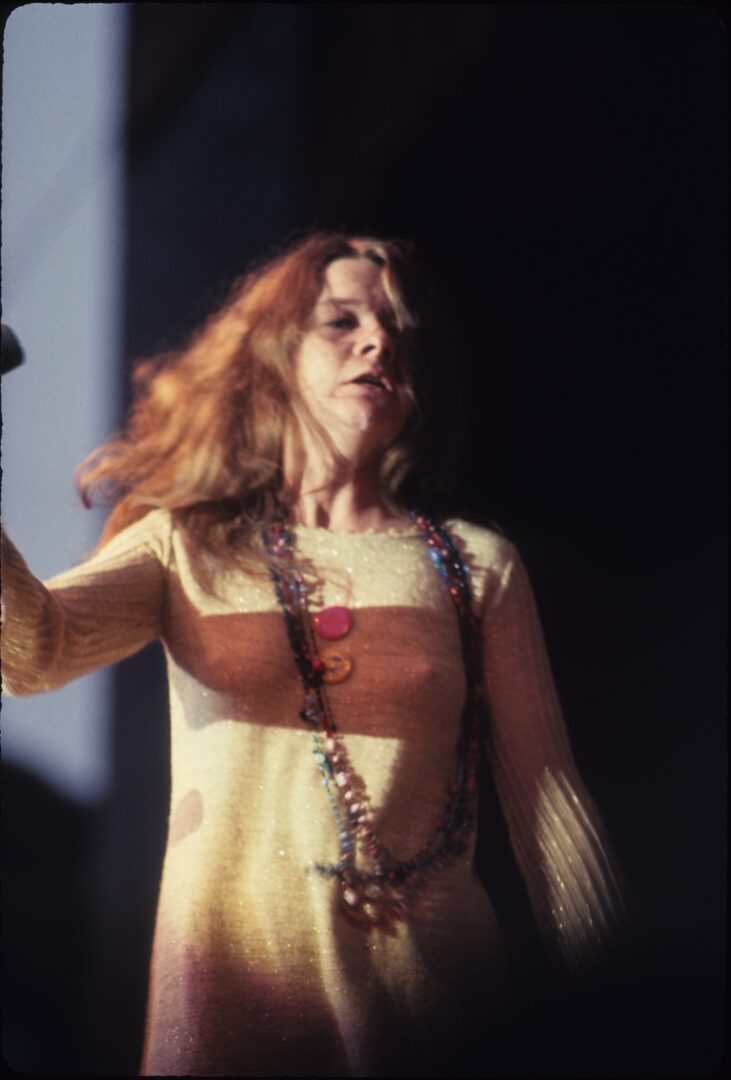
Photos of Janis Joplin by Henry Diltz, Courtesy of Gary Strobl at the Diltz Archive.