
“RUBBER SOUL - the album that changed the musical world we lived in then to the one we still live in today.” ---Andrew Loog Oldham, record producer/manager of the 1963-1967 Rolling Stones, founder Immediate Records, author, deejay, and Rock and Roll Hall of Fame inductee.
“Today we think of the Beatles epic as one incredible breathless run, and it did all happen very fast, their 8 or 9 dizzying years,” offered writer and novelist Daniel Weizmann.
“But on close inspection, before Rubber Soul, there was a subtle sense that the Beatles were...almost starting to run of steam, exhausted from all that mop-shaking. And who can blame them? Beatlemania would have driven four less durable souls into an insane asylum. Beatles for Sale, Beatles VI, Help! -- the songs are great but some near-invisible identity crisis is at work in them, a groping for more. In an alternate, less beautiful universe, the band might have even thrown in the towel right then and there. Which is partially why Rubber Soul is such a miracle -- it's not just an album, it's an announcement, that they would not back down. They had stripped down to essentials, learned to stifle their own cuteness, and were ready to push past youth, guided by introspection. They aren't there yet, but the plot had thickened -- and Rubber Soul is the first chapter of Act II, the very best part of the story.”
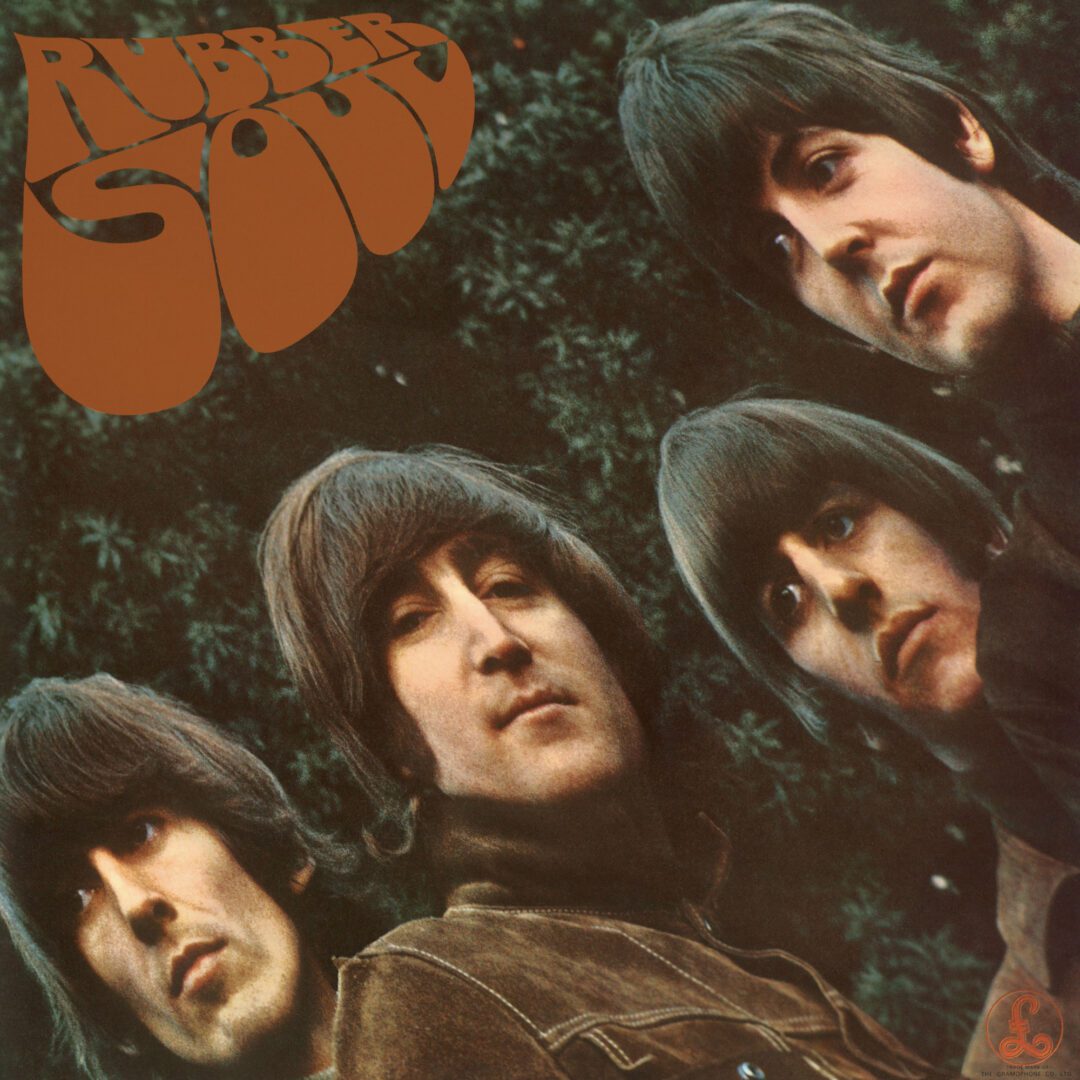
Rubber Soul, released on December 3, 1965, was the Beatles’ first release not to feature their name on the album’s cover, an uncommon strategy in late 1965. The cover photograph was by Robert Freeman in the garden of John Lennon’s home in Weybridge.
In 1997 I conducted an interview with George Harrison. He mentioned he had first heard the sitar instrument on the set of The Beatles’ movie Help! Later that year, he would record with it on the session for John Lennon’s “Norwegian Wood (This Bird Has Flown).”
George told me about his earliest attempt at playing the sitar with the Beatles, “Very rudimentary. I didn’t know how to tune it properly, and it was a very cheap sitar to begin with. So ‘Norwegian Wood’ was very much an early experiment. By the time we recorded ‘Love You Too’ I had made some strides.
“That was the environment in the band. Everybody was very open to bringing in new ideas. We were listening to all sorts of things, Stockhausen, avante-garde music, whatever, and most of it made its way onto our records.”
During 2007, I interviewed my friend Brian Wilson for the 40th anniversary Pet Sounds tour program notes. Brian confessed “Michelle” and “All My Lovin’” were his two favorite Paul McCartney songs and immediately cited Rubber Soul.
‘“Norwegian Wood’ completely blew my mind, and marijuana was around for Pet Sounds. Well, when I first listened to Rubber Soul, I then went to the piano and all I could see were my keys. I locked in with the keyboard and wrote [with Tony Asher] ‘God Only Knows’ in 45 minutes.”
In 1998, I interviewed Elvis Costello in Hollywood during his Painted By Memory recording sessions with Burt Bacharach at Ocean Way Studios. We briefly discussed Rubber Soul.
“I have a perspective on it that someone of my years probably shouldn't have. I always heard Burt’s tunes in cover form first. And that was important. The stuff that my dad [Ross MacManus, musician, singer and trumpet player who performed with Joe Loss and his Orchestra] brought home were ‘A’ label singles.
“Like the Beatles ones I had, were the non-single tracks like ‘Michelle,’ and songs from Rubber Soul that they [music publisher Dick James’ Northern Songs] thought were better suited for covers than, maybe, ‘Drive My Car’ was. They were sent over on demonstration acetates. Rather than having the Parlophone label, which never pressed ‘Michelle’ as a single, the publisher, pressed an acetate. And that was how small they were thinking about that ‘radio cover.’”
“Firstly, what a fabulous elasticisable title!! Puts it all in the perfect perspective,” volunteered music historian, author and broadcast journalist, Ritchie Yorke.
“Creativity grows. And it shows. On Rubber Soul, we are seeing the beast that became John Lennon’s composing heart is gaining traction and he’s beginning to let it flow on through. How blessed we were that it flowed upon our watch. And in our presence. A wonderful album made most of us realize that there was a lot more to these dudes than just pulling off limp versions of great R & B tunes.’’
“They were the natural progression from the roots of the music,” underscored Blondie’s drummer Clem Burke. “The early recordings spread the gospel of Little Richard, Buddy Holly, and Motown to a new generation of rockers. They are and always will be my muse. I’ll listen to a few songs before a show and get a rush of emotions. They had the best drummer in rock ’n’ roll that really made the recordings creative.”
“With their own, unique version of Rubber Soul American Capitol finally got it right,” claimed proud Canadian Beatlemaniac Gary Pig Gold.
“Up until then of course, all of Parlophone’s precious Fab LP’s had been thoroughly sliced, diced and, I quote, Prepared for release in the U.S.A. with the assistance of Dave Dexter, Jr. With varying degrees of success, shall we say. But no sooner had John Lennon caught sight – not to mention sound – of Capitol’s slap-dash ‘very special movie soundtrack souvenir album’ for Help! than the (in)famous Dex was given the heave-ho by the powers-that-were at EMI’s London HQ, leaving substitute Capitol international A&R exec Bill Miller’s staff to assemble a Rubber Soul for 1965’s all-important North American Christmas market.
“And what a fine job they did! For the first time leaving the Beatles’ U.K. cover photos and graphics of choice intact – one of the Sixties’ most iconic long-playing images, absolutely – Miller’s men cobbled together what some still profess to be a ‘folk-rock’ blend containing two left-over numbers from the British Help! LP while removing several of the rougher, as in fully plugged-in tracks from Rubber Soul U.K. In doing so however, the core of the band’s intricate original running order was wisely left as-is and the ultra-refreshing result was a slightly more ‘mellow’ perhaps (‘mature’ was the word many startled reviewers used in ‘65) package from those hitherto poppy-go-lucky mop-tops.
“Nevertheless, discriminating ears from Los Angeles to the Canadian Laurentians immediately took notice …not the least of which to the very air of savvy sophistication – though some detected second-hand jazz-cigarette smoke as well – which permeated the entire proceedings, from Lennon’s provocatively fishy-eyed ‘I dare you to find anything wrong with this’ gaze on the front cover to the Strat ‘n’ sitar-soaked sounds within. Why, for starters as we all know, no less than a certain Beach Boy, upon first removing Rubber Soul from his turntable, immediately vowed to ‘answer’ it asap by himself making ‘the greatest album ever!’ And if, because of that challenge alone, the American Rubber Soul should be hailed, even a half-century later, as a resounding, unqualified utterly game-changing success.”
“‘Day Tripper’ and ‘We Can Work It Out’ were already available as a two-sided singles,” reminisced writer Paul Body. “Help! had been out for the Summer of Yesterday. Now Rubber Soul to end the year on a quiet note. Of course, the import and domestic versions of Rubber Soul were different but that was cool. You either bought domestic version at Sears or bounced over to Lewin Record Paradise on Hollywood Blvd. to get the import.
“It seemed like a perfect Winter album, all dark and moody. They had come a long from ‘I Want to Hold Hand.’ It was cool to hear ‘Nowhere Man’ on the album before it was a single, never will forget that when I saw them LIVE George Beatle played that cool lead break and I remember you could hear that bell sound at the end, even in Chavez Ravine. The harmonies were stunning on ‘If I Needed Someone.’ The Hollies covered it but the Beatles version was the ONE. ‘Michelle’ was great to listen to on a cold winter night, felt like Paris.
“Yeah, the Mop Tops had come a long way. The Country stomp of ‘I’m Looking Through You’ made you want to dance, the European grimness of ‘Girl,’ sounded like something from a Truffaut movie, all black turtle neck and black beret chic. Francois Hardy. ‘In My Life’ was sad then and it’s sadder now. Yeah, Rubber Soul was pointing towards the future and what a future it turned out to be.”
In his SiriusXM satellite radio duties, deejay and guitarist/musical director in Bruce Springsteen & the E Street Band, Steven Van Zandt programs Beatles’ recordings, devotes shows to them, and spins their catalog on vinyl and in mono on his Underground Garage channel.
“As far as the Beatles in mono, there was something physical as well that the analog medium communicated that digital never will,” emphasized Van Zandt.
“It doesn't really matter of course unless you’re listening to it on vinyl anyway and we know whatever they used will be a relief compared to the various, sometimes absurd, and usually terrible stereo versions.
“I had probably five lengthy conversations with [Apple Records’] Neil Aspinall over the last ten years of his life. In every one I begged him to put out the original configurations in the original mono. At first, he couldn’t quite understand why I was so passionate about it.
“By the third conversation he realized I was never going to stop bugging him about it and started seriously considering, not if, but when it could get done. He always had one distraction after the other, the Las Vegas thing [LOVE] took a lot of his time, but I'm sure he put it in motion before he left us. Anyway, I'm very glad it got done.”
During 1974 I attended a press conference in Beverly Hills at the Beverly Wilshire Hotel when George Harrison was announcing his first US solo tour. My report was published in the November 2, 1974, issue of Melody Maker.
On meeting the Beatles, Harrison said, “Biggest break in my career was getting into the Beatles. In retrospect, biggest break since then was getting out of them.”
Was he amazed about how much the Beatles still mean to people?
“Not really. I mean, it’s nice. I realize the Beatles did fill a space in the Sixties. All the people the Beatles meant something to have grown up. It’s like anything you grow up with—you get attached to things.
“I understand the Beatles in many ways did nice things, and it’s appreciated that people still like them. They want to hold on to something. People are afraid of change. You can’t live in the past.”
I first met Sir George Martin at The Hollywood Bowl in 1996. He had sent me a note in the mail after hearing a recording I produced, praised my work, and invited me to the soundcheck at the venue when he prepared a tribute event that showcased the repertoire of the Beatles.
I spoke to Martin again in 2006 at Capitol Records Studio B. It was at a playback party for the Beatles’ LOVE.
George talked about a Frank Sinatra recording session he saw in this same room on his first visit to Hollywood in 1958.
The British EMI label sent him over the Atlantic after Martin was invited by Capitol label executive Voyle Gilmore to visit the American division. Martin described that ’58 booking when Frank Sinatra was backed by Billy May’s orchestra while actress Lauren Bacall was in attendance. The songs were eventually placed on Sinatra’s Come Fly With Me LP.
We chatted for a few minutes and I thanked Martin for discovering and signing the Beatles to their British record label deal. I complimented his persistent determination, along with Brian Epstein, in prodding Capitol Records to have faith in Martin’s groundbreaking Parlophone/EMI recordings with the boys in 1963.
One of Martin’s productions by the Beatles started playing in the studio. Try hearing their sound over custom TAD monitors inside Capitol Records…George autographed an album, put his arm around me and smiled, “Pretty good stuff. Don’t you think?”
(Harvey Kubernik is the author of 20 books, including 2009’s Canyon Of Dreams: The Magic And The Music Of Laurel Canyon, 2014’s Turn Up The Radio! Rock, Pop and Roll In Los Angeles 1956-1972, 2015's Every Body Knows: Leonard Cohen, 2016's Heart of Gold Neil Young and 2017's 1967: A Complete Rock Music History of the Summer of Love. Sterling/Barnes and Noble in 2018 published Harvey and Kenneth Kubernik’s The Story Of The Band: From Big Pink To The Last Waltz. In 2021 the duo wrote Jimi Hendrix: Voodoo Child for Sterling/Barnes and Noble.
Otherworld Cottage Industries in 2020 published Harvey’s Docs That Rock, Music That Matters. His Screen Gems: (Pop Music Documentaries and Rock ‘n’ Roll TV Scenes) is scheduled for December 2025 publication.
Harvey wrote the liner notes to CD re-releases of Carole King’s Tapestry, The Essential Carole King, Allen Ginsberg’s Kaddish, Elvis Presley The ’68 Comeback Special, The Ramones’ End of the Century and Big Brother & the Holding Company Captured Live at The Monterey International Pop Festival.
During 2006 Kubernik appeared at the special hearings by The Library of Congress in Hollywood, California, discussing archiving practices and audiotape preservation. In 2017 he lectured at the Rock and Roll Hall of Fame in Cleveland, Ohio, in their Distinguished Speakers Series. Amidst 2023, Harvey spoke at The Grammy Museum in Los Angeles discussing director Martin Scorsese's The Last Waltz music documentary.
Kubernik is in a documentary, The Sound of Protest now airing on the Apple TVOD TV broadcasting service. https://tv.apple.com › us › movie › the-sound-of-protest. Director Siobhan Logue’s endeavor features Smokey Robinson, Hozier, Skin (Skunk Anansie), Two-Tone's Jerry Dammers, Angélique Kidjo, Holly Johnson, David McAlmont, Rhiannon Giddens, and more.
Harvey is interviewed along with Iggy Pop, Bruce Johnston, Johnny Echols, the Bangles' Susanna Hoffs and Victoria Peterson, and the founding members of the Seeds in director Neil Norman’s documentary The Seeds - The Seeds: Pushin' Too Hard now streaming on Vimeo. In November 2025, a DVD/Blu-ray with bonus footage of the documentary will be released via the GNP Crescendo Company.
The New York City Department of Education in 2025 published the social studies textbook Hidden Voices: Jewish Americans in United States History. Kubernik’s 1976 interview with music promoter Bill Graham on the Best Classic Bands website Bill Graham Interview on the Rock ’n’ Roll Revolution, 1976, is included).