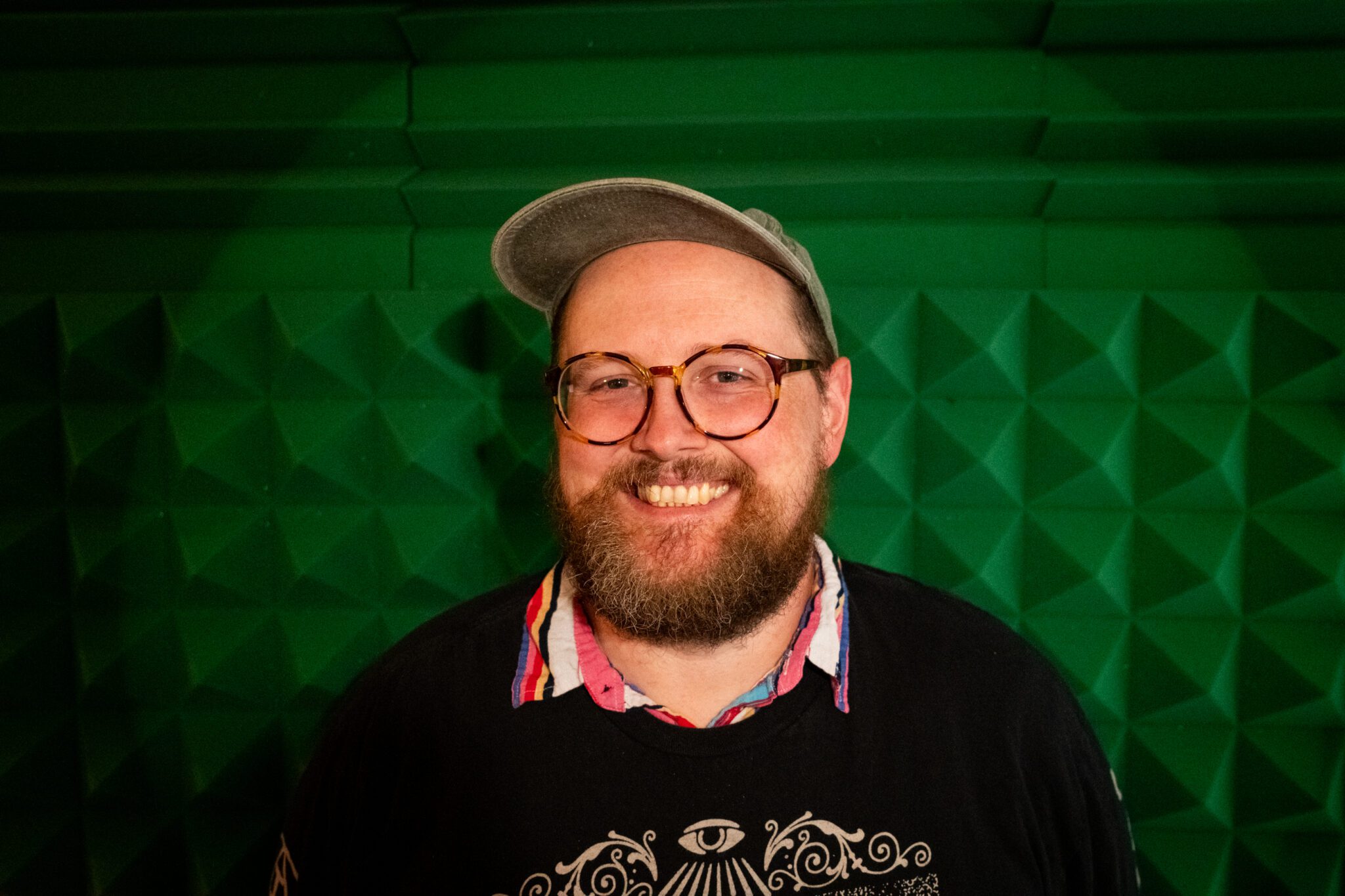

The complete title for musical raconteur Derek Shulman’s new book for Jawbone Press is Giant Steps: My Improbable Journey From Stage Lights to Executive Heights. It is a fascinating “warts and all” account of the vocalist and multi-instrumentalist’s evolution from his professional beginnings in the mid-‘60s, with British pop/soul band Simon Dupree & The Big Sound to seminal progressive rockers Gentle Giant, to his emergence as a prime mover and shaker in the ’80s and beyond as a record executive responsible for signing and reviving the careers of major acts such as Bon Jovi, Dream Theater, Slipknot, Pantera, Bad Company and AC/DC.
In very real and honest accounts, Shulman describes the experiences as a kid growing up poor in Glasgow, Scotland and Portsmouth, England. He hailed from a large Jewish family that included his siblings Phil and Ray, who would later join him in Simon Dupree & The Big Sound and Gentle Giant.
Lewis Shulman was patriarch and father and was a professional jazz trumpeter by trade. Naturally, there was a lot of musical influence early on in the house. But, beyond poverty, life at home was not without its emotional and existential challenges.
“My dad was a jazz musician and lived that life,” says Shulman. “He imbibed in whatever he did. I never smoked, took drugs or drank, except for an occasional glass of wine. The negative thing I learned from my father was to stay away from those things. He passed away at 50 years old. However on the positive side, he encouraged all of us to practice and become really good at an instrument. My brother Ray, in particular, could pick up the violin, a wind instrument or any kind of brass and master it in 10 minutes.”
So, amid the trauma of losing his father at a young age, Shulman, like many kids, maintained a love for the pop and rock artists of the day. Music became a personal sedative and a salve to counteract the strife he was feeling at home. But as he excelled at mastering various musical disciplines like guitar, woodwinds or vocals, his confidence in joining a band and becoming a professional musician became his calling and creed.
Not long after declaring to his teachers that he would eschew the traditional routes of employment in Portsmouth, in favor of becoming a pop star, Shulman and his siblings proceeded down the path of making it so. With their brother-in-law as their manager, Simon Dupree & The Big Sound got an audition with Parlaphone Records at the storied Abbey Road Studios. Being that they were all huge Beatles fans only made the experience that much more palpable and surreal.
A successful audition landed them a record deal that quickly set them on a grueling schedule playing eight or nine gigs a week throughout the U.K. as well as other parts of Europe. And it naturally gave Shulman and the band a great apprenticeship and seasoning that led to recording a series of ear-catching and soulful singles. They scored a hit in 1967, with the psychedelically-infused tune “Kites,” making it to number nine on the U.K. charts.
Toward the latter part of the ‘60s, into the early ‘70s, burned out on what they called the “scampi and chips circuit,” Shulman and company were ready for a stylistic change. And they found it via the urging and guidance from an interim keyboard player by the name of Reginald Dwight. Dwight, who later became Elton John, turned Shulman and his band mates on to what was happening musically in America and other regions during the “summer of love.” “He was a real music fiend,” says Shulman. “And when he was working with us in Simon Dupree he would tell us, ‘man, you guys are really good and you should listen to bands like Spirit and all these West Coast groups.’ We knew about Frank Zappa and artists like that but we took Reg’s advice. He was very influential in us breaking out of our little bubble.”
Hence, Gentle Giant was born and changed the face of progressive rock and the global music landscape as we know it. “There were no musical labels like ‘prog’ back then,” explains Shulman. “Gentle Giant became just some music that we heard and wanted to put together. We knew we wanted to expand our musical vision and write and perform material that was reflective of our personalities.”
From 1970 through 1980 Gentle Giant released a series of critically-acclaimed albums that fulfilled their collective concept of music that embraced diversity and blended the classic harmonic structures they were previously known for in the pop world, with a more avant garde and experimental approach.
But, alas, with lukewarm record sales and spotty commercial airplay, the sun eventually set on the Gentle Giant years. The early ‘80s found Shulman at a figurative fork in the road. And this is where the seemingly “improbable” became reality. Through the urging of a friend and associate at Polygram Records, the former front man for Gentle Giant was offered an unexpected opportunity.
“I never in a million years, having been in a band, thought of myself as a record label executive,” says Shulman. “That was so far off my radar. But when I got that call from a friend to interview for the job, I figured, why not take a look and see what the job is all about? I remember the first day I was there I went from office to office and literally realized that the music business wasn’t the music business. It was, in fact, the business of music and every office had their own agenda and had their own priorities.”
These days Shulman works with his son Noah in preserving and re-mastering some of the Gentle Giant back catalog. And many artists in the hip-hop world like Travis Scott and Ahmir “Questlove” Thompson of The Roots cite Gentle Giant as an influence and have integrated samples from those classic GG tracks into chart-topping hits.
Perhaps if someone were to ask Derek Shulman what his definition of success was in business and in life, he would best summarize it as just trying to be as authentic as possible. And that has been something that has kept him in good stead and has maintained his sanity in an industry that is often anything but.