
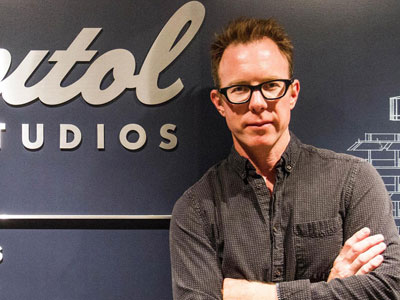
 Kevin Bartley
Company: Capitol Mastering
Clientele: Motörhead, The Decemberists, Frank Sinatra
Contact: capitolstudios.com/services/mastering
Bartley discovered his passion for audio early. He always preferred records to TV and movies. At 15 he picked up the guitar and joined a band. As a teenager, he bought a quarter-inch 8-track and started to record friends’ demos. It wasn’t long until he became acquainted with more sophisticated studio gear. In 1992, a buddy at Capitol hired him as a tape librarian and his mastering education began in earnest. One day an established mastering engineer was not available so Bartley was tapped to step in. He now has access to Capitol’s famed Les Paul-designed echo chambers.
What are some of the biggest challenges facing emerging mastering engineers, aside from budgets?
Mastering is much as it used to be. The technical advances make it easier to do so much to audio that the expectations have increased. When I first started, simple changes were impressive. Because we all have the ability to make such minor changes, the expectations from artists and producers are much higher now.
What have been your favorite technical developments over the past few years?
High sample rates are great because I can go from 44,1 to 192 easily. There are so many plug-ins available now that you can pick and choose. My chain is half analog and half digital. The combination is ideal. And Capitol has built this great all-tube compressor called the CM55-11. That’s really handy. A big plus of working at Capitol is that they design all kinds of tools for us.
What are common problems you see in mixes?
Typically the kick drum and bass aren’t separated enough. That makes it difficult. There’s a similar problem with vocals and hi-hat. Those areas are tough to separate if the instruments aren’t mixed with enough separation, tone-wise. There are also issues with over de-essing (removing sibilance). That’s impossible to correct. Mixing through compression is a problem because for every one step forward you take two steps back.
What are the best ways for artists to save money when it comes time to master?
As it is, they’re already saving money because there’s no tape involved and they can send files digitally. To save even more, before they submit audio they should listen to it with headphones. Listen for pops and ticks from edits. Ensure that vocals aren’t too sibilant or over de-essed. Send files a few days before a session so I can check them. Sometimes I can give clients ideas for adjustments before they come in.
How is mastering for vinyl different from mastering for CD or iTunes?
The level going to vinyl is so much lower than to CD. I’ll give the cutting engineer a lower volume level with less limiting and compression. They can get a far better result by adding that themselves. More than likely, they’ll turn the volume down anyway. There’s no point in limiting a mix for vinyl that will end up worse. You want to leave the mix less affected because it’ll come out better.
Can all engineers master for vinyl? Are younger ones at a disadvantage?
Most of mastering is learned hands-on. Lathes are expensive and I’m not sure if engineering schools teach vinyl mastering. If an engineer can’t master for vinyl, they’re at a disadvantage. They’d have to find a vinyl mastering house that would be willing to let them come in and learn. The problem with cutting vinyl is that the materials are expensive and equipment is irreplaceable. Blank lacquers are costly.
Final thoughts?
Use your ears and follow your intuition. Treat each song individually. Don’t try to match something another song has done. You lose the unique qualities when you do. •