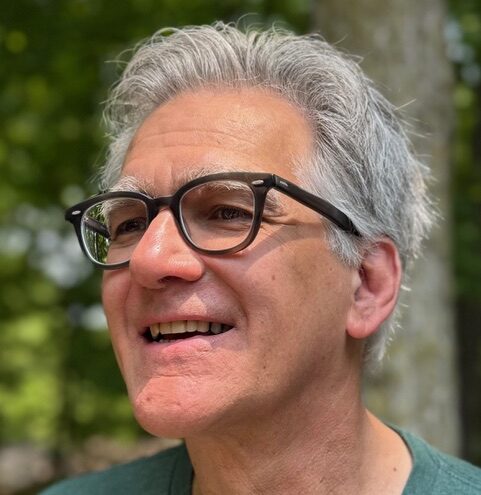
CEO
Immersive Design Labs
Years with Company: 2
Address: 19000 Maple Lane, Excelsior, MN
Web: immersivedesignlabs.com
Email: listen@immersivedesignlabs.com
Notable Users: Willy Porter, Justin Gray
BACKGROUND
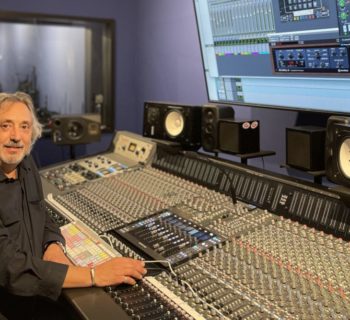
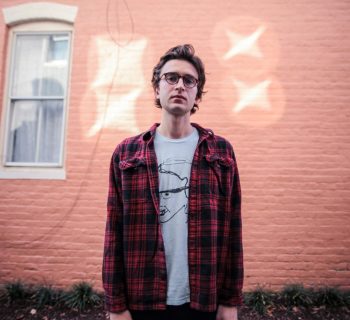
Adrian Weidmann believes immersive audio is the future. Despite his faith in the format, he noticed nobody was capturing audio at its source to create immersive recordings. Thus, he invented the 7.0.4 Immersive Array, now on sale through his startup, Immersive Design Labs. Accessories and product improvements are in the works.
Testing, Testing
When I started in this field, I was in charge of remote recording at Wisconsin Public Radio. This would’ve been the late ‘70s, early ‘80s. We did a remote weekly radio show at one of the clubs, and another out of a liberal arts museum. Subsequently, I was studying mechanical engineering and was interested in the technical side. The audio guru in the engineering program at University of Wisconsin-Madison at the time was Professor Greiner. In his graduate program, I got exposed to Brüel & Kjær test and measurement equipment. They were and still are the gold standard in sound and vibration testing, and measurement equipment.
At the [radio] studio, we got all the trade journals. There was one magazine published out of London called Studio Sound. I answered a classified ad in the back for Brüel & Kjær to be the chief cook and bottle washer for a line of recording microphones that emerged out of the test and measurement field. Off I went to Copenhagen and spent almost 10 years with the company. I was able to travel the world and be the ambassador/advocate of these new omnidirectional microphones. Shortly after I left, the company spun that off into a new company known as DPA Microphones.
Like a Rolling Stone
I got to meet amazing people—artists, producers, and such. One of these gentlemen was on a Prince tour when they came through Copenhagen. He subsequently was the stage manager when The Rolling Stones went out on their Steel Wheels tour. I was back in the States sitting in our office in Massachusetts when I got a call. To this day, I only know him by his stage name, Cowboy. He said, “I’m with The Stones. We’re at Foxborough [Stadium]. The band wants to do a video shoot, but we cannot get the sound of Charlie Watts’ drum kit. Could you come down?”
I miked up Charlie Watts’ drum kit with these Brüel & Kjær microphones. I said to the sound guy, “Be careful. These are not what you’re used to.” And the reaction was, “Are you kidding? Those are omnis...” The drum tech comes out and cracks down on the snare. It was like a stick of dynamite went off. It sounded amazing.
Fully Immersed
I moved back to the states and went to Neve. I was at AMS Neve for six or seven years. Then I moved back to Minneapolis and got into a completely different business up until about two to two-and-a-half years ago. There’s another test and measurement company that followed what DPA had done. They approached me and said, “Let’s see if we can launch something.”
The challenges I had back in the day came flooding back. I remembered taking advantage of that transition from analog to digital, and [thought]—"what’s that transition today?" It immediately took me to the immersive world. Nat King Cole, Frank Sinatra, Patsy Cline… Those records hold up. They were made when the technology was simple. It was all about mike placement, and musicians that could play a song. I said, “Let’s revisit that.” I started learning about immersive and found that the lion’s share of what’s being done in immersive is mixing. They go back to those old recordings and turn that into an immersive mix. And I thought, nobody seems to be doing immersive capture. There’s an opportunity there.
Preparation
When you do immersive capture, you first have to think of the song. The song has to exist. It needs to be rehearsed. The preproduction is critical. Nowadays, you have limitless tracks. You have plug-ins. The music is built track by track-by-track. In many cases, the song doesn’t even exist when you start recording. “This is the drum track I’d love to build on.” Or, “Here’s the rhythm track.” If you want to do immersive capture, that song and the story you want to tell need to be thought through beforehand. That’s a huge difference.
Designing the Array
When I got into this, the apparent leader in the field was Dolby Atmos. I was familiar, because it’s a cinematic format and that’s a market we addressed at Neve. I said, “How can we combine the sensibilities of the physics of sound and accurately capturing a sound field with Dolby Atmos?” So I educated myself on the format. I said, “Instead of virtual objects, let’s position the microphones into that array and capture that three-dimensional sound field.”
We designed the array by looking at what’s out there. [Others are] using aluminum and they get heavy. We made our array out of carbon fiber, so it’s very light. The microphones are made out of titanium so they’re light, as opposed to a [microphone with a] metal or brass housing.
Showcases
When we did our first showcase at AES in October of ’24, I had a handful of prototypes. I booked Power Station in New York. Nobody wanted to see another microphone manufacturer, but I figured if we’re doing it at Power Station maybe that’ll be a nice draw. As we’re planning the event, Willy [Porter] calls and says, “I’d like to introduce you to a friend of mine.” This friend happened to be Neil Dorfsman of Dire Straits’ Brothers in Arms fame. That event turned into Willy playing and Neil engineering in that studio. The folks at loudspeaker design firm Ex Machina Soundworks came in and set up their Atmos playback system in the control room. That set the tone.
We then replicated that as part of NAMM ’25. We booked EastWest Studios, another iconic room. And we had Matt Wallace and Will Kennedy engineer that session. The folks at Kali Audio were kind enough to bring in their system. We recorded through the day, and in the evening had guests come in to listen and so forth. That spurred us to replicate [the idea] in Nashville.
Car Talk
The killer application for immersive listening is the car. That is where this experience will take off, because it’s a controlled environment. And we’re quickly moving towards autonomous driving vehicles, so the car will essentially become a rolling entertainment center. I was at a recent NAMM show and ran into a gentleman from Dolby. I told him what I was doing and said, “I’m working with this artist, Willy Porter. We’ve got this record, Humans In A Room.” He goes, “I know that record. Come with me right now.” He takes me to the Pioneer [Electronics] booth. “This is Adrian. Could you squeeze him in on a demo?” We get in a Toyota SUV, and the gentleman from Dolby says, “Pull up Willy Porter.” It sounded amazing.
The product that Pioneer was showing is the first after-market box that slides into the radio slot on the dash that plays back Dolby Atmos in a car with a four-speaker conventional array. That’s going to change the perception of immersive capture for consumers but also record labels.
Just Breathe
When you’re recording, let your instrument breathe. For so many years, we have been trying to isolate. The more you isolate, the more you’re squeezing the emotion out of the performance. It needs air. It needs to breathe. That acoustic instrument needs air around it. Move that microphone off by two feet. That’s a simple thing to do. And try using two microphones, because that’s how we hear. Put two microphones out there the width of your ears. The results are stunning.