Artist: Charles Fauna
Producer and Arranger: Charles Fauna
Co-Production and Additional Instrumentation: Jaguar Sun
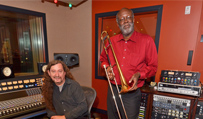
Additional Bass Production: Ronnie Lanzilotta
Mixing Engineer: Andy D. Park
Mastering Engineer: Ariel Loh
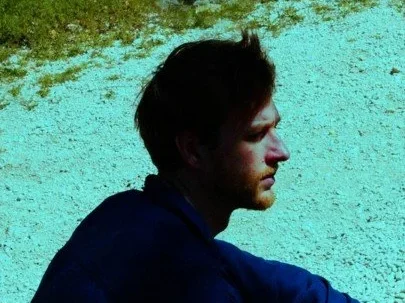
The Origin: Absorbing a world where sound, vision, and feeling overlap, Charles Fauna — the moniker of the LA/NY-based producer and multi-instrumentalist Charlie Mischer—has developed a synesthetic field where emotion, atmosphere, and imagery continuously feed into one another, crystallizing into song. Within this cross-wired framework, auditory signals, visual cues, and sonic impressions lie buried deep in the subconscious. Fauna likens his creative process to excavation: a patient unearthing of these hidden melodies.
Through this sensory lens, his musical evolution unfolded in clear phases — bridging early bedroom production with the exploratory work of his first musical project, Paideia, before arriving at the fully realized identity of Charles Fauna.
As Fauna, that multi-sensory perception became his compositional spine. He approached each release as a series of self-contained sonic and thematic worlds. From the grief-torn symbolism of Eulogy and the isolated sci-fi transcendence of Yonder, to the rebuilding impulse of Renewal and the synth-soaked neo-purgatory of L I M B O, Fauna’s catalog evolved into distinct themes.
Yet even the most expansive musical lifecycles eventually reach a tipping point. For Fauna, “Moon Dog,” the first single from his forthcoming full-length album, signals that inflection point. Driven most notably by profound personal experiences, the track reflects a subtle shift in the way he composes music.
The Production: “Moon Dog” entered his mind in the way Fauna says much of his strongest work does — as if it had already been forming just out of reach, arriving fully intact when it was ready to be heard. Sitting in a Nashville airport terminal, a sudden creative spark emerged from the surrounding ambient noise.
“The ‘ooo’ melody for the chorus was the first thing I wrote,” Fauna recalls. To the listener, it plays like a vocalized ache, echoing forever. In hindsight, he connects that moment to the broader gravity surrounding the song: his father’s declining health and later loss. “That image of yearning, howling, desperately reaching out into the universe only to be met with silence, felt so devastating and powerful. It felt true.”
That fragmented scribble in the airport foreshadowed a distinct heaviness. As his father’s health later declined, the idea Fauna had already drawn from his subconscious became the outlet. This spurred a creative push, fusing that melancholic feeling with a specific key and color profile.
“I always think in visual terms when I’m writing,” he explains. “I have synesthesia, so different musical keys have very strong color associations for me.”
For Fauna, B minor is a key associated with a deep, nocturnal blue. Guided by this vivid sensory palette, the track settled into a vision of wide-open fields bathed in the stillness of the night. This imagery aligned with broader themes of expansiveness and freedom across the forthcoming album— a feeling he describes as “running without resistance.”
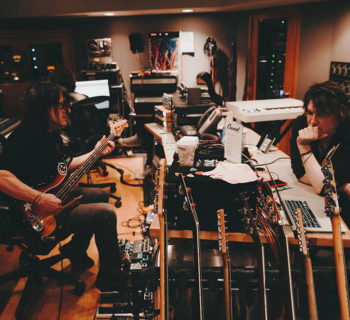
Beyond the visual mechanics of his synesthesia, this concept of boundlessness translates directly into tangible production choices. Upending his usual digital routine, Fauna swapped programmed electronic patterns for live drums to give the rhythmic foundation a more physical, human feel. Leaning into this live instrumentation was a deliberate return to his musical background.
“The drums are actually my first instrument, and the only one for which I received any kind of formal training,” he notes. That foundational background shaped how he balanced the rhythm section for “Moon Dog,” ensuring the low-end retained a deep, driving beat while maintaining high-end clarity. Ultimately, Fauna engineered this balance to evoke a specific physical environment: “a song meant for the car, for long meditative drives…”
Texturally, this live rhythmic spirit allowed Fauna to layer contrasting musical elements and build a vivid, sensory ecosystem. He explicitly wanted the track to feel kaleidoscopic, juxtaposing a prickly acoustic guitar — which he notes “felt like rain drops down your neck” — against vast, open space.
To achieve this fluid spaciousness without relying on electronic patches, Fauna studied intricate fingerpicking styles. “I was really inspired by classical guitar playing — how notes create these cascading waterfalls that seem to bounce downward — like a marble falling down a staircase," he explains. "Gravity dictates a unique rhythm. In this case, I wanted to fill this song with [similar] acoustic guitar textures. That ended up being a sonic throughline for the entire album.”
Translating that physical performance, however, presented a challenge. “It is a dance between creating that lush, transportive ambience while resisting the impulse to fill every empty moment with a sound,” Fauna says. “It’s very easy to start filling up the negative space in a track to the point where it becomes overwhelming to listen to.” Ultimately, the track rejects rigid, pre-constructed digital environments in favor of something more lived-in.
This transition toward more tactile textures mirrors a personal evolution. “I wanted the production to reflect a version of me that was a little more mature, more assured, and more relaxed. Where before I might have produced an EDM drum beat and used synth bass, this time I knew it had to all be live. I wanted more of a band feeling with this album.”
As one of the first songs to fully realize this new approach, “Moon Dog” signals a broader recalibration in his creative process. Whether it marks the closing of a chapter or the beginning of something new remains unresolved, but whatever is on the horizon, Fauna is listening through his familiar synesthetic language while remaining open to how it might evolve.
“It’s a perfect snapshot of me in my 30s,” Fauna reflects on the song. “Still doing this whole artist thing solely out of passion and personal fulfillment rather than some need to be seen. I’ll always love it for that reason.”
Photo Courtesy of Big Picture Media