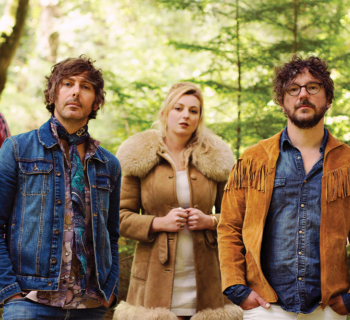
 MC: How did you come to work with your management and booking agent?
Schultz: Both kind of found us. When bands ask me for advice on what to do [to get industry interested] I tell them we just toured our asses off and played out a lot. A good example is that we were playing a residency in New York at The Living Room. It was a legendary spot and Seattle-based management company ONTO Management flew in to see us because they happened to see a video of us playing a house party. They hooked us up with Paradigm Talent for booking.
MC: When you were coming up were there any significant shows or festivals that were turning points in your career?
Schultz: In 2012 we played our first SXSW. We had tried to get in a number of years in a row and couldn’t. And then finally we got in once we had management. People then were on our heels. And it was a good lesson too because we had wasted so much money on application fees. They don’t really let you in until somebody knows about you.
We played about 12 shows there over the course of three days. And we played the 12th show in a church and we were pretty worn out. Everybody was sick and that’s also when it happened to be when most of the eyes were on us. And it’s never how you draw it up, but it was a good show. That broke a lot of doors down for us.
Playing SNL in 2013 was obviously also a way to say hello to a lot of the country. But Jeremiah and I had been playing live and grinding it out for seven or eight years prior to all of this so we were prepared for some of these things. Playing the Grammys was also a great event. And then that’s when things got really crazy. We just kept getting bigger. I think we felt that our music was more restrained and subtle. It was surprising to see it work and be accepted on bigger stages and venues.
MC: So the band grew beyond your expectations?
Schultz: I felt like because we were not appealing to the lowest common denominator by being fast and loud it wasn’t gonna find a place. And then it became part of the fabric of the mainstream. And if you listen to our first album compared to our second, it sounds like a demo in a lot of ways.
MC: I read where President Obama even had songs from your first album on his playlist.
Schultz: We heard that when we were making our second record. It makes you think this is so far reaching. We never expected or planned for this. That was very frightening and inspiring at the same time.
MC: How did you maintain your focus, amid all the distractions and fervor, to make the follow-up Cleopatra album?
Schultz: We drank lots of coffee (laughs)! But, yeah, we finally got to spend some quality time with the songs. I think the problem a lot of people have when they’re following up anything is they’re trying to think of the first thing that they thought of before, and try to repeat that. And that’s definitely not what we were doing. It’s not that we were over the first album, but we were really ready to turn a page about these songs and ideas being way more interesting than what we had on our first album. So, in a way we felt lucky that the world was waiting for another album because we felt our stuff was getting better. I also think we had a clearer idea of who we were going into album number two because of all the failures and past experience we’ve had.
MC: Well, there is no substitute for experience.
Schultz: I’m 33 now. It helps to have your own ideas of who you are and what you do before any success comes along. It makes it a little less complicated.
Photos by Scarlet Page
Contact Jim Merlis, Big Hassle Media