 STORM LEE GARDNER
facebook.com/stormlee; storm.life
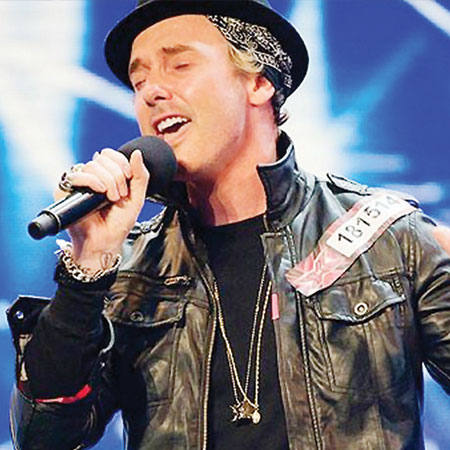
Storm Lee Gardner is an award-winning, Grammy-nominated singer, songwriter, author and artist. He worked as a vocalist on the Fox TV phenomenon Glee, racking up over 600 songs in six years. Gardner rehearsed and recorded with Tom Cruise for the movie musical, Rock of Ages, and ended up performing on 18 of the film’s 20 tracks. In the U.K., he was a controversial finalist on X Factor, delivering many show-stopping performances. He also contributed his vocal skills to various projects that had him working with artists, producers, songwriters and television networks, including Adam Anders, Diane Warren, Desmond Child, the Matrix, Rodney Jerkins, Carrie Underwood, Ricky Martin, Meatloaf, Ozzy Osbourne, Glen Ballard, Big Time Rush, The Singing Bee, NBC, CMT, LOGO, Disney, Fox and more.
Do you have any general rehearsal tips?
Know what you want to do. Are you working on new songs? Working with intros and outros? Developing the show? Working on a song’s interpretation or the feel of the show? All of those areas are important. But to accomplish that, everyone has to know the material (unless we’re working on new songs) so we can focus on other things.
Many singers arrive last (at rehearsals) so the players can warm up first. Do you subscribe to that concept?
It depends on the reason for the rehearsal. Usually, I arrive first and rehearse with my keyboard player for an hour to check out the material. By the time the other players arrive we’re in the swing of it and they can just drop in. I believe the singer sets the tone, so I like to be singing when the band shows up.
Is there anything that every rehearsal should have?
The one constant I try to bring, no matter what, is a warm, friendly and positive attitude. I don’t complain about traffic or personal problems. I’ve watched people lose jobs because of their behavior. I learned from their mistakes.
Do you rehearse your stage performance?
It depends on the show. If it’s a heavily choreographed show, you need to know your cues. My own shows tend to be staged rather than rehearsed. I’ve found that audiences would rather connect with the artist than watch a perfect performance that has very little feeling. So, I try to reveal myself through the material. I take my cue from the Boss: keep it loose, honest and authentic.
Do you tape or record rehearsals?
Now I do. But I was late to that game because I didn’t like the way I looked on camera. Eventually, I learned that if you can step back and be objective you might be surprised at how important simple things can be. Besides, it also gives you clips for social media, which fans seem to like.
What was your weirdest rehearsal experience?
Actually, there are two weird ones. The first involved Meatloaf with Bat Out of Hell III. Producer Desmond Child asked me to sing all the songs to work out the kinks. But, Meatloaf wasn’t happy about that. He walked in, put a chair right in front of me, sat down with his arms crossed and stared me down. I was sweating bullets and didn’t know where to look. Thankfully, by the time I got to the first chorus he started smiling; by the end of the session he was dancing around. Afterwards, he hugged me and called me his secret weapon.
My other strange experience involved Ozzy Osbourne. I was working with Ozzy when I hit a particularly tough high note, and he simulated jerking off… which sounds awful but it was funny. After that, he insisted on calling me Sperm instead of Storm.
Any additional advice you’d like to share?
I’ll tell you what works for me. I approach everything backwards, I visualize the end result first. That way I see a fully realized idea, a complete vision––and I only need to reveal it. If you approach your rehearsals that way, visualizing the vibe, mood and majesty you want to project, it will make a big difference.
And, I learned this the hard way: do it with love. Rehearse to a point, but leave room for love to take your performance to another level––a place where you can share it with your audience.