 MICHAEL LLOYD
facebook.com/michael.lloyd.756; twitter.com/MichaelLloydSr
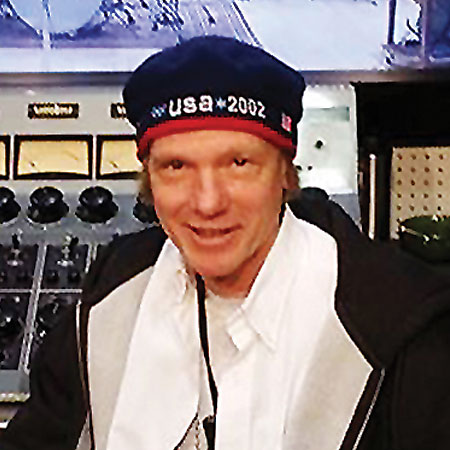
Michael Lloyd’s career spans five decades and has earned him hundreds of gold and platinum records as an artist, songwriter and producer. His recordings range from pop and rock to country, R&B, gospel and jazz. Moreover, he has provided scoring, music supervision and production for numerous television shows and over 100 films, including Dirty Dancing—which is one of the best-selling soundtracks of all time. Indeed, Lloyd’s production roster is packed with incredible artists, like Lou Rawls, Barry Manilow, Kimberley Locke, Natalie Grant, Jennifer Warnes, Shaun Cassidy, Stryper, the Righteous Brothers, the Monkees, the Supremes, the Burrito Brothers, the Moody Blues, Air Supply, Frank Sinatra and even Kim Fowley.
What is the most important aspect of a rehearsal?
Every rehearsal should have a purpose. Just playing your songs is not enough. It might be fun, but it won’t accomplish much. Also, this is very important: somebody has to be in charge.
As a producer, what do you pay attention to during rehearsal?
There are a lot of things depending on the rehearsal. But, initially, I listen to see if the performance is too fast or too slow. Younger players often play too fast because they’re inexperienced and nervous, while older musicians play faster when they’re bored. Every song needs a certain energy level and it has to be consistent or it will sound sloppy.
Do you consider the visual aspects of a performance?
You can’t overlook the visuals and stage performance. Live shows are all about those things. You have to be entertaining and connect with your audience. Many professional acts (including rock bands) will rehearse almost “everything” they do on stage. It’s not totally choreographed, but the show is well planned and thought out. That’s why there’s such a huge difference between pro acts and amateurs.
Do you recommend recording rehearsals?
Artists should take advantage of every tool they have. Recording and videotaping a rehearsal can be great reality checks––even if you just use your phone. That way you can see and hear exactly what you’re doing.
Are pre-production rehearsals (prior to recording) approached differently?
In pre-production you should have reference recordings of the songs you want to play. Demos are best, but any recording is better than none. Those recordings allow you to prepare and plan what you need to work on. The better the preparation, the better the rehearsal.
What is the most common rehearsal mistake you’ve seen?
Some bands will set up differently on stage than in rehearsal. You should always set up the same way. That’s what the pros do. Their spot on stage is their comfort zone. Setting up differently every time you play will definitely affect your performance––and not in a good way.
Do you advise using fresh gear, i.e. strings, drum heads, etc., at rehearsals?
There are two schools of thought on that. Personally, I think there’s too much emphasis on changing strings and heads and tuning amps. Unless something is broken or causing serious problems, I don’t mess with it. You lose a consistency of sound when you change things. I like to know what sound to expect and I want it to be constant.
Any additional advice you’d like to relate?
Rehearsals aren’t just a team sport, they’re an individual sport as well. The goal is to get better every time you play. And to do that you need to practice on your own, not just at rehearsals. Your ultimate goal is to be a better player. •