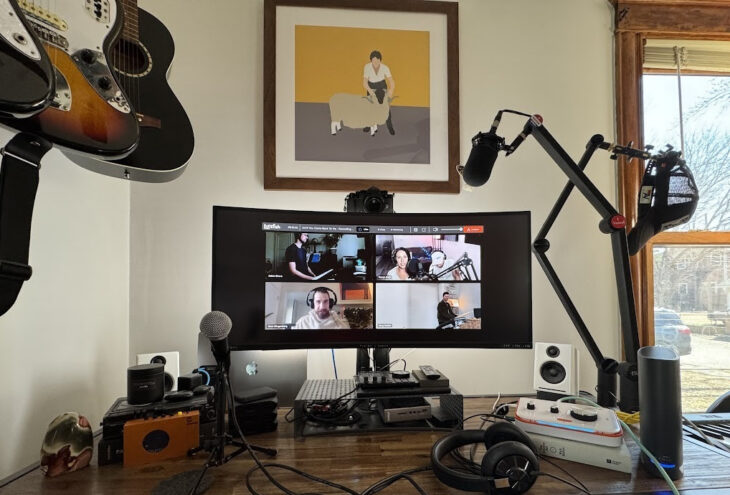
Remote music-making has gotten very good at solving one problem: distance. Lutefish wants to tackle another one—figuring out who, exactly, you’re supposed to play with.
The real-time music collaboration platform, backed by Wenger Corporation, has launched Open Jam, a new feature designed to let musicians discover, join, and host remote jam sessions with people outside their existing circles. Rather than requiring musicians to coordinate a rehearsal with friends or bandmates weeks in advance, Open Jam turns the platform into something closer to a digital community jam room.
Lutefish was built around the idea that musicians should be able to rehearse, write, and play together in real time even when they aren't physically in the same room. Its Stream hardware uses a direct Ethernet connection and low-latency audio processing to keep musicians in sync, with sessions supporting up to five participants.
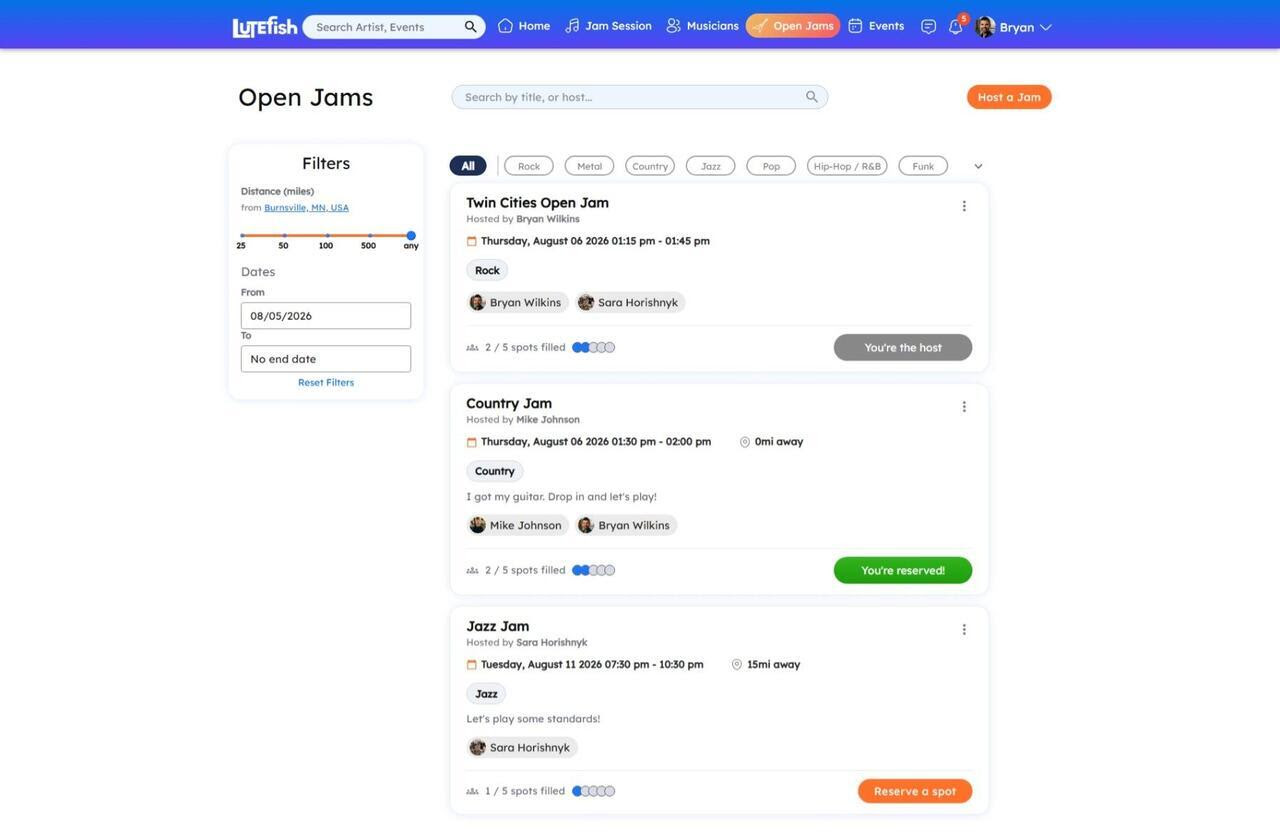
Open Jam takes that technology and adds a more social layer. Instead of only connecting with people you already know, subscribers can browse publicly available sessions and find musicians they might not otherwise encounter. Sessions can be organized around a particular genre or other parameters, giving players a chance to stumble into a musical collaboration without having to orchestrate the whole thing themselves.
In other words, it's the difference between texting your bandmates, "Are you guys free Tuesday at 8?" and seeing that somebody has a blues jam happening tonight and deciding to jump in.
Creating a session is designed to be similarly straightforward. Hosts can establish a name, genre, time and participant limit, while other musicians can browse the new Open Jams section and search by session title, host or genre. Spots can be reserved in advance, and musicians can join a waitlist if a session fills up. Lutefish also sends confirmations and reminders to participants, taking some of the administrative work out of getting a virtual room full of musicians together.
“Open Jam is an important step in Lutefish’s vision to make real-time online music collaboration feel more natural, social, and spontaneous,” says Rakhi Malik, Vice President of Marketing & New Technology Platform at Wenger Corporation. “With Open Jam, musicians can move beyond only scheduling with the people they already know and discover new players nearby, reserve a spot, and jump into a session when inspiration strikes. It gives our community more reasons to play, more ways to connect, and more opportunities to turn distance into music together.”
That emphasis on community is notable for a platform whose underlying technology is already focused on making remote playing feel less like a video call and more like an actual rehearsal. Lutefish's system separates the audio processing from the computer or tablet handling the visual interface and controls, with the Stream device handling the real-time audio connection.
The company has also positioned Lutefish as more than a piece of hardware. Its platform includes community-oriented tools for finding musicians, discovering gigs and events, and connecting with other players, while paid subscribers can use the Stream for live sessions.
And there is already some serious proof-of-concept behind the idea. At NAMM 2025, Stevie Wonder made a surprise appearance at the Lutefish booth and used the Stream to jam in real time with musician Bill Pomerleau, who was playing from his home studio in San Diego.
Now, Open Jam puts the emphasis on what happens when musicians actually use it to meet one another.
“Open Jam moves Lutefish beyond scheduled sessions and into a more dynamic music community,” says Malik. “By making jam sessions discoverable, reservable, and easier to join, we’re giving musicians more reasons to return to the platform, meet new collaborators, and experience what real-time online music-making can become.”
Open Jam is now available to Lutefish paid subscribers. For musicians who have ever wanted to play with someone new but found that geography, schedules, or the sheer logistics of getting everyone in the same room got in the way, the feature offers a rather appealing proposition: sometimes the next great jam session doesn't have to be planned. It just has to have an open spot.
For more information, visit lutefish.com.