Above photo by Mathias Fau
There’s a certain electricity that only exists at the Whisky a Go Go—a sense that decades of Sunset Strip mythology are still hanging in the air somewhere between the Marshall stacks, the dim red lights and the ghosts of every band that ever walked onto that stage believing they were destined for something bigger. On this particular night, that energy belonged to Hellings.
Not simply Brett Hellings the singer, but Hellings the band—the evolving, hard-charging rock vehicle the veteran indie frontman has spent years building through sheer persistence, conviction and increasingly high-profile collaborations with some of rock’s most respected players. Though the set lasted barely 30 minutes, sandwiched between other acts on a multi-band bill, the performance hit with the force and emotional commitment of a full arena headline set compressed into half an hour of raw catharsis.
Having written about Brett Hellings and his various projects over the past few years—including his collaborations with members of Guns N’ Roses, The Rolling Stones, Aerosmith, John Mellencamp and Alice Cooper’s orbit—it was personally gratifying to finally see these songs at full throttle onstage and translated with such visceral force. The records hinted at the passion and intensity driving his artistry, but nothing quite prepares you for the physicality and spiritually charged abandon of a Hellings performance in person.
Before the set, the Whisky itself carried that familiar pre-show tension: musicians wandering the floor, guitars waiting on stands beneath purple lights, bartenders moving casually while anticipation quietly built. The upstairs room served briefly as a gathering point before the band ultimately took command of the legendary main stage downstairs. By the time Hellings launched into the opening notes of “Rehab for Love,” the floor in front of the stage had filled in nicely, and the room’s energy shifted instantly from casual showcase mode into full-blooded rock show.
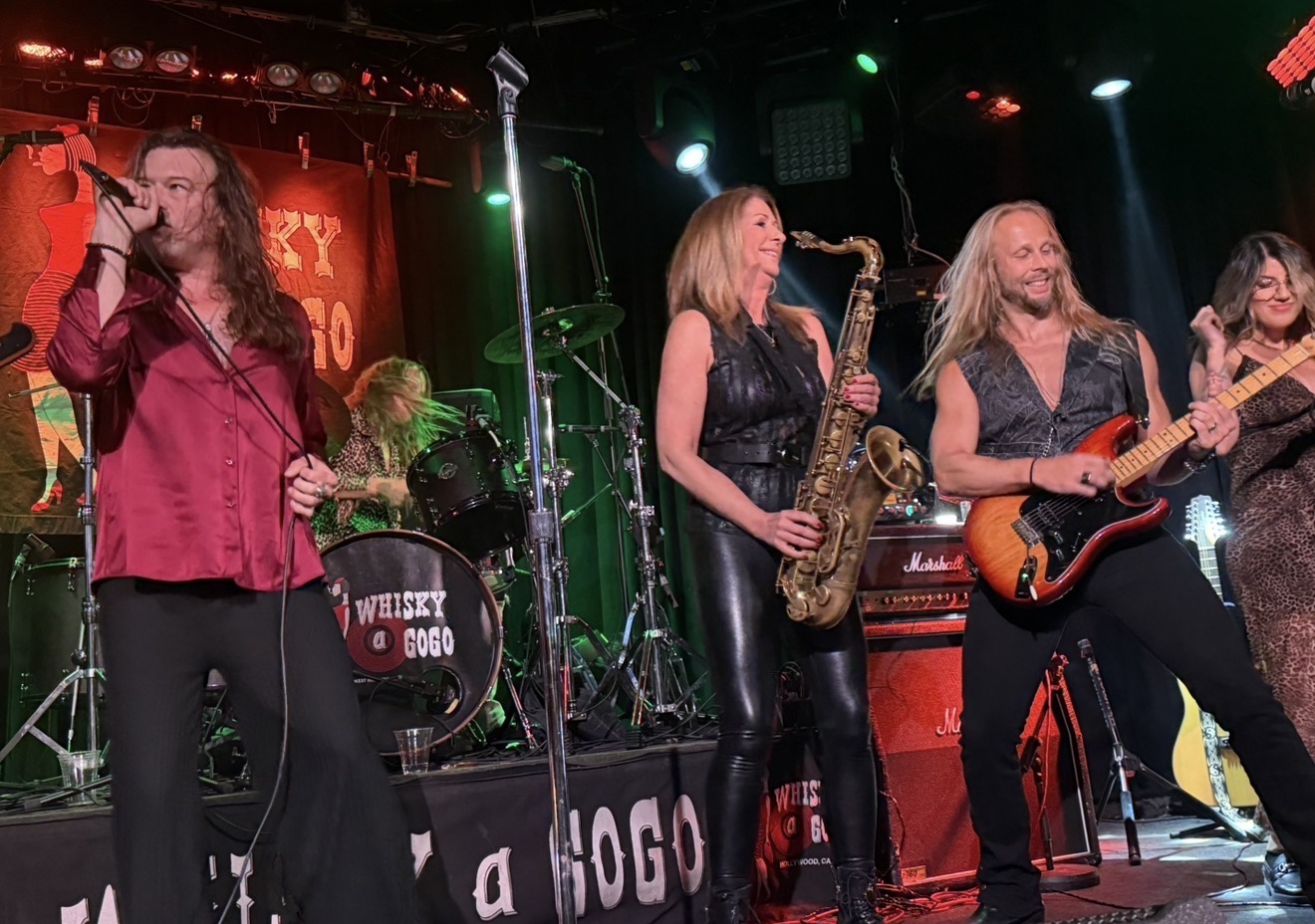
A major part of that impact came from the sheer strength of the band surrounding Hellings. The expansive seven-piece lineup featured keyboardist Carey Frank (Bruce Springsteen, Michael Bublé, The Jonas Brothers), bassist Kristian Attard (Jason Mraz, Heart, Boy George, Meghan Trainor), lead guitarist Jake Faun (David Lee Roth, Selena Gomez), guitarist John Ashton (Cherie Currie), drummer Andreas Brobjer (Lady Gaga, Paul Oakenfold), saxophonist Katja Rieckermann (Rod Stewart, Carole King, Brooks & Dunn, Mary J. Blige) and powerhouse backing vocalist Adi Argelazi Faun, known for her work with YYNOT and as Janis Joplin in Las Vegas’ 27 Show. Rather than feeling like hired guns assembled for a gig, the musicians played with the chemistry and raw excitement of a seasoned touring unit.
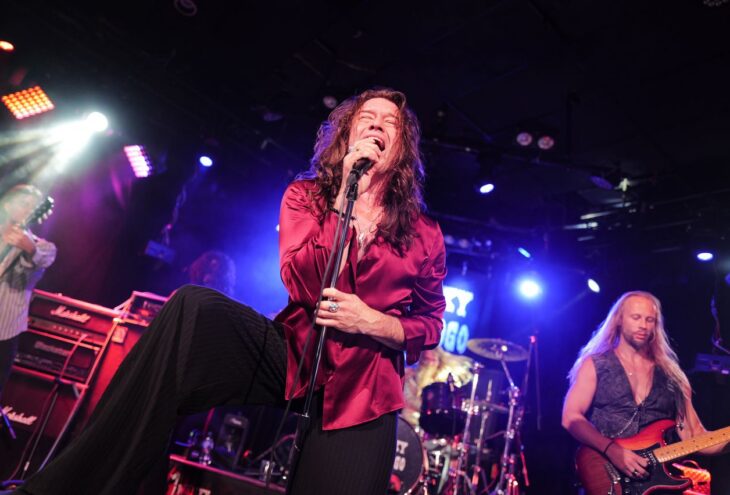
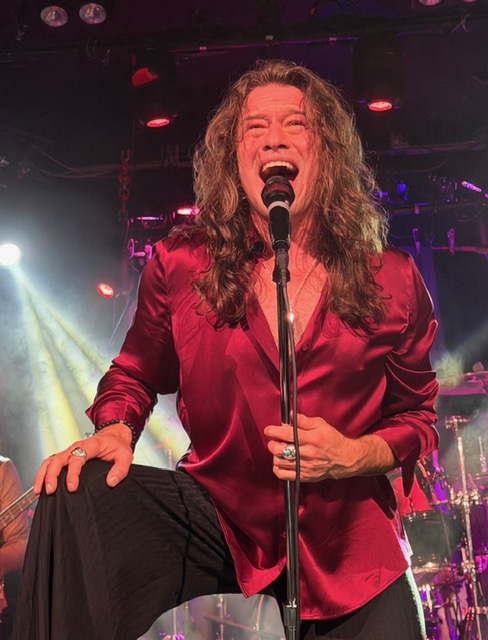
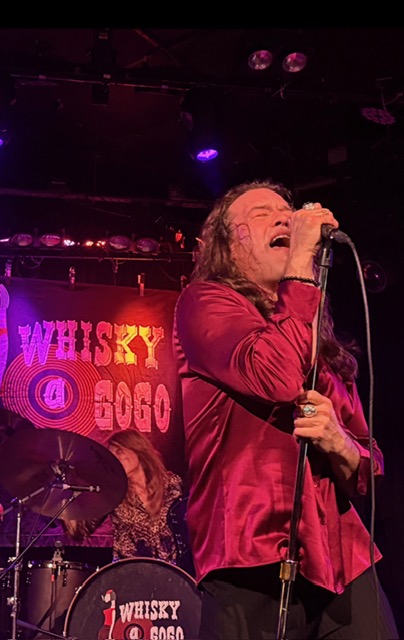
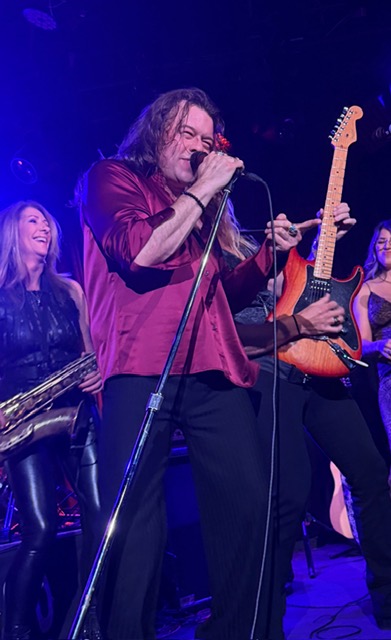
Wearing a maroon silk shirt and black pants, long hair flying constantly in motion, Hellings attacked the stage with the kind of commitment that feels increasingly rare in contemporary rock performance.
“Rehab for Love,” the opening track from Hellings’ 2024 album Borderline, set the tone immediately with its pulsing groove, bluesy keyboard undercurrent and soaring chorus about romantic addiction. Hellings doesn’t merely sing these songs—he physically inhabits them. One moment he was gripping the mic stand like a lifeline, the next spinning across the stage, flipping his hair wildly or crouching near the edge of the platform trying to connect directly with the audience. His voice alternated between soulful lower-register phrasing and explosive high-register screams worthy of classic arena rock frontmen. During instrumental passages, especially John Ashton’s wailing guitar solo, Hellings stalked the stage clapping, swaying and urging the room higher.
What became striking over the course of the set was how naturally Hellings balanced theatrical rock-star bravado with genuine heartfelt vulnerability. “Borderline” began almost gently, showcasing the soulful side of his voice before gradually evolving into a chugging blues-rock burner powered by fiery guitars and funky keyboard flourishes. Throughout the song, Hellings manipulated the microphone stand almost like a dance partner—pulling it across the stage, leaning into it, wrapping himself around it as the music intensified.
Even during quieter moments, his sense of urgency and fire never disappeared. On the power ballad “Kill Me to Keep Loving You,” elegant piano lines introduced one of the evening’s most profoundly moving performances. Hellings conveyed heartbreak with startling sincerity, his raspy voice carrying both pain and longing while the band slowly built toward an anthemic chorus. As the guitar solo erupted, he physically bent downward into the music, head swinging as if exorcising every lyric through movement.
“Over You” revealed perhaps the most cinematic side of the set. Beginning at the keyboard before moving center stage, Hellings delivered the song with simmering sensuality and brooding restraint. Even standing nearly motionless compared to the more ferocious rockers, his energy radiated through facial expressions, closed eyes and subtle body movements. At one point, during Ashton’s blistering solo, Hellings embraced the guitarist mid-performance before retreating briefly stage side to towel off—evidence of just how physically demanding his performance style truly is. That relentless commitment may be Hellings’ greatest strength as a live performer. Many singers can hit the notes. Far fewer can make an audience feel every ounce of heart, sweat, conviction and physical investment behind them.
The evening’s soul-stirring centerpiece arrived with “Chance on Love,” Hellings’ latest single featuring guitarist Richard Fortus of Guns N’ Roses, bassist Darryl Jones of The Rolling Stones and drummer Charley Drayton. Introduced by Katja Rieckermann’s silky saxophone work, the song showcased the softer, more romantic side of Hellings’ artistry while still building toward sweeping power-ballad grandeur. His voice moved effortlessly from whispery intimacy to full-throated abandon, all while he gracefully swayed beneath the Whisky lights, every gesture amplifying the drama of the lyrics.
But Hellings was never content to remain in introspection too long.
“A Fool in Love” reignited the room with pure sweaty rock-and-roll abandon. The groove hit hard, the keyboards swirled with bluesy fire and Hellings transformed fully into untamed frontman mode—jumping onto the drum riser, headbanging violently, whipping his hair through the humid club air and repeatedly pushing toward the edge of the stage to pull the audience deeper into the experience. The chemistry between the band members became especially apparent here, particularly when Adi Argelazi Faun joined Hellings for full-bodied, richly harmonized dual-vocal passages that elevated the already high-octane chorus.
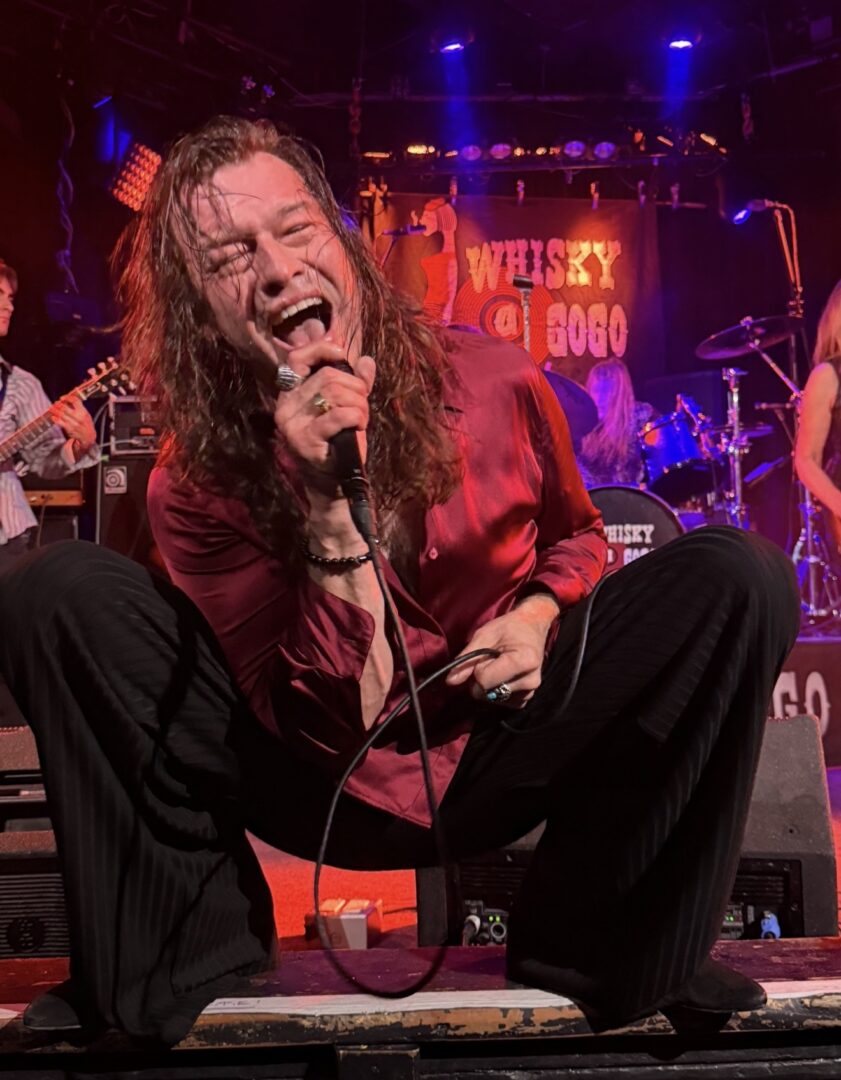
By the time the encore performance of unreleased rocker “Power Trip” arrived, Hellings seemed completely consumed by the performance in the best possible way. Squatting at the front edge of the stage, screaming into the mic with veins bulging and sweat pouring from his face, he looked less like a singer performing songs and more like someone purging something primal directly into the room. And perhaps that’s what ultimately makes Hellings compelling.
Despite years of grinding through the industry, despite collaborations with legendary sidemen and producers, despite writing increasingly sophisticated material, there remains something wonderfully unpolished and unpredictably dangerous about what he does live. In an era where many rock performances feel carefully calculated or overly controlled, Hellings throws himself into every note with reckless sincerity.
At the Whisky a Go Go—a venue built on rock mythology—that kind of commitment still matters. And for 30 blistering minutes, Hellings made the legendary room feel alive all over again.
Photos by Jonathan Widran