This Saturday Carole King is celebrating the 10th anniversary of one of her epic concerts by giving fans a chance to rewatch it online. It was announced Thursday on Instagram. View the concert film of her 2016 show in London's Hyde Park, with selections from 1971’s Tapestry, on YouTube.
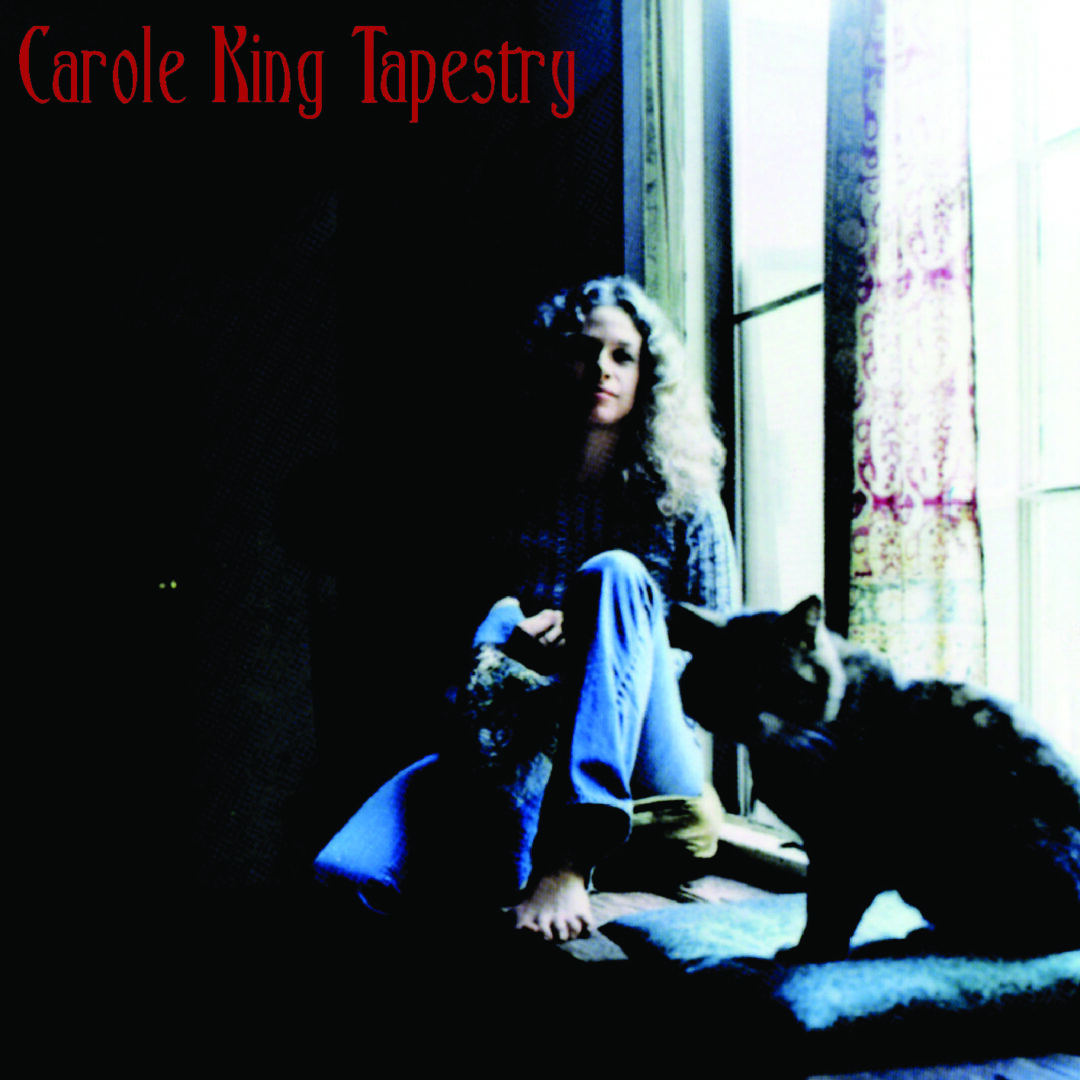
Released in late March 1971, Tapestry, produced by Lou Adler, struck a universal chord at an opportune time in pop and rock music history - the intersection of folk-rock's introspective and a socially conscious sense of disturbing forensic romanticism in a planet-gone- wild. With the escalating rise of West Coast naturalism centered in the saturated Los Angeles music sector known as Laurel Canyon.
Just prior to Tapestry coming out was the deregulation of the FM bandwidth, which resulted in a mini-explosion of so-called new 'progressive' or 'underground' or 'free-form' radio stations eager to spotlight their own artists and playlists separate from the mainstream Top 40.
During 2003, as yet another milestone of its importance, Tapestry was one of 50 recordings selected by the Library of Congress and placed in the National Recording Registry.
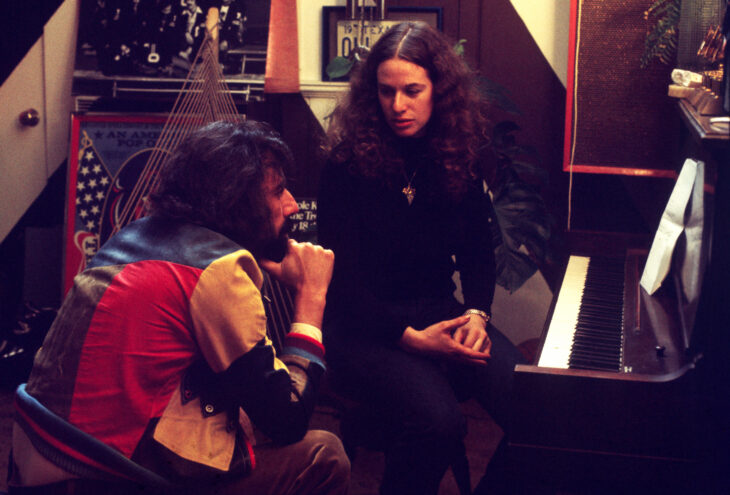
In a recorded conversation between Carole King and Lou Adler inside A&M Studio B on October 18, 1972, in Hollywood, CA., King shed some light on her songwriting aspect of Tapestry.
“The music is always again inspiration, but I have more control of the musical inspiration. In other words, if I get a musical idea, if I just get a glimmer of a musical idea, I can make that go much more how I want it to go. If I get a lyrical inspiration, I really have to work hard at controlling it. I really can’t control it. And most of the good lyrics that I have written have just sort of come to me without any control.
“The only control that I exert is in editing, which I’ve always done to Gerry’s lyrics and Toni Stern’s lyrics. I’m a very good editor, and that’s the craft. Once I got to the stage of recording, I have feelings of wondering about whether it going to make it or not for a time, but the big questions about, you know, whether it’s going to make it or will people like it, all the big insecurities really happen when I’m writing the song. Once the song is being written and once it’s finished and I play it for you, and a few people whose opinions I respect, I begin to get a feeling. Sometimes I already have the right feelings. Sometimes I don’t know. When I write my own lyrics, I’m conscious of trying to polish it off but all the inspiration is really inspiration, really comes from somewhere else.”
In their 1972 interview, Adler conducted with Carole at Studio B at A&M Records, she disclosed the album title origins.
“It is typical of the magic that seems to surround that album, a magic for which I feel no personal responsibility, but just sort of happened, that I had started a needlepoint tapestry, I don’t know, a few months before we did the album, and I happened to write a song called ‘Tapestry,’ not even connecting, you know, the two up in my mind. I was just thinking about some other kind of tapestry, the kind that hangs and is all woven, or something, and I wrote that song. And, you being the sharp fellow you are, (giggles), put the two together and came up with an excellent title, a whole concept for the album.”
During my research for the Tapestry 2008 Deluxe Edition liner notes, I spoke with engineer Hank Cicalo. King’s 1971 LP delivered new sonic results courtesy of A&M’s custom-built Howard Holzer console.
“On Tapestry, Lou and I did quite a few things. There was a thing about the middle of Carole’s voice where it’s almost warmth with a little edge. I always wanted to capture that. I thought her piano playing was great, she would sing, and she was such a writer and performer, she knew when to lay out and when to hit it. So that was always great. Then, when her vocals came when you mixed them, the spaces were always in the right places. Everything was supporting her voice and that piano. That’s where the nucleus of the whole album was.
“My thing with drums, in a record I did, Russ Kunkel on this, I always wanted to get the cymbals. Years ago, it was one microphone over the top. That kind of thing. But because of the brushes and light cymbal work, and if you listen to those records, you will hear it. It’s there. The hi-hat was very important top these records or any of these records. That’s how you sub divide the bar. Musicians don’t listen to that but they feel it. So, to me it was always important people could hear what was in the phones.
“Lou was the kind of guy, as a producer, first of all he had an incredible feeling for songs. He could listen to a tune and go ‘that’s that’s not. Let’s go on to the next one.’ And the way he would work it was amazing. We were mixing the album, I had some other projects going, but about the second week of mixing, we re-mixed some things, I wanted to mix some things, Lou wanted to mix some things and one night we came down, pretty much finished it, let’s listen to it from the top in one of the editing rooms in the back at A&M. Third room. We listened to the album late at night. Play the whole thing down.
“The second engineer was there. Lights low, and I said to myself ‘this sounds great!’ I don’t mean great engineering. I mean the tunes. It started hitting. I turned around to Lou, we walked out, went to the hallway, and I told Lou, ‘Something is goin’ on here.’ ‘Yea…It’s pretty good…’
“That was the first time we really struck on it. All these things, but when we sat down and listened to it then we realized it was something better than normal. A great record coming. And that’s when I felt it and I think that’s when he felt it that night.
“The studio had a Howard Holzer special made console. His board you could really punch it. The only thing I had to worry about was tape there was no noise reduiction in those days. So much easier now. Everything was supporting that voice and that piano.
“That’s where the nucleus of the whole album was. No matter what happened in that room, it had to support it. You got to remember whole period everything was moving from two track tapes. I met Carole when she wrote songs for the Monkees, whom I did 4 or 5 albums with. The writer becoming the recording artist or star seemed to be a natural path for people performing as side people. And then they made an album suddenly becoming a star or an artist or performer. And see them grow, but we were all growing the producers, the record companies. The progression was natural.”
In 2008, I interviewed Lou Adler at his office in Malibu, CA.
Q: You’ve always been a song man.
A: Going back to my early days with Sam Cooke and Bumps Blackwell. The first thing that Bumps, Sam’s producer, a man from Seattle who had worked with Quincy Jones when Quincy was 16 or 17. Bumps took us to school. He made us go through stacks of demos, made us break them down. ‘What was good about the first verse?’ ‘The second verse?’ ‘The bridge, and how do you come out of the bridge?’ So, from the beginning part of my career in the music business I was a songman. That was very important to me. When I’m working with Carole on the songs from Tapestry, and she is playing me these songs, she is playing songs that are the best. From track to track, you don’t get a bad song. You might get one song that I would have had a problem with sequencing, but they’re solid songs even just with piano and voice.
Q: Tell me about your stint at Aldon Music in the very early 1960s? The company later became Screen Gems Music, who were the publishers of Carole’s songs on Tapestry.
A: Lenny Waronker brought Randy Newman to meet me, and I gave Randy a stack of Carole King demos. I thought that was the best education that anybody that wanted to be a songwriter could have. I mean, at one point I said to Snuff Garrett, who was producing Bobby Vee, “I’ll let you hear this, but you’ve got to give me the demo back,” because they were keeping the demos.
“Well, the thing that she did in singing and playing -- and she also sang all the parts that eventually would show up on the followup records, the hits. Once a producer got a hold of her record, she pretty much laid out the arrangement. Both instrumentally and the vocal parts that would end up on the record. Her demos when I first started working for Aldon Music, the way that we worked, Donnie Kirshner, myself and Al Nevins, and the staff would find out what particlar artist that had a hit and was looking for follow ups.
“That assignment was then given to all the writers to go to their cubicles and knock out some songs. They were there from the beginning. And actually, wrote the song. I mean, she -- History shows most of her hits, until she became a recording artist and wrote “You’ve Got a Friend” and “So Far Away,” were with Gerry Goffin. They didn’t just write records, like in ’58 and ’59, for Fabian and Avalon. But they wrote songs first, and then wrote the record and showed how the song sould be interpreted.
Q: Some thoughts about Gerry Goffin who co-wrote a few tunes on Tapestry.
A: Gerry Goffin is one of the best lyricists in the last 50 years. He’s a storyteller, and his lyrics are emotional. “Natural Woman,” “Will You Still Love Me Tomorrow” both on “Tapestry.” These are perfect examples of situations, very romantic, almost a moral statement. Coming out of the 1950s, with the type of bubble gum music, and then in 1961, Gerry is writing about a girl who just might let a guy sleep with her and she wants to know, “is it just tonight or will you still love me tomorrow?” Goffin could write a female lyric. If he could write the words to “Natural Woman,” that’s a woman speaking. Gerry put those words into Carole’s mouth. He was a chemist before he was a full-time lyricist. He’s very intelligent and obviously emotional.
Q: What about Carole’s growth as a songwriter?
A: Watching her writing her own lyrics as the principal lyricist I saw her develop as a lyrtic writer, “You’ve Got a Friend.” A famous Carole King song. She was not confident as you can imagine then in writing lyrics, having worked with Gerry, as I’ve said, arguably one of the best lyricists over the last 50 years, maybe. But she gained her confidence within this Tapestry album and I think she had been writing a little bit, but really once we started on Tapestry she felt confident enough to complete those songs.
“We went by songs. The only thing we reached back for, which was calculated in a way, which of the old Goffin and King songs that was hit should we put on this album? And, that’s how we came up with “Will You Still Love Me Tomorrow.” I thought that song fit what the other songs were saying in “Tapestry.” A very personal lyric.
“Tapestry was such a partnership between Carole, myself, Hank Cicalo, the engineer, and the musicians, so it’s hard to say anyone suggested because we did it all together. Because it was really that kind of record. On Carole’s demos that leads to the sound on Tapestry, her piano out front, and the bass drums, maybe a guitar, but she put in all the parts. Within her piano you could hear a string part, or hear another background part, and she did the background parts. After The City album and Writer Carole began writing for herself.
Q: Talk to me about Carole King in 1970, before her Writer debut solo LP on your Ode Records label, and just before Tapestry began.
A: The climate of the late ‘60s had no women in the Top Ten charts, except Julie Andrews on ‘The Sound Of Music’ soundtrack. Before the Monterey International Pop Festival in 1967 I flew to New York and tried to sign Laura Nyro. I invited her to perform at the festival.
“Carole was in a group The City, who I produced for Ode in 1968. The LP. was called Now That Everything’s Been Said. The City’s album was supposed to be a group, even though it sounds a little like Tapestry, not so much in the subtleties, but in the way that group plays off of each other. At the time Carole did not want to be a solo artist. She wanted to be in a group and she was more confortable in a group. She didn’t want to tour that much or do any interviews. And we started to get those kinds of songs that would then lead us to Tapestry.
“Toni Stern, a writer for Screen Gems, collaborated with Carole earlier on the Monkees’ Head soundtrack and The City album, and Carole’s debut album Writer. I knew her a little bit. She was introduced to Carole by Bert Schneider of RayBert Productions, producers of the Monkees. I saw her when the songs were presented with Carole to me for Tapestry.
“Danny Kootch and Charlie Larkey were on The City’s Now That Everything’s Been Said album, they are the core certainly of Tapestry. Larkey on both electric and acoustic standup bass and his relationship with Carole at the time, husband and babies to be. And father of babies to be. His bass was very important to the sound and feel of Tapestry.
“As music often does, it becomes the soundtrack of the particular time. What I think happened in ’70 or late ’70, ’71, James Taylor and Joni Mitchell and Carole, is that the listening public and the record-buying public bought into the honesty and the vulnerability of the singer-songwriter, naked in the sense -- You know, what James was singing about, “Fire and Rain.” Their emotions that they were laying out there allowed the people to be okay with theirs. And I think the honesty of the records, there was a certain simplicity to the singer-songwriter’s record, because they either start with vocal-guitar or piano-voice.
Q: Reflect on Tapestry.
A: I really knew that it was special. It brought out emotions that no other record at least at that time had. Tapestry was really special and hit a real chord with the public.”
Q: The pre-production period was fundamental to Tapestry. You cited the influence of jazz vocalist June Christy’s Something Cool LP with arranger Pete Rugolo.
A: It’s one of the first albums that I started noticing sequence and continuity of songs and thoughts, so that it wasn't a roller coaster emotional ride, it was a smooth ride. Musically, if there's one other thing, Peggy Lee with George Shearing, who connected some instrument to his piano playing. He doubled the vibes, he doubled the guitar, you know? You'll hear on Tapestry, if you go back and listen to it, I doubled a lot of Carole's parts with Danny Kortchmar's guitars.
“So, for me as a producer, those were two real influences, but especially the June Christy album. Carole’s piano playing on the demos dictated the arrangements. What I was trying to do was to re-create them in the sense of staying simple so that you could visualize the musicians that were playing the instruments. And also tie Carole to the piano, so that you could visualize her sitting there, singing and playing the piano, so that it wasn't 'just the piano player,’ it was Carole. And that came from the demos, which would start with Carole playing and singing, as well as doing some of the string figures, always on piano.
“During pre-production I had in my mind to use a lean, almost demo-type sound. Carole on piano playing a lot of figures with a basic rhythm section, Russ Kunkel and Joel O’Brien on drums, Charles Larkey, bass, Danny “Kootch” Kortchmar, guitar, Ralph Schuckett on the electric piano, along with David Campbell doing the string section.
“I also had Curtis Amy on sax and flutes, his wife Merry Clayton, and Julia Tillman. James Taylor added acoustic guitar to ‘So Far Away,’ ‘Home Again’ and ‘Way Over Yonder’ on the album. James is also on ‘Will You Love Me Tomorrow’ and along with Joni Mitchell is one of the backing vocalists on ‘You’ve Got a Friend.’”
Q: Explain to me selecting the songs for Tapestry.
A: We had 14 songs that we were considering. One of which was “Out In The Cold” that didn’t make the initial album. Which we later issued as a bonus track that’s on CD. Carole would play the songs, some that she had written, or was finishing, and some that she wrote during the album. Everything that we selected I obviously felt should be on the album and we didn’t have that many songs that we were leavng out.
“The pre-production consisted of coming up to my office on the A&M Records lot. We eventually recorded all of those tracks in the A&M Studios, B and C. After Carole would play all the songs, and at that point we think about musicians that would fit. We had this little core group of musicians. The difference on the tracks realy lies with the drummer. On things like “Home Again” and “So Far Away” was Russ Kunkel, and on the more uptempo ones was Joel O’Brien.
“I recall walking out of the studio after the initial playback of Tapestry with Danny Kooch, and he said, “what do you think of this?” He misinterpreted I think when I replied, “it’s the musical equivilent of Love Story, which was a number one move at that time. And Kootch, felt, “that’s a little soft.” What I meant was that it was an emotional album that was going to be very big and bring out emotions in people that no other record at least until that time had.
Q: What about the post-production period?
A: Carole never expressed this is really good or this is going to be really big. I think she was happy with what we were doing. During the Tapestry sessions she was very confident, very business-like and organized.
“She takes problems that occur in the sessions as good as anybody I ever worked with, fine, get it fixed. She had a real calmmess about her., if there is a fire you don’t see it on the surface as far as the post production, after you do all the recording, mixing, I closed the doors to the mixing room, and I played Carole the mixes after they were done, if she had any suggestions we would then go in and fix the mix. But she never asked to be there during mixing and I don’t feel she felt left out.
“When I felt the mix was final to a point, then she would listen and might have suggestions or comments like, ‘That’s it,” “That’s fine” or “I think the vocal has to be up or you missed that part.”
Q: The sequencing on Tapestry was crucial.
A: When I started sequencing Tapestry, I remembered and thought the sequenceing on June Christy’s Something Cool was incredible, the transition from song to song just kept you in the album. It was something that I tried to accomplish with Tapestry.
“I took the tapes home and I went through a lot of changes. I finally fixed on the sequence and took a vacation to my house in Mexico that had a small cassette player and that’s when I came up with the final sequencing. But I went through a lot of changes.
“John Phillips of the Mamas & Papas influenced me a lot on sequencing and what the final chord on one song is to the first note on the next one so it’s not jarring music transitions.
“Sequencing meant a lot in those days, the journey, or the experience or the adventure of lisitening to a new album and sitting down by yourself puttng on that vinyl, The story that it told, the sequencing was very important. I was sequencing for the person who was listening at home, alone.
Q: How does Tapestry fit into Carole’s body of work?
A: Well, I think it is the epitomy the matching of the songwriting with her piano playing. And her vocalizing. The producion allows all of those things to be forefront. It’s not a ‘Spector’ sound as her own sound. We got a little away from the subsequent albums we did after that.
“The group of Tapestry songs have that many right songs on an album, songs that compliment each other. Songs that trasmit everything that is right about Tapestry. What would I do different? Everything was done right for whatever the reasons were. Once again, it’s Carole King as a songwriter.
Q: Tell me about the atmosphere at A&M Records when you produced Tapestry. You did the album on their lot. They distributed your Ode label.
A: A&M itself, you can’t imagine the heads of some labels coming to some sessions and then standing next to you and saying thing, but with Herb (Alpert), because we had been previous business partners and his musicianship, and my respect for him, as co-head of that label, I was totally confortable with that.
“You could talk to him on a music level. I had my own promotion man within the A&M structure so that helped a lot. The people at A&M loved music. They were not there for any other reason. The fact that a musician who co-owned a label. As far as the first Tapestry playback and the advance buzz, you didn’t have to do much.
We sent out the mailing to radio stations and record reviewers. The first review we got back from The Long Beach Press Telegram was a bad review. Whoever wrote it talked about Carole’s voice being thin. But there was no other plan other than get it out there and let people hear it. The response on the lot itself, visualize it at the time was like a college campus.
“Everybody talked to each other about all the products during lunchtime, and the word on the A&M lot was fantastic, and the kind of responses that validated what we had done. ‘This album is so personal.’ ‘This album I can listen to over and over and it reminds me of things that I’m going through.’ That permeated throughout the years it has continued to sell.
“Each time from vinyl to CD to downloads. Somebody buys Tapestry again because they want to listen to Tapestry in the new mode. It just became personal to everyone who listened to it. There were enough songs in there for people to pick up this song and that song. “So Far away” is my favorite song. At the time of the initial release, we were still thinking AM radio as far as singles. FM radio still had an undergound feel to it.
“The choice of “It’s Too Late” as a single came from (A&M co-owner) Jerry Moss. The differnce between Tapestry and other albums I had been involved in was the word of mouth. On “It’s Too Late” Curtis Amy is on sax. He had played on the Doors’ “Touch Me.” But the distinctive flavor he added to “Tapestry” was his flute.
“He hadn’t played flute in a very long time and he was nervous about it ‘cause he had just been playing sax. I said, ‘we’re gonna use flute on this.’ Curtis said, ‘Give me a couple of days to work on it.’Curtis and his wife Merry Clayton were both fantastic and were a very important part of Tapestry.