
MC: You guys also work with Glamour Kills clothing. How did you establish that relationship?
Gaskarth: Glamour Kills has been a brand that we [associated with] from the start. They were running out of the New York/New Jersey area and were always at the shows promoting their line. It became one of those situations where we partnered up at an early point in both of our careers. They were a fledgling clothing company, and we were a young band.
I always love partnerships between brands and bands when it’s done right. I think back to Blink-182 with Hurley and Atticus. We took a note from that and branded ourselves around this clothing line. The cool thing about music is that it influences more than just music. Music has a lifestyle brand around it, depending on what kind of music it is. With fashion, it was one more way to influence the culture that was built around our music.
MC: All Time Low started a trend there with Glamour Kills—other bands are taking partnerships with them too.
Gaskarth: Glamour Kills has done really well. They’ve thrived. They’ve embraced the scene we created together. That’s been an amazing thing. It’s helped out a lot of bands, and the bands continue to help build it as a brand. Now [Glamour Kills] have their own tour every year, they have shows that they do, all kinds of cool stuff going on.
MC: Do you have any other endorsements? With instruments or music gear?
Gaskarth: I work with Fender on my guitars now. Zack, our bass player, also works with Fender. Jack has been working with ESP for his guitars. Rian plays SJC drums, which is an awesome drum company––Rian has been with them for years.
You find the people who you like working with and you partner up, and it becomes beneficial for everyone. Fender has been great to us, and they take care of our needs and always make sure we have rippin’ guitars for tour. If things break, they get right on it. That’s the most valuable thing for us––people who have our back.
MC: How did All Time Low originally get in touch with those companies?
Gaskarth: I don’t specifically know. [laughs] You just fall into these situations where you meet people from the company. Originally, I think, Zack was playing Fender basses before we had a sponsorship. As our band got a little bit bigger, our current Fender rep, Billy, noticed and reached out and said, “Hey man, thanks for playing our guitars. If you ever wanna work together, we can work something out.” It grew from there.
Similar situation with SJC. Rian met the guy who started the company and they started talking and it snowballed.
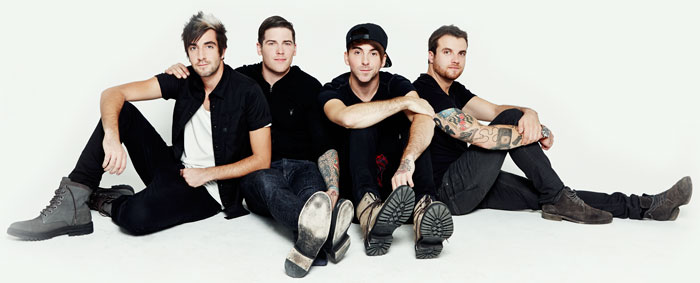
MC: All Time Low started in early 2000s when you were in high school. Describe what it was like to start your careers at a young age.
Gaskarth: It was super weird for us, because it literally started as just a garage band. We were playing in Rian’s parents’ basement. Just doing it for fun. It was never initially something that we ever saw becoming a career necessarily. We started playing shows and got a little bit better, and then we started using social media, branching out, talking to bands from nearby states, trading shows with them, getting out there and playing more and more along the East Coast.That extended as far as we could take it.
It was kind of a difficult thing balancing that with school. It was weird because all of our friends were going to do the college visits, and we were meeting with record labels and playing showcases. It’s a different way to grow up, but it was definitely fun. At a certain point, we realized that we actually may have a shot at making [music] a career, and when we realized that, we thought, “Okay it’s now or never. We have to take that leap of faith; otherwise it’s gonna go away.” We decided to take that leap and so far—knock on wood—it’s worked out for us.
MC: The band has been together for 10 years. Most bands switch out members or, unfortunately, break up before they make it big. What is the key to your success?
Gaskarth: I don’t know what the secret is. I can’t speak about what we did differently from other bands. A big thing for us is that we’re family. We treat this thing like family. The four of us are brothers. You don’t turn your back on family. We have times where we struggle, but we work through it and work it out. There isn’t any rivalry or bitterness, which might drive most bands apart. Quitting has never been an option. We just think, “What’s the next goal? How are we gonna get there? Let’s keep our heads down and do this.” That’s what kept us really close, and we have each other’s backs. Like I said, it’s a very family mentality.
Contact manager Keith Lazorchak, keith@pmmla.com