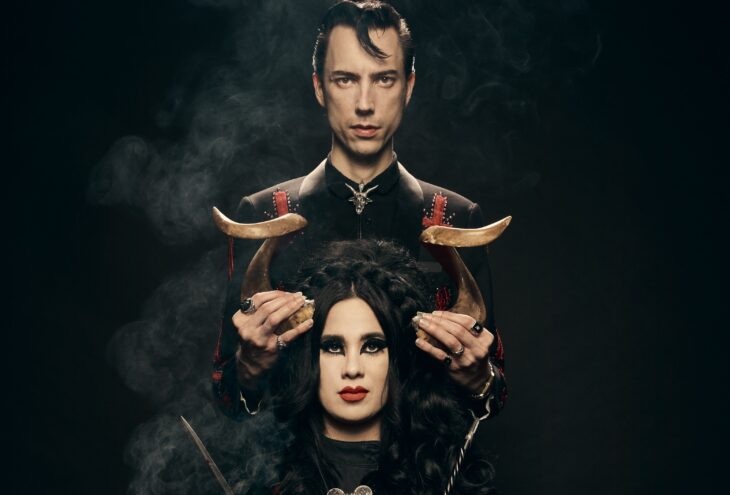
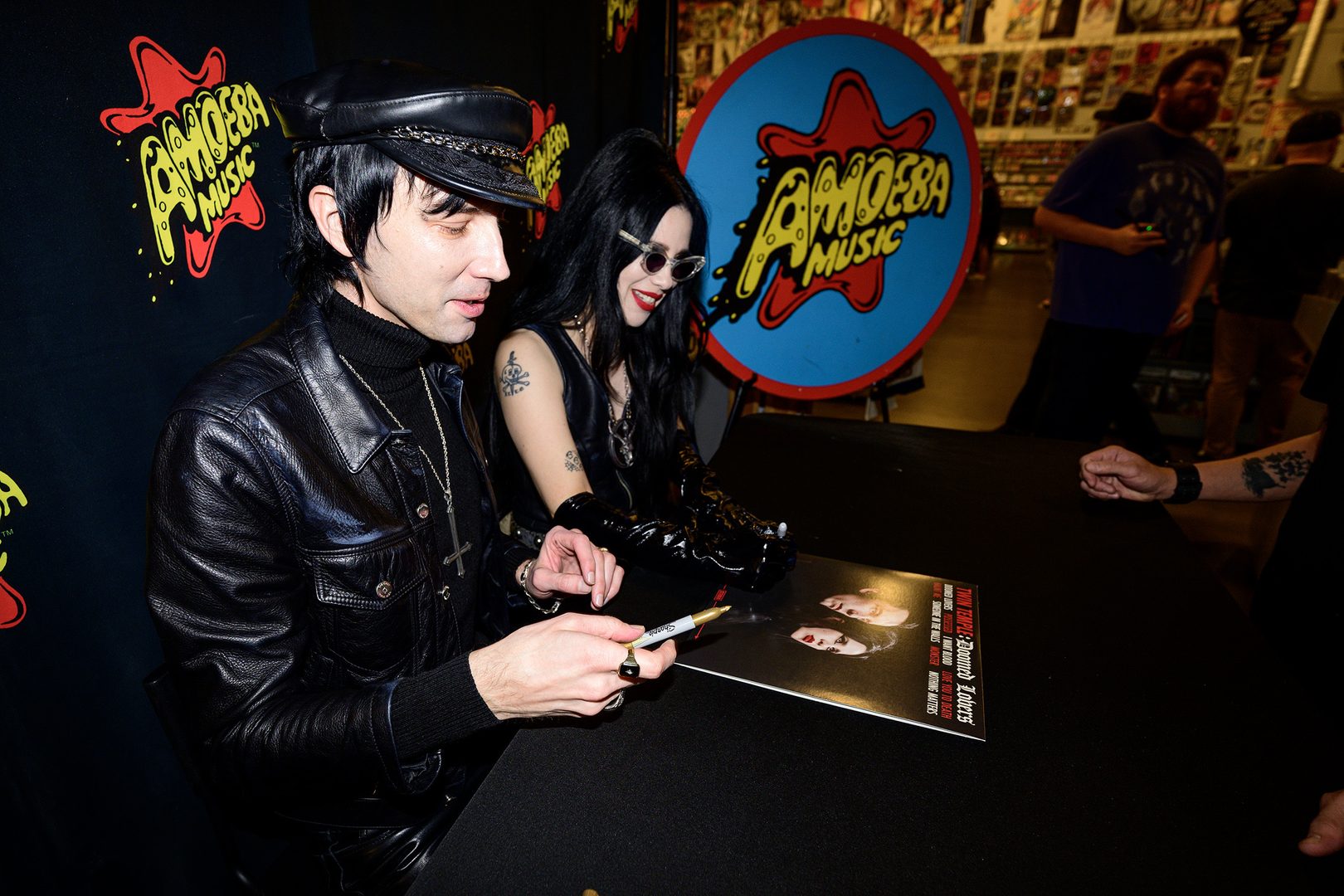
All black garb, ghostly face paint, pentagram and 666 symbols, and upside-down crosses adorn the crowd filing into Amoeba for a recent, packed-to-the-rafters record release event, but they aren’t there to meet and greet with a menacing metal outfit or even a gloomy goth group. When the witching hour (7 p.m.—or 6 p.m. plus 60 minutes and 6 seconds) finally comes, and Twin Temple saunters out to meet their fans and perform songs from their new album, Doomed Lovers, the band is an enchanting sight, seemingly from another place and time.
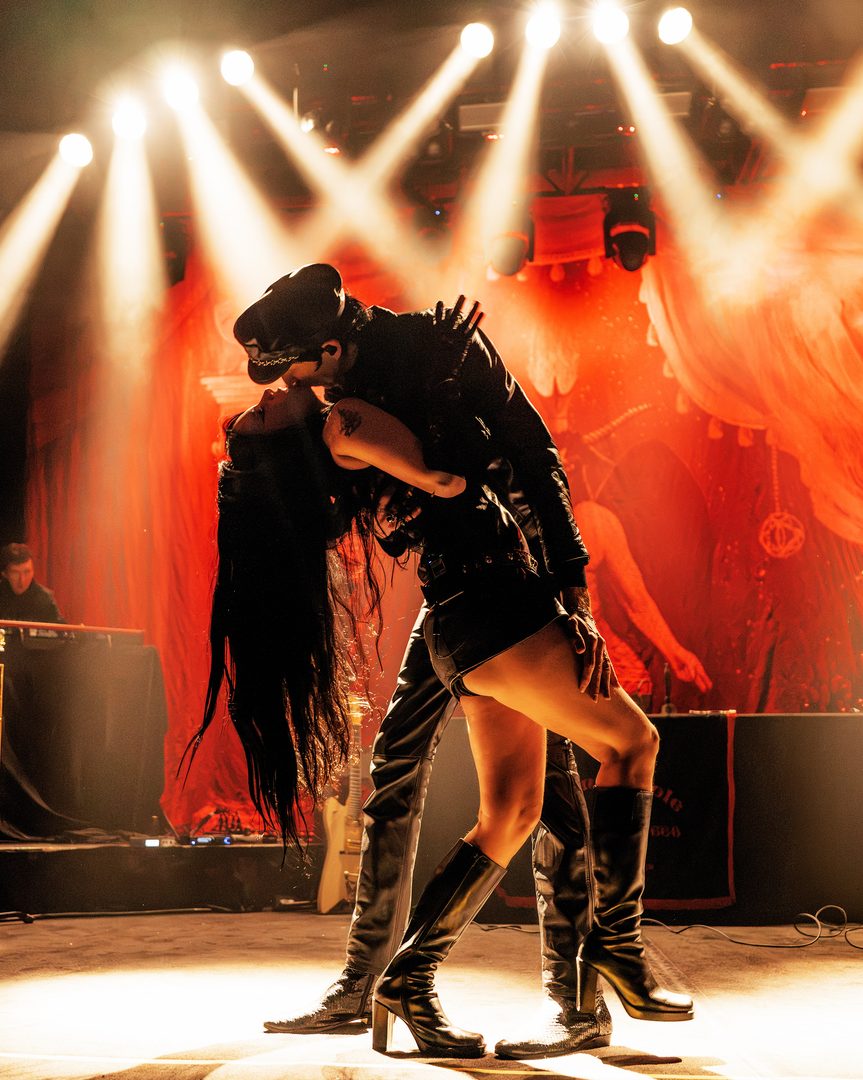
Singer Alexandra James is in a leather mini dress and big retro hair that recalls Brigitte Bardot’s famed motorcycle shoot, and her husband, lead guitarist Zachary James, gives off an equally vintage vibe in black leather pants and matching mod biker cap. The entire band—featuring backing musicians Matty D (guitar), Julian Smith (drums), Aaron Orbit (bass), Seth Sosebee (keys), and Eddie Guadiana (sax)— all donning dark getups, have an undeniably imposing synergy, but the sounds they’re conjuring are anything but aggressive, menacing or hard.
Instead, their set is filled with seductive tempos, bittersweet balladry and old-timey country-tinged anthems that recall Patsy Cline, Ronnie Spector and even a little Amy Winehouse, a sound they coined as “satanic doo-wop” when they first formed the group back in 2016.
Rhythm and Rituals
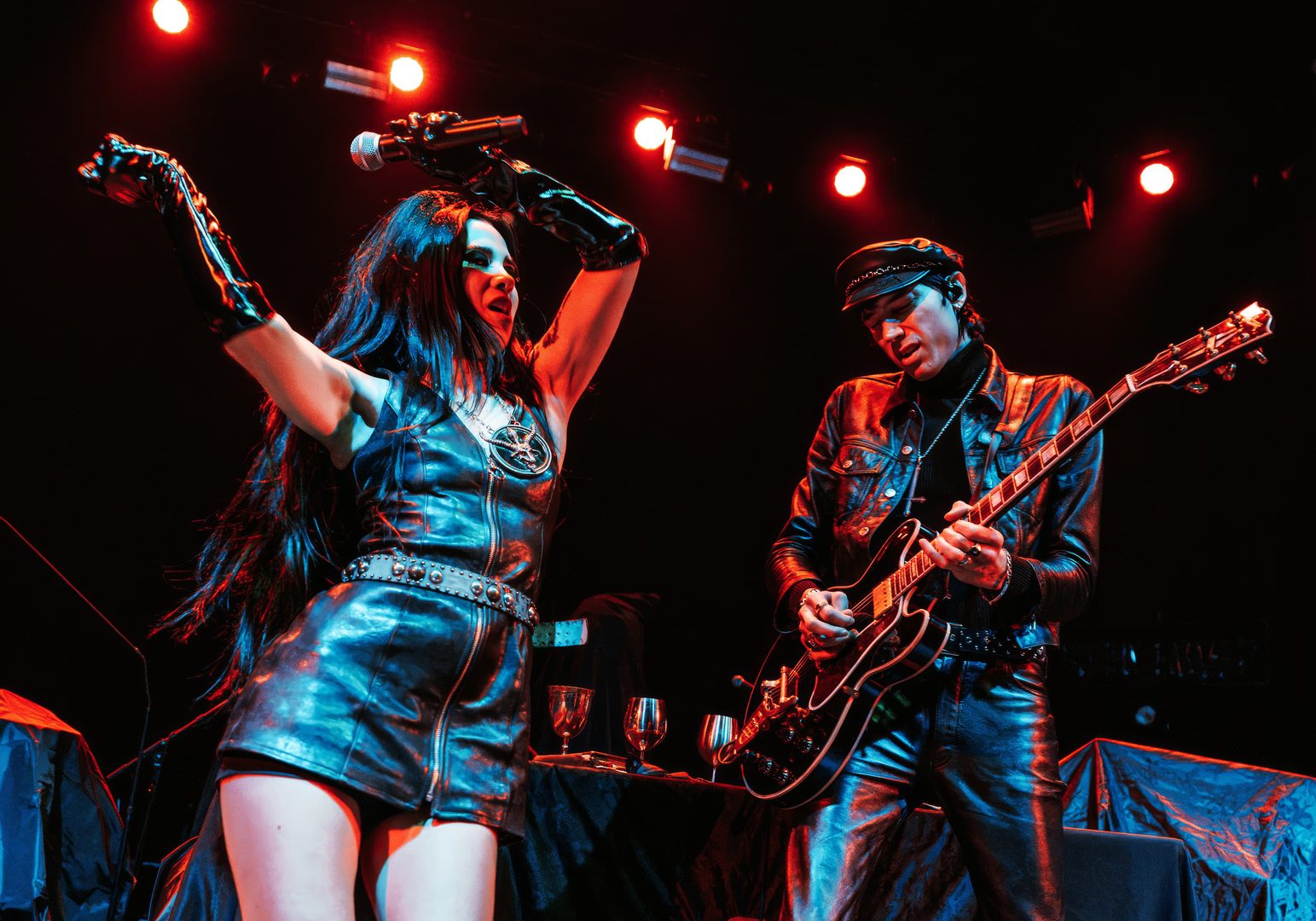
Alexandra’s impressive pipes and possessed delivery are mesmerizing, but the stage banter takes the performance to another, more Alice Cooper-style realm, with interactive chants (“Hail Satan!”), props and other fiendish frolic. At their full shows, there’s sword play, an altar setup and chalices filled with “blood,” which is what led to the group being dropped from touring with country artist Charley Crockett this summer. After announcing the news on social media, Jack White invited them to open for him at the Hollywood Palladium when his tour hit L.A. where they reside. Suddenly it seemed everyone knew who they were— and how they worship.
Yes, Twin Temple identify as proud satanists, but despite their devilish lyrics and ritualistic stage schtick, the duo’s interpretation of what this means actually has less to do with the preconceived notions of a horned figure in a fiery hellscape and more to do with freedom of expression and using “Satan” as an archetype to represent individualism and rebellion against tyranny and ironically, evil.
They believe in upholding the separation of church and state and most notably, in being good people, celebrating love and compassion not because of divine command but because of personal responsibility and critical thinking. They’re both well-versed about all of this and explain it further during a delightful and enlightening Zoom interview with Music Connection a few days before the record release.
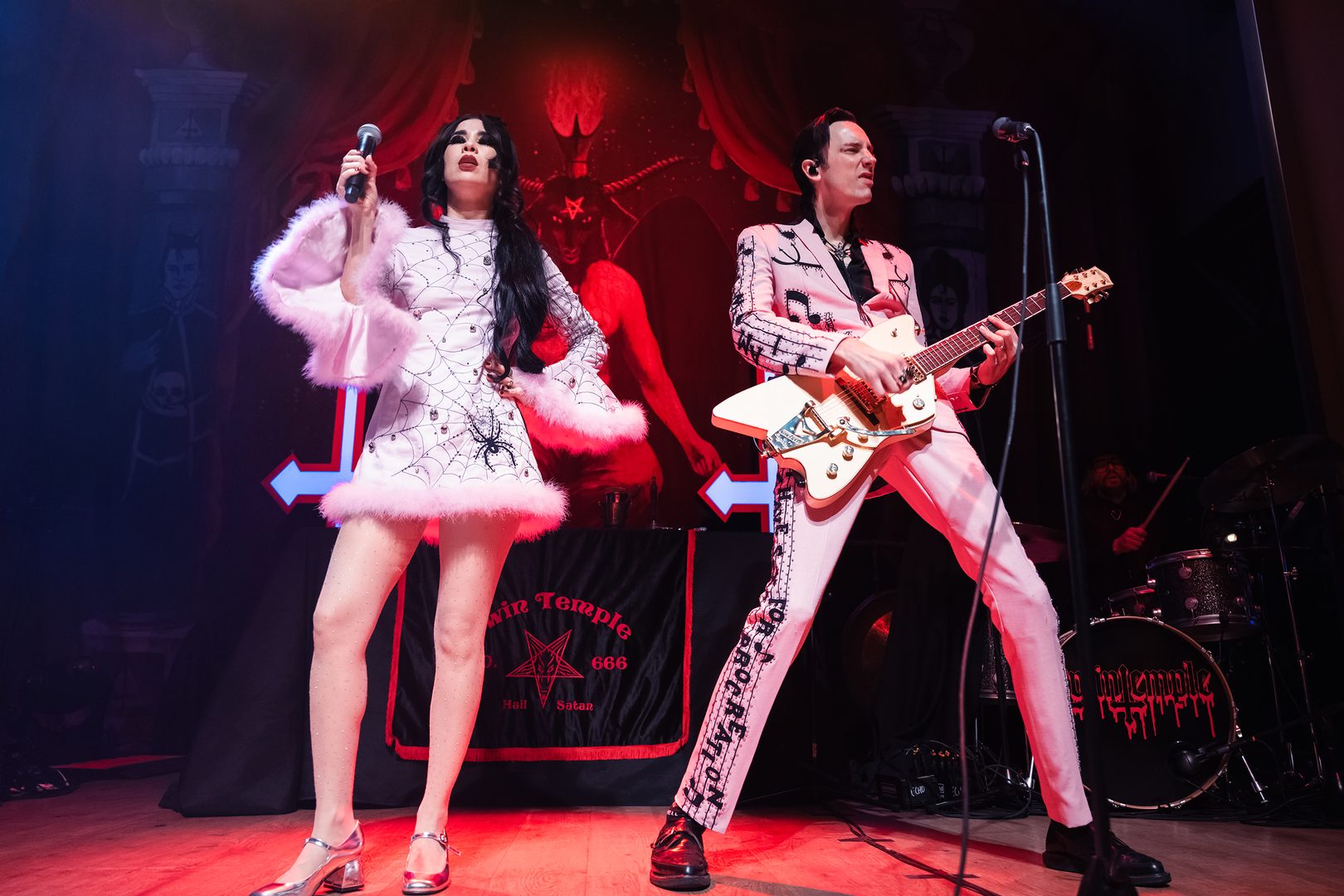
“For us, it’s about the thousands of years of symbolism and history, and the idea of the adversary or Lucifer. You know what I mean?” Alexandra says. “[He was] cast out of heaven for basically the pursuit of knowledge and refusing to bend the knee to dogmatic rule. To us, as symbols and metaphors for who we are and our role in society and the worlds we’re looking to explore, I think it’s really rich, and there’s so much precedent for it, and there’s so much philosophy surrounding it, so it’s kind of been a huge well of inspiration in our lives and art.”
Punk Rock Partners
Balancing the subversive, sometimes farcical imagery that inspires their interests and that of their fans (the occult, horror and literature —Mary Shelley’s Frankenstein is not surprisingly, a favorite)with a self-aware, sincerely reflective approach to their messaging and songwriting, makes Twin Temple a unique voice in the current music landscape. Their fans, as we observe at the Amoeba event and at the Jack White show, wear tees for decidedly heavier artists like Danzig and Ghost (both of whom they’ve opened for), but they also shamelessly sing and sway to the group’s soulful, slow-building torch songs about lust and loss, like new album gems “Love You To Death” and “Nothing Matters.”
The contrast is part of the appeal, and it just might be the point. TT make gorgeous—and ghoulish—music by design, and if some people don’t get it, so be it. Some might like the music, but not the conceptual influences (Zach says they have friends and family members who identify as Christians and Catholics who dig their music) and some might be all about their wicked elements and looks. Both inevitably end up appreciating the new—or rather old— sonic forms and genres that the band is influenced by.
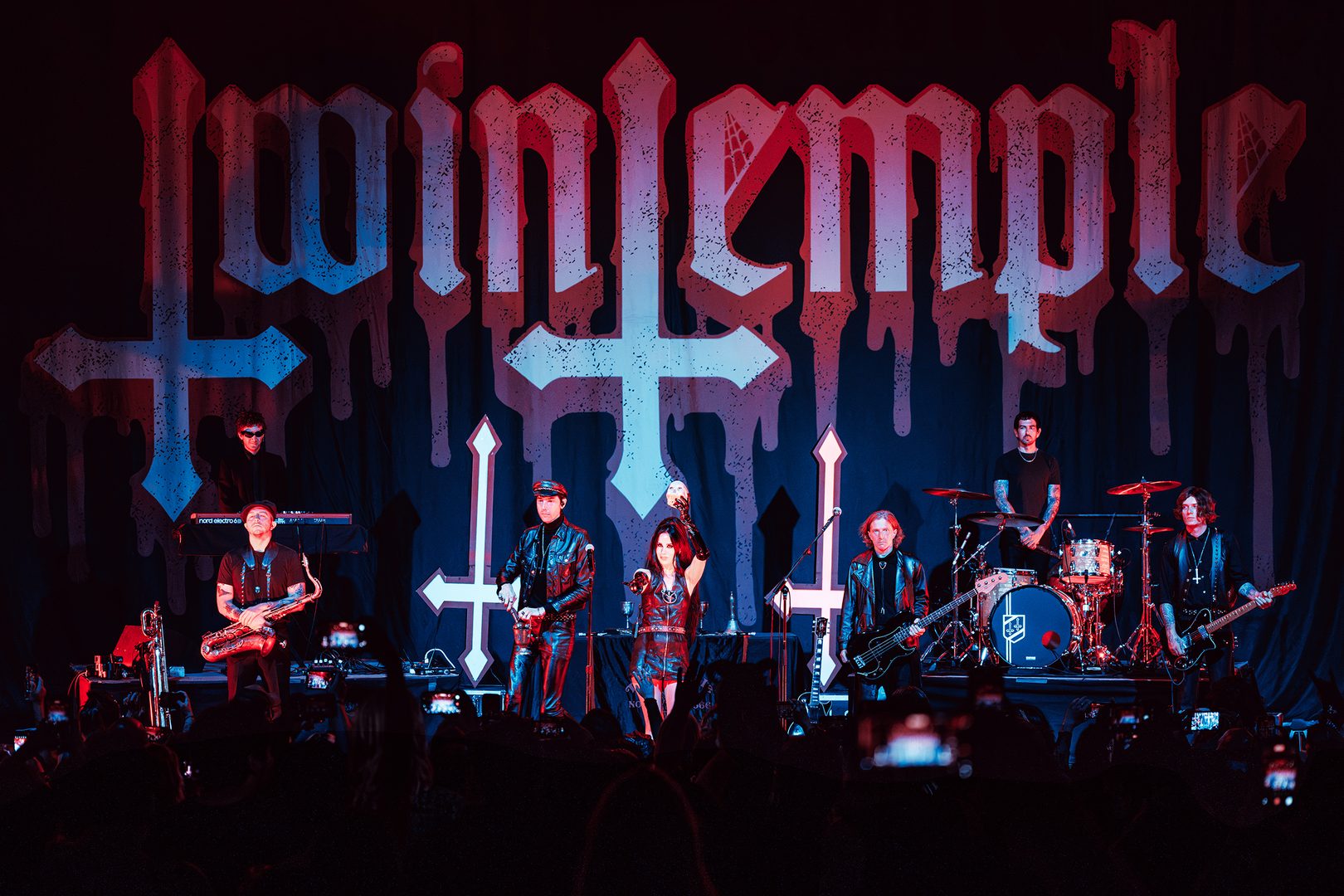
They just hope to get people thinking and feeling. As Alexandra explains, focusing on “the timeless idea of a disruptor—someone who’s rattling the cages of society and questioning things” is what drives her and her partner. “We want to push change. I think that’s one thing that we’ve come to accept: that for better or worse, our role is not to be prom king and queen. We’re not Ken and Barbie. We’re disruptors and we’re cultural provocateurs. That’s what rock and roll is… it should be a little bit dangerous.”
No surprise, the two musicians say they met in the “L.A. punk rock scene,” both leading their own bands, playing in small clubs and admiring each other from afar. OK, they first met when they were “burned at the stake” centuries prior, they say (hee-hee), but yeah, in this realm it was in musician circles. Zach was born in Santa Monica and moved around a lot with his parents, but has called Southern California home for most of his life.
Alexandra, who is half Korean, half British, hails from San Francisco and moved to L.A. when she was 17 to pursue her music. After working together, touring together and becoming a couple, they decided to merge their individual projects as well as their lives.
“It was around 2011-2012… we toured for a couple years and then in 2015 we got married,” recalls Zach. “We decided it was too much work to do this double band thing, and then other times tour separately–we were either pulled apart, or it was just redundant.”
The doo wop sound evolved as naturally as their personal relationship did. Though they were initially each playing heavier music in the vein of Johnny Thunders and The Ramones, as they learned about what inspired those groups, especially the latter, they gravitated towards the wistful old-fashioned elements. “I’d been trying to write those kinds of songs for a long time,” Zach says. “We talk about this all the time. Like the Ramones, they love the girl groups. They love doo wop and obviously, they worked with Phil Spector. The Misfits, Danzig… It’s like with all the punk bands, you really can trace that stuff back…”
“People love to dismiss doo wop as you know these asinine teenage songs from the soda pop shop,” adds Alexandra. “But actually, if you dig into the history of the '50s and '60s when this music was being created, it was revolutionizing society and culture. You would not have the civil rights movement without doo wop and rock and roll at the time. So I think for us, all the through lines are connected, and all the wiring makes sense in our minds. At the same time, it’s fun to have kind of like the cognitive dissonance of it all. You know, this is our world that we live in, and we continue to keep expanding the frontiers.”
The Devil’s in the Details
The band’s debut, 2019’s Twin Temple Brings You Their Signature Sound… Satanic Doo-Wop, built some pretty fierce fandom right away, and their annual Halloween shows filled a void in L.A. that’s been felt by many ever since the Cramps’ legendary spooky season soirees ceased a decade prior (a few years later, singer Lux Interior passed away, ending the iconic group for good). TT didn’t do a Halloween show this year due to radius clauses for their opening slots for Danzig in Anaheim and Jack White in Hollywood, but many remember their past events fondly, which followed COVID’s concert drought.
And speaking of the Cramps, that band’s juxtaposition of B-movie monster motifs and vintage sounds (surf rock and rockabilly) has made them bigger legends than ever, and their cryptic couple chemistry—preserved in videos and in live show footage— is a big part of that. TT channel the same kind of smoldering sex magic between them on stage and record, while also promoting inclusivity that nods to fetish and queer culture, just as Lux and Ivy did.
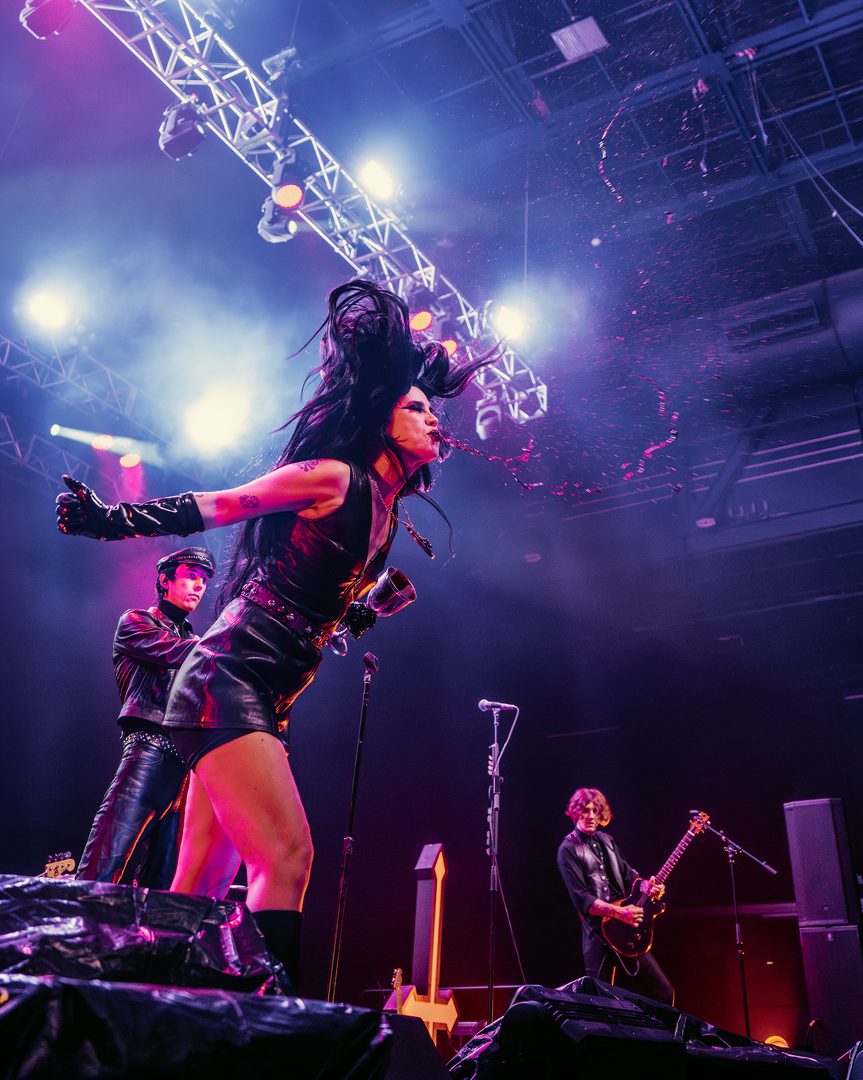
Not surprisingly, the couple has seen pushback over the years, and way before Crockett booted them by stating, “I thought they were like Black Sabbath, but they ain’t. Not today, Satan.”
Alexandra says early in their journey, before they released the debut, they were repped by Red Light management and had been set up with a “diamond producer” to develop the project. Over the course of a few months, they had half of the first record written, but when they presented songs like “Lucifer My Love,” they were promptly ghosted, then dropped.
The producer told them that he liked the “60s classic rock and roll girl group type of stuff” because it had “commercial potential,” but thematically, they would not be following them down the darker path they were heading toward.
“We were kind of at this crossroads where we were like, ‘Do we burn everything down to the ground that we worked so hard for?” Alexandra recalls.” We’d been slogging it out in the underground punk scene for so long, since our teens… you know, we were in our 20s at that point and it was like okay, ‘we need to take our career to the next level’ and they were basically like, ‘can you just do this, but also change all this.’”
At that moment, Alexandra and Zach say a fire was lit inside of both of them. “We were like, fuck it, let’s keep our day jobs and do this. This is our baby, and we just had a feeling about it. We were so excited. We were constantly told by the industry, ‘take that off, do this, don’t do that.’ So, we kind of played by the rules for so long, and we got really sick of it. We were just like, okay, so it’s not gonna be commercially successful, but that’s actually really exciting because that means we can make whatever we want,” Alexandra shares.
The couple admit it’s been hard sometimes and that maybe the demonic element held them back in certain areas, “but it’s propelled us in other areas,” Zach insists. Though nothing about this band is a gimmick, they do have fun with the fears and enjoy poking at the pearl-clutching contingents they make uncomfortable.
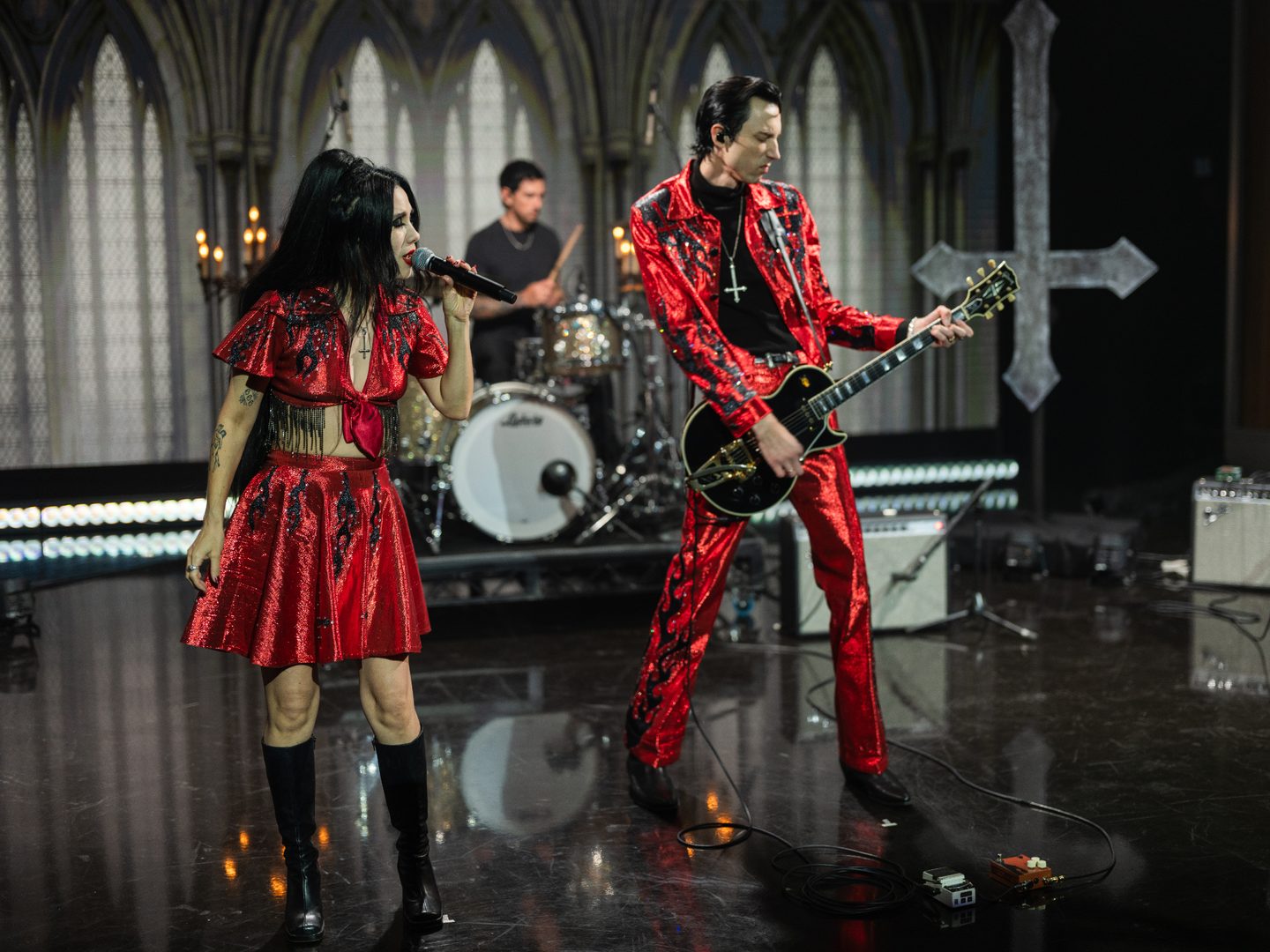
After they got so much attention for the Crockett cut and the Jack White endorsement, they scored a prime spot on The Daily Show and they definitely played into the tempestuous tropes, telling host Jordan Klepper that people think satanism is “going to orgies, dancing nude under the full moon, drinking chalices of blood and hanging out with goats” adding that “we’re here to say that’s absolutely true.”
Pushing ‘Satanic Panic’ Buttons
Walking the line between satire (The Daily Show is a satiric news program) and the scholarly truths they actually believe in, could be risky and might not register with everyone. But TT do it with ease and a tantalizing tease that will resonate for rock fans, especially older ones who remember how similarly sinister-seeming music artists captured our imaginations as kids. AC/DC, KISS, Iron Maiden and yes, the band Crockett called out, Black Sabbath, all seeped their music in demonically-charged imagery, becoming targets for Christian protestors in the ‘70s and ‘80s.
The dearly departed “Prince of Darkness” Ozzy Osbourne, now remembered as a beloved family man, was at one time, public enemy number one in the minds of religious folk, both for his lyrics and wild stage shows, during the “Satanic Panic” era, which Alexandra joked on the show, she’d like to see get going again.
Unfortunately, that era did produce some extremists back in the day, many intent on silencing art they didn’t like. Within the current political climate, there are obviously still people who still feel that way, maybe more than ever. Twin Temple have not been immune to their harassment. After Alex Jones did a segment about the band on his show Info Wars back in 2019, they were doxxed and got death threats.
“Our inbox was full and there were Bibles on our doorstep,” Zach recalls. They had to change their email addresses and Alexandra says they ultimately had to move from their house in Silver Lake because it was just too scary — and not the good kind of scary.
Still they persisted in creating the chilling and cheeky sounds that called to them. Following Satanic Doo Wop, they released Stripped from the Crypt: Twin Temple Present a Collection of Live (And Undead) Recordings from Their Satanic Ritual Chamber in 2020, then an EP, Twin Temple Summon the Sacred Whore... Babalon in 2021, followed by God Is Dead in 2023, with highlight cuts including the alluring “I’m Wicked” from the debut, the split single “Satan is a Woman” and “I am a Witch.”
They also released a stellar cover single of the Rolling Stones’ “Paint it Black” this year that we are shocked hasn’t been picked up by a TV show yet. There’s still time, though.
TT’s music was heard on the 2024 Peacock series Hysteria, the Amazon Prime comedy Queen of Oz and the Hulu show The Exorcism of Carrie Jackson. Clearly, Ryan Murphy has not heard about them yet, but we fully expect their American Horror Story moment to come sooner than later— or even better, a Tim Burton Wednesday soundbite.
Conjuring Old Spirits in the Studio
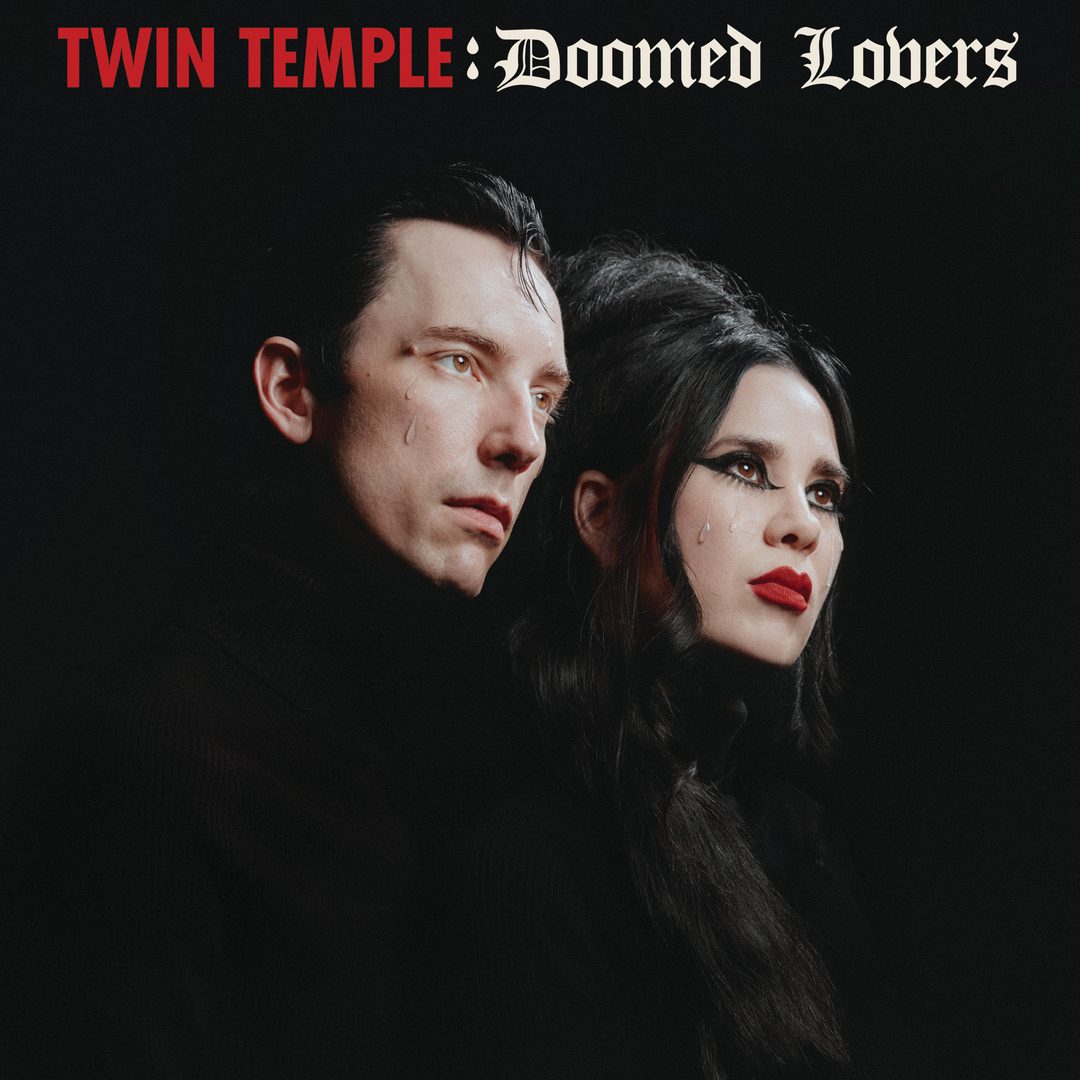
Standing by their creative vision and sometimes-sordid subject matter might have finally paid off for Twin Temple in terms of exposure, but that doesn’t mean they haven’t been open to evolving sonically, and even softening a bit. Doomed Lovers still has titles like “Possessed,” “Haunt Me,” and “Monster,” but the new songs are broader interpretation-wise and a lot more layered, lyrically and instrumentally.
After alt-country rocker and noted producer Shooter Jennings became friendly with the couple socially, it was only a matter of time until they’d all work together, and Lovers evolved as an organic collaboration everyone was ready for. It took about a year to finish, but in some ways it’d been building for years.
“There’s just so much deep musical potential in what they’ve been doing,” Jennings shares. “They can really explore their music and the American songbook in all these different ways, and put this kind of dark spin on it. It’s kind of new territory, and to get to emulate Lee Hazelwood and some of our heroes in the studio was the most exciting thing ever.”
Jennings says that Zach’s love of the Fender Bass IV, six-string electric bass-guitar hybrid used on recordings from The Wrecking Crew (the famed collective L.A. session musicians who played on countless hits in the 1960s and 1970s) served as inspiration for the classic, decidedly lush sound they were honing, as did the work of Italian Spaghetti Western composer Ennio Morricone and psychedelic cowboy Hazelwood, best known for his work with Duane Eddy and for writing “These Boots Are Made For Walking” for Nancy Sinatra.
Jennings’ room at Sunset Sound, dubbed “Snake Mountain,” has a 1976 custom Frank DeMedio API console built for the room, and analog gear that suited Temple perfectly. No plugins were used, and Neumann U 47 microphones captured the array of rhythms and textures, including Jake Bellrose and Matt Chamberlain’s dynamic drum parts. Jennings describes the amalgamation as “taking everything and kind of covering it with cobwebs” and points to other unique touches like a 37-piece Bulgarian orchestra, providing cinematic depth.
“I feel like every record we’ve kind of lifted the veil a little more and a little more, and this one is the most exposed we’ve been,” Zach says. “We intentionally handicapped the production to just the band in a room, and we cut it live in a day and a half. Working with Shooter and working at Sunset Sound and having access to all this incredible gear and great players that he brought in, I feel like it enabled us and opened the door to do all the stuff we always wanted to do and to try. Shooter really created a space for experimentation for us to do that and he was a big supporter through the creative process.”
Merry Mayhem
Doomed Lovers is Twin Temple’s most accessible record to date, but it’s still audacious. It’s a more mature and melancholic music experience, which fans of any genre can enjoy, even without the arresting visuals that make the couple so fun to watch on stage and in videos. Image is still an essential part of their allure, though.
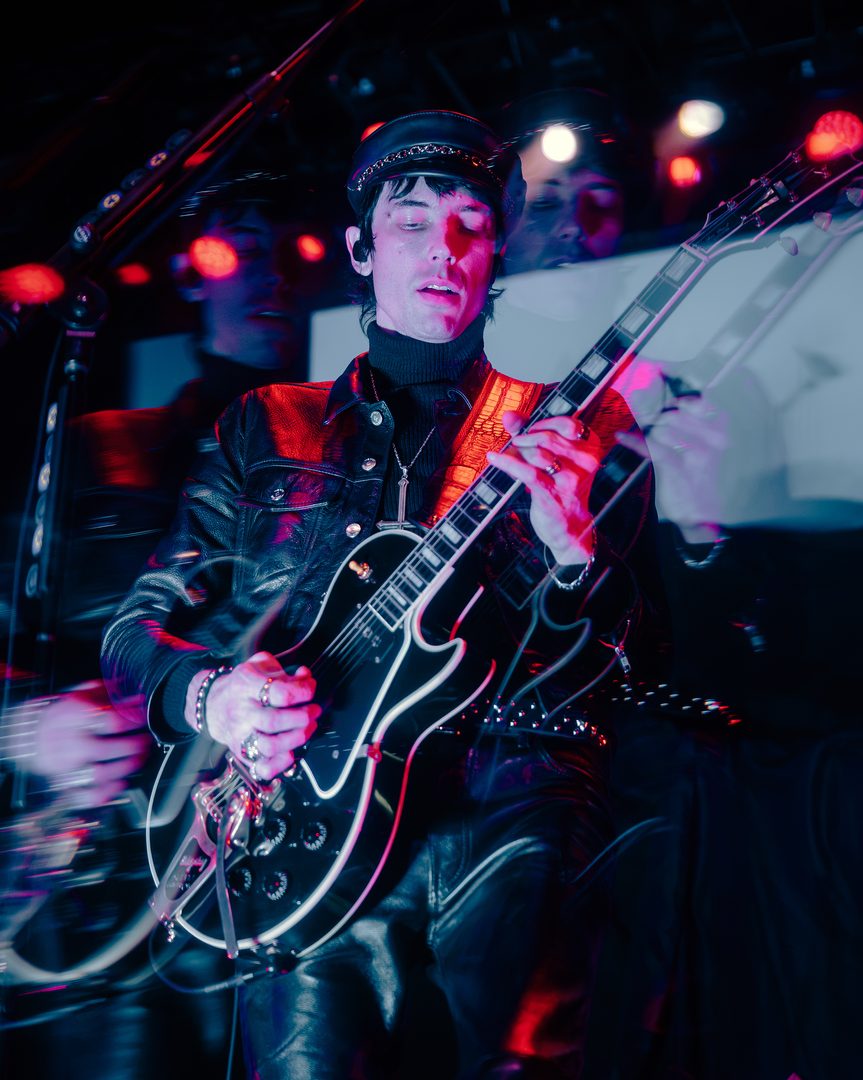
Their early stage looks were inspired by rodeo tailor Nudie Cohn and his iconic rhinestone “Nudie Suits” including an Elvis/Dolly Parton-esque look with sparkly spiderwebs. Their current leather looks by Chuck Bones and The Cast, make a less glam but equally flamboyant fashion statement, as do their t-shirt designs and merch, which Alexndra explains is an “extension of our musical art and world, and an opportunity for storytelling.”
Their goodies (teas, lipsticks and candles) make for great gifts, and with the Yuletide season on the horizon, cool stocking stuffers. We wind down the interview with questions about their holiday plans and what’s next as the year ends.
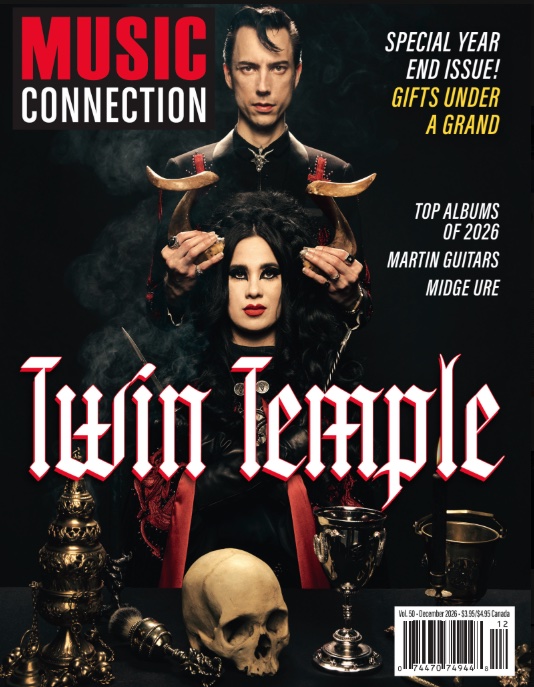
Do they celebrate Christmas? Yes and “we usually listen to the Phil Spector Christmas record on repeat and hope that Krampus gives us a good spanking,” says Alexandra. Looking to the future, the band has a US headlining tour starting February 19 and ending at The Wiltern in L.A. March 20, followed by shows in the UK and Europe next summer. They also just announced a slot at the Azkena rock festival in Spain.
Back at Amoeba, we chat with fans, many who waited hours to meet them. One of them, in a tee that reads “Satan,” says that she loves their message of “non-conformity and not being a shitty person” and sees the new record as a “sad, raw and intense” leap forward. She’s right.
Alexandra calls it their “most personal record yet,” following one of the darkest periods of their lives. Twin Temple are growing and showing more of themselves beyond the spook show, and it’s resonating with themes of grief and sorrow. “We are in some ways larger than life characters, and people definitely have an opinion of our personas, but we wanted to show more,” she shares. “You know, we bleed and we cry, and we go through everything that everybody else goes through. We’re not always strong. We can be vulnerable, and we can struggle… that’s the human experience.”