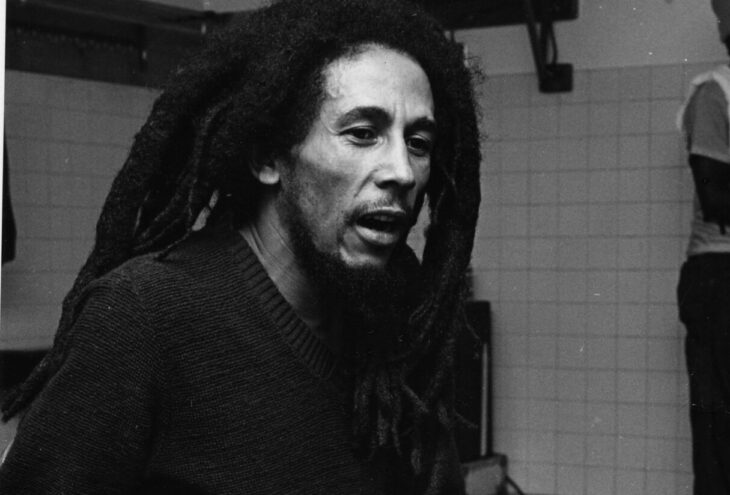
Fifty years ago, Bob Marley & The Wailers headlined a four-night residency at the Hammersmith Odeon in London, England, spanning June 15-18, 1976, to kick off the second leg of their Rastaman Vibration tour. The prestigious booking was a risky move, with a ticket count five times of a usual Wailers show. They sold it out, and the group seized the moment with utter fire and precision, leaving reviewers grasping for words to describe what they’d witnessed. Bob’s time had come.
For the first time ever, audiences can finally experience the magic of these seminal and sought-after shows with the release of the brand-new live album, Roots, Rock, Reggae: Live at the Hammersmith Odeon, out August 14, 2026, via Tuff Gong/Island/UMe. The previously unreleased 18-track album, newly mixed from the original multi-tracks, will arrive in multiple configurations, including 180-gram 2LP Vinyl, an exclusive limited edition 2LP Color Vinyl, 2CD, digital download and streaming at all DSPs and, where available, an ATMOS mix for the full “you-are-there” concert experience.
Offering a glimpse of what to expect, Roots, Rock, Reggae (Live at the Hammersmith Odeon) became available on streaming platforms today.
A must-have for Marley devotees and newcomers alike, the album has been packaged with stunning graphics featuring photographs from the shows, a unique cover design that appears ‘sideways’ but folds out to full-body photo of Bob in his performance trance, custom labels, printed sleeves and a new essay by longtime Marley confidant and associate Don Letts, a.k.a. “The Rebel Dread,” who shares his own in-person recollections of the residency. All elements are present in the standard 2LP set, which will be on heavyweight 180-gram vinyl, and the 2CD edition. The additional, limited-edition color vinyl release gets transparent Molten Lava Red (LP1) and Peridot Green (LP2), plus an exclusive mini-poster of the original Island Records advertisement promoting both the new Rastaman Vibration album and the European leg of Marley’s tour, which launched with this four-night stand at the Hammersmith Odeon.
The residency proved to be a watershed moment for the group. Two years earlier, within months of Eric Clapton taking “I Shot the Sheriff” to No. 1 in the U.S., Marley had answered with Natty Dread (1974), his first major statement for a widening international audience. Live!, recorded at London’s Lyceum Theatre, delivered the breakthrough in late 1975, aided by the concert version of “No Woman, No Cry,” which reached the U.K. Top 20 in early 1976. This growing momentum carried Marley into his celebrated June run at London’s Hammersmith Odeon. In the weeks that followed, Rastaman Vibration became his first U.S. Top 10 album.
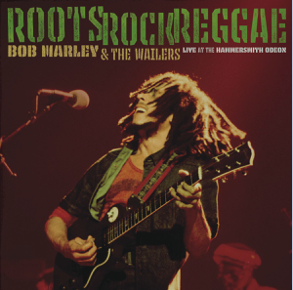
But, except for an incomplete bootleg, the answer to whether there were recordings of the moment remained elusive. (After all, Live! had been issued just six months earlier.) Remote tapes from the Island archives, separated into different facilities over the years, were only recently connected into the full experience. Roots, Rock, Reggae: Live at the Hammersmith Odeon curates the best performance of each song across four shows recorded June 16-18, 1976.
Among the album’s many highlights are the rarity “Bend Down Low,” which was performed only on the final night of the Hammersmith run; an extended, new-to-the-set “Crazy Baldhead;” an improvisatory, deep bass rendition of “Lively Up Yourself” – and then the finale, a revelatory 30-minute encore punctuated by a chilling “War” and an intense, 12-minute "Get Up, Stand Up,” in which Bob weaves a call to dance into a plea for unity.
“The event simply went off. It was just like Bob always knew it was going to happen: he was rocking.” – Chris Salewicz, from Bob Marley: The Untold Story
In the liner notes, Lettsperhaps described it best: “a theatre full of people suddenly sharing the same heartbeat.”
Experience Bob Marley & The Wailers cementing their legacy as an unparalleled and undeniable powerhouse on Roots, Rock, Reggae: Live at the Hammersmith Odeon.
2LP/2LP D2C
Side A
1. Introduction (0:28)
2. Trenchtown Rock (4:08)
3. Burnin’ and Lootin’ (4:31)
4. Them Belly Full (But We Hungry) (3:18)
5. Rebel Music (3 O'Clock Roadblock) (4:58)
6. I Shot the Sheriff (4:11)
Side B
1. Crazy Baldhead (6:05)
2. Bend Down Low (4:10)
3. Want More (6:38)
4. No Woman, No Cry (6:09)
Side C
1. Lively Up Yourself (7:47)
2. Roots, Rock, Reggae (5:29)
3. Encore Introduction (0:30)
4. Positive Vibration (3:35)
5. Rat Race (6:45)
Side D
1. War (4:16) /
2. No More Trouble (2:21)
3. Get Up, Stand Up (12:15)
2CD
Disc 1
1. Introduction (0:28)
2. Trenchtown Rock (4:08)
3. Burnin’ and Lootin’ (4:31)
4. Them Belly Full (But We Hungry) (3:18)
5. Rebel Music (3 O'Clock Roadblock) (4:58)
6. I Shot the Sheriff (4:11)
7. Crazy Baldhead (6:05)
8. Bend Down Low (4:10)
9. Want More (6:38)
10. No Woman, No Cry (6:09)
11. Lively Up Yourself (7:47)
12. Roots, Rock, Reggae (5:29)
Disc 2
1. Encore Introduction (0:30)
2. Positive Vibration (3:35)
3. Rat Race (6:45)
4. War (4:16) /
5. No More Trouble (2:21) /
6. Get Up, Stand Up (12:15)
DIGITAL
1. Introduction (0:28)
2. Trenchtown Rock (4:08)
3. Burnin’ and Lootin’ (4:31)
4. Them Belly Full (But We Hungry) (3:18)
5. Rebel Music (3 O'Clock Roadblock) (4:58)
6. I Shot the Sheriff (4:11)
7. Crazy Baldhead (6:05)
8. Bend Down Low (4:10)
9. Want More (6:38)
10. No Woman, No Cry (6:09)
11. Lively Up Yourself (7:47)
12. Roots, Rock, Reggae (5:29)
13. Encore Introduction (0:30)
14. Positive Vibration (3:35)
15. Rat Race (6:45)
16. War (4:16) /
17. No More Trouble (2:21) /
18. Get Up, Stand Up (12:15)
I witnessed Bob Marley and the Wailers in concert eight times from 1975 to 1979. The first was on July 13, 1975, at the Roxy Theatre in West Hollywood. I interviewed the group once in 1976 for Melody Maker. Our rendezvous was held in such a ganja smoke filled room at the Island Records office on Sunset Boulevard that I totally forgot to press record on my cassette tape machine!
John Lennon and Yoko Ono attended the Wailers’ May 16, 1976, Roxy show. The couple sat near me. I thanked John for introducing me to the reggae and bluebeat music he had touted in music publications and radio interviews. He grinned and offered a friendly handshake.
On July 22, 1978, I was invited to cover Bob Marley and the Wailers at the Starlight Bowl amphitheater in Burbank. A few music reporters were given tickets and all-access backstage passes. I watched the concert from the wings, standing the whole evening with Mick Jagger, holding his daughter Jade in his arms. Mick still managed to pass some ganja to our circle that included Peter Tosh, who was opening the next day for the Rolling Stones at Anaheim Stadium in Orange County.
Before the transformative evening concluded, a very sweaty Bob Marley ran over to our area at the venue and just passed me on his way to talk to Peter, who then joined him for a surprise appearance during “Get Up, Stand Up.” Tosh later told reggae scholar and Bob Marley biographer Roger Steffens, “Mi slap Bob’s hand, and him say, ‘Bwoi, de Pope feel dat one!’” Three days later, Pope John Paul I died.
In May 1973, the Wailers (before they resumed using their earlier name, Bob Marley and the Wailers) played at the Speakeasy club in London, England. Reggae fan Keith Richards was in attendance.
Drummer Jim Keltner had told me about driving around England with Richards during 1970-1972 to pick up reggae records at a shop in Ladbroke Grove, like Gregory Isaacs’ “Extra Classic” and the Itals’ “In a Dis Ya Time.” The Rolling Stones later covered a reggae tune by Eric Donaldson, “Cherry Oh Baby,” on their Black And Blue LP, released in 1976.
In a 1999 interview that appeared in my book Screen Gems: Pop Music Documentaries & Rock and Roll TV Scenes, Keith Richards extolled the sounds from Jamaica and the impact of the island’s culture.
“I think because it’s timeless music. I call it ‘marrow music.’ Not even bone music. It strikes to the marrow. It’s like a faint echo. . . The body responds to it, and I don’t know why. You asked me earlier about Goats Head Soup. I was only really learning about Jamaica then and, when you’re making records, you’re pretty much myopic. It was only really after recording Goats Head Soup and staying in Jamaica for several months, which was when I bumped into the Wingless Angels on the beach. We got talking
“In certain ways, Jamaica doesn’t change that much. There’s a very solid rhythm to life there, and they seem to be able to adapt to even incoming technologies that speed the rest of the world up. What I really love about Jamaica is that they have a rhythm all their own and everybody, including yourself—after a few days you can’t get out of step, man, you know.”
Richards had mentioned the Wingless Angels, a Jamaican Rastafari reggae group in Steer Town that he met and recorded, executive-producing an album issued on his own Mindless Records imprint in 1995.
I asked Keith the best way for me to hear Wingless Angels. “Flat on your back, with some partners, rum, and weed,” Richards laughed.
This century I have conducted extensive interviews with Roger Steffens. Since 1984 he has been doing a multi-media tour, The Life of Bob Marley, around the world.
HK: In 1973, Bob Marley and the Wailers were one thing. What is his current legacy?
RA: Today, Marley is regarded as an icon, a symbol of many things. He is certainly an herbal icon. Through his revolutionary words, he is a political figure. He’s also a fashion figure – dreads, formerly despised, feared and shocking – are now ubiquitous, co-opted from Rasta livity into mainstream acceptance. Next to Haile Selassie, he is probably the best-known symbol of the Rasta philosophy and its primary prophet. The head of Amnesty International said everywhere he goes in the world today, Bob Marley is the symbol of freedom. He remains reggae’s biggest seller and one of the heaviest-earning dead celebs. Seven of his kids record, and most have won Grammys; now their own children are recording.
HK: What is the current Bob Marley demographic? Who are the people who attend your Life of Bob Markey shows?
RS: I find my audiences cover a full range of ages. Certainly, college-age folks are enormous Marley fans. But middle-aged people, many of whom were alive during the Golden Age of Reggae (1966-1981) are still deeply interested in him as well. Wherever there is suffering, there will be Bob Marley songs of solace. Wherever people extoll the healing virtues of love, they will sing Bob’s songs. And wherever people are in revolt, crying out for justice, they will use Bob’s anthems as their inspiration.
HK: What keeps amazing you about Bob Marley?
RS: How he always seemed current. Look at all the commercializations of him today. He’s the name of a key brand of marijuana – perhaps a dream come true for him. The New Yorker reviewed So Much Things to Say and mentioned some of the other things on which you will find Marley’s image currently: “There are T-shirts, hats, posters, tapestries, skateboard decks, headphones, speakers, turntables, bags, watches, pipes, lighters, ashtrays, key chains, backpacks, scented candles, room mist, soap, hand cream, lip balm, body wash, coffee, dietary-supplement drinks, and cannabis (whole flower, as well as oil) that bear some official relationship with the Marley estate. There are also lava lamps, iPhone cases, mouse pads, and fragrances that do not.”
HK: What is it like constantly re-visiting the life and work of Marley?
RA: I hear something new almost every time. And now that the estate is going through the vaults and coming up with things like the new alternate mixes – and vocals – of Exodus, there are things that even I haven’t heard in many decades of digging. Plus, there are murmurings of the lost Danny Sims’ sessions finally surfacing, songs reputedly by Bob with titles like “Don’t Draft Me.”
HK: The global reach of Marley always fascinates me
RS: First Nation peoples (Indians, to Americans) everywhere love Bob. The Maori (pronounced MOW-ree, like Marley without the “L”) gave Bob the title of Redeemer. Aboriginals play him constantly on their radio station in the heart of Australia. The Havasupai in Arizona believe he is the fulfillment of an ancient prophecy that Chief Crazy Horse would return to the earth as a black man to lead the red man forward to his new freedom. During the Nicaraguan civil war, both sides rode to battle singing Marley anthems.
(Harvey Kubernik is the author of 20 books, including 2009’s Canyon Of Dreams: The Magic And The Music Of Laurel Canyon, 2014’s Turn Up The Radio! Rock, Pop and Roll In Los Angeles 1956-1972, 2015's Every Body Knows: Leonard Cohen, 2016's Heart of Gold Neil Young and 2017's 1967: A Complete Rock Music History of the Summer of Love.
Sterling/Barnes and Noble in 2018 published Harvey and Kenneth Kubernik’s The Story Of The Band: From Big Pink To The Last Waltz. In 2021 they wrote Jimi Hendrix: Voodoo Child for Sterling/Barnes and Noble.
Otherworld Cottage Industries in 2020 published Harvey’s Docs That Rock, Music That Matters. His Screen Gems: (Pop Music Documentaries and Rock ‘n’ Roll TV Scenes) was published on February 6, 2026 by BearManor Media.
Harvey spoke at the special hearings in 2006 initiated by the Library of Congress held in Hollywood, California, discussing archiving practices and audiotape preservation.
In 2017, he appeared at the Rock & Roll Hall of Fame in Cleveland, Ohio, in its Distinguished Speakers Series and as a panelist discussing the forty-fifth anniversary of The Last Waltz at the Grammy Museum in Los Angeles in 2023.
During 2025, Kubernik was interviewed in the Siobhan Logue-written and -directed documentary The Sound of Protest,airing on the Apple TVOD TV broadcasting service. The film also features Smokey Robinson, Hozier, Skin (Skunk Anansie), Two-Tone's Jerry Dammers, Angélique Kidjo, Holly Johnson, David McAlmont, Rhiannon Giddens, and more).
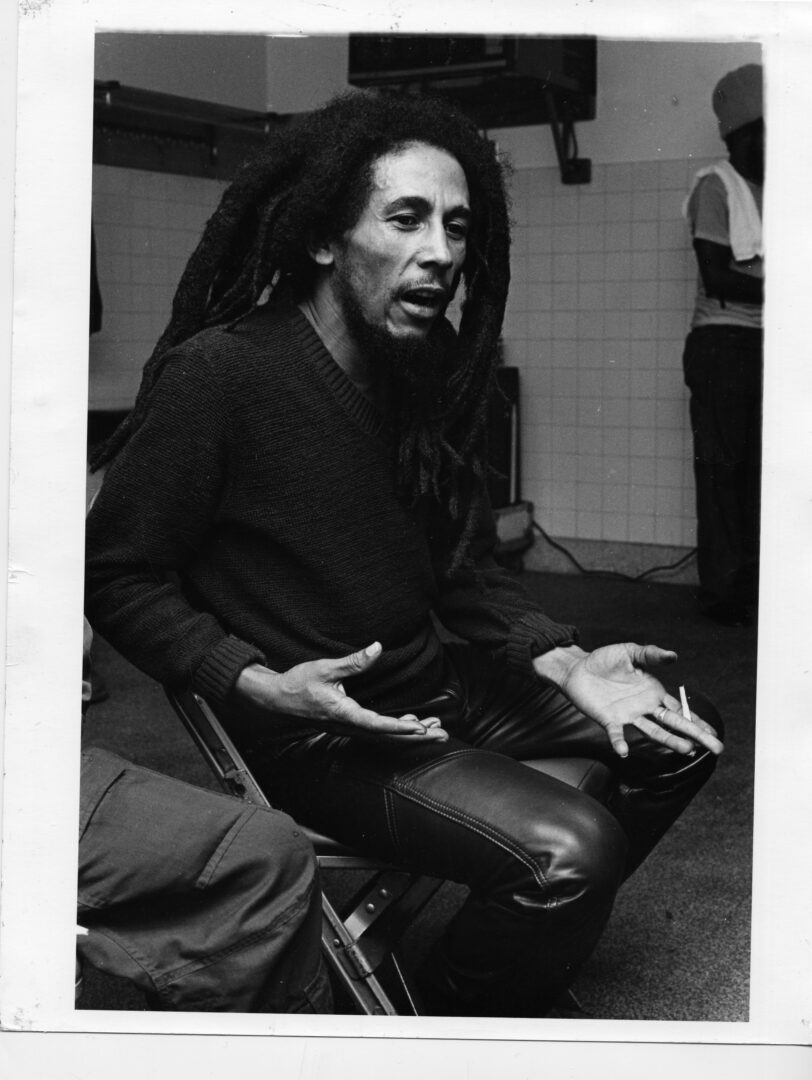
Photo of Bob Marley by Roger Steffens.