Harvey Kubernik Interviews with Jerry Garcia, Bill Graham, Marty Balin, Paul Kantner, Grace Slick, Bill Walton
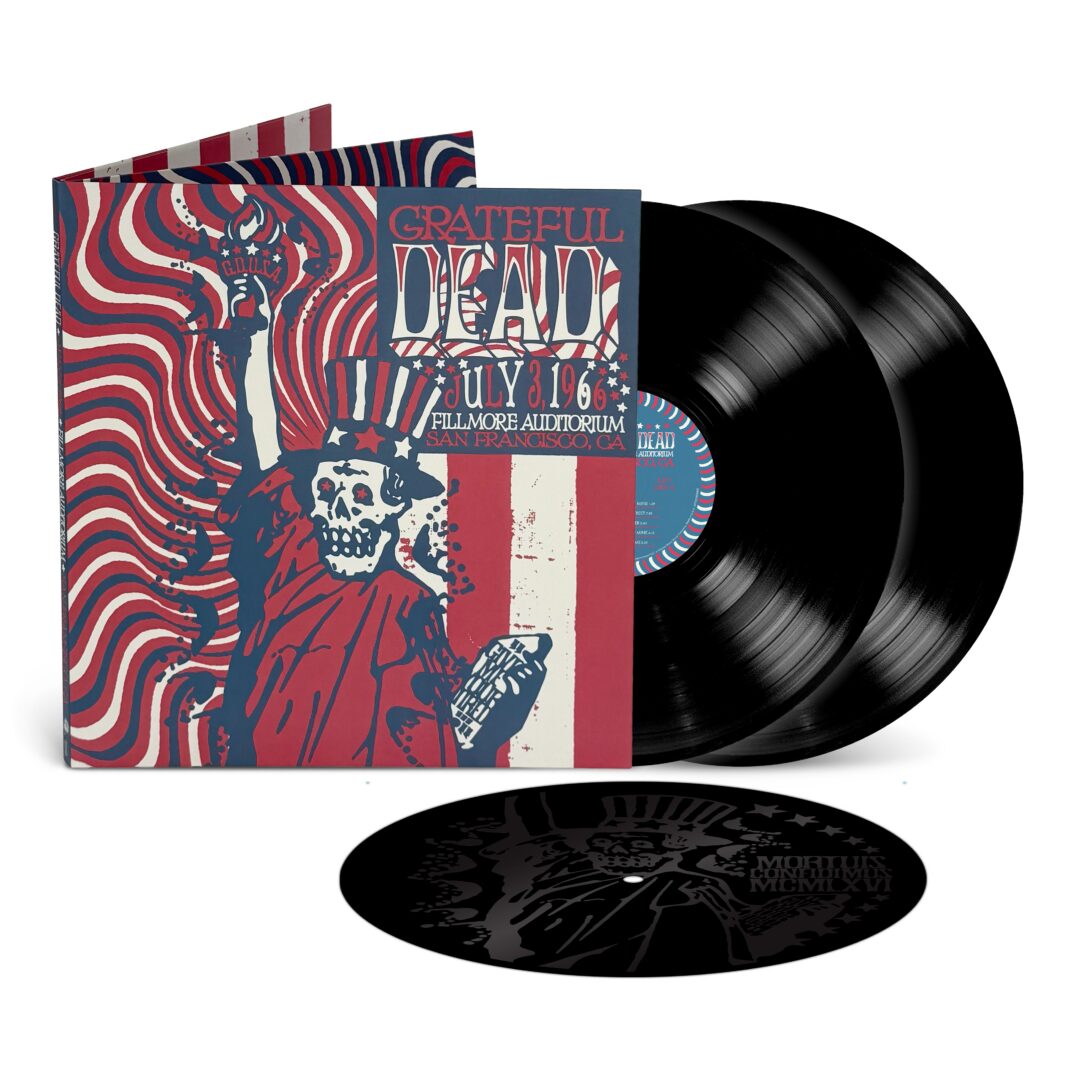
Six months after changing its name from the Warlocks, the Grateful Dead was a scuffling, unsigned band searching for an identity when it played Bill Graham’s Independence Ball on July 3, 1966. That show—making its vinyl debut exactly 60 years later.
Fillmore Auditorium, San Francisco, CA (7/3/66) arrives July 3 from Rhino.com on 2CDs. A 3LP-set will be available exclusively from Dead.net, limited to 6,600 copies and featuring a custom etching on the final side. The live album will also be available digitally to stream and download. The original performance was recorded by Owsley "Bear" Stanley and produced by Grateful Dead Legacy Manager and Archivist Dave Lemieux. Mastered by Jeffrey Norman at Mockingbird Mastering with speed correction and tape restoration by Plangent Processes.
While the Dead's archive is legendary for its depth, complete high-fidelity documents of the band's first year are rare. The July 3 recording—which debuted in 2015 as part of the 50th-anniversary boxed set 30 Trips Around the Sun—stands as a primary exception. It captures the group in the midst of a radical mutation, a charged R&B dance band already moving toward new musical terrain in the star-spangled ether of the Independence Ball. At the time, the band featured Jerry Garcia, Bill Kreutzmann, Phil Lesh, Ron "Pigpen" McKernan, and Bob Weir.
The performance includes the earliest known live recordings of several songs, including rare originals like "Tastebud," "You Don't Have To Ask," and "Cardboard Cowboy." These tracks, along with a cover of Johnny "Guitar" Watson's "Gangster Of Love," would largely vanish from the band's repertoire by the end of the summer.
One of the staples that would survive, "Cold Rain and Snow," possesses a raw urgency that wouldn't settle into its more familiar, laid-back arrangement for several years. That recording is available digitally today. Of the track, Grateful Dead Archivist David Lemieux said "One of the Grateful Dead's longest-tenured songs in their repertoire, Cold Rain & Snow was around from 1965 to 1995, played every year of the Dead's performing career aside from 1968 and 1975. This was played when it was still in its peppier arrangement."
"The Grateful Dead are a profoundly young band on the recording of the Independence Ball," writes Jesse Jarnow (co-host Good Ol' Grateful Deadcast, author of Heads) in the album's liner notes. "There's a round of applause after every song, but rarely cheers. It's only been 14 months since the Warlocks made their live debut, and they sound it—sometimes raw, but always thrilling. And, honestly, maybe a little jittery, too... As alien as they sound from the present, the miracle of the Dead tapes from 1966 is that they're not from alternate timelines at all, but realities that manifested into ours for the briefest of flashes."
There is also the new episodic social series A Beginner's Guide To The Grateful Dead Live which continues with a five-song playlist from Chris Benchetler. The legendary freeskier is the creative force behind Fire on the Mountain, the award-winning 2019 action sports film narrated by Bill Walton and set to the music of the Grateful Dead. Benchetler joins a growing list of notable Dead Heads helping newcomers navigate the band's vast live catalog through this series. The playlists serve as the perfect entry point for the curious, as guests share some of the performances that helped get them on the bus. https://www.dead.net/beginners-guide
Learning about this upcoming Grateful Dead 1966 release, I am reminded of the Fillmore Auditorium, and 1976-2010 interviews I conducted with Jerry Garcia, Bill Graham, Jefferson Airplane’s Marty Balin, Paul Kantner, Grace Slick and Bill Walton.
Harvey Kubernik: Bill, can you remember your first meeting with Jerry Garcia?
Bill Graham: I met Jerry in 1965. He was doing the Acid Tests. I thought he and his entire band were from another planet. I was very disturbed at those first parties because—and there’s a lot of differences in opinion—grown-ups as well as kids were testing their metabolism. I was producing theater in San Francisco at that time, where the group was still the Warlocks, doing benefits involving these groups. I got to know him later on.
Jerry Garcia: I really think the scene out here created the possibility for Woodstock to happen. The Monterey International Pop festival—the thing, the activity, music, and people. The set-up was out here.
BG: Before Woodstock, if you had a hit album—700,000 or 800,000 units. Today an album will sell three million units and there won’t be any headlines. How can you retain the quality of the soup when you add water? The beauty of what Jerry is saying is that the Dead, Starship, Santana and others were very instrumental in something that they still retain. Knowing you can sell it, would you give it away? There were free shows put on that didn’t have to be free.
HK: In a business marked by one-hit wonders and trends, how do you account for your longevity?
JG: We’re serious. One of the things you could say about all the bands that came from San Francisco at that period of time was that none of them were very much alike.
BG: There was never a San Francisco sound, or a Boston sound. They may do the same thing to an audience though, which is give them pleasure.
JG: I think each of us has dealt with it in various ways. For me, I know what I’m supposed to do, and I’ll do what I’ll have to do to be able to play. I think almost all the people I’ve known around this area, involved around the music scene, have been faithful to that thing.
BG: Jerry just hit a key. There is something that they’re always had in common from the beginning, something hardly spoken about in the media after all these years. The San Francisco bands, starting with the Dead, always went to the gigs with the intention of putting it out there. It was the lack of professionalism at the beginning that made that possible. It wasn’t that the contract said 45 minutes and “that’s what we’ve got to play.” They were the first one who asked to play longer. They wanted to extend the relationship between the audience and themselves. And that prevails to this day. You can’t get them to play shorter sets. Carlos always wanted to play longer which is very different from the professional attitude that you get.
BG: One of the reasons for that—and Jerry won’t say it—is you get a man like this who can make all kinds of money across the country. The Grateful Dead just came off the road, and he has a desire to play, and he takes his band and plays a club that holds 400 people! When you go out, you want to make music and you want to make a living. There are times when I really think the Grateful Dead are demented—insane. They could have made ten times as much money.
JG: I always did. I think that the world has changed. I think the United States has changed very visibly in the last ten years. A lot of it had to do with what happened in San Francisco. I can’t say how or why, but I also think it’s affected everything?
HK: Like how?
JG: Just all the interest in things like ecology. All the interest in the sense of personal freedom as expressed by all kinds of movements. All these things were designed to free the human. Social overtones. All that stuff. The communal spirit.
HK: Did you ever think ten years ago that the Grateful Dead would get beyond the ballroom circuit and that rock and roll would be presented in baseball stadiums?
JG: When the Acid Tests were happening, I personally felt “In three months from now the whole world will be involved in this.’ So, as far as I’m concerned, it’s been slow and disappointing. Why isn’t this paradise already? [Laughs.] My personal feeling has been one of waiting around.
HK: Being an elder statesman in the rock and roll world, how long do you feel you can continue the hectic pace, touring deadlines?
JG: I’ve learned that it requires a certain discipline for me personally. And I know I’ll approach it in a certain way. I’ll definitely burn out, and I wouldn’t survive a tour, for example. For me, it’s a matter of surviving. This is the set of givens. You’re gonna be in airports, motels, exposed to any number of strange drugs, strange experiences, intensity of this sort, and so forth. Within that framework how do you stay even? What you do is learn so it becomes a thing of pace, vitamin C, protein. You try and stay alive. That’s a fundamental problem. I’m just the sort of person who deals with things on that level. Once I know things what I have to cope with, it’s just a matter of adjustment. I just hate personal failure, being on stage and going through the changes and playing bad because I’m either not well, tired, too stoned, whatever. To me it’s an aversion therapy thing. It’s the reason I’ve been able to survive.
HK: Both of you were cultural heroes of the Bay area scene. Was there any added pressure being a mouthpiece for the community?
JG: Everybody knows who they are. No matter what you read about you in the paper, you know who you are. You don’t get any special breaks at the gas station. You can either be sucked in by that stuff, in which case it just eats you, or else just realize there’s a difference between what you read and who you are.
HK: Didn’t you ever feel you represented something special to the honest music community?
JG: I always did. I think that the world has changed. I think the United States has changed very visibly in the last ten years. A lot of it had to do with what happened in San Francisco. I can’t say how or why, but I also think it’s affected everything?
HK: Like how?
JG: Just all the interest in things like ecology. All the interest in the sense of personal freedom as expressed by all kinds of movements. All these things were designed to free the human. Social overtones. All that stuff. The communal spirit.”
Marty Balin
HK: Tell me about the Matrix Club. You booked the Warlocks into the venue.
MB: I opened the Matrix Club in 1965 in San Francisco. Booked bands in 1966 and ’67.
“I roamed around and went into this bar down on Fillmore that looked empty on a Friday night. Not many people in it. So, I came back Saturday night and there were very few people in the bar. So, I went and told these guys I thought we could get that bar because it’s not doing great biz. So, they went and they got the license from that guy and we started fixing it up and making it into the Matrix. As we were doing that people, you know, people were comin’ in lookin’ for places to play. The infamous Warlocks. Janis [Joplin]. All these other people were looking for places to play, too. So, I had an immediate influx. And besides that, I had jazz guys playing, there, blues guys, cats from The Committee. They would do stand up. It took off right off the bat.
HK: You worked with concert promoter Bill Graham, who in the sixties managed Jefferson Airplane for a while.
MB: In my formative rock days, Bill Graham was my manager, and you couldn’t have a better teacher.
Bill came out from New York and had the New York moxie. He was a totally different cat. He was running the Mime Troupe when we went over there to rehearse and I remembered him. He was sitting in the office and I looked at him and remembered him auditioning for this play, Guys and Dolls. And he got fired after a big fight with the director. ‘Cause I was a dancer in the show. So, I went into the office. And he asked, “‘I’m just playing original music. I just want to do that.” And we started talking and I said, “Why don’t you put on a benefit for your Mime Troupe and we’ll play it and see what happens.” And he put on a benefit for the group’s legal defense fund. They were lined up around the block. Lawrence Ferlinghetti, the Fugs, John Handy, and Jefferson Airplane. November 6, 1965. I said, “Hey Bill. Why don’t you get a place and we can play often?” So, he went and got the Fillmore. We played a show with the Russian poet Andri Vozneskensy. And boom! History was made.
“I loved the room. There was a good sound system that changed and grew as the bands grew with their equipment. That’s one of the amazing things: The technology that grew around us, you know, as we were playing. Because I remember starting out, we had these little Column speakers on the side of the stage that were really lame. Especially for electricity. And I thought to myself, ‘Boy. If it’s like this for me. What was it like for Little Richard and Elvis and guys like that?’
“As the Fillmore started, people were coming in with amps and guitars for the guys to try and a new sound system that was always be changed, being put up and getting bigger and better. It just all grew all around us and just fascinating to watch.”
Grace Slick:
HK: The Fillmore was a second home to your band.
GS: We played the Fillmore. The audience and the bands were not that separate. In other words, a large amount of the audience was the other bands at the time. There were lots of bands that were working in San Francisco and we played with each other on the stage sometimes. Somebody would walk up from the audience and play guitar for a while with somebody. Another band. So, it was casual, and not that separated.
HK: You knew and worked with Bill Graham at The Fillmores, who at one time managed The Jefferson Airplane. What was he like?
GS: As a rock ‘n’ roll force, I mostly liked his energy. Both physical and mental. He was able to keep an awful lot of balls in the air. He could organize, and do business, whereas most of us were on the artistic side, which is a positive thing, but also, we would not have been able to deal effectively, I don’t think, with the business end of it. Which he did. And without that, we would not have had what we did. A venue to express ourselves.”
Paul Kantner
HK: Your thoughts on The Fillmore
PK: The reason that people came to the Fillmore was not the band. People came to the Fillmore much like a Harvest festival. The same reason they came to the Human Be In. To be there. And if there were food bands playing that was an added plus. But not many people were coming as fans of the band. Not many. Some. That wasn’t the draw of the Fillmore and the Avalon. I went to the Human Be In. The summer before the summer of Love I always mention. Everything was possible. And plausible, even. And we got away with it all. More or less. Mostly. You went to the park, the Fillmore, Monterey, to get absorbed in the whole whatever it was going on.
Again, getting to the heart of the matter. The point is if you find something that makes you joyful take note of it. Amplify it if you can. Tell other people about it. That’s what San Francisco was about. Both musically, idealistically, and metaphorically and every other way. That’s what we did here. We were in a place that encouraged and nourished that kind of thinking and still does to this day and we took full advantage of it. We weren’t up on soap boxes complaining like the Berkeley people. And we need those people too. Those people are very valuable but that’s not what we did.”
The college and professional basketball player, radio and television broadcaster/analyst Bill Walton was one of the world’s best known Grateful Dead followers and ardent fan since the late sixties of their concerts, catalog and legacy.
Mandatory viewing for any Grateful Dead fan is 2024’s ESPN 30 for 30 series multi-part documentary on Walton,The Luckiest Guy in the World, directed by Steven James, with a Grateful Dead soundtrack.
Walton was a three-time All-American all three years he played varsity ball, during which the legendary John R. Wooden coached UCLA team compiled a record of 86-4. The #1 draft choice of the Portland Trailblazers in 1974, his professional career was stunted by frequent injuries, but he did manage To Lead Portland to an NBA title in ’77 and was the league’s MVP the following year. As a member of the Boston Celtics’ ’85-’86 champions, he was winner of the NBA’s prestigious Sixth Man Award. He also played for the San Diego/L.A. Clippers ’79-’85.
Bill Walton
HK: What are the similarities between the Grateful Dead and basketball team?
BW: Creativity, team, work, speed. You don’t know what’s gonna happen from one moment to the next. It’s not scripted. The Grateful Dead are like a basketball team in that the guys who stir the drink are different every day and there’s a tremendous inter-team competition. I’ve seen it be Bob Weir or Mickey Hart, Danny Ainge or Scott Wedman. Basketball teams play in many of the same arenas as the Dead do. It’s really fun when I go to a game now as an announcer and the security guards and ushers will stop me and say, “Bill, what are you doing here? The Dead aren’t playing tonight.”
The Celtics always teased me about being a Deadhead. Naturally, none of them had ever been to a Grateful Dead show. So, one night, I took Kevin McHale and Larry Bird to a Dead gig in Boston for my birthday. Afterwards, some of the band and crew came over to one of the Celtics’ practices. Mickey Hart even wears a Celtic warm-up jacket in the video of the Dead’s “Touch Of Grey.”
Later in the season, the Dead were going to play outside Boston, and I talked to the guys and they made special arrangements so the team could be seated in an area near the stage for the show. Just about the whole Celtics team came, even Chief (Robert Parrish), There was a moment when Jerry Garcia looked over at Larry Bird and started to play, like “This is how we do it,” and they went on to jam for four hours. It was a magic moment for me because the Grateful Dead have been such a huge part of my life for over 20 years, and I think my friends and teammates finally got it.
When I played in Portland, I was friends with the some of the PA announcer at the Coliseum. I would bring Dead tapes and cassettes to be played before the game. When we came out for the warm-ups, they’d play “Truckin.” When I was in Boston, the organist at the Garden learned to play a bunch of Dead songs.
HK:How would you compare Jerry Garcia and Larry Bird?
BW: Brilliance in performance is the main similarity. Commitment. Passion for work. Jerry Garcia is not one of those guys who sits around thinkin’, Gee… I just can’t wait for this to be over.” He just wants to work every day. For people like Garcia and Bird, there’s never enough. A lot of guys wish there were 82 games each season and some wish there were 50. Garcia and Bird both have the hunger, desire and creativity to never be satisfied. They will always believe they can do it better. The real beauty of Garcia and Bird is that when they see somebody else has gotten it done, they come back the next time better than ever.
(Harvey Kubernik is the author of 21 books, including 2009’s Canyon Of Dreams: The Magic And The Music Of Laurel Canyon, 2014’s Turn Up The Radio! Rock, Pop and Roll In Los Angeles 1956-1972, 2015's Every Body Knows: Leonard Cohen, 2016's Heart of Gold Neil Young and 2017's 1967: A Complete Rock Music History of the Summer of Love.
Sterling/Barnes and Noble in 2018 published Harvey and Kenneth Kubernik’s The Story Of The Band: From Big Pink To The Last Waltz. In 2021 they collaborated on Jimi Hendrix: Voodoo Child for Sterling/Barnes and Noble.
Otherworld Cottage Industries in 2020 published Harvey’s Docs That Rock, Music That Matters. His Screen Gems: (Pop Music Documentaries and Rock ‘n’ Roll TV Scenes) was published in February 2026 by BearManor Media. Kubernik is researching a multi-voice narrative study on the Beatles scheduled for a UK publisher with a summer 2027 publication date.
Harvey spoke at the special hearings in 2006 initiated by the Library of Congress held in Hollywood, California, discussing archiving practices and audiotape preservation.
In 2017, he appeared at the Rock & Roll Hall of Fame in Cleveland, Ohio, in its Distinguished Speakers Series and as a panelist discussing the forty-fifth anniversary of The Last Waltz at the Grammy Museum in Los Angeles in 2023).
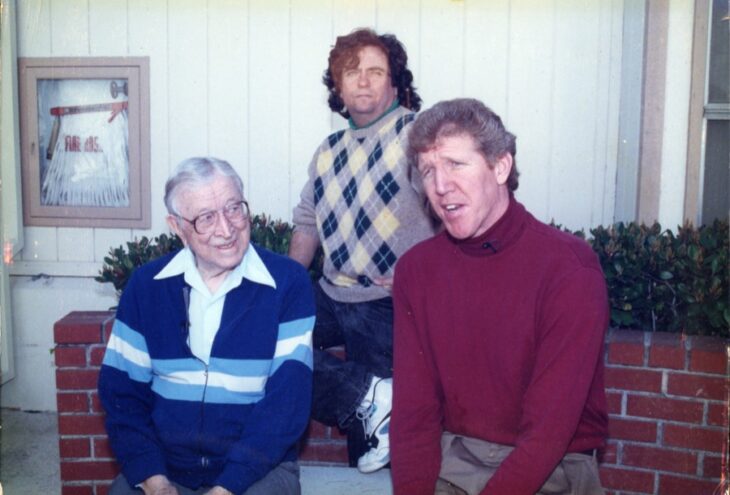
Photo of John Wooden, Harvey Kubernik, Bill Walton by Heather Harris.
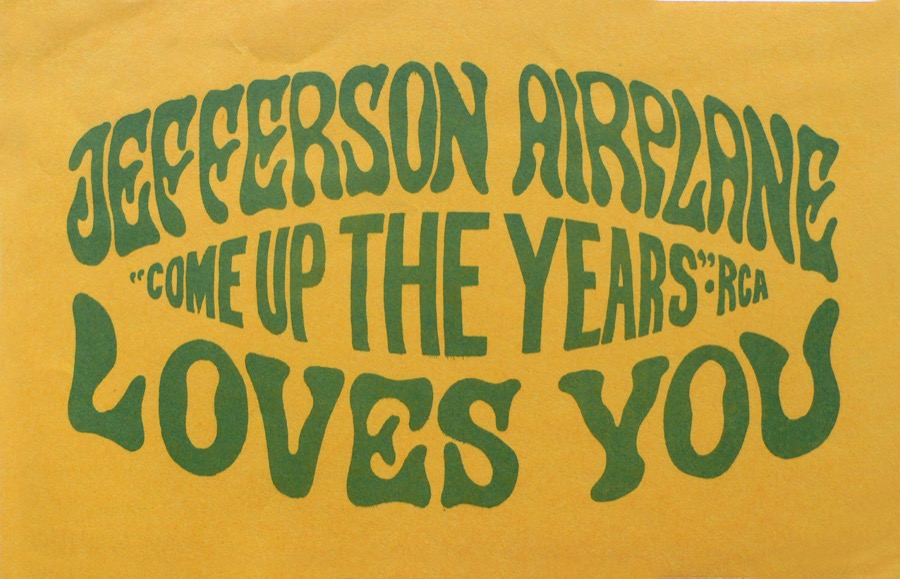
Jefferson Airplane promotional sticker courtesy of Gary Strobl.