
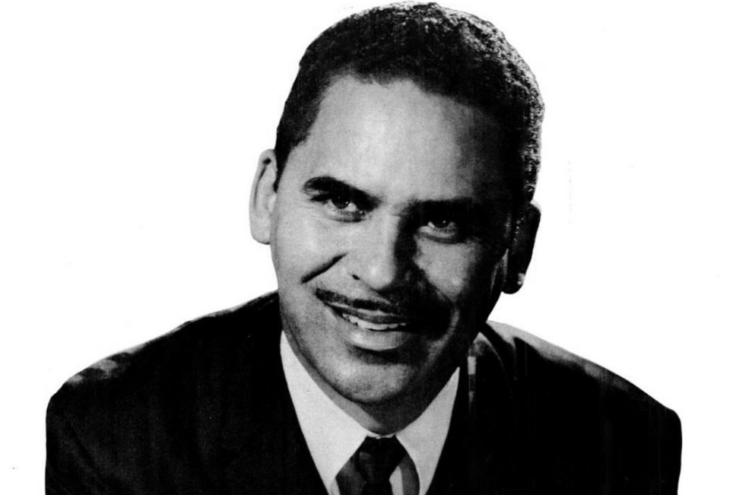
With the 2017 book Soul Survivor: A Biography of Al Green by Jimmy McDonough, and the popularity of Green’s recordings on reissue CD’s and streaming outlets, it’s appropriate to display a 2004 interview I initially conduced for HITS magazine with his influential record producer Willie Mitchell. A portion of this conversation appears in the just published McDonough title.
The timelessly sensual groove of both Al Green The Immortal Soul of Al Green, a four CD set released in 2004, and an earlier Hi Records Memphis sound three-CD package, Hi Times: The R&B Years, issued by the Right Stuff label, stand hand in hand with the best and most popular Motown music available these days one can always hear on the radio, discotheque, CD player and movie soundtrack.
These collections deliver a magical era with church-soaked vocals and soaring falsetto leads underlined by the almost-mathematical production work of Willie Mitchell and the soothing and compelling Hi Rhythm under-recognized house band featuring the Hodges Brothers (Mabon, “Teenie” Hodges on guitar; Leroy “Flick” Hodges on bass; Charles Hodges on keyboard), plus Howard Grimes on drums and percussion, and Willie Mitchell’s brother James Mitchell on strings. The late drummer Al Jackson’s work is also documented in these compilations.
Al Green, Ann Peebles, Willie Jackson, O.V. Wright, Syl Johnson, Otis Clay, Bill Black and many more were part of the glittering Hi Records stable, launched in 1956 initially as a rockabilly and instrumental label. The hands-on addition of producer and bandleader Mitchell in the mid-‘60’s veered the label into state-of-the-art R&B recordings. Many of the Hi Records singles sold millions of copies.
Willie Mitchell and his band provided the musical entertainment at several New Year’s Eve parties for Elvis Presley at his Graceland home in Tennessee.
And it’s sometimes forgotten that in the late ‘60’s Willie Mitchell had his own instrumental top 40 single in the U.S. charts “Soul Serenade.”
I saw Willie gig around that time at Disneyland many years ago.
The Beatles on a U.S. tour stop visited Mitchell’s Hi Studio.
The late 1990’s Hi Times box set retrospective of his studio and songwriting ventures, fans and record collectors will have the opportunity to learn about this musical genius and examine Mitchell’s recording style and endeavors at the Hi label. Says Mitchell about Hi Times: “This is a real historical thing. I think the whole world enjoys it, and I’m very happy about that.” Michael Point in his review of the set in The Austin-American-Statesman, illustrates the impact of these Memphis-created recordings and its underrated producer/talent scout: “Mitchell, one of the musical masterminds of modern American music, along with (Al) Green’s voice…seamlessly (fused) sexuality and spirituality in one steamy package.”

Still active in the music and recording business, Willie Mitchell owns a popular club in Memphis, TN, “Willie Mitchell’s,” managed by his two daughters. His sons are involved in the hip-hop arena.
In June 2004 in Memphis, Tennessee Willie Mitchell Boulevard was established.
Besides the Al Green tracks on Hi Times, all of the action cut at Mitchell’s Royal Studios with an RCA number 9 microphone then further check out the Mitchell-produced tunes from Ann Peebles. “I Can’t Stand The Rain,” was a favorite record of John Lennon, and the scary warning prediction, both in the lyrics as well as Ann’s voice in “I’m Gonna Tear Your Playhouse Down,” covered by Graham Parker.
Like Allen Toussaint, Sam Phillips, Rick Hall and other regional giants, Willie Mitchell has left a lasting impression on Rock and Roll and Rhythm and Blues,” he states.
In the May 2001 issue of MOJO magazine in the U.K., writer Robert Gordon described the Hi Studio and further detailed Willie Mitchell’s vast audio contributions.
“The Hi Studio is located in an old movie theatre, the Royal, the control room used to be in the projection booth but has moved to the back of the studio floor, which still slopes. They began with a two-track machine and by the time they were done with Al Green’s hits, they’d linked four together, wired so that only two machines-four tracks-could record simultaneously. Willie Mitchell was innovative and exacting, and achieved his multi-layered sound with antiquated equipment.”
In his biography for the Blue Note Records label in 2005, Green explained what brought the two back together, Green says, "Willie has that twinkle in his eye, he has a talent. He's the founder of the Al Green sound, that personal sound. It's finishing the aural painting that we started with 'Tired of Being Alone,' 'Let's Stay Together,' 'For the Good Times' and all those things. It's a beautiful painting and we should finish it, so that's what we're doing."
In October of 2005 EMI Music Marketing issued the splendid Al Green: Greatest Hits, an expanded CD/DVD collection that includes all the Green And Mitchell hit collaborations with a DVD that includes five never before available Green TV appearances spanning 1972-2004.
The pair during their initial Hi/London Records period through 1976 did 8 albums that sold over 20 million records.
In 1994 I conducted a phone interview with fellow Pisces Willie Mitchell in Memphis, TN. We chatted about his monumental recording and production career, his work with Hi Records, and life in the studio with his most important talent discovery, Al Green.
Q: Where were you born?
A: Ashland, Mississippi. My parents moved to Memphis when I was three.
“I studied music at Melrose High and then Rust College. Before I went to college, there was a Memphis musician named Onzie Horn, whom I lived with for a while when I was 16. He showed me the Schillinger system (a music method) he had learned in Chicago. He studied with Billy Strayhorn and Quincy Jones.
Q: There is almost a mathematical production style and the way you employ sparse instrumentation on many of the recordings we’ve heard the last 30 years. I know the Schllinger system involved music notes or notation as mathematics.
From listening to the Hi Records box-set, I noticed you used big, semi-jazz chords in your charts.
A: When I began work with Al Green, I applied some of those different things. Especially on “I’m Still In Love With You.” You’ll find lots of those big chords there. I used freak chords on “Let’s Stay Together.”
Al would come to the house and eat and sleep. My wife cooked for him. I used to play him records and say, “Listen to the notes and how they are posted.” In fact me and Al used to spend as much as 10-15 hours a day just studying.
Q: How do you feel about the release of the Hi Records collection?
A: I’m glad the box set is out. There are a lot of things on it that weren’t hits. There’s some pretty good music they’ve brought out of the closet. I’m getting a lot of comments, especially in Memphis, about the collection. “I really didn’t know that.” Some of the stuff I cut I don’t remember.
Q: In the liner note to Hi Times, you mention former Hi Records owner, Joe Cuoghi, who died in 1970. You mentioned he “was the greatest man (you’ve) ever known…he was the guy that put Memphis on the way.”
A: Joe liked me. He used to say, “Willie, you’re five years ahead of your time.” I kept tryin’ to change rhythms. I changed the rhythm of “The Stomp.” I changed the rhythm on a thing called “The Crawl.” It came out under my name in 1962 and did pretty well. Joe was a supportive person. He was like my father, a real go-getter. He respected musicians. He had a good ear. He knew when he heard a hit record. That’s the main thing.
Q: You were around Hi Records for years before they let you get close to the board.
A: I had done an album with O.V. Wright, ‘Eight Men and Four Women’ which became a huge R&B smash for Don Robey and Duke/Peacock Records. Then they sent me Bobby “Blue” Bland and I did an album with them. Then more people began to come. Charlie and Inez Foxx and I would always say to Joe, ‘I don’t like the sounds I’m getting out of this place. We can do better than this.’ I told them I wanted to run the board. For my first session, I cut ‘Soul Serenade,’ which turned out to be a big R&B and pop record. King Curtis had had a pretty good hit on it. I said we’re gonna do it funky and simple. It became a huge hit.
Then we started working with Ann Peebles. A trumpet player, Gene “Bowlegs” Miller, brought her up to me and said, ‘Willie, this girl has a good voice.’ I told him, ‘All she needs is material.’ So we went into the studio with her and the first record went around 100,000. She became popular on the blues and R&B market. This was before Al Green.
Q: How did you first meet Al Green in 1968? I know back then he was billed as Al Greene and the Soulmates who were based in Grand Rapids, Michigan and released an album, Back Up Train on their own Hot Line label. During a tour in Texas, the Soulmates split, and left Greene who did a solo date.
A: We were booked in Midland, Texas. It was a real hot day. 109 degrees in the shade. It was a huge club that seated 2,500 people. When I pulled in, Al Green came up to me and said, ‘Hey man, I’m stranded here. Could I sing a couple of songs? You could give me enough money to get me back home to Michigan.’
So I let him and Al starts singing a Sam & Dave song when we were going over what songs we were gonna do. I was gonna give him $50.00. Then he starts singing and I told my brother, ‘Hold the band a minute.’ I said, ‘Come over here, kid. Man, you got a great voice. Why don’t you go back to Memphis with me? We got a little label called Hi Records and we can cut some records.’ And he said, ‘Well, how long will it take for me to be a star?’ I told him about 18 months. He said, ‘I don’t have that long.’
So, we played the gig that night. I was really amazed at his voice. The way he sounded. The way he delivered a song. So, after the gig, we were packing up the bus and a car had blocked the driveway and we couldn’t leave. We were sitting there ready to go. So there’s a knock on my window. ‘Hey man, you said it would take 18 months for me to become a star.’ I said, ‘Somewhere in that area.’ He said, ‘Nah. I’m not going.’ Then the car in front of me got started and we went to pull out and he said, ‘Yeah, I’m going.’ So, he came to Memphis. We are about ten minutes from Memphis, about to cross the bridge and he says, ‘I have to go back to Grand Rapids, Michigan…I‘m gonna need some money.’ “Uh-oh. Here it comes.” ‘To get myself straight in Grand Rapids so I can come back and work, I’ll need $1,500.00. That was big money in 1969. So I said, ‘O.K. kid, I’m gonna give you this money. Now go back, straighten yourself out and come back.’
He was real cocky, but I liked his attitude. I put him on the bus and three months later, I would think, ‘That little…took my money and I don’t even have an address or phone number with his name.’ Then one night, we played a college in Louisville, Kentucky, came home at 6:30 a.m. and somebody starts bangin’ on the door and Al Green is standing there. I let him in and showed him where he needed to go. He said, ‘Don’t you remember me? I’m Al Green.’ I had forgotten him. He had my money. I got him an apartment, but he was getting frustrated. He cut a version of the Beatles’ ‘I Want To Hold Your Hand.’ We came up with a thing called ‘You Said,’ which did about 100,000. I wasn’t satisfied with that. I said, ‘We’re off on a Sly Stone groove and we’ve got to find our own thing.’
Q: What was the initial session like in 1970?
A: He was singing too hard. I told him he had to soften down. Then we cut a version of the Temptations’ ‘I Can’t Get Next To You.’ that did about 700,000. It showed that he was still singing hard but he had such command. That sort of launched him into getting some gigs. Then we started cutting an album, ‘Green Is Blue.’ He was up in Detroit and brought in this song, ‘Tired Of Being Alone.’ And when I heard the song, I knew that was gonna be it.
"It took a long time to find it," Mitchell adds," but we did it by working from 11am 'til two in the morning, every day. 'Can't Get Next to You' was close, but 'Tired of Being Alone' was it."
It hung around February to July and we sold about 900 of ‘em. And I said, ‘I can’t be this wrong. This song was gonna be a hit.’ So I went to Atlanta, Georgia to radio station WAOK. I sat with the DJ and the record busted there. We did 30,000 the first week. I called back to Memphis at WGIA, who I dropped the record already, and told them, ‘We got somethin’ goin’ on.’ Then I went to New York and all hell broke loose. It ended up doing 1.5 million. I told Al, ‘You’ve been singing hard.’
Q: I always heard that when Al was in England on his first tour, you really developed your own sound for him at that point back home.
A: When Al was in England, I came up with the melody for ‘Let’s Stay Together.’ When he came back, we would stay at the piano from 9 in the morning until 11 at night. Just a piano and a tape recorder and he’d sing. In 15 minutes, all the lyrics were down for ‘Let’s Stay Together.’ I was getting’ hot. I wanted 500,000 copies pressed on ‘Let’s Stay Together.’ They thought I was crazy. The record came out on Monday and by Thursday it was gold. Then, ‘Call Me.’
Q: What were Al Green’s greatest strengths in the recording process? You stressed a falsetto vocal coupled with the Hi Rhythm Section, (The Hi Records house band) that birthed a new form of funk and soul.
A: The main thing is, Al could sing in tune. Once he got a hook on a song, it was hard to beat him. The song was dead. We had six years of nothing but gold and platinum records with Al. Then we finally hit with Ann Peebles’ ‘I Can’t Stand The Rain.’ That was good. Did some really good stuff with Syl Johnson. We did the rhythm tracks, Al Green or whoever would sing their part, and we’d build from that.
Q: I’m amazed listening to the drum sounds on your productions, with Al Jackson’s pulsating drums and Howard Grimes on conga. The songs still jump out of the radio.
A: Al Jackson was my drummer until his death. Howard Grimes had cut for Stax, recorded with Rufus Thomas and still worked with me. Every time I cut Al Green, I would have both Howard and Al on hand to play.
Q: You also worked with the fantastic blues singer O.V. Wright, who is still being recognized by new record buyers.
A: O.V. Wright, in my opinion, is the greatest blues singer that ever lived. I don’t think there’s anybody close to him for the feeling he had and the way he approached a song.
In 2007, Al Green celebrated the 40th anniversary of his soul-transcendent music career. To commemorate the occasion, Al Green: The Definitive Greatest Hits, a new career-spanning collection of his most beloved and enduring hits, was issued in January by Capitol/EMI Music Catalog Marketing in CD and deluxe CD/DVD packages and digitally. The collection’s 21 tracks, all 24-bit digitally remastered, include five classic Hi Records-era Number One hits, “Let’s Stay Together,” “I’m Still In Love With You,” “L-O-V-E,” “Livin’ For You,” “You Ought To Be With Me,” and other career-defining tracks Green recorded for Hi and Blue Note. The CD package features new liner notes by Colin Escott and archive photos, and the deluxe CD/DVD adds six film and video clips, including TV performances from 1971, 1978 and 2004.
(Harvey Kubernik is the author of 20 books, including 2009’s Canyon Of Dreams: The Magic And The Music Of Laurel Canyon, 2014’s Turn Up The Radio! Rock, Pop and Roll In Los Angeles 1956-1972, 2015's Every Body Knows: Leonard Cohen, 2016's Heart of Gold Neil Young and 2017's 1967: A Complete Rock Music History of the Summer of Love.
Sterling/Barnes and Noble in 2018 published Harvey and Kenneth Kubernik’s The Story Of The Band: From Big Pink To The Last Waltz. In 2021 they wrote Jimi Hendrix: Voodoo Child for Sterling/Barnes and Noble.
Otherworld Cottage Industries in 2020 published Harvey’s Docs That Rock, Music That Matters. His Screen Gems: (Pop Music Documentaries and Rock ‘n’ Roll TV Scenes) was published on February 6, 2026 by BearManor Media.
Harvey spoke at the special hearings in 2006 initiated by the Library of Congress held in Hollywood, California, discussing archiving practices and audiotape preservation.
In 2017, he appeared at the Rock & Roll Hall of Fame in Cleveland, Ohio, in its Distinguished Speakers Series and as a panelist discussing the forty-fifth anniversary of The Last Waltz at the Grammy Museum in Los Angeles in 2023.
During 2025, Kubernik was interviewed in the Siobhan Logue-written and -directed documentary The Sound of Protest,airing on the Apple TVOD TV broadcasting service. The film also features Smokey Robinson, Hozier, Skin (Skunk Anansie), Two-Tone's Jerry Dammers, Angélique Kidjo, Holly Johnson, David McAlmont, Rhiannon Giddens, and more.
Harvey was an interview subject along with Iggy Pop, the Beach Boys’ Bruce Johnston, Love’s Johnny Echols, the Bangles' Susanna Hoffs, Victoria and Debbi Peterson, and the founding members of the Seeds for director/producer Neil Norman’s documentary The Seeds: Pushin' Too Hard. In summer 2026, GNP Crescendo will release the film on DVD/Blu-ray). Author Miss Pamela Des Barres narrates.
Willie Mitchell photo (top) courtesy of Hi Records/Wikicommons
Al Green photo by Brad Elterman