I suspect the estate of Tom Petty and Universal Music Enterprises are preparing a 50th edition of Tom Petty and the Heartbreakers’ first LP in the summer of 2026.
As a recording artist and archivist, the late frontman Petty was keenly aware of his ongoing legacy and repurposing his catalog. A recent Record Store Day release was Tom Petty and the Heartbreakers Live at the Paradise Rock Club 1978, from a gig in Boston.
The SiriusXM channel still broadcasts reruns of Tom’s show, Buried Treasure, with exclusive content from Mike Campbell, Steve Ferrone, and guest DJs programming never-before-heard recordings.
https://www.tompetty.com › pages › radio
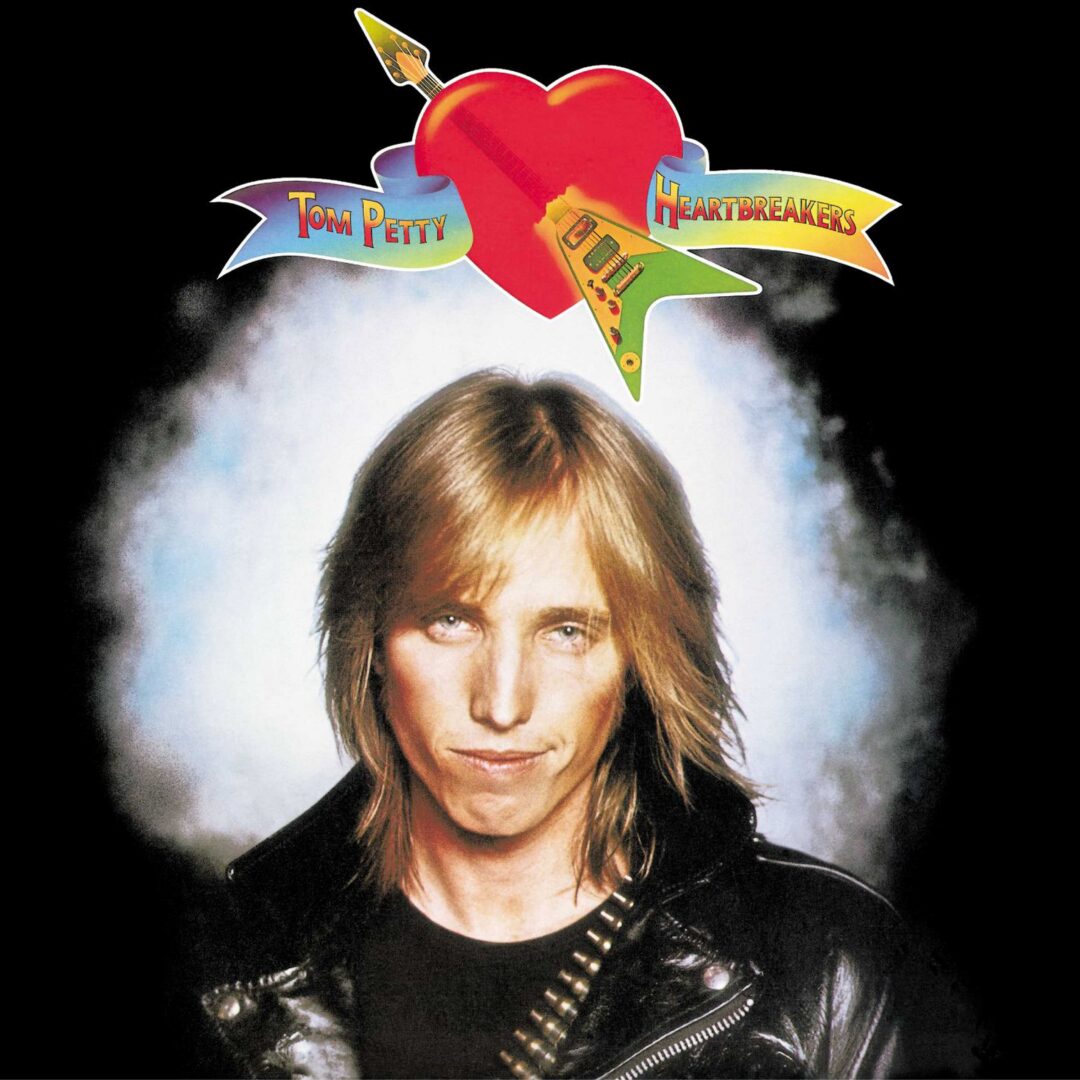
Tom Petty and the Heartbreakers was released on November 9, 1976, by Shelter Records. The LP was produced by Denny Cordell, recorded and mixed at the Shelter Studio in Hollywood, California.
Singer/songwriter and guitarist, Petty wrote all the songs, except "Rockin' Around (With You)," co-written with guitarist Mike Campbell. The Heartbreakers lineup included organist and piano player Benmont Tench, bassist Ron Blair, and drummer Stan Lynch. There were additional musicians on a few songs, including bass players Donald “Duck” Dunn, Emory Gordy, and drummer Jim Gordon, along with background singers Phil Seymour and Dwight Twilley.
In 1975, I interviewed Petty’s former Shelter Records label mates, Dwight Twilley and Phil Seymour, for Melody Maker when their “I’m on Fire” was on the charts.
We were inside the Shelter Records office, which was located in, shall we say, “the seedy area” of Hollywood. I remember leaving Shelter that afternoon, clinging to my newly purchased cassette tape machine as two eager prostitutes and a dope dealer escorted me to my car.
In 1978, Phil Seymour and I were invited to the Paley Brothers recording session of “Baby, Let’s Stick Together,” which Phil Spector was producing in Hollywood at Gold Star studios.
I have a memory of hitting a tambourine with Seymour near drummer Hal Blaine, bass player Ray Pohlman, keyboardist Barry Goldberg, along with guitarists Don Peake, Dan, and David Kessel. Seymour and I were on the date as percussionists, although I’m not listed on the internet credits.
A few years before his death, Andy Paley, aware of this omission, mailed me The Paley Brothers-The Complete Recordings on the Real Gone Music record label, where my name was now in their 2013 liner notes booklet.
My first encounter with Tom and the Heartbreakers was at the Shelter Records office in 1976, when label co-owner Denny Cordell had arranged perhaps the first promotional photo session with Andee Nathanson (neé Cohen). That day, Andee and I were immediately struck by the determination exhibited by the young Tom Petty.
Soon afterwards, I visited ABC Records on Beverly Blvd in Los Angeles, which distributed Shelter at the time, and was invited to hear an acetate pressing of the band’s LP before it was shipped to retailers. I was impressed.
The first single issued was “Breakdown,” which cracked the Top 40 US charts. “American Girl” subsequently became an FM radio staple and one of the band’s signature recordings. In 1978, the disc went Gold.
In 2024, the Tom Petty Estate, Cameron Crowe, and Tribeca hosted the world premiere theatrical showing of the documentary Tom Petty: Heartbreakers Beach Party at the Laemmle Royal Theatre in West Los Angeles. Distributor Trafalgar Releasing released it in cinemas. It was Crowe’s first film as director and aired only once on MTV in 1983. The long-thought-lost 16mm reels were restored with twenty additional minutes of archival footage starring Petty and his bandmates Mike Campbell, Benmont Tench, Stan Lynch, and Howie Epstein.
It has in-depth interviews, live performances, and access to the group in 1982-1983 as they finish, promote, and tour to support their Long After Dark album, which Petty co-produced with Jimmy Iovine. Tom Petty: Heartbreakers Beach Party was screened, and followed by a panel conversation between Tom’s daughter Adria Petty, Crowe, and Heartbreakers Mike Campbell, Benmont Tench, and Ron Blair, moderated by Justin Richmond (of the Broken Record Podcast with Rick Rubin).
Family, friends, fans, and past collaborators of Petty’s, including yours truly, came together to celebrate the rocker, among them his widow Dana, granddaughter Everly, Heartbreaker Scott Thurston, Justin Pierce, Chris Stills, Roy Trakin, Joel Bernstein, Matt Pinfield, and the Bangles’ Susanna Hoffs and Vicki Peterson.
“Tom Petty and the Heartbreakers leaned into the making of the film with a kind of hilarious music-filled honesty that still feels fresh forty years later,” Crowe said.
“I’m so happy we’re bringing it back in all its reckless glory. The fact that it was yanked from MTV after one airing at 2 am just shows it was indeed an outlandish feast for fans in all the best ways.”
There’s a scene in Crowe’s documentary where he captures Petty on the band’s tour bus singing and strumming an impromptu acoustic version of “(Marie’s the Name) His Latest Flame.” It underscores the realization of Tom’s childhood dream. Doc Pomus and Mort Shuman penned “(Marie’s the Name) His Latest Flame,” first cut by Del Shannon for the album Runaway with Del Shannon, released in June 1961. Elvis Presley recorded the song the same year. That summer, an 11-year-old Petty met Elvis Presley on the set of Follow That Dream in Ocala, Florida, and soon vowed he was going to be a rock star when he grew up.
I saw Tom and the band’s debut at the Whisky a Go Go in 1977, where they opened for Blondie, after which the Heartbreakers’ rocket blasted off, aided by rave reviews in the UK music press.
In early 1978, as West Coast Director of A&R for MCA (now UMe), after MCA bought ABC Records, I made the initial recommendation to Petty’s manager, Tony Dimitriades, that Tom and the band work with engineer turned-producer Jimmy Iovine on their third album (and first for MCA’s Backstreet imprint).
Petty liked Iovine’s previous work as an engineer with John Lennon and his production of Patti Smith’s “Because the Night.”
Out in the fall of 1979, Damn the Torpedoes was Tom Petty and the Heartbreakers’ first multiplatinum album; two years later, they also worked with Iovine on Hard Promises and then Long After Dark.
In 1978, I suggested that Tom and Del Shannon, another of Petty’s early 1960s rock ’n’ roll heroes, make an album together. So, we all met in Hollywood at the offices of music publisher Dan Bourgoise, who helmed Bug Music and managed Del Shannon for decades.
With Petty on board as producer, Del’s studio band included Mike Campbell, Benmont Tench, and Ron Blair (as well as Howie Epstein, who would replace Blair in Petty’s band), along with my submission of guitarist Steven Hufsteter.
Sessions started that fall but stretched out for a year and a half. Finally, at the end of 1981, Shannon’s Drop Down and Get Me was released on Network Records, a new label helmed by Al Coury, a former Capitol Records and RSO Records executive, and distributed by Elektra/Asylum. I received a credit on the album as “Organic Catalyst.”
On December 10, 1981, I went to watch Del Shannon at The Country Club venue in Reseda, California. Tom Petty joined him for the encore, a version of the Beatles’ “From Me to You.” Del was the first recording artist in America to cover a John Lennon and Paul McCartney tune. Afterwards, Del and Tom mentioned they did the song for me. The Doors’ record producer, Paul A. Rothchild, was backstage and complimented my A&R skills.
I earlier interviewed Tom Petty in the Lookout Management offices for the March 8, 1980 issue of Melody Maker.
AND THEY SAID it never rains in Southern California. Like hell it doesn't! Day after day after day of torrential rains nearly washed us into the briny depths. It was a nightmare. Woody Allen would argue it was a warning from the Gods to amend our frivolous, hedonistic LA ways. If nothing else, it's a reminder that there are larger forces at work than governments, oil companies, and record labels. It's a time, as Thomas Mann would say, to "take stock."
Up on Sunset Boulevard, in the steel and glass that houses Lookout Management, Tom Petty sits high and dry. The rains have abated; as the city dries out and reflects, so does Petty. His career has weathered the storm and stress of musical indecision, legal snafus, and the delirious ride to the top of the charts.
Since the release of his latest record, Damn the Torpedoes, Petty has tasted the glamour and gluttony of rock 'n' roll superstardom. After existing for several years on the strength of a big cult following, Petty has broken through to platinum status, vindicating his unwavering commitment to authentic rock 'n' roll values.
"Somewhere, somehow, somebody must have kicked you around," he sings on 'Refugee', his latest single. Beyond its assessment of alienation and love, it captures the true grit of rock's primal scream. That's the emotion that Petty taps in his music and in concert. Developing out of the "I'll piss anywhere" school of rock 'n' roll, first posited in American R&B music and later by the Rolling Stones, Tom Petty and his cohorts, the Heartbreakers are poised for the long haul, fully recovered from the ravages of the star-making chicanery.
Flaxen-haired, gaunt-faced, lithe, Florida-born, Angeleno by design, Petty is composed and uncommonly talkative during our conversation. And although the rock press has lavished voluminous praise upon his shoulders, he's maintained a marked reticence in return. Now, though, fresh off a grueling tour of arenas and large halls in support of the new LP, Petty is primed for a bout of self-analysis.
"Playing large venues is both good and bad," he says. "In one respect, it's very flattering to the ego. The whole trick with the big rooms is to try to make them intimate. You get a whole new set of responsibilities. We did well at the Forum here in LA, and we even managed to squeeze in a club date at the Whisky.
"My life has changed in the three years since we first played the Whisky, when we opened for Blondie. It seems like an eternity ago. I was watching the news recently, and they were talking to these kids who waited hours to get in, and most of them said, 'Wow, Tom Petty and the Heartbreakers have got so big in such a short time.' I guess to them it was a short time, but to me it's been ages. The lawsuit alone seemed like ten years."
He's pleased that, wherever they go, they're always introduced as Petty and the Heartbreakers. "I've always wanted it that way … so there was a band identity established, rather than me and whoever was in the studio at the time. Their identity is coming out more and more. It's healthy.
"Also, we're not as uptight on stage as we used to be. On the You're Gonna Get It tour [this second LP], I noticed some things that weren't happening. I saw a video of us on TV, and it was so boring. We were all so stone-faced. Now we go out to have a good time, and that shows up in every facet of the current live performance.
"Today, with the amount of money people spend going to a concert, they should get their money's worth. You should be able to leave your conscious mind. I used to go listen to the black churches, and it was amazing to watch the energy build until there was some kind of pop. From there it went upward, like a jet taking off.
"We need the feedback of the audience. I just spent a year not having contact with anyone. It was such a pleasure to come back and find that it was still there."
The hiatus in Petty's career occurred when his record label, Shelter/ABC, was bought by MCA Records. Petty contended that his contract entitled him to consult and cooperate in the process of selecting another record company to distribute his recordings, in the event that the pact between ABC and Shelter was ever terminated. Following the buy-out, Petty believed himself to be a free agent, open to negotiate a new contract with whomever he wished, while MCA presumed him to be a new roster addition.
Push came to shove, and in a short time, war was waged in the courtroom, prohibiting Petty from undertaking any musical activities. The legal entanglement was ultimately resolved by the intervention of MCA-Universal executive Danny Bramson.
Bramson, the 27-year-old booking agent for the Universal Amphitheatre and guiding force of Backstreet Records, an MCA subsidiary, proposed a compromise: Petty would sign to his label, keeping Tom under the MCA corporate umbrella while satisfying Petty's demands for the attention and promotion he felt he'd earned. The deal was signed, vast sums of dollars changed hands, assuaging Tom's enormous legal and personal debts, and all was right in the world again.
"We did a small tour last summer in California, 'The Lawsuit Tour', and it was great," he continues. "I think the lawsuit tour ended the lawsuit. It contributed because it showed people that we could play in MCA's own backyard, and it could be pleasurable and in harmony. That's when we started talking again.
"It was a bad experience being off the road, but it was good in one respect: if I'd been on the road, the record wouldn't have sounded the same. Because all I did, to keep from going completely crazy, was write songs and get totally involved in the record. When we came back and played, I knew it made us a lot closer. What the lawsuit did was bring us to a point of break-up, but we survived."
The affair represented a crash-course in music-business ethics — "it was the first time I actually got to see how evil it could be, how rough they play.
"I've always said that there was a book in it [the lawsuit], but who'd want to read it? It's such a miserable, ugly story that absolutely fascinated me by the sheer stupidity.
"They didn't care if they destroyed my mentality, both emotionally and financially. I had to get mean and fight."
Despite this, he maintains that the music business isn't all bad. "I owe a lot to it," he admits. "It's fulfilled my lifelong dream. But on the other hand, musicians aren't educated enough to deal with these people. The businessman knows how bad the kid wants the candy, but many times, they don't realize you have something equally valuable to offer them. Every kid in this town has had a dream, and if it happens, where's all the money gone? Everyone you supported has cars and a house in Switzerland, while you're still living at the Tropicana Hotel [a sleazy hotel in West Hollywood].
"I'd like to think that our band helped pave the way for the things that are happening in town now. New bands don't have to pay Top 40 music to get gigs. Kids will pay to see an unknown band do original material, and new attitudes will develop."
Refreshed by that flight of candor, Petty pauses for a drink and resumes with a critique of his own music.
"In 1976, we were criticized for playing songs under three minutes. When we did our first album, we wanted a little garage sound, not a multi-track effort. Now everyone is into short songs and we're back to stretching out.
"We very rarely rehearse the tunes before recording them. 'Shadow of a Doubt,' I wrote one night and recorded it the next morning. But now, when we play tunes on stage, we have a better understanding of what we want to do with them. We take our time and let them unfold naturally."
Damn the Torpedoes represents a quantum leap in production values and thematic continuity for Petty. Enlisting the aid of New York fireball Jimmy Iovine to co-produce, Petty has crafted a convincing portfolio of the rigors of romantic alienation (“Refugee”), spiritual deprivation (“Century City”), and reaffirmation (“Even the Losers”).
The Heartbreakers ride roughshod over Petty's structures, the sheer depth of their sound rivalled only by Springsteen & the E Street Band. And Iovine, who engineered Bruce's last two albums, brings that same sense of immediacy and drama to Tom’s recording.
This is a subject that Petty warms to without any probing: "I was looking for a new experience in the studio, a radical departure from the past. We did two albums in Hollywood in the same style, with Denny Cordell producing, and it was time for a change. Around the time we finished You're Gonna Get It, Cordell played me Patti Smith's 'Because the Night' and it completely blew my mind. I thought, 'Incredible, who did it?' Some kid named Jimmy Iovine.
"Anyway, time for the third record, and I felt I needed a co-producer because I don't feel I can keep a perspective on myself. I called Jimmy and asked him to come to LA, and he obliged. I found out he worked on Walls and Bridges by John Lennon and, of course, Born to Run, which are two of my favorite albums of mine.
"We met for the first time in the studio, and it was instant communication.
"Jimmy and I agreed to have a more obvious bass sound on this album, because I missed it on the last two. I wanted to hear low end on the drums, and he knew how to get it. He taught the band a lot about rhythm, about relaxing and playing with swing. It's one thing to play a pattern on the drums it's another thing to make it swing.
"The most radical change we undertook is that we moved into a large room to record. We used Sound City and Cherokee Studios rather than a small, tight one. He taught me that if you want to get that big airy type of sound, you've got to be in a big room."
Petty claims, too, that Iovine's understanding of his legal predicament made the collaboration a lot easier. "Jimmy had been through the legal thing with Bruce, and he'd been through it with Lennon. Sometimes when we recorded, the legal hassles were going on in the studio. We'd have to drag out tapes and play all the things we'd recorded, and the court would log the proceedings: a vocal line here, a lead solo there. You wouldn't believe what was going down.
"The scary thing was that I had to put all my money into that record to pay for it. I really had to over-extend myself. The lawyers would check out if we were cutting tracks and then demand that we hand them over. 'We heard you played a Chuck Berry tune, where is it?' Then they'd take me into court and put me on the stand and really grill me for a good nine hours a day."
Petty returned to England last week, to the scene of a triumphant tour that followed his debut LP. British bands now emulate his sound as Petty covers filter into the Isle.
Eager to return to the source of much of his musical inspiration, Petty recalls with mixed emotions his excursions to Britain: "England has always been a special place for us because they accepted us before anywhere else.
"You know, I remember when we were making this album, I kept thinking that this was an American album, the subject matter, the sound, the production. I used to read English reviews with things like, 'He goes through women like Kleenex, a rock 'n' roll gunslinger post!' To me, that's a giggle. I'm not a poser. We've always been proud that we were originally from the South before we landed in LA. All the great rockers were from the South: Elvis, Jerry Lee, Buddy Holly, Carl Perkins, Little Richard.
"Some of the English press have been trying to rub me out. Take the Knebworth gig last year. They gave us all kinds of shit … and I know the gig didn't suck. I saw 100,000 people on their feet.
"We were at a disadvantage. The keyboard broke down on the first number, but we carried on. We played the festival because we didn't have time for a tour, and that was the wrong thing to do."
He enters the '80s on a crest of critical and popular acclaim. In the few short years that constitute his recording career, Petty has experienced a roller coaster of highs and lows. Finally, things have begun to stabilize, and he can settle down into the business of making music without the anxiety of being the businessmen's next sacrifice.
"There was a sense of persecution throughout most of 1979," he says. "I was being sued by so many people at once. Some were suing to protect themselves. I never gave in. It was so gruesome … I didn't go over the edge with drugs. I did a little of that the year before, the 'cocaine lifestyle', but I came to my senses. No drugs or drink were going to get me through the lawsuit.
"I'm finally feeling support from every level for the first time in my life. Management, record company, my family … it helps a lot. It's bigger than I ever imagined it to be. But I want to keep a lid on it. I'm not interested in being a household word. I'm interested in making good records. I just really want to write good songs. Is that asking too much?"
In 1978, I spent a month at Leon Russell’s Paradise Studio in North Hollywood during sessions for his Americana album.
Leon and I talked about Tom Petty, who he and Denny Cordell signed to Shelter Records. Russell was somewhat impressed that in my job at MCA Records, I paired Petty with Iovine, resulting in Damn the Torpedoes. He laughed when I said, “I was just continuing what you and Cordell started. . .”
In 2013, Tom Petty wrote the lengthy foreword to my book Turn Up the Radio! Rock, Pop, and Roll in Los Angeles 1956-1972 (2014), published by Santa Monica Press.
“Here in a stream of consciousness are some random thoughts on Los Angeles. Before I even held an instrument, I knew I had to get to L.A. I lived in a small college town in north central Florida called Gainesville. Quite a nice place in the ’50s, but something inside told me that the road I was on was going somewhere else.
I was born in 1950. At the age of 10, I entered the much-explored decade of the ’60s. I wouldn’t trade coming of age in those years for another 10 lifetimes. But anyway, as I was saying, age 10 was a big year because, for some reason, the radio began speaking directly to me. Rides in the car were becoming magical, the music on the AM pop station was intoxicating. The other kids my age weren’t much interested in records or the radio, confirming my belief that this music was being played for me alone. I didn’t realize until years later that I had memorized the words to a hundred or so pop treasures.
Historically, rock and roll was in the doldrums in the early ’60s and even the late ’50s. Years later, with a greater education and broader overview, I agree the flame was somewhat turned down. But, I tell you, there was still a lot to love. Roy Orbison’s voice came from another world. Ricky Nelson was vibrant and cut through the bullshit with the most badass electric guitar. Brenda Lee’s voice was pure and smoky teenage lust. Many say Elvis was already dead after the army, but to me, “His Latest Flame” or “Return to Sender” were feel-good pills. “The Twist”? Bring it on! Check out Chubby’s Cameo-Parkway single or Joey Dee’s “Peppermint Twist,” and tell me those don’t rock! However, in those days, “rock” was considered far too juvenile to be analyzed in print.
None of the artists had books written about them. I went mad trying to dig up any information on Elvis. However, my radar began to pick up some big- time info when I was forced to spend the day at my older cousin’s house. Looking around his room, to my huge surprise, he owned rock and roll records! He told me simply that all the kids his age dug this music. TEENAGERS! I needed to find some. The 16-year-old girl at the end of my block had always been kind and tolerant of me. So, I began to drop by, and she turned me on to her record collection and some important info like “there are no girls singing on the Everly Brothers’ records.”
When I finally became a teen in ’63, the Beach Boys were my favorites, and guess where they came from? The shows on television ended with the announcer saying, “From Television City in Hollywood.” The call of the West began for me very early. In ’64, the penny dropped. Like thousands of musicians my age, the Beatles’ Ed Sullivan Show appearance was a blueprint for building the rest of my life. English bands became the rage, and that was fine with me. Rock and roll’s flame had been turned up... Way up. The U.S. artists at first seemed to have no real answer until the day I heard the transcendent guitar intro to “Mr. Tambourine Man” on the radio, coming through that tiny dashboard speaker. It was bigger than life itself. The intro spilled into lush harmonies and intriguing lyrics by a songwriter by the name of Bob Dylan. But for me, more than anything, it was the guitar intro that gave the record a profound credibility.
To be specific, a twelve-string Rickenbacker guitar played by Roger McGuinn, who had first seen the instrument in the Beatles’ film A Hard Day’s Night in the hands of George Harrison. If you, like me, were a teen at this time, you know the Beatles’ impact on music and culture could never truly be covered in any amount of literary volumes. But the Byrds’ music came across as totally original. This record would later be viewed by many as maybe the most important cross-pollination in the history of rock. The deejay identified the group as the Byrds from Los Angeles. By the way, so were Rickenbacker guitars. The floodgates had opened. The music business would grow leaps and bounds in L.A. The music hit new highs with the Buffalo Springfield, Love, and many more, which you will soon read about.
I was playing the bass in a band called Mudcrutch with my longtime friend Tommy Leadon. Tommy’s brother Bernie had a group with a guy from my neighborhood named Don Felder. When their group split up, Bernie made the bold move of moving to L.A. In what seemed like no time, he had joined a group called the Flying Burrito Brothers. Tommy left our group for L.A. not long after and quickly secured a gig with Linda Ronstadt.
My mind was made up around the time Bernie started a group called the Eagles, which Don later joined. I was on my way west. L.A. was everything I wanted it to be, history around every corner. Mudcrutch landed a record deal after a whole two days in town. After one failed single, we broke up. Later, we ran into two musician friends from Gainesville and formed the Heartbreakers. Every record we have made since has been in L.A., and I have been a happy resident of the city since 1974.
The musical contributions of the City of Angels follow in fascinating detail on the next pages. I hope I’ve warmed you up for taking in the magic of the city and the power of its radio on innocent bystanders and rock and roll junkies alike. Harvey has done a great job on L.A. and its musical jar of lightning. Enjoy. Tom Petty, Malibu, California ’13.
(Harvey Kubernik is the author of 20 books, including 2009’s Canyon Of Dreams: The Magic And The Music Of Laurel Canyon, 2014’s Turn Up The Radio! Rock, Pop and Roll In Los Angeles 1956-1972, 2015's Everybody Knows: Leonard Cohen, 2016's Heart of Gold Neil Young and 2017's 1967: A Complete Rock Music History of the Summer of Love.
Sterling/Barnes and Noble in 2018 published Harvey and Kenneth Kubernik’s The Story Of The Band: From Big Pink To The Last Waltz. In 2021, they wrote Jimi Hendrix: Voodoo Child for Sterling/Barnes and Noble.
Otherworld Cottage Industries in 2020 published Harvey’s Docs That Rock, Music That Matters. His Screen Gems: (Pop Music Documentaries and Rock ‘n’ Roll TV Scenes) was published in February 2026 by BearManor Media. Kubernik is currently researching a book on the Beatles for a UK publisher scheduled for summer 2027 publication.
Harvey spoke at the special hearings in 2006 initiated by the Library of Congress held in Hollywood, California, discussing archiving practices and audiotape preservation. In 2017, he appeared at the Rock & Roll Hall of Fame in Cleveland, Ohio, in its Distinguished Speakers Series and as a panelist discussing the forty-fifth anniversary of The Last Waltz at the Grammy Museum in Los Angeles in 2023.)
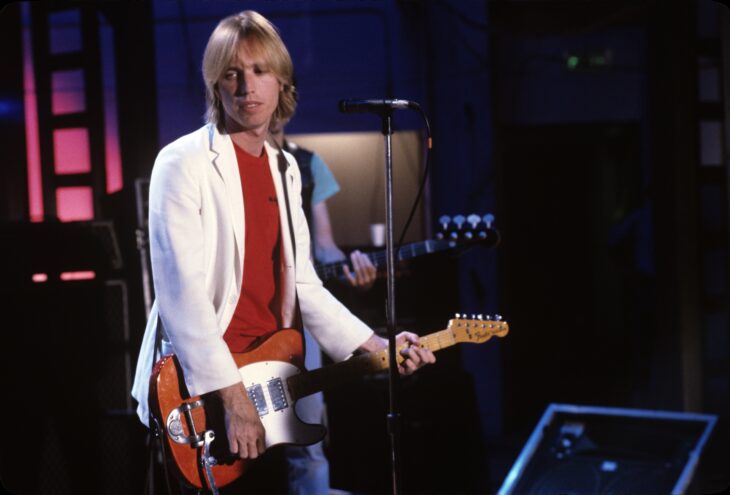
Photo of Tom Petty by Henry Diltz, courtesy of Gary Strobl at the Diltz Archive