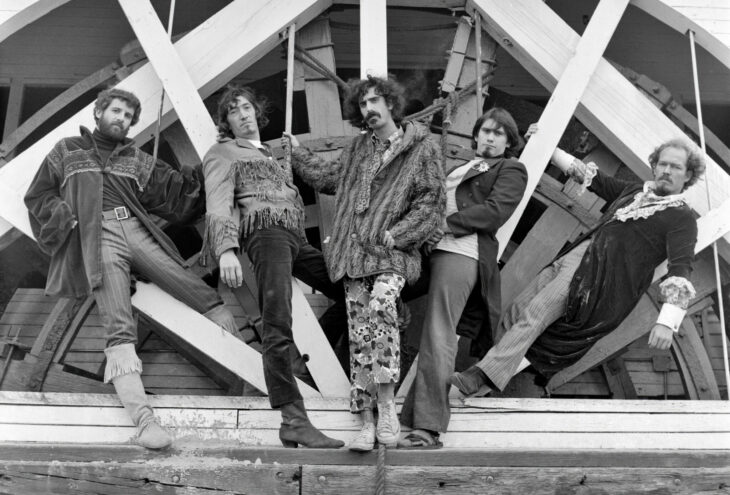
When Frank Zappa and The Mothers of Invention’s Freak Out! arrived in the summer of 1966, it represented a seismic shift in what a rock album could be. Released by Verve Records on June 27, 1966, as one of the first double albums in rock history — and virtually unprecedented as a debut release — Zappa and The Mothers rejected the prevailing conventions of the three-minute pop single, instead crafting an ambitious work that blended doo-wop, rhythm and blues, orchestral music, free jazz, tape manipulation, and biting social satire into a cohesive artistic statement.
Set against the backdrop of a pivotal moment in American culture — amid the rise of the counterculture, the Vietnam War, and a growing distrust of mainstream values — the album skewered suburban conformity, celebrity culture, consumerism, and political complacency with a level of sophistication and irreverence that was virtually unprecedented in popular music. Its experimental structure, culminating in the groundbreaking sound collage "The Return of the Son of Monster Magnet,” helped redefine the possibilities of the LP, demonstrating that a rock album could function as a unified artistic work rather than simply a collection of songs.
In doing so, Freak Out! expanded the creative vocabulary of popular music and helped define the increasingly ambitious and experimental direction rock would take in the latter half of the 1960s.
The album was also a bio-regional expedition of a soundtrack to unique sounds and a culture that emerged in Hollywood
In celebration of 60 years of Freak Out!, a newly expanded 60th anniversary edition will be issued on September 25 via Zappa Records/UMe in a variety of formats, including a six-disc (5CD/1Blu-ray Audio) Super Deluxe Edition that features 105 tracks in total, many of which have never been released. The compilation was produced by Zappa Vaultmeister Joe Travers.
A media announcement from Zappa Records UMe described their retail release.
“Over the past six decades, its fearless blend of musical innovation, satire, and artistic independence has resonated with generations of musicians and creators, influencing artists as diverse as Alice Cooper, Devo, "Weird Al" Yankovic, Primus, Phish, and John Frusciante, while earning the admiration of cultural figures including comedian and actor Cheech Marin, filmmaker Terry Gilliam, and The Simpsons creator Matt Groening. Sixty years after its release, Freak Out! remains not only a landmark recording, but a bold artistic manifesto whose originality, irreverence, and uncompromising vision continue to challenge, provoke, and inspire new generations of musicians and listeners alike.
“This new, expanded collection titled Freak Out!: 60th Anniversary Edition contains Travers’ 24-bit/192kHz digital transfers and John Polito’s 2026 mastering of the core album’s 15 tracks, along with the rediscovered 1966 pre-master mix, the retrieved and restored 1966 mono mix, Fillmore Auditorium tapes mainly culled from a trio of live 1966 dates, original Mothers 1966 rehearsals, original Mothers demos, mono vocal reference mixes, and a truly special three-track Freak Out! late-night jam session outtake collage.
“The Blu-ray contains the core album newly remixed in 24-bit/48kHz Dolby Atmos and 24-bit/48kHz Dolby TrueHD5.1 surround sound by Karma Auger and Erich Gobel at Studio1LA, the same team behind the acclaimed Dolby Atmos and surround mixes of 2022’s Waka/Wazoo, 2023’s Over-Nite Sensation, 2024’s Apostrophe (’), 2025’s One Size Fits All, and 2025’s Bongo Fury releases, respectively. Also included is the hi-rez stereo 2025 remaster at 24-bit/192kHz and 24-bit/96kHz options for the main album, bonus audio with bespoke visualizers, and one bonus, vault-culled, now-in-surround track, “Groupie Bang Bang.” Auger and Gobel used the original 4-track masters along with Vault stereo elements to create the new Dolby Atmos mix.
“The lavish Super Deluxe Edition box comes complete with a litho print and a 26-page booklet with unseen photos from the archives of Ray Leong. There are also little-seen session photos by David Anderle, who, as an A&R man for MGM Records, signed the Mothers of Invention to their Verve-distributed label in 1966. The package includes liner notes and new historical essays by Leong, music journalist Jason Pettigrew, and, as always, The Vaultmeister, Joe Travers. The booklet also includes a replication of the original, double-sided fold-out Freak Out! Hot Spots Map created and designed by Zappa.
“In addition to the Super Deluxe Edition box set, there will be two vinyl releases: a 180-gram 5LP box set featuring the pre-master mix on 2LPs, the mono master on 2LPs, and 1LP of additional highlights (demos, live tracks, and collage cuts) and a 180-gram 2LP pressing of the original album on multi-color vinyl, remastered from Travers’ 24-bit/192kHz high-rez transfer and faithfully restored packaging including a gatefold jacket. Both versions will include the Freak Out Hot Spots Map.
“The multi-color 2LP edition is available exclusively at Zappa.com while all other editions can be found at Zappa.com, uDiscover Music, and Sound of Vinyl and are available. Additionally, the Super Deluxe Edition will be available digitally, with all 105 tracks offered in hi-rez and standard options. A standalone Dolby Atmos mix of the core album’s 15 tracks will also be available on all Atmos-supporting streaming services.
“The 1966 pre-master mix tapes, which were generously donated to the Zappa Vault by Erland Sundin, were in fabulous condition for being six decades old. The contents of those reels seemed to be a reference mix run off by MGM engineers during the production of Freak Out! on April 16, 1966. The tapes reveal a crystal-clear vintage mix before the treatments applied by producer Tom Wilson that gave Freak Out! its final overall sonic character.
“The mono master tapes for Freak Out! were never returned to Zappa when he won back possession of his catalog in the early 1980s. Luckily, and thanks to the single version masters released from Freak Out!, three songs were found on tape in their original mono form—“Who Are The Brain Police?,” “How Could I Be Such A Fool,” and “It Can’t Happen Here.” The rest of the album was restored from a vinyl source thanks to Scott Parker, who obtained an absolutely pristine original copy of the mono release that was duly captured in high-resolution, and then properly restored by the longtime Zappa collaborator John Polito at Audio Mechanics.
“The historic 1966 Fillmore Auditorium recordings were captured by recording engineer John Judnich, who shared a house with the famous comedian Lenny Bruce. Judnich, who worked for Bruce, was responsible for many advances in the industry for high-fidelity sound systems and was also a longtime friend to both Frank and Gail Zappa.
“It appears that The Mothers played the Fillmore Auditorium a number of times during 1966. In The Vault, thanks to Judnich, tapes exist from February 24, 1966, along with tapes from June 24 and 25, 1966 (i.e., the shows with Lenny Bruce). All of these instances include the only live recordings of the Freak Out!-era Mothers with Elliot Ingber on guitar.
“The quality of some of these recordings is admittedly not up to the standards normally associated with expanded Zappa projects/objects—but, historically speaking, these tapes give us the only instances of what the Freak Out! Mothers sounded like in live performance during the time frame when the album first became available in mid-1966.
“The Mothers rehearsals are another rich discovery in this 2026 Freak Out! offering. A small portion of them, including an alternate take of “How Could I Be Such A Fool,” was issued by Zappa on the legendary 1998 Mystery Disc. (First available on vinyl as part of The Old Masters Box I in 1986, it was later compiled for the 1998 CD.) Here we have a longer edit, direct from the original master 7-inch reels. These rehearsal tapes were most likely recorded in 1965, at the rehearsal spot on Seward Street in Hollywood, Calif. That locale had been lent to the group by Tim Sullivan as payment for the music Frank had recorded for the 1965 movie, Run Home Slow.
“Three of the Mothers demos here were issued on Joe’s Corsage in 2004, while a few of the mono vocal reference mixes were issued as part of The MOFO Project/Object in 2006, labeled as “Vocal Overdub Master Takes.” These tracks feature the overdubbed vocal takes that made the final master, albeit mixed way up front.
“The release of the 15-track double-LP Freak Out! album – produced by Tom Wilson – was, in that prototypical Zappa way, a key moment in time where he brought a burgeoning movement to the forefront of the scene, in turn helping to create awareness in the world about what was happening around him. This hour-long album helped redefine the possibilities of rock music while helping to popularize its title as a phrase that entered the cultural lexicon and remains in common use six decades later.
“The songs on Freak Out! reveal just how fully formed Zappa's artistic vision already was. From the blistering critique of the American education system in “Hungry Freaks, Daddy” and the unsettling, waltz-like meditation on conformity in “Who Are the Brain Police?” to the affectionate doo-wop send-up of “Go Cry on Somebody Else's Shoulder,” the searing social commentary of “Trouble Every Day,” inspired by the 1965 Watts riots, and the avant-garde experimentation of the three-part suite “Help, I'm a Rock,” Zappa demonstrated a remarkable command of both lyrical satire and fearless musical innovation. It was an astonishing debut that announced the arrival of a singular creative voice—one that would challenge the conventions of rock music for decades to come.
“As Zappa wrote in the album's original liner notes, ‘Freaking Out is a process whereby an individual casts off outmoded and restricting standards of thinking... in order to express creatively his relationship to his immediate environment and the social structure as a whole.’ Six decades later, that philosophy remains as radical—and as relevant—as ever.
“In the summer of 1966, Los Angeles was in the middle of a Freak Scene. Happenings that were officially dubbed “Freak Outs” were taking place almost monthly. If you really wanted to be in the know, you’d pick up The Los Angeles Free Press, which then featured articles and ads about the scene that were sometimes created by none other than the head Mother himself, Frank Zappa.
“Events such as GUAMBO (a.k.a. The Great Underground Arts Masked Ball and Orgy), Son Of GUAMBO, and multiple engagements at the Shrine Auditorium, Santa Monica Civic, and elsewhere were flourishing. The Whisky A Go Go was also thriving, along with Pandora’s Box and The Trip (before all being squashed by the higher-ups, that is). The Sunset Strip was overrun by young people, and the scene was thriving to the point where it got the attention of city officials who found it to be a major threat. Clubs got shut down, and kids got picked up and arrested in the street. Zappa had seen enough. He chronicled the good, the bad, the ugly, and the downright freakiness of it all on a most historic debut album credited to the band Zappa had essentially renamed in a pinch, The Mothers of Invention.”
It is important to mention that Freak Out! was recorded at the TTG studios in Hollywood. It was located on North McCadden Place near the intersection of Sunset Blvd. and Highland Ave. Founded in June, 1966, TTG had been Radio Recorders and later Conway Recorders before TTG obtained the property license. The facility was owned by sound engineer Ami Hadini and Tom Hidley, who had installed a 16-track machine, TTG one of the first in town. Bill Parr, formerly of Conway, designed the custom TTG board utilized for film scoring upstairs.
The Mothers of Invention did Freak Out! and Absolutely Free at TTG with producer Tom Wilson. The Velvet Underground and Nico, along with Winds of Change, by Eric Burdon and the New Animals, also recorded with Wilson during 1966-1967.
In 1968, the Doors, with producer Paul Rothchild and engineer Bruce Botnick, would record Waiting For the Sun, after cutting “Unknown Soldier” and “Spanish Caravan” at Sunset Sound.
Botnick told me in a 2009 interview that TTG was also equipped with Ampex 351-2 and 440 tape recorders to augment a 3M 8-track recorder that he and Rothchild employed on Strange Days. In addition, TTG had EMT 140 Echo Plates along with Sony and Telefunken microphones.
In 1959, Elliot Ingber was in the Gamblers with bassist Larry Taylor, guitarist Derry Weaver, and keyboardist Bruce Johnston. Nik Venet produced the Gamblers’ “Moon Dawg” and “LSD-25” in 1959 for World Pacific Records. Ingber also gigged with drummer Sandy Nelson and guitarist Don Peake.
After his 1966 stint with Zappa, Elliot co-founded Fraternity of Man, produced by Tom Wilson. Ingber and Lawrence “Stash” Wagner co-wrote "Don't Bogart Me,” renamed "Don't Bogart That Joint," on the soundtrack to Easy Rider. Elliot later recorded with The Factory, Little Feat, and Shakey Jake Harris. In 1972, he was heard in Captain Beefheart’s Magic Band, employing the stage name Winged Eel Fingerling, for 1972’s The Spotlight Kid.
Ingber’s guitar explorations were informed by his devotion to fifties blues and R&B, a sonic bond he shared with Zappa.
In 2014, I chatted with Elliot about the landmark Dolphins of Hollywood record shop on Central Avenue in downtown Los Angeles.
“It was located on the magic corner of Vernon and Central. Having to take a Red Car from Hollywood [felt] like I was landing on another planet. Discovering a place where this music was available was wonderful. They carried LPs, and not just 45s. To see the music of Jimmy Reed and Bo Diddley so available . . . I heard Lafayette Thomas, who did ‘The Walk’ with Jimmy McCracklin, and guitarist Lowman Pauling with the “5” Royales. Jody Williams, who played on Bo Diddley’s ‘Mona,’ and Hubert Sumlin were on Howlin’ Wolf’s ‘Evil’ and ‘I’ll Be Around,’ amongst other records. Pat Hare was on the live Muddy Waters album from Newport and played with Junior Parker. I also found and heard ‘Big Boy’ by Bill Doggett, that featured Bill Jennings on guitar. For me, it was all about 1954 to 1958, and after that, the music and the cars turned to crap.”
"I first met Tom Wilson while being a guest of my brother Elliot Ingber, as he participated in the recording of the first Mothers of Invention album,” guitarist/songwriter and producer Ira Ingber emailed me in August 2026.
Ira is currently recording and playing in two Southern California-based bands with guitarist Steve Bartek, BarIng All, and jackiO.
Ingver visited TTG and observed the groundbreaking recording sessions of Freak Out!
“It was early in 1966, and the studio was TTG on the corner of Highland Ave. and Sunset Blvd. in Hollywood. Tom Wilson was sitting behind the recording console with the recording engineer, who I believe was Val Valentin. I recall Tom being very welcoming to me. He was impeccably dressed, and equally well-groomed. Urbane, thoroughly professional, and clearly very much in charge was he. I was seeing what a ‘real’ music producer did and how he did it, first hand. He possessed, among other things, the first portable telephone I had ever seen. It was a rotary phone in a briefcase. This guy needed to make important phone calls immediately, I thought.
“I attended several sessions. All the members of the band knew me, and Frank was especially kind to me. He had generously lent me a Fender Twin Reverb amp, as well as a Rickenbacker 12-string guitar for an extended period. Tom also actively engaged in conversation with me, a 16-year-old kid!
“In 1969, also at TTG, I ended up playing bass on several Fraternity of Man songs for their second and final album, Get It On. The Hagstrom 8-string bass I played belonged to Frank Zappa. He had lent/given it to my brother years earlier.
“Tom was producing this second Fraternity of Man album, just as he had done the first one. He attempted to bring some version of order to what was a very chaotic setting. He was supportive and completely encouraging of my own attempts to bring some musical order to the chaos. He didn't look down at this now 19-year-old kid. He treated me as a serious musician who was earnestly performing his parts. I will never forget his smiling countenance, and his confidence-building demeanor."
“In the summer of 1965, as a drummer, I worked with Frank Zappa in the developmental stages of the Mothers of Invention, legendary record producer, talent manager, and onetime Takoma Records label co-owner Denny Bruce reminisced with me in a 2010 interview.
Bruce rehearsed with Zappa and his new band, later to be called the Mothers of Invention, for a few months in 1965 and did two shows, one at the Brave New World venue in Hollywood in the summer of 1965 as well as a landmark event, GUAMBO-Great Underground Arts Masked Ball and Orgy at the Danish Center.
“I first met Zappa at his California courtyard apartment in Echo Park. Zappa had records that filled up his bathtub. These are the records that informed his albums. The discs are his touchstones. Every record was there for a reason. He couldn’t live without them.
“Frank heard about me from a girl named Pepper before he met me. He told her, ‘This guy sounds exactly like the male figure I’m looking for. You say he can carry a back beat?’
“We met and Frank was very happy. ‘You are in that Brian Jones and Mike Clarke territory. You don’t have to be good. You just have to show up in your Mod outfit, and chicks want you.’
“Frank further explained, ‘A lot is going on in society today, and that’s really where I am headed. There is a lot of protesting I want to do using this band but we have to be cute and smart. And it really helps with you being there with blonde hair as well, instead of ‘Fugs kind of serious guys.’
“With you, we have the West Coast rock look, and it takes pressure off of me. I know I’m not attractive. That’s all gonna be worked into the act. I use everything, as you soon will find out. I use what is available. You contribute, and I appreciate it. Keep the beat and get the people dancing. Then we’ll get more jobs.’
“We rehearsed for a few months and did a couple of shows, including one at The Brave New World in Hollywood as well as the landmark event GUAMBO-Great Underground Arts Masked Ball and Orgy at the Danish Center.
“I was always proud of everything he ever did. I’m honored that I knew him. I made him laugh and he liked all my ideas.
“The Frank Zappa who I knew in the 1965-1967 period… He would have the ability to process all the information going on around him. I don’t mean reading or listening to music. I just mean focusing on conversations he might have had.
“I had been to San Francisco in 1966, and we crashed in somebody’s pad, and when we woke up there were 20 people. I just described the scene to him and later that day, from our dialogue and conversation, that cat was able to turn it into ‘Flower Punk,’ an anti-hippie song.
“Frank Zappa worked very hard. That guy in my mind, with coffee and cigarettes, put in 24X7. He was always working and I know he enjoyed working all night because it was quiet. His genius is hard work. Very intelligent. Deep-rooted he knew he was ugly and had to out- work the other guy.
“That was his genius. And it made sense that he would put out an album in ’67, Absolutely Free, because he was. Not paying attention to convention and the grin and grip stuff you have to do to get your product out. It all was like water rolling off a duck’s back. ‘Cause he did look freaky without trying. OK?
“Zappa never fuckin’ remotely talked about stardom. He talked about figuring out how you make enough money to be able to keep a band together. And how to make enough money to hopefully make the music you’re hearing and you’re trying to write down and compose so that ultimately guys can play this music.”
After the Turtles disbanded in the very early seventies, Howard Kaylan, along with his longtime partner Mark Volman, became core members of Frank Zappa’s Mothers of Invention, performing and recording under the names Flo and Eddie. They appeared on four Mothers of Invention albums and were lensed in Zappa’s theatrical feature film 200 Motels.
“I went to the Freak Out! recording sessions at T.T.G. studios. I loved Frank and the records,” volunteered Kaylan in an interview conducted last decade.
“Back in that era in 1966 and ’67, before ‘Happy Together’ hit, and Mark Volman and I were still street people in L.A., working in the same clubs and stuff, there was enough of a camaraderie there. Knowing him, but also through [manager] Herb Cohen and going to the Zappa log cabin in Laurel Canyon.
“I go to the Freak Out! that night. There are two or three rooms that are being used simultaneously, and Frank had tape recorders going in all of them. There are different tracks being played in all of them, and people are doing different things in every room. Frank would put some guys in one room, and some in another. The environment was more Soupy Sales than, say, Spike Jones. He’s creating his own scenarios. He’s making people go up to the mike and either rant in their own language, or getting them to say things. I think I was doing a little bit of both. Then I went into another room, where it seemed to be like an orgy, and that’s where [Tom] Wilson was.
“I knew who he was. I was aware that he was the guy who produced Dylan and many other gems. They were just recording random couples and noises, and people who had not met each other before. Frank would actually direct them physically, almost like he was directing a movie. It was surreal and great. I really wanted to be a part of it. It was so outside of my normal, structured thing. I had no idea, and still don’t know, how much stuff was ever going to be used. Brilliant editing job. Still a masterpiece, in my mind.”
Earlier this century, songwriter/record producer/music publisher Kim Fowley detailed his own encounters with Frank Zappa.
“The first time I had heard about Frank Zappa was when he cowrote “Memories of El Monte” by the reformed Penguins. Zappa visited Art Laboe’s Original Sound and knew the engineer, Paul Buff. He was a mentor to Frank, and they were good friends from Cucamonga. That’s the real teacher of Frank Zappa. Paul did ‘Bustin’ Surfboards’ by the Tornadoes, and the surf music classic ‘Wipe Out.’
“My impression of Zappa was ‘John Cage-obsessed doo-wop guy with emotional leanings toward East L.A. Latin and black culture, making fun of white people who were superficial and shallow.’ Which, of course, was cool.
“Zappa was another guy in the mid-sixties standing around in Laurel Canyon clothes. Nothing more, nothing less. Somewhere between a beatnik and a farmer. So we went that night, someplace where they had their equipment, and he said, ‘Play something!’ I made up a song on the spot, and he said, ‘You’re in the band if you wanna be.’
“The first gig we did was in a venue, a building on Santa Monica Boulevard near the intersection of Crescent Heights. They used to have music there, where people and independent promoters would rent it and four-wall it. Two hundred, three hundred people. The Mothers of Invention went in. I came on for two or three songs. It was raga music, jazz changes, Roland Kirk, R & B, atonal, mantra, rock.
“I knew guitarist Elliot Ingber who was working with Frank before the Freak Out! LP recording sessions from the late 1950s with Don Peake from an Italian restaurant in Los Angeles on Pico Blvd. It was owned by singer Timi Yuro’s mother. A lot of the up-and-coming musicians, songwriters, and producers would eat there. Timi’s mother would give us discount spaghetti dinners.
“Later, at Canter’s Delicatessen, Frank then said, ‘We’re going in the studio to do what we did tonight. I have some stuff for the band, that I have learned. We’re gonna turn the street loose in there, and you can come down and make noise if you want.’
“I’m on the track ‘Help, I’m a Rock.’ I walked into the studio with Les McCann and Danny Hutton. I lived earlier in the attic of a house owned by Danny’s mother.
“TTG. Studios was a giant cheeseburger box with high ceilings. Owned by a sound engineer, an Israeli named Ami Hadani, who built studios and worked with Tom Wilson and Zappa on Freak Out! and Absolutely Free. Bill Parr built and designed the T.T.G. board in the big film-scoring room upstairs. He was one of the engineers on the Hollywood Argyles’ ‘Alley-Opp’ that we did at American Recorders. Jimi Hendrix later recorded at TTG. and cut one of my songs, ‘Fluffy Turkeys.’
“For Freak Out! we were there all night. We didn’t get paid. We did it because Frank convinced us it was historical and we were on the cusp of something and we all bought into it. We all wanted to go have breakfast. That was more important. I shared a microphone with Mac Rebennack and Les McCann.
“The Freak Out! album to me was John Cage meets 1920’s France. A Josephine Baker version of art is anything that you can get away with. I thought Frank was gifted. I thought musically he was brilliant.”
“To me, Zappa is tightly linked to the music of Los Angeles and the East L.A. music community,” asserted author and East Los Angeles music scholar Gene Aguilera.
“When I first heard Freak Out!, I freaked out. Because there was a lot of doo-wop in there. There was a lot of Chicano in there. I felt he was sending me a direct message, right to my heart. He had Roy Estrada on bass. Chicano from the beginning.
“He has these songs like ‘Trouble Every Day,’ about the August 1965 Watts Riot. It was very L.A. He just didn’t do these three-minute songs of love. He talked about a lot of politics. A darker shadow, the underbelly. Zappa sang of “going to El Monte Legion Stadium” and later, as a solo act, played the storied Olympic Auditorium. Even the title of the Mothers of Invention LP Just Another Band from L.A. appears resplendently in cholo lettering by Leo Limon. What a genius writer he was. I have Frank Zappa up on my wall.
“I once told Zappa at UCLA's Royce Hall that I've been playing Freak Out! since I was 13 years old, to which he quipped, ‘And your neighbors still talk to you?’"
“In early January 1967, my parents and I moved from Westport, Connecticut, to Encino, and I first learned the meaning of ‘culture shock,’ underlined writer, poet, and painter, Dr. James Cushing.
“Where was the snow? Where were the 19th-century houses? Where were the long stone walls? And what did Encino have to do with ‘LA’? Could I possibly fit into this strange place?
“With these questions spinning in my mind, and six dollars of Xmas money in my pocket, I accompanied my mother on a trip to Builders Emporium in Van Nuys. Builders Emporium was the Home Depot of the period (it closed in 1997). I don’t remember what household items we went there to buy, but I remember that the store had a records section, and in the center of that section was a record vending machine. I had never seen one before, and I haven’t seen one since. It had two main slots, one for 12” LPs, the other for 7” 45rpm singles; you would put in your cash, pull the corresponding lever (like a cigarette machine), and the LP or single of your choice would pop out. Copies of the titles the machine contained were up on a display.
“I looked at my options on the 45rpm side, and first noticed ‘For What It’s Worth’ b/w ‘Go and Say Goodbye’ by Buffalo Springfield on Atco. I had heard DJ Dan Ingram play the A-side on WABC-AM before we left Westport, so I knew this was a cool song by an LA-based group. I placed my dollar bill in the machine and pulled the lever. Pop! There was the record in my hands. The machine worked!
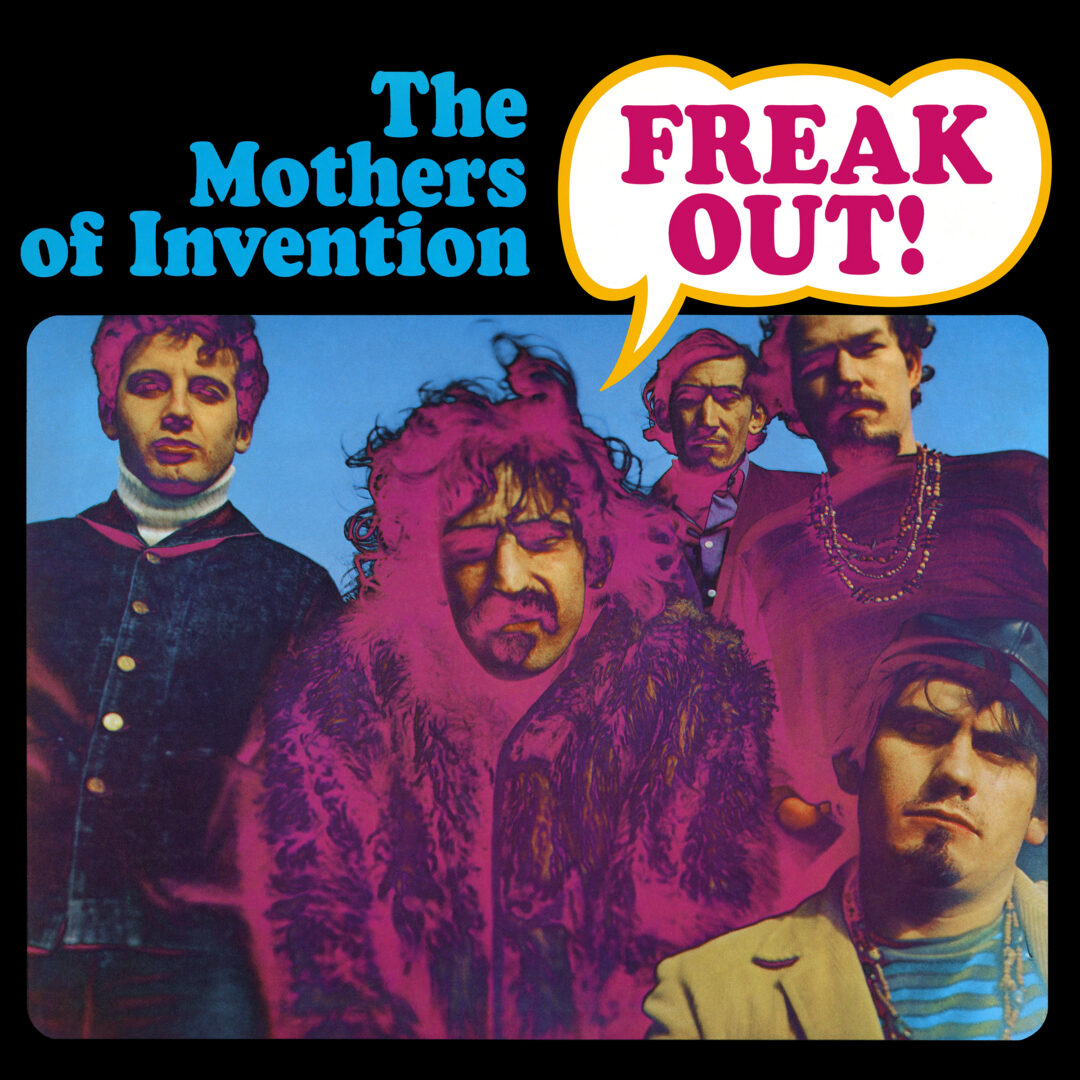
“Then I looked at the LP offerings and saw the cover of Freak Out! by The Mothers of Invention, a record and a band I had never heard of. I studied the front cover, with the solarized color processing giving Zappa's fur coat an unearthly pink glow. On the back cover was a note from “Suzie Creamcheese” (‘These Mothers is crazy. You can tell by their clothes. One guy wears beads and they all smell bad’). I had an impulse, followed by a conscious thought. The impulse was, I think I need to have this record. The thought was, These Mothers obviously know things about LA that I do not, and I’m going to need this information to live my life here. I summoned my teenage courage, fed my five-dollar bill into the slot, pulled the correct lever, and pop! There it was, shrink-wrapped in my hands: the mono pressing of Freak Out! on Verve. (I bought the mono because the stereo was a dollar more.)
“I believe I listened to all four sides of this LP at least once a day every day for the next two months. I would listen while reading the liner notes, poring over the list of names and Zappa’s description of the songs (“…very greasy. You should not listen to it. You should wear it in your hair”). I noticed that Tom Wilson, a name I recognized from my Bob Dylan albums, was listed as “producer.” By the end of the first week I had most of the songs on disc one memorized, and by the end of week two, I could sing along with ‘Help, I’m A Rock’ and was using phrases from it in conversation (Mother: How was school today, dear? Me: Oh, you know, it’s a drag when you’re rejected). But from the beginning, it was side four, the 12-minute ‘experimental’ side, that captivated me most. I invite you to ponder the figure of a 13yr-old boy in his bedroom in Encino, late at night with the lights off, sweating and dancing all alone to ‘The Return of the Son of Monster Magnet.’ At those moments, life in LA seemed to make sense.”
"When Frank Zappa talked, I always listened," claims to this day Gary Pig Gold.
"And so, inside my very first copy of Verve V6-5005-2, as a most impressionable young teen I took totally to heart those instructions right there in his Notes on the Compositions Included Herein for 'Hungry Freaks, Daddy' to, and I quote, 'Forget about the Senior Prom and go to the library and EDUCATE YOURSELF if you’ve got any guts.'
"So I responded first by glancing directly above in that monumental album’s inner spread to the 179 names on FZ’s (in)famous Freak Out List. And was duly inspired to, yes, immediately head to the library to find out anything and everything I could about, for starters, Tom Wilson, Tiny Tim, Maurice Ravel, Lenny Bruce, Ravi Shankar, James Joyce, Salvador Dali, Charles Mingus, Pierre Boulez, Charles Ives, and even the mysterious Jeepers.
"Without doubt, across Freak Out’s four sides and sixty-one minutes – and throughout untold hours spent listening and studying the man’s overall oeuvre this past half century and counting, I must admit, much unlike the words casually thrown onto most each and every other long-playing record’s back cover ’way back then, Frank’s liner notes proved just as impactful and rewarding as the Motherly sounds which accompanied my reading.
"Oh, and even Bob Dylan – actually one of those hallowed 179 names listed in ’66 – emerged during the depths of COVID to state, and again I quote, 'I listened to the Mothers of Invention record Freak Out! that I hadn’t heard in a long, long time. What an eloquent record. ‘Hungry Freaks, Daddy’ and the other one, ‘Who Are The Brain Police’: perfect songs for the pandemic. No doubt about it, Zappa was light years ahead of his time. I’ve always thought that.'”
“You know, when people ask me about the most revolutionary debut album in rock history, I don’t even have to think about it,” declared musician/keyboardist and recording artist, Morley Bartnoff.
“It’s Freak Out! by Frank Zappa and the Mothers of Invention. Here you had this incredible double album released by Verve Records in 1966 that took doo-wop, R&B, rock ‘n’ roll, avant-garde classical music, experimental jam sessions, tape loops, found sounds, and total controlled chaos, and somehow turned it into one amazing artistic statement. Can you imagine the suits and ties at the record company hearing this thing for the first time? Their heads must’ve exploded! And yet, somehow, Verve had the vision—and maybe the courage—to put it out. Thank goodness they did, because that album changed art, music, and culture forever. It gave everybody permission to color outside the lines.
“I’ll never forget the first time I saw Freak Out!. My mom, Ruth, and I were shopping at Sears in 1966, and we wandered over to the record department. There it was—that unforgettable cover. I looked at it and thought, “I’ve got to have this!” My mom took one look and said, “These people look very strange.” I have laughed about that line my whole life because it sounds exactly like something Frank Zappa would’ve dropped into one of those bizarre spoken-word sections on It Can’t Happen Here. I can almost hear it sandwiched between all those voices and sound effects. Little did my mom know that one innocent sentence would become one of my favorite Zappa memories. That album didn’t just become part of my record collection—it became part of my DNA.
“Then there was my own little Frank Zappa moment years later. I was at a AZA Jewish youth conclave in Sedona, Arizona, and they had a performance-art evening. I decided to dramatically read the lyrics to “Trouble Every Day” while my musician friend Dr. of Music Rocky Gordon played percussion behind me. Everything was going beautifully, building to the big dramatic ending. The last line comes… " no way to delay. "There's trouble coming every day" Rocky raises his arm for this gigantic cymbal crash… and instead he slips! The entire drum kit comes crashing down in one glorious avalanche of drums, cymbals, and hardware.
“The audience absolutely exploded with laughter. Nobody got hurt, thank goodness, but looking back, I honestly think Frank Zappa would’ve loved it. It was spontaneous, unpredictable, hilarious, and somehow perfect. That’s what Freak Out! has always meant to me. It’s about celebrating the unexpected, embracing happy accidents, questioning everything, and reminding us that sometimes the greatest art comes from throwing away the rule book and just letting the universe do its thing. Absolutely Free!”
“What I loved about Zappa was his endearingly satiric take on the ‘50s doo-wop that he simultaneously adored and sent up,” proudly confessed actor and DJ Roger Steffens, author of The Family Acid.
“Frank Zappa and the Mothers of Invention got me through Ruben & The Jets’ ‘cause I’m a doo-wop freak.
“They captured the spirit so beautifully and were hysterical and funny. And it was great music. As we examine Frank Zappa now, and the entire shape of the 1960-1970 decade, we see who the stand-out figures really are and whose work has lasted like anybody else. I mean, Zappa was part John Cage, Edgar Varese, Pierre Ambre and the Penguins.
“For those of us whose high school soundtrack was the Medallions, the Penguins and other East LA giants, that music revived cheap thrills and backseat memories whose echoes were still strong into our 20s.
“At the same time, aural experiments by Brian Wilson, Jagger-Richards and Lennon-McCartney were changing the direction of pop, but Zappa bravely reminded us that the roots of all that were in pure adolescent falsetto wonderlands, skillfully reworking them for a new day. FM radio became the locale for his delicious experiments, which could find no credible home on AM.”
“Frank is now not part of guitar player sixties music history,” reinforced Howard Kaylan.
“And if you can’t talk to a kid and get Zappa as an answer to ‘Who was the greatest rock guitar player of all time ever,’ they will say Carlos Santana or Jimmy Page. They will never tell you, Frank Zappa.
“I loved him and the records. He was singing about growing up. I was trying to sing about growing up, too. It wasn’t that far apart. When people say ‘I don’t understand how you guys ever became guys in the Mothers. How did you ever get to know Zappa in the first place?’ And I say to them, man, as I said in my book, ‘We were all trying to get the same gigs on Sunset Boulevard.’ And largely that’s true.
“Nobody made distinctions in that canyon of dreams back then as to what type of music you were doing. If you were Lester Chambers and you were living in that canyon, Joni Mitchell didn’t question what kind of music you were doing. Nobody did. Everybody was in there for themselves. To make their music shine for a minute while the bright stars were already living there. We didn’t want to change things. We wanted so badly to be a part of it that finding our place was so important. I’m not sure as Turtles we ever found our place, but as Flo and Eddie in the Mothers we sort of busted out of our comfort zone a little bit. I think the Turtles were comfortable for us.
“Frank was very curious. Discussing what worked and why it worked and the social implications of it. So that he could stay on top of the pop music when we were brought into the band anyway, stay on top of the pop music side of things. Because Frank couldn’t. Or wouldn’t. I mean, it didn’t interest him. What interested him was the public’s reaction. He was very much Margaret Mead of his generation.
“I worshipped We’re Only In It For The Money. One of the greatest rock records of all time. The cover art, too. It was better to me than the Beatles were at the time. There was a lot more content. A lot more undertone. A lot more sub-plot. A lot more ‘Wake Up America’ kind of thing.
“Whether it was real or imagined, I thought that Frank was the most brilliant writer that I had ever seen. Socially, since Dylan. I loved the Beatles stuff, and not to take away from it, but this was new. I wore out copies of it. Even on 8-track. I had it every place.
“And it wasn’t just power, it was just mastery. There was some deep compassion in the man that it actually was very empathetic. He could listen, whether he was listening for his own personal gain later on to turn that into money later in the creative venture or not.”
In 2024, I spoke with John Mayall, who knew both Frank Zappa and John Judnich.
“I met Frank in 1967 in Scandinavia, when he and the Mothers of Invention were playing there and we were in Copenhagen at the same time. So that’s where I met that crowd. ‘If you come to America, look me up.’ So, I did.
“I stayed at Zappa’s cabin for the first part of my three-week vacation. I never really left Hollywood and Laurel Canyon. It became the confirmation for me. That’s where I wanted to move eventually.”
On his Blues From Laurel Canyon album, Mayall penned a tune about Zappa.
“The feeling when you listen to the song ‘2401’ is the vibe you hear. For me it was a very eccentric household, really. Frank and Gail Zappa, at the center, were the grounding factor there. The sanest people on the planet. I think Frank really encouraged that, and he kind of collected oddballs and information about America and its culture.”
While bunking in Laurel Canyon, Mayall lodged for a short time in the basement of John Judnich’s house, who was comedian/satirist Lenny Bruce’s right-hand man.
Judnich owned the Tyco Brae sound company, which serviced the 13 Shrine Exposition Hall Pinnacle dance concerts in Los Angeles. Mayall also catalogued and notated rare Lenny Bruce tapes for Judnich.
In August 2026, I mentioned Freak Out! to photojournalist Heather Harris, who had her own relationship to the album and wanted to share the experience.
“It was a social occasion predicated on a University of Southern California master’s program film student offering to advise an acquaintance of mine on the particulars of getting into that university's prestigious cinema program.
“Off we went to a guest house in the Benedict Canyon area where one George Lucas lived. After a few FAQs, our host graciously offered to show us his latest footage shot for his current student film. He warned that there were no sound effects/soundtrack yet, so he would pick out some appropriate music to fill in the aural blanks.
“We were treated to spectacular footage of top fuel drag racing, from the standstill smoky throttling against torque converter before the ‘Christmas Tree’ lights signal go, to thrilling yet graceful high-speed top fuel dragsters battling two by two.
“And all the while, Lucas played us the brand newly released that week LP of Frank Zappa and the Mothers of Invention - Freak Out! on his home stereo system. And hell yeah, it worked.
“Not only did it work, but it also inspired the Lucas brain cells to file away the concept of ultra-cool rock music to be paired with car culture teens, as he would direct in his soon-to-be-feature film American Graffiti.”
In 1967, while at USC, Lucas made a short film, The Emperor, about KBLA radio DJ Bob Hudson, known as “The Emperor,” when he was a student.
“Frank Zappa first played an important role with me with the Mothers of Invention, which I didn’t like in eighth grade, then totally loved in ninth grade,” declared Jello Biafra, spoken word artist, political activist and co-founder of the band Dead Kennedys in a 2004 interview with me.
During 1985, Biafra was invited up to Frank and Gail Zappa’s home in Laurel Canyon. I lent Jello my mother’s car so he could drive to Woodrow Wilson Drive. Over a pizza and cookies dinner, the couple provided helpful advice on a highly publicized censorship trial Biafra was going through at the time.
In 1986, I met Frank in Santa Monica at The Midnight Special Bookstore, where he was on a panel discussing censorship. On Friday, May 10, 1968, I saw Frank Zappa, the Charley Musselwhite Blues Band, and Sweetwater in downtown Los Angeles at the Shrine Exposition Hall.
“I was only beginning to realize that you could mix rock music with good lyrics—at least, lyrics that would upset the right people,” underscored Jello. “Thus, I got into Alice Cooper. Then Zappa hit all kinds of raw nerves, ’cause he was satirizing the same kind of people I had to go to school with and stuff.
“I even tried to do a stage play of ‘Billy the Mountain’ from Just Another Band from L.A. when I was in high school. But it was a class assignment, and some of the people were not into it at all. It didn’t really come out very good.
“Even then, Zappa wasn’t just cynical about the people he called ‘plastic’; he went after the stupid side of the ‘Summer of Love’ and the escapist side as well. And right there at the beginning, [he] was pointing to a possible government role in manipulating people through drug abuse. Frank was the first one who laid it out to me that it was possible to talk about these other things that concerned me but put it with interesting music at the same time. Of course, his sense of humor was amazing, and I saw a lot of people around me through the same lens that Zappa saw people.”
“What I love about Zappa is the way he connects to the pre-Beatle world of American bohemianism,” reinforces writer and novelist Daniel Weizmann.
“Even long after he became the reluctant king of hippiedom, Zappa always struck me as a beatnik at heart, with that same Mad Comics trickster spirit of Lenny Bruce, Russ Meyers, early Bukowski, Venice cats like Lawrence Lipton and Stuart Z. Perkoff, and the whole crosshatch of subcultures that were just under the surface in Cali '59 to '63--bikers, surfers, poets, bongo-heads all pulling for exotica, for erotica, for something else—‘the left behinds of the Great So-ci-e-ty!’ (Cue the kazoos!) Case in point: In early '65, Zappa got busted by a vice squad undercover officer for agreeing to produce a ‘sexually suggestive reel-to-reel’ for a stag party.
“His trip was never just about music, no way. Zappa was a straight-up tummeler--the Yiddish word for soup spoon--a stirrer of pots.”
“The Blu-ray contains the core album newly remixed in 24-bit/48kHz Dolby Atmos and 24-bit/48kHz Dolby TrueHD5.1 surround sound by Karma Auger and Erich Gobel at Studio1LA, the same team behind the acclaimed Dolby Atmos and surround mixes of 2022’s Waka/Wazoo, 2023’s Over-Nite Sensation, 2024’s Apostrophe (’), 2025’s One Size Fits All, and 2025’s Bongo Fury releases, respectively. Also included is the hi-rez stereo 2025 remaster at 24-bit/192kHz and 24-bit/96kHz options for the main album, bonus audio with bespoke visualizers, and one bonus, vault-culled, now-in-surround track, “Groupie Bang Bang.” Auger and Gobel used the original 4-track masters along with Vault stereo elements to create the new Dolby Atmos mix.
“The lavish Super Deluxe Edition box comes complete with a litho print and a 26-page booklet with unseen photos from the archives of Ray Leong. There are also little-seen session photos by David Anderle, who, as an A&R man for MGM Records, signed the Mothers of Invention to their Verve-distributed label in 1966. The package includes liner notes and new historical essays by Leong, music journalist Jason Pettigrew, and, as always, The Vaultmeister, Joe Travers. The booklet also includes a replication of the original, double-sided fold-out Freak Out! Hot Spots Map created and designed by Zappa.
“In addition to the Super Deluxe Edition box set, there will be two vinyl releases: a 180-gram 5LP box set featuring the pre-master mix on 2LPs, the mono master on 2LPs, and 1LP of additional highlights (demos, live tracks, and collage cuts) and a 180-gram 2LP pressing of the original album on multi-color vinyl, remastered from Travers’ 24-bit/192kHz high-rez transfer and faithfully restored packaging including a gatefold jacket. Both versions will include the Freak Out Hot Spots Map.
“The multi-color 2LP edition is available exclusively at Zappa.com while all other editions can be found at Zappa.com, uDiscover Music, and Sound of Vinyl and are available. Additionally, the Super Deluxe Edition will be available digitally, with all 105 tracks offered in hi-rez and standard options. A standalone Dolby Atmos mix of the core album’s 15 tracks will also be available on all Atmos-supporting streaming services.
“The 1966 pre-master mix tapes, which were generously donated to the Zappa Vault by Erland Sundin, were in fabulous condition for being six decades old. The contents of those reels seemed to be a reference mix run off by MGM engineers during the production of Freak Out! on April 16, 1966. The tapes reveal a crystal-clear vintage mix before the treatments applied by producer Tom Wilson that gave Freak Out! its final overall sonic character.
“The mono master tapes for Freak Out! were never returned to Zappa when he won back possession of his catalog in the early 1980s. Luckily, and thanks to the single version masters released from Freak Out!, three songs were found on tape in their original mono form—“Who Are The Brain Police?,” “How Could I Be Such A Fool,” and “It Can’t Happen Here.” The rest of the album was restored from a vinyl source thanks to Scott Parker, who obtained an absolutely pristine original copy of the mono release that was duly captured in high-resolution, and then properly restored by the longtime Zappa collaborator John Polito at Audio Mechanics.
“The historic 1966 Fillmore Auditorium recordings were captured by recording engineer John Judnich, who shared a house with the famous comedian Lenny Bruce. Judnich, who worked for Bruce, was responsible for many advances in the industry for high-fidelity sound systems and was also a longtime friend to both Frank and Gail Zappa.
“It appears that The Mothers played the Fillmore Auditorium a number of times during 1966. In The Vault, thanks to Judnich, tapes exist from February 24, 1966, along with tapes from June 24 and 25, 1966 (i.e., the shows with Lenny Bruce). All of these instances include the only live recordings of the Freak Out!-era Mothers with Elliot Ingber on guitar.
“The quality of some of these recordings is admittedly not up to the standards normally associated with expanded Zappa projects/objects—but, historically speaking, these tapes give us the only instances of what the Freak Out! Mothers sounded like in live performance during the time frame when the album first became available in mid-1966.
“The Mothers rehearsals are another rich discovery in this 2026 Freak Out! offering. A small portion of them, including an alternate take of “How Could I Be Such A Fool,” was issued by Zappa on the legendary 1998 Mystery Disc. (First available on vinyl as part of The Old Masters Box I in 1986, it was later compiled for the 1998 CD.) Here we have a longer edit, direct from the original master 7-inch reels. These rehearsal tapes were most likely recorded in 1965, at the rehearsal spot on Seward Street in Hollywood, Calif. That locale had been lent to the group by Tim Sullivan as payment for the music Frank had recorded for the 1965 movie, Run Home Slow.
“Three of the Mothers demos here were issued on Joe’s Corsage in 2004, while a few of the mono vocal reference mixes were issued as part of The MOFO Project/Object in 2006, labeled as “Vocal Overdub Master Takes.” These tracks feature the overdubbed vocal takes that made the final master, albeit mixed way up front.
“The release of the 15-track double-LP Freak Out! album – produced by Tom Wilson – was, in that prototypical Zappa way, a key moment in time where he brought a burgeoning movement to the forefront of the scene, in turn helping to create awareness in the world about what was happening around him. This hour-long album helped redefine the possibilities of rock music while helping to popularize its title as a phrase that entered the cultural lexicon and remains in common use six decades later.
“The songs on Freak Out! reveal just how fully formed Zappa's artistic vision already was. From the blistering critique of the American education system in “Hungry Freaks, Daddy” and the unsettling, waltz-like meditation on conformity in “Who Are the Brain Police?” to the affectionate doo-wop send-up of “Go Cry on Somebody Else's Shoulder,” the searing social commentary of “Trouble Every Day,” inspired by the 1965 Watts riots, and the avant-garde experimentation of the three-part suite “Help, I'm a Rock,” Zappa demonstrated a remarkable command of both lyrical satire and fearless musical innovation. It was an astonishing debut that announced the arrival of a singular creative voice—one that would challenge the conventions of rock music for decades to come.
“As Zappa wrote in the album's original liner notes, ‘Freaking Out is a process whereby an individual casts off outmoded and restricting standards of thinking... in order to express creatively his relationship to his immediate environment and the social structure as a whole.’ Six decades later, that philosophy remains as radical—and as relevant—as ever.
“In the summer of 1966, Los Angeles was in the middle of a Freak Scene. Happenings that were officially dubbed “Freak Outs” were taking place almost monthly. If you really wanted to be in the know, you’d pick up The Los Angeles Free Press, which then featured articles and ads about the scene that were sometimes created by none other than the head Mother himself, Frank Zappa.
“Events such as GUAMBO (a.k.a. The Great Underground Arts Masked Ball and Orgy), Son Of GUAMBO, and multiple engagements at the Shrine Auditorium, Santa Monica Civic, and elsewhere were flourishing. The Whisky A Go Go was also thriving, along with Pandora’s Box and The Trip (before all being squashed by the higher-ups, that is). The Sunset Strip was overrun by young people, and the scene was thriving to the point where it got the attention of city officials who found it to be a major threat. Clubs got shut down, and kids got picked up and arrested in the street. Zappa had seen enough. He chronicled the good, the bad, the ugly, and the downright freakiness of it all on a most historic debut album credited to the band Zappa had essentially renamed in a pinch, The Mothers of Invention.”
It is important to mention that Freak Out! was recorded at the TTG studios in Hollywood. It was located on North McCadden Place near the intersection of Sunset Blvd. and Highland Ave. Founded in June, 1966, TTG had been Radio Recorders and later Conway Recorders before TTG obtained the property license. The facility was owned by sound engineer Ami Hadini and Tom Hidley, who had installed a 16-track machine, TTG one of the first in town. Bill Parr, formerly of Conway, designed the custom TTG board utilized for film scoring upstairs.
The Mothers of Invention did Freak Out! and Absolutely Free at TTG with producer Tom Wilson. The Velvet Underground and Nico, along with Winds of Change, by Eric Burdon and the New Animals, also recorded with Wilson during 1966-1967.
In 1968, the Doors, with producer Paul Rothchild and engineer Bruce Botnick, would record Waiting For the Sun, after cutting “Unknown Soldier” and “Spanish Caravan” at Sunset Sound.
Botnick told me in a 2009 interview that TTG was also equipped with Ampex 351-2 and 440 tape recorders to augment a 3M 8-track recorder that he and Rothchild employed on Strange Days. In addition, TTG had EMT 140 Echo Plates along with Sony and Telefunken microphones.
In 1959, Elliot Ingber was in the Gamblers with bassist Larry Taylor, guitarist Derry Weaver, and keyboardist Bruce Johnston. Nik Venet produced the Gamblers’ “Moon Dawg” and “LSD-25” in 1959 for World Pacific Records. Ingber also gigged with drummer Sandy Nelson and guitarist Don Peake.
After his 1966 stint with Zappa, Elliot co-founded Fraternity of Man, produced by Tom Wilson. Ingber and Lawrence “Stash” Wagner co-wrote "Don't Bogart Me,” renamed "Don't Bogart That Joint," on the soundtrack to Easy Rider. Elliot later recorded with The Factory, Little Feat, and Shakey Jake Harris. In 1972, he was heard in Captain Beefheart’s Magic Band, employing the stage name Winged Eel Fingerling, for 1972’s The Spotlight Kid.
Ingber’s guitar explorations were informed by his devotion to fifties blues and R&B, a sonic bond he shared with Zappa.
In 2014, I chatted with Elliot about the landmark Dolphins of Hollywood record shop on Central Avenue in downtown Los Angeles.
“It was located on the magic corner of Vernon and Central. Having to take a Red Car from Hollywood [felt] like I was landing on another planet. Discovering a place where this music was available was wonderful. They carried LPs, and not just 45s. To see the music of Jimmy Reed and Bo Diddley so available . . . I heard Lafayette Thomas, who did ‘The Walk’ with Jimmy McCracklin, and guitarist Lowman Pauling with the “5” Royales. Jody Williams, who played on Bo Diddley’s ‘Mona,’ and Hubert Sumlin were on Howlin’ Wolf’s ‘Evil’ and ‘I’ll Be Around,’ amongst other records. Pat Hare was on the live Muddy Waters album from Newport and played with Junior Parker. I also found and heard ‘Big Boy’ by Bill Doggett, that featured Bill Jennings on guitar. For me, it was all about 1954 to 1958, and after that, the music and the cars turned to crap.”
"I first met Tom Wilson while being a guest of my brother Elliot Ingber, as he participated in the recording of the first Mothers of Invention album,” guitarist/songwriter and producer Ira Ingber emailed me in August 2026.
Ira is currently recording and playing in two Southern California-based bands with guitarist Steve Bartek, BarIng All, and jackiO.
Ingber visited TTG and observed the groundbreaking recording sessions of Freak Out!
“It was early in 1966, and the studio was TTG on the corner of Highland Ave. and Sunset Blvd. in Hollywood. Tom Wilson was sitting behind the recording console with the recording engineer, who I believe was Val Valentin. I recall Tom being very welcoming to me. He was impeccably dressed, and equally well-groomed. Urbane, thoroughly professional, and clearly very much in charge was he. I was seeing what a ‘real’ music producer did and how he did it, first hand. He possessed, among other things, the first portable telephone I had ever seen. It was a rotary phone in a briefcase. This guy needed to make important phone calls immediately, I thought.
“I attended several sessions. All the members of the band knew me, and Frank was especially kind to me. He had generously lent me a Fender Twin Reverb amp, as well as a Rickenbacker 12-string guitar for an extended period. Tom also actively engaged in conversation with me, a 16-year-old kid!
“In 1969, also at TTG, I ended up playing bass on several Fraternity of Man songs for their second and final album, Get It On. The Hagstrom 8-string bass I played belonged to Frank Zappa. He had lent/given it to my brother years earlier.
“Tom was producing this second Fraternity of Man album, just as he had done the first one. He attempted to bring some version of order to what was a very chaotic setting. He was supportive and completely encouraging of my own attempts to bring some musical order to the chaos. He didn't look down at this now 19-year-old kid. He treated me as a serious musician who was earnestly performing his parts. I will never forget his smiling countenance, and his confidence-building demeanor."
“In the summer of 1965, as a drummer, I worked with Frank Zappa in the developmental stages of the Mothers of Invention, legendary record producer, talent manager, and onetime Takoma Records label co-owner Denny Bruce reminisced with me in a 2010 interview.
Bruce rehearsed with Zappa and his new band, later to be called the Mothers of Invention, for a few months in 1965 and did two shows, one at the Brave New World venue in Hollywood in the summer of 1965 as well as a landmark event, GUAMBO-Great Underground Arts Masked Ball and Orgy at the Danish Center.
“I first met Zappa at his California courtyard apartment in Echo Park. Zappa had records that filled up his bathtub. These are the records that informed his albums. The discs are his touchstones. Every record was there for a reason. He couldn’t live without them.
“Frank heard about me from a girl named Pepper before he met me. He told her, ‘This guy sounds exactly like the male figure I’m looking for. You say he can carry a back beat?’
“We met and Frank was very happy. ‘You are in that Brian Jones and Mike Clarke territory. You don’t have to be good. You just have to show up in your Mod outfit, and chicks want you.’
“Frank further explained, ‘A lot is going on in society today, and that’s really where I am headed. There is a lot of protesting I want to do using this band but we have to be cute and smart. And it really helps with you being there with blonde hair as well, instead of ‘Fugs kind of serious guys.’
“With you, we have the West Coast rock look, and it takes pressure off of me. I know I’m not attractive. That’s all gonna be worked into the act. I use everything, as you soon will find out. I use what is available. You contribute, and I appreciate it. Keep the beat and get the people dancing. Then we’ll get more jobs.’
“We rehearsed for a few months and did a couple of shows, including one at The Brave New World in Hollywood as well as the landmark event GUAMBO-Great Underground Arts Masked Ball and Orgy at the Danish Center.
“I was always proud of everything he ever did. I’m honored that I knew him. I made him laugh and he liked all my ideas.
“The Frank Zappa who I knew in the 1965-1967 period… He would have the ability to process all the information going on around him. I don’t mean reading or listening to music. I just mean focusing on conversations he might have had.
“I had been to San Francisco in 1966, and we crashed in somebody’s pad, and when we woke up there were 20 people. I just described the scene to him and later that day, from our dialogue and conversation, that cat was able to turn it into ‘Flower Punk,’ an anti-hippie song.
“Frank Zappa worked very hard. That guy in my mind, with coffee and cigarettes, put in 24X7. He was always working and I know he enjoyed working all night because it was quiet. His genius is hard work. Very intelligent. Deep-rooted he knew he was ugly and had to out- work the other guy.
“That was his genius. And it made sense that he would put out an album in ’67, Absolutely Free, because he was. Not paying attention to convention and the grin and grip stuff you have to do to get your product out. It all was like water rolling off a duck’s back. ‘Cause he did look freaky without trying. OK?
“Zappa never fuckin’ remotely talked about stardom. He talked about figuring out how you make enough money to be able to keep a band together. And how to make enough money to hopefully make the music you’re hearing and you’re trying to write down and compose so that ultimately guys can play this music.”
After the Turtles disbanded in the very early seventies, Howard Kaylan, along with his longtime partner Mark Volman, became core members of Frank Zappa’s Mothers of Invention, performing and recording under the names Flo and Eddie. They appeared on four Mothers of Invention albums and were lensed in Zappa’s theatrical feature film 200 Motels.
“I went to the Freak Out! recording sessions at T.T.G. studios. I loved Frank and the records,” volunteered Kaylan in an interview conducted last decade.
“Back in that era in 1966 and ’67, before ‘Happy Together’ hit, and Mark Volman and I were still street people in L.A., working in the same clubs and stuff, there was enough of a camaraderie there. Knowing him, but also through [manager] Herb Cohen and going to the Zappa log cabin in Laurel Canyon.
“I go to the Freak Out! that night. There are two or three rooms that are being used simultaneously, and Frank had tape recorders going in all of them. There are different tracks being played in all of them, and people are doing different things in every room. Frank would put some guys in one room, and some in another. The environment was more Soupy Sales than, say, Spike Jones. He’s creating his own scenarios. He’s making people go up to the mike and either rant in their own language, or getting them to say things. I think I was doing a little bit of both. Then I went into another room, where it seemed to be like an orgy, and that’s where [Tom] Wilson was.
“I knew who he was. I was aware that he was the guy who produced Dylan and many other gems. They were just recording random couples and noises, and people who had not met each other before. Frank would actually direct them physically, almost like he was directing a movie. It was surreal and great. I really wanted to be a part of it. It was so outside of my normal, structured thing. I had no idea, and still don’t know, how much stuff was ever going to be used. Brilliant editing job. Still a masterpiece, in my mind.”
Earlier this century, songwriter/record producer/music publisher Kim Fowley detailed his own encounters with Frank Zappa.
“The first time I had heard about Frank Zappa was when he cowrote “Memories of El Monte” by the reformed Penguins. Zappa visited Art Laboe’s Original Sound and knew the engineer, Paul Buff. He was a mentor to Frank, and they were good friends from Cucamonga. That’s the real teacher of Frank Zappa. Paul did ‘Bustin’ Surfboards’ by the Tornadoes, and the surf music classic ‘Wipe Out.’
“My impression of Zappa was ‘John Cage-obsessed doo-wop guy with emotional leanings toward East L.A. Latin and black culture, making fun of white people who were superficial and shallow.’ Which, of course, was cool.
“Zappa was another guy in the mid-sixties standing around in Laurel Canyon clothes. Nothing more, nothing less. Somewhere between a beatnik and a farmer. So we went that night, someplace where they had their equipment, and he said, ‘Play something!’ I made up a song on the spot, and he said, ‘You’re in the band if you wanna be.’
“The first gig we did was in a venue, a building on Santa Monica Boulevard near the intersection of Crescent Heights. They used to have music there, where people and independent promoters would rent it and four-wall it. Two hundred, three hundred people. The Mothers of Invention went in. I came on for two or three songs. It was raga music, jazz changes, Roland Kirk, R & B, atonal, mantra, rock.
“I knew guitarist Elliot Ingber who was working with Frank before the Freak Out! LP recording sessions from the late 1950s with Don Peake from an Italian restaurant in Los Angeles on Pico Blvd. It was owned by singer Timi Yuro’s mother. A lot of the up-and-coming musicians, songwriters, and producers would eat there. Timi’s mother would give us discount spaghetti dinners.
“Later, at Canter’s Delicatessen, Frank then said, ‘We’re going in the studio to do what we did tonight. I have some stuff for the band, that I have learned. We’re gonna turn the street loose in there, and you can come down and make noise if you want.’
“I’m on the track ‘Help, I’m a Rock.’ I walked into the studio with Les McCann and Danny Hutton. I lived earlier in the attic of a house owned by Danny’s mother.
“TTG. Studios was a giant cheeseburger box with high ceilings. Owned by a sound engineer, an Israeli named Ami Hadani, who built studios and worked with Tom Wilson and Zappa on Freak Out! and Absolutely Free. Bill Parr built and designed the T.T.G. board in the big film-scoring room upstairs. He was one of the engineers on the Hollywood Argyles’ ‘Alley-Opp’ that we did at American Recorders. Jimi Hendrix later recorded at TTG. and cut one of my songs, ‘Fluffy Turkeys.’
“For Freak Out! we were there all night. We didn’t get paid. We did it because Frank convinced us it was historical and we were on the cusp of something and we all bought into it. We all wanted to go have breakfast. That was more important. I shared a microphone with Mac Rebennack and Les McCann.
“The Freak Out! album to me was John Cage meets 1920’s France. A Josephine Baker version of art is anything that you can get away with. I thought Frank was gifted. I thought musically he was brilliant.”
“To me, Zappa is tightly linked to the music of Los Angeles and the East L.A. music community,” asserted author and East Los Angeles music scholar Gene Aguilera.
“When I first heard Freak Out!, I freaked out. Because there was a lot of doo-wop in there. There was a lot of Chicano in there. I felt he was sending me a direct message, right to my heart. He had Roy Estrada on bass. Chicano from the beginning.
“He has these songs like ‘Trouble Every Day,’ about the August 1965 Watts Riot. It was very L.A. He just didn’t do these three-minute songs of love. He talked about a lot of politics. A darker shadow, the underbelly. Zappa sang of “going to El Monte Legion Stadium” and later, as a solo act, played the storied Olympic Auditorium. Even the title of the Mothers of Invention LP Just Another Band from L.A. appears resplendently in cholo lettering by Leo Limon. What a genius writer he was. I have Frank Zappa up on my wall.
“I once told Zappa at UCLA's Royce Hall that I've been playing Freak Out! since I was 13 years old, to which he quipped, ‘And your neighbors still talk to you?’"
“In early January 1967, my parents and I moved from Westport, Connecticut, to Encino, and I first learned the meaning of ‘culture shock,’ underlined writer, poet, and painter, Dr. James Cushing.
“Where was the snow? Where were the 19th-century houses? Where were the long stone walls? And what did Encino have to do with ‘LA’? Could I possibly fit into this strange place?
“With these questions spinning in my mind, and six dollars of Xmas money in my pocket, I accompanied my mother on a trip to Builders Emporium in Van Nuys. Builders Emporium was the Home Depot of the period (it closed in 1997). I don’t remember what household items we went there to buy, but I remember that the store had a records section, and in the center of that section was a record vending machine. I had never seen one before, and I haven’t seen one since. It had two main slots, one for 12” LPs, the other for 7” 45rpm singles; you would put in your cash, pull the corresponding lever (like a cigarette machine), and the LP or single of your choice would pop out. Copies of the titles the machine contained were up on a display.
“I looked at my options on the 45rpm side, and first noticed ‘For What It’s Worth’ b/w ‘Go and Say Goodbye’ by Buffalo Springfield on Atco. I had heard DJ Dan Ingram play the A-side on WABC-AM before we left Westport, so I knew this was a cool song by an LA-based group. I placed my dollar bill in the machine and pulled the lever. Pop! There was the record in my hands. The machine worked!
“Then I looked at the LP offerings and saw the cover of Freak Out! by The Mothers of Invention, a record and a band I had never heard of. I studied the front cover, with the solarized color processing giving Zappa's fur coat an unearthly pink glow. On the back cover was a note from “Suzie Creamcheese” (‘These Mothers is crazy. You can tell by their clothes. One guy wears beads and they all smell bad’). I had an impulse, followed by a conscious thought. The impulse was, I think I need to have this record. The thought was, These Mothers obviously know things about LA that I do not, and I’m going to need this information to live my life here. I summoned my teenage courage, fed my five-dollar bill into the slot, pulled the correct lever, and pop! There it was, shrink-wrapped in my hands: the mono pressing of Freak Out! on Verve. (I bought the mono because the stereo was a dollar more.)
“I believe I listened to all four sides of this LP at least once a day every day for the next two months. I would listen while reading the liner notes, poring over the list of names and Zappa’s description of the songs (“…very greasy. You should not listen to it. You should wear it in your hair”). I noticed that Tom Wilson, a name I recognized from my Bob Dylan albums, was listed as “producer.” By the end of the first week I had most of the songs on disc one memorized, and by the end of week two, I could sing along with ‘Help, I’m A Rock’ and was using phrases from it in conversation (Mother: How was school today, dear? Me: Oh, you know, it’s a drag when you’re rejected). But from the beginning, it was side four, the 12-minute ‘experimental’ side, that captivated me most. I invite you to ponder the figure of a 13yr-old boy in his bedroom in Encino, late at night with the lights off, sweating and dancing all alone to ‘The Return of the Son of Monster Magnet.’ At those moments, life in LA seemed to make sense.”
"When Frank Zappa talked, I always listened," claims to this day Gary Pig Gold.
"And so, inside my very first copy of Verve V6-5005-2, as a most impressionable young teen I took totally to heart those instructions right there in his Notes on the Compositions Included Herein for 'Hungry Freaks, Daddy' to, and I quote, 'Forget about the Senior Prom and go to the library and EDUCATE YOURSELF if you’ve got any guts.'
"So I responded first by glancing directly above in that monumental album’s inner spread to the 179 names on FZ’s (in)famous Freak Out List. And was duly inspired to, yes, immediately head to the library to find out anything and everything I could about, for starters, Tom Wilson, Tiny Tim, Maurice Ravel, Lenny Bruce, Ravi Shankar, James Joyce, Salvador Dali, Charles Mingus, Pierre Boulez, Charles Ives, and even the mysterious Jeepers.
"Without doubt, across Freak Out’s four sides and sixty-one minutes – and throughout untold hours spent listening and studying the man’s overall oeuvre this past half century and counting, I must admit, much unlike the words casually thrown onto most each and every other long-playing record’s back cover ’way back then, Frank’s liner notes proved just as impactful and rewarding as the Motherly sounds which accompanied my reading.
"Oh, and even Bob Dylan – actually one of those hallowed 179 names listed in ’66 – emerged during the depths of COVID to state, and again I quote, 'I listened to the Mothers of Invention record Freak Out! that I hadn’t heard in a long, long time. What an eloquent record. ‘Hungry Freaks, Daddy’ and the other one, ‘Who Are The Brain Police’: perfect songs for the pandemic. No doubt about it, Zappa was light years ahead of his time. I’ve always thought that.'”
“You know, when people ask me about the most revolutionary debut album in rock history, I don’t even have to think about it,” declared musician/keyboardist and recording artist, Morley Bartnoff.
“It’s Freak Out! by Frank Zappa and the Mothers of Invention. Here you had this incredible double album released by Verve Records in 1966 that took doo-wop, R&B, rock ‘n’ roll, avant-garde classical music, experimental jam sessions, tape loops, found sounds, and total controlled chaos, and somehow turned it into one amazing artistic statement. Can you imagine the suits and ties at the record company hearing this thing for the first time? Their heads must’ve exploded! And yet, somehow, Verve had the vision—and maybe the courage—to put it out. Thank goodness they did, because that album changed art, music, and culture forever. It gave everybody permission to color outside the lines.
“I’ll never forget the first time I saw Freak Out!. My mom, Ruth, and I were shopping at Sears in 1966, and we wandered over to the record department. There it was—that unforgettable cover. I looked at it and thought, “I’ve got to have this!” My mom took one look and said, “These people look very strange.” I have laughed about that line my whole life because it sounds exactly like something Frank Zappa would’ve dropped into one of those bizarre spoken-word sections on It Can’t Happen Here. I can almost hear it sandwiched between all those voices and sound effects. Little did my mom know that one innocent sentence would become one of my favorite Zappa memories. That album didn’t just become part of my record collection—it became part of my DNA.
“Then there was my own little Frank Zappa moment years later. I was at a AZA Jewish youth conclave in Sedona, Arizona, and they had a performance-art evening. I decided to dramatically read the lyrics to “Trouble Every Day” while my musician friend Dr. of Music Rocky Gordon played percussion behind me. Everything was going beautifully, building to the big dramatic ending. The last line comes… " no way to delay. "There's trouble coming every day" Rocky raises his arm for this gigantic cymbal crash… and instead he slips! The entire drum kit comes crashing down in one glorious avalanche of drums, cymbals, and hardware.
“The audience absolutely exploded with laughter. Nobody got hurt, thank goodness, but looking back, I honestly think Frank Zappa would’ve loved it. It was spontaneous, unpredictable, hilarious, and somehow perfect. That’s what Freak Out! has always meant to me. It’s about celebrating the unexpected, embracing happy accidents, questioning everything, and reminding us that sometimes the greatest art comes from throwing away the rule book and just letting the universe do its thing. Absolutely Free!”
“What I loved about Zappa was his endearingly satiric take on the ‘50s doo-wop that he simultaneously adored and sent up,” proudly confessed actor and DJ Roger Steffens, author of The Family Acid.
“Frank Zappa and the Mothers of Invention got me through Ruben & The Jets’ ‘cause I’m a doo-wop freak.
“They captured the spirit so beautifully and were hysterical and funny. And it was great music. As we examine Frank Zappa now, and the entire shape of the 1960-1970 decade, we see who the stand-out figures really are and whose work has lasted like anybody else. I mean, Zappa was part John Cage, Edgar Varese, Pierre Ambre and the Penguins.
“For those of us whose high school soundtrack was the Medallions, the Penguins and other East LA giants, that music revived cheap thrills and backseat memories whose echoes were still strong into our 20s.
“At the same time, aural experiments by Brian Wilson, Jagger-Richards and Lennon-McCartney were changing the direction of pop, but Zappa bravely reminded us that the roots of all that were in pure adolescent falsetto wonderlands, skillfully reworking them for a new day. FM radio became the locale for his delicious experiments, which could find no credible home on AM.”
“Frank is now not part of guitar player sixties music history,” reinforced Howard Kaylan.
“And if you can’t talk to a kid and get Zappa as an answer to ‘Who was the greatest rock guitar player of all time ever,’ they will say Carlos Santana or Jimmy Page. They will never tell you, Frank Zappa.
“I loved him and the records. He was singing about growing up. I was trying to sing about growing up, too. It wasn’t that far apart. When people say ‘I don’t understand how you guys ever became guys in the Mothers. How did you ever get to know Zappa in the first place?’ And I say to them, man, as I said in my book, ‘We were all trying to get the same gigs on Sunset Boulevard.’ And largely that’s true.
“Nobody made distinctions in that canyon of dreams back then as to what type of music you were doing. If you were Lester Chambers and you were living in that canyon, Joni Mitchell didn’t question what kind of music you were doing. Nobody did. Everybody was in there for themselves. To make their music shine for a minute while the bright stars were already living there. We didn’t want to change things. We wanted so badly to be a part of it that finding our place was so important. I’m not sure as Turtles we ever found our place, but as Flo and Eddie in the Mothers we sort of busted out of our comfort zone a little bit. I think the Turtles were comfortable for us.
“Frank was very curious. Discussing what worked and why it worked and the social implications of it. So that he could stay on top of the pop music when we were brought into the band anyway, stay on top of the pop music side of things. Because Frank couldn’t. Or wouldn’t. I mean, it didn’t interest him. What interested him was the public’s reaction. He was very much Margaret Mead of his generation.
“I worshipped We’re Only In It For The Money. One of the greatest rock records of all time. The cover art, too. It was better to me than the Beatles were at the time. There was a lot more content. A lot more undertone. A lot more sub-plot. A lot more ‘Wake Up America’ kind of thing.
“Whether it was real or imagined, I thought that Frank was the most brilliant writer that I had ever seen. Socially, since Dylan. I loved the Beatles stuff, and not to take away from it, but this was new. I wore out copies of it. Even on 8-track. I had it every place.
“And it wasn’t just power, it was just mastery. There was some deep compassion in the man that it actually was very empathetic. He could listen, whether he was listening for his own personal gain later on to turn that into money later in the creative venture or not.”
In 2024, I spoke with John Mayall, who knew both Frank Zappa and John Judnich.
“I met Frank in 1967 in Scandinavia, when he and the Mothers of Invention were playing there and we were in Copenhagen at the same time. So that’s where I met that crowd. ‘If you come to America, look me up.’ So, I did.
“I stayed at Zappa’s cabin for the first part of my three-week vacation. I never really left Hollywood and Laurel Canyon. It became the confirmation for me. That’s where I wanted to move eventually.”
On his Blues From Laurel Canyon album, Mayall penned a tune about Zappa.
“The feeling when you listen to the song ‘2401’ is the vibe you hear. For me it was a very eccentric household, really. Frank and Gail Zappa, at the center, were the grounding factor there. The sanest people on the planet. I think Frank really encouraged that, and he kind of collected oddballs and information about America and its culture.”
While bunking in Laurel Canyon, Mayall lodged for a short time in the basement of John Judnich’s house, who was comedian/satirist Lenny Bruce’s right-hand man.
Judnich owned the Tyco Brae sound company, which serviced the 13 Shrine Exposition Hall Pinnacle dance concerts in Los Angeles. Mayall also catalogued and notated rare Lenny Bruce tapes for Judnich.
In August 2026, I mentioned Freak Out! to photojournalist Heather Harris, who had her own relationship to the album and wanted to share the experience.
“It was a social occasion predicated on a University of Southern California master’s program film student offering to advise an acquaintance of mine on the particulars of getting into that university's prestigious cinema program.
“Off we went to a guest house in the Benedict Canyon area where one George Lucas lived. After a few FAQs, our host graciously offered to show us his latest footage shot for his current student film. He warned that there were no sound effects/soundtrack yet, so he would pick out some appropriate music to fill in the aural blanks.
“We were treated to spectacular footage of top fuel drag racing, from the standstill smoky throttling against torque converter before the ‘Christmas Tree’ lights signal go, to thrilling yet graceful high-speed top fuel dragsters battling two by two.
“And all the while, Lucas played us the brand newly released that week LP of Frank Zappa and the Mothers of Invention - Freak Out! on his home stereo system. And hell yeah, it worked.
“Not only did it work, but it also inspired the Lucas brain cells to file away the concept of ultra-cool rock music to be paired with car culture teens, as he would direct in his soon-to-be-feature film American Graffiti.”
In 1967, while at USC, Lucas made a short film, The Emperor, about KBLA radio DJ Bob Hudson, known as “The Emperor,” when he was a student.
“Frank Zappa first played an important role with me with the Mothers of Invention, which I didn’t like in eighth grade, then totally loved in ninth grade,” declared Jello Biafra, spoken word artist, political activist and co-founder of the band Dead Kennedys in a 2004 interview with me.
During 1985, Biafra was invited up to Frank and Gail Zappa’s home in Laurel Canyon. I lent Jello my mother’s car so he could drive to Woodrow Wilson Drive. Over a pizza and cookies dinner, the couple provided helpful advice on a highly publicized censorship trial Biafra was going through at the time.
In 1986, I met Frank in Santa Monica at The Midnight Special Bookstore, where he was on a panel discussing censorship. On Friday, May 10, 1968, I saw Frank Zappa, the Charley Musselwhite Blues Band, and Sweetwater in downtown Los Angeles at the Shrine Exposition Hall.
“I was only beginning to realize that you could mix rock music with good lyrics—at least, lyrics that would upset the right people,” underscored Jello. “Thus, I got into Alice Cooper. Then Zappa hit all kinds of raw nerves, ’cause he was satirizing the same kind of people I had to go to school with and stuff.
“I even tried to do a stage play of ‘Billy the Mountain’ from Just Another Band from L.A. when I was in high school. But it was a class assignment, and some of the people were not into it at all. It didn’t really come out very good.
“Even then, Zappa wasn’t just cynical about the people he called ‘plastic’; he went after the stupid side of the ‘Summer of Love’ and the escapist side as well. And right there at the beginning, [he] was pointing to a possible government role in manipulating people through drug abuse. Frank was the first one who laid it out to me that it was possible to talk about these other things that concerned me but put it with interesting music at the same time. Of course, his sense of humor was amazing, and I saw a lot of people around me through the same lens that Zappa saw people.”
“What I love about Zappa is the way he connects to the pre-Beatle world of American bohemianism,” reinforces writer and novelist Daniel Weizmann.
“Even long after he became the reluctant king of hippiedom, Zappa always struck me as a beatnik at heart, with that same Mad Comics trickster spirit of Lenny Bruce, Russ Meyers, early Bukowski, Venice cats like Lawrence Lipton and Stuart Z. Perkoff, and the whole crosshatch of subcultures that were just under the surface in Cali '59 to '63--bikers, surfers, poets, bongo-heads all pulling for exotica, for erotica, for something else—‘the left behinds of the Great So-ci-e-ty!’ (Cue the kazoos!) Case in point: In early '65, Zappa got busted by a vice squad undercover officer for agreeing to produce a ‘sexually suggestive reel-to-reel’ for a stag party.
“His trip was never just about music, no way. Zappa was a straight-up tummeler--the Yiddish word for soup spoon--a stirrer of pots.”
(Harvey Kubernik is the author of 21 books, including 2009’s Canyon Of Dreams: The Magic And The Music Of Laurel Canyon, 2014’s Turn Up The Radio! Rock, Pop and Roll In Los Angeles 1956-1972, 2015's Every Body Knows: Leonard Cohen, 2016's Heart of Gold Neil Young and 2017's 1967: A Complete Rock Music History of the Summer of Love.
Sterling/Barnes and Noble in 2018 published Harvey and Kenneth Kubernik’s The Story Of The Band: From Big Pink To The Last Waltz. In 2021 they collaborated on Jimi Hendrix: Voodoo Child for Sterling/Barnes and Noble.
Otherworld Cottage Industries in 2020 published Harvey’s Docs That Rock, Music That Matters. His Screen Gems: (Pop Music Documentaries and Rock ‘n’ Roll TV Scenes) was published in February 2026 by BearManor Media. Kubernik is researching a multi-voice narrative study on the Beatles scheduled for a UK publisher with a planned summer 2027 publication date.
Harvey spoke at the special hearings in 2006 initiated by the Library of Congress held in Hollywood, California, discussing archiving practices and audiotape preservation.
In 2017, he appeared at the Rock & Roll Hall of Fame in Cleveland, Ohio, in its Distinguished Speakers Series and as a panelist discussing the forty-fifth anniversary of The Last Waltz at the Grammy Museum in Los Angeles in 2023. Kubernik attended the 1976 event celebrating The Band).
Photo by Ray Leong