
MC: Queen of the Clouds, your current full-length release, features some revelatory lyrics; lines from the song “Habits” like, “I eat my dinner in my bathtub/Then I go to sex clubs/Watching freaky people gettin’ it on…” The sex and drugs are there.
TL: Yes!
 MC: Is it essential to be this honest and personal in your lyrics?
TL: It is. I used to write a lot of short stories when I was growing up. I love telling stories. Lyrics are the most important thing to me; that’s what makes a song relatable for people. With melodies, I can play around, but the lyrics are what takes me into my heart and soul and makes me think about what I really want to say in a song.
MC: Do you write from titles?
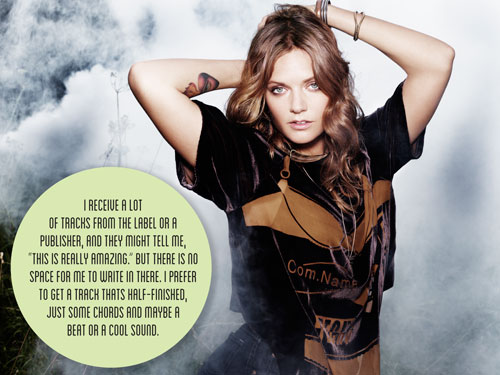
TL: It varies a lot. Usually I will have sentences, or an idea, or a storyline that I want to write about. If I have a track, it can inspire something in me, but if I write from scratch I will make a small production and find chords that match the melody idea I have in my head and that suits the mood of the song. It works in various ways, but it goes best when I have a story in mind that I want to tell.
MC: You’ve said that since your first language is Swedish, it actually helps you in being more direct in English. Can you elaborate?
TL: When I translate my songs they feel more blunt in Swedish than they do in English. I know how to phrase it in English, but it’s like putting a filter on the lyrics, and making them less harsh.
Swedish is very harsh and straight to the point. It’s hard to walk around what you want to say, because there are fewer words for what you want to say. I think that helps, if I want to say something, I have more ways to say it in play with words more so than if I am in writing in Swedish.
MC: Do you like writing songs as part of a team, or does that sometimes seem artificial?
TL: It used to [seem artificial], when it was people I didn’t choose myself. Now I work with people who I get along with really well. When you start out you usually have to go through these setup sessions that can feel really strange, but that’s how you end up meeting people that you love working with. It can get really tiring to have someone tell you, “Okay, we need a hit, guys.” It shouldn’t be on your mind when you write a song. Maybe hits have come through that way, but I don’t want to have that mindset.
MC: You’ve worked with super-producer and songwriter Max Martin––how would you describe the collaborative process?
TL: He definitely wants to hear other people’s ideas. He’s very easy to work with and very self-critical. He never settles. Someone in his position might just lean on their name and think, ‘Yeah, it’s good enough. People will still play it because it’s mine.” He would never do that. He pushes himself. I think that’s why he’s so successful.
MC: Melodically, Swedish pop often incorporates a shadow of melancholy.
TL: I think a lot of it does. You can create something happy and perfect, but everyone has some kind of sadness; that’s how life is, not everything is easy. I think if you can create something that makes you dance, and it’s a little sad, it goes more into the heart than something that’s just about happiness, or when you pretend that everything is great.
MC: Do you write songs on the road?
TL: Sometimes. I travel with my portable studio that I set up in various hotel rooms when I have time.
When I do press it’s a little less intense. If I’m doing shows it’s just a sound check during the day and sometimes I don’t even need sound checks, and I will find time to do some writing.
MC: What recording gear do you carry with you?
TL: I have my laptop, a MIDI keyboard and a Shure mic that goes in with an interface.
MC: Are your demos flushed out?
TL: Not production-wise. I’m pretty good at doing my own vocal production. The idea usually comes through, but I need my team to make it complete.