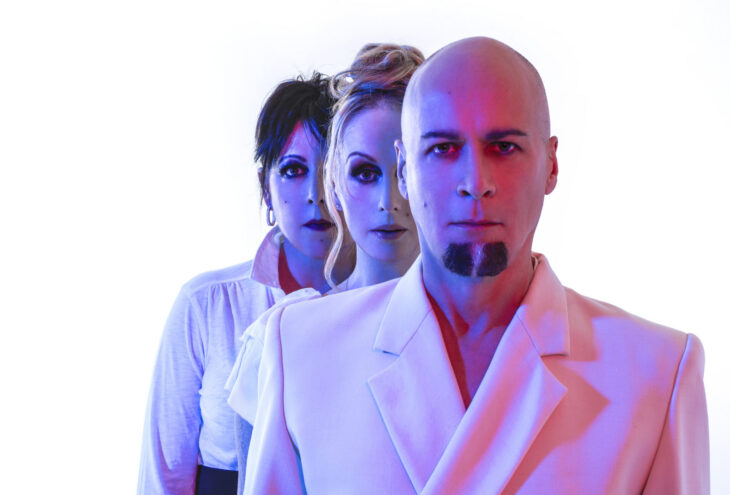
Since their formation in 1977, British synth-pop/new-wave outfit The Human League has been one of the more forward-facing, ingenuitive, and imaginative bands of its type. More than just a nostalgia-based pop act, The Human League has always offered listeners a glimpse into the future—both thematically and artistically.
Simultaneously, the group has, during its lifespan, been a hit machine, and they’ve never shied away from that. Rather than do that awkward thing of not playing the singles and only performing songs from whatever the latest release happens to be, The Human League happily embrace their previous successes while focusing on putting on a killer show. Combine those things, an effective balance of the past, present, and future, and The Human League of 2026 is a potent beast.
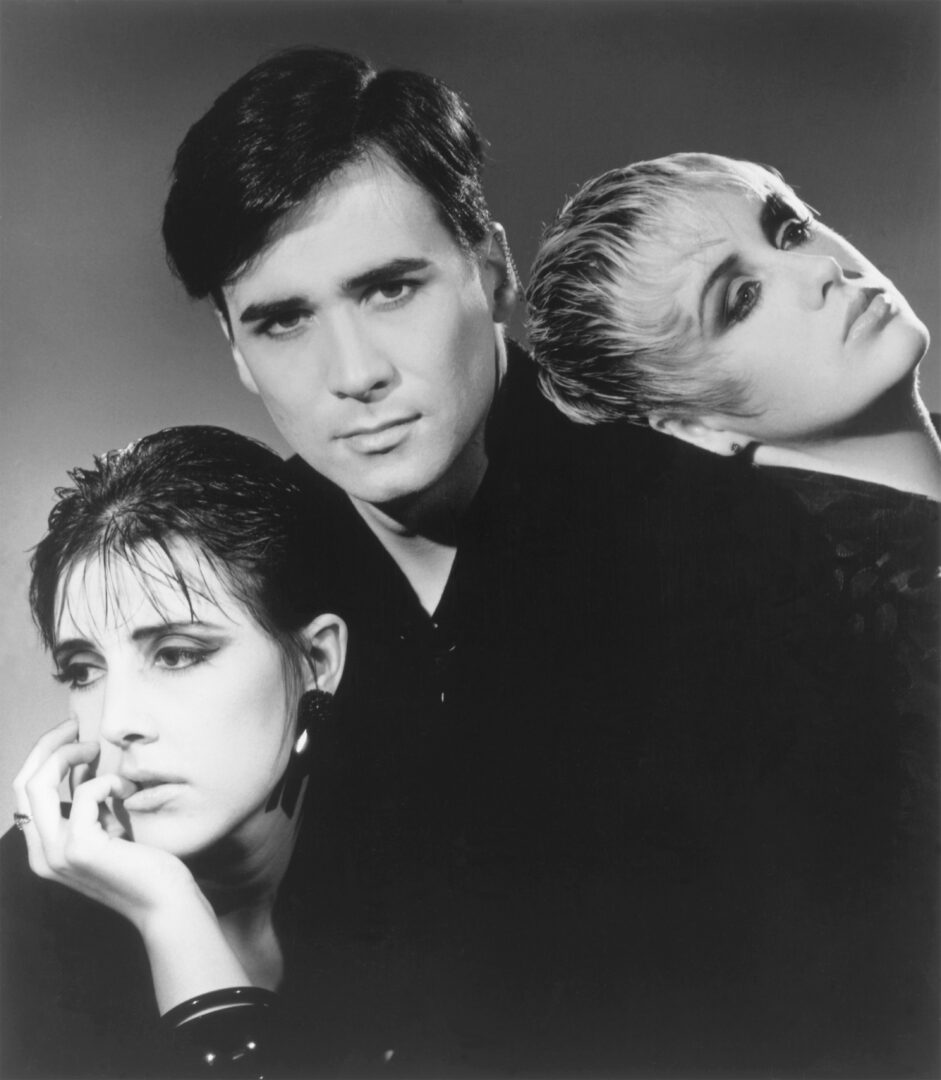
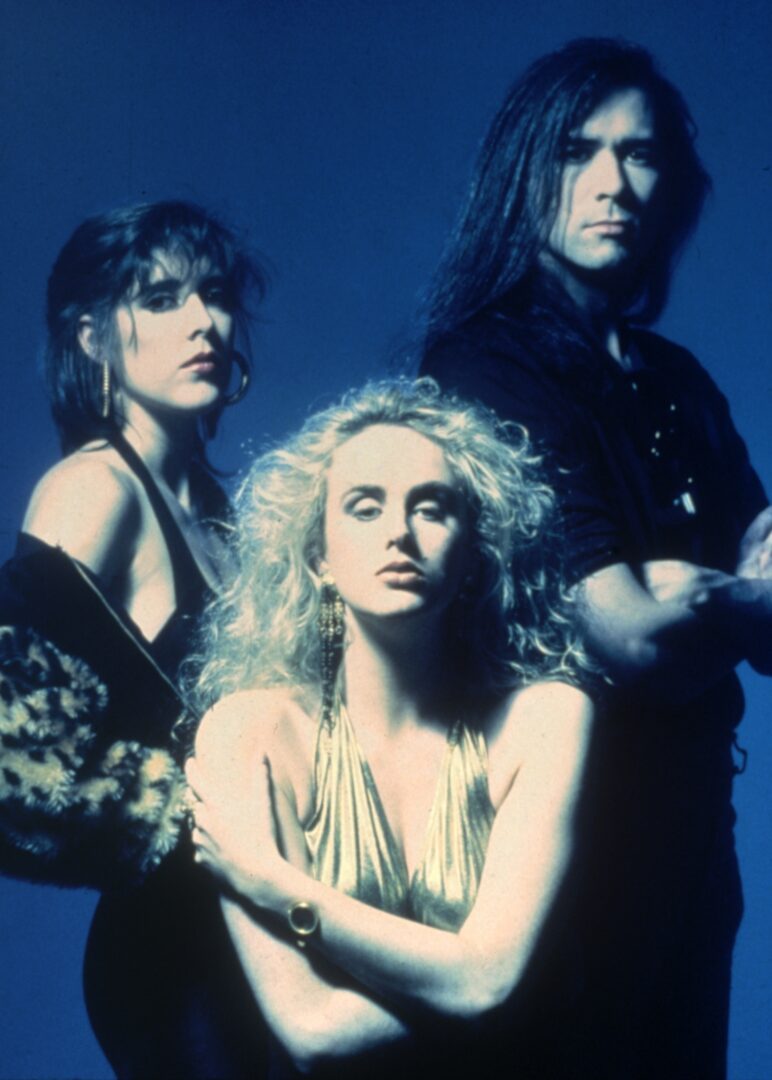
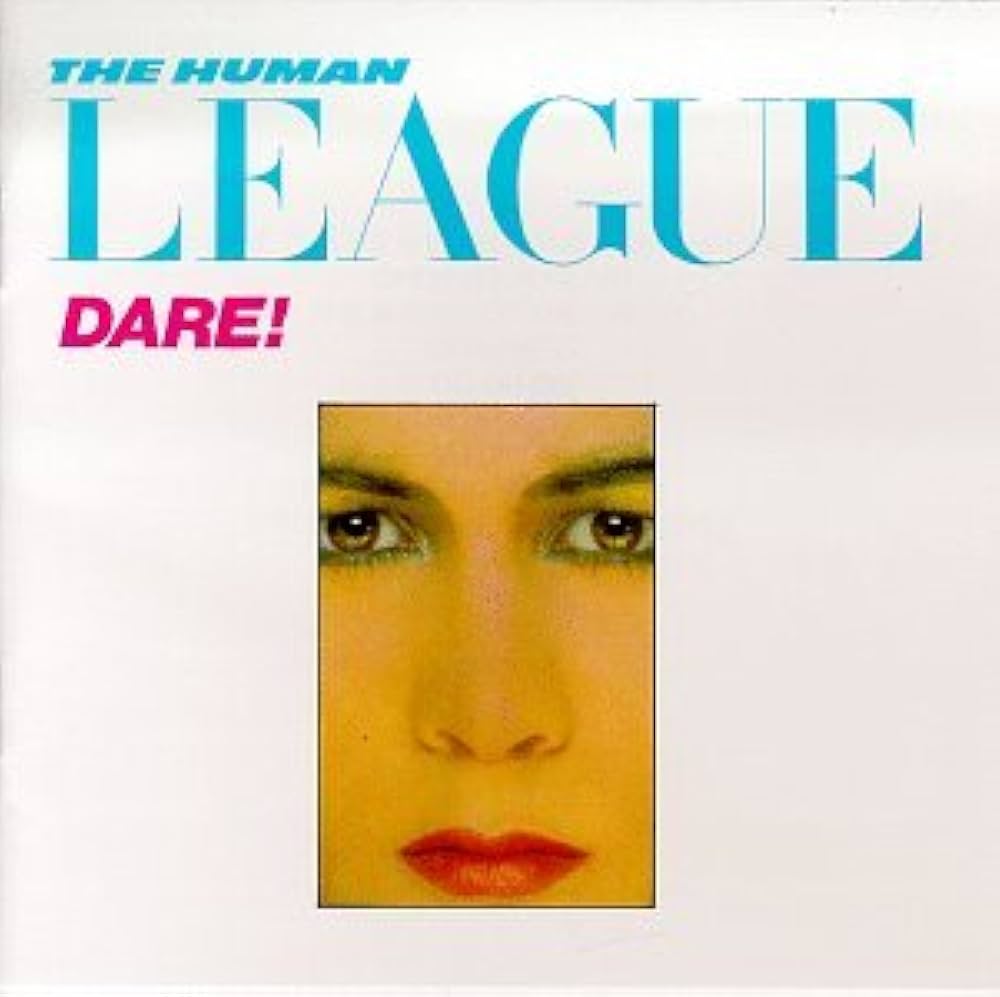
Again, it’s always been that way. For the ‘79 album Reproduction and then Travelogue the following year, the lineup consisted of Philip Oakey, Martyn Ware, and Ian Craig Marsh, plus visuals man Philip Adrian Wright. By ‘81’s classic Dare, the lineup had changed almost entirely. Oakey and Wright remained, while Jo Callis (The Rezillos), among others, came in to help Oakey fill the synth-shaped holes. Key to the new Human League was the addition of singers Susan Ann Sulley and Joanne Catherall, both of whom Oakey discovered dancing in a Sheffield, U.K. nightclub. Oakey, Sulley, and Catherall are, to this day, the voices and faces of The Human League.
On June 4, The Human League will play at the Hollywood Bowl as part of their Generations tour. Also performing are Soft Cell and Alison Moyet, making for a monstrously stacked bill.
“We’ll be doing what we do, really,” says Oakey. “I think for quite a long time now, we have been ambassadors from a glamorous past. And that’s what we do. We march out, we don’t have any tricks. We don’t have any cars or glass spiders or anything. We go out and we do our best to sing the songs in tune and not collapse while we’re on stage at our great age.”
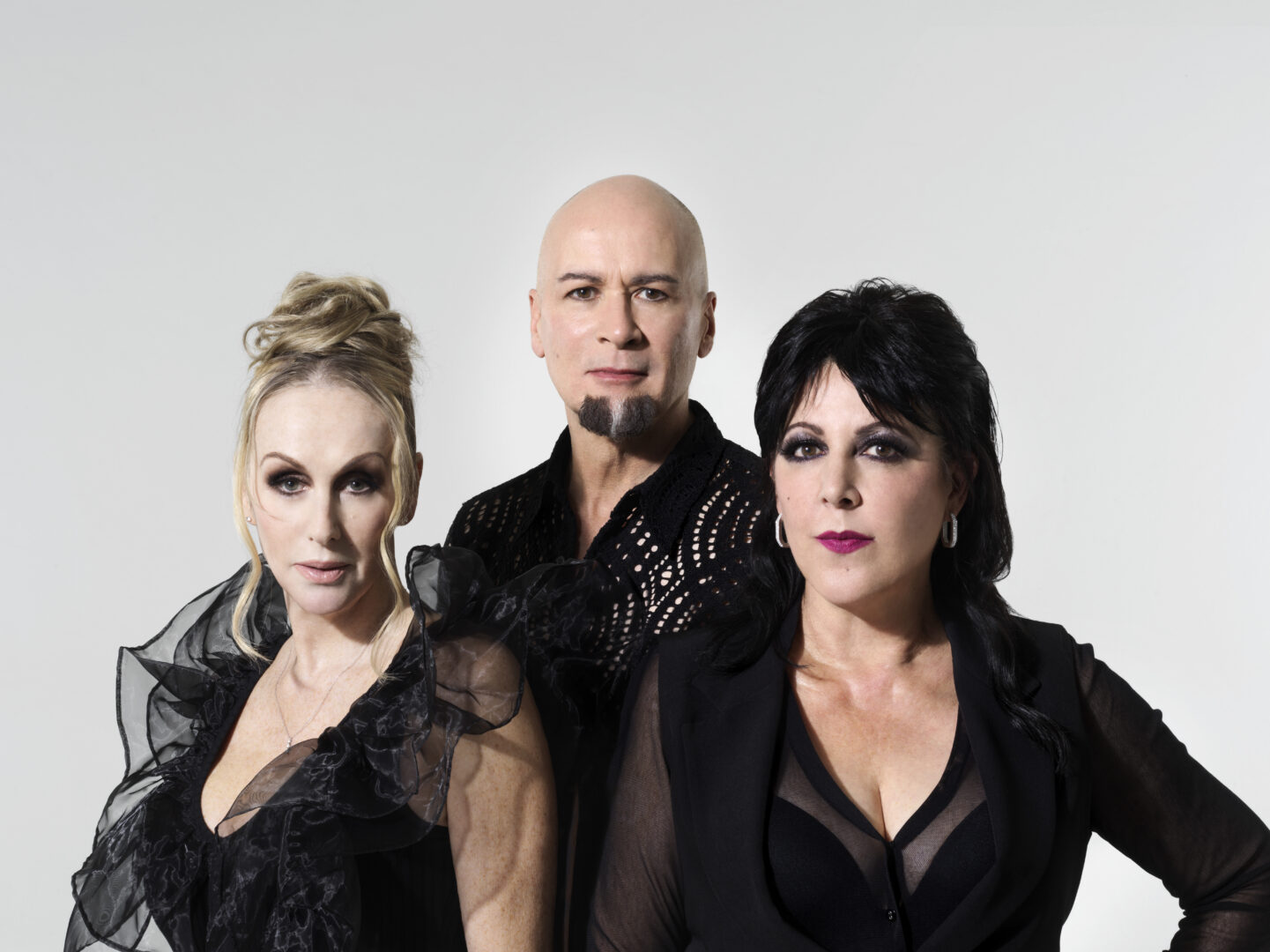
“We just got to put on a show,” agrees Sulley. “That’s what we do, and I’m sure it’s going to be great. We’ve played at the Hollywood Bowl a few times before, and it’s such an iconic venue and a great venue. When you’re on the stage, if you turn around, you see the sign, and it’s like, wow, you know, I still can’t believe that. The 17-year-old girl from Sheffield is still playing in places like this, so that’s always a bit of a surprise. But, yeah, we’re just putting on a good show.”
Oakey and Sulley are big fans of Marc Almond’s Soft Cell, and Alison Moyet. Both, in fact, appear as excited about the lineup as the fans are.
“We have hit so lucky this time,” Oakey says. “I mean, I like a lot of the bands from our era. We play all the time and we see them, but both of those have got a really special place in our heart, and we are very, very lucky to be traveling around, working on the same stage with them. I love them both.”
“You know what? In all these years, I have never, ever met Alison, or if I have, I don’t really remember,” adds Sulley. “But her voice is fantastic. We’re all slightly nervous when it was put to us, because we thought, ‘Oh God, we can’t sing like Alison can sing. We’re going to be awful.’ But I know Marc really well. I’ve known Marc for a very, very long time. A fabulous bloke. So yeah, it’s gonna be great.”
The Generations tour starts in San Diego on June 2 and ends a month later in Ohio. Naturally, the historic Hollywood Bowl show will be a highlight.
“We have we played it a couple of times before,” says Oakey. “It’s big news to us. I’m afraid
I’m a bit of a fan of Los Angeles. I’ve just come back from Los Angeles actually—my girlfriend’s sister lives there. I mean, it sounds a bit daft as a dour, miserable northerner from England, but Los Angeles suits me. If anyone would let me, I’d go and live there. The ties that bind—I’m like Gulliver in Lilliput, with a load of guys tying me down with little cotton strings.”
Sulley and Oakey agree that it’s important to put a setlist together that pleases their fans, especially on the sort of ‘80s package tour that Generations is. The Human League being the band that it is though, they’ll always find ways to keep things fresh. But making their fans happy is a priority.
“I think we’re only on for about an hour and 10 minutes or something, so it’s predominantly just going to be all the songs that everyone’s expecting and that everyone knows,” Sulley says. “We don’t have time to put a lot of the not-so-well-known songs, and we’d be daft doing that, especially on a bill with Alison and Soft Cell. We don’t want to go out there and be one of those groups that plays weird stuff that no one wants to hear. You will be getting what you expect. There’ll be ‘Fascination’ and ‘Love Action’ and ‘Don’t You Want Me,’ obviously. So yeah, I don’t think we’ll let you down from a song point of view.”
“Things get swapped in and out,” adds Oakey. “To be honest, we sort of lean towards the hits.
We try to give the people what they want, and then we slot the other ones in, the ones we like.”
That means you’re less likely to hear songs from 2011’s Credo (still the most recent album) or even 2001’s Secrets, despite that both of those are very strong collections of songs. It just happens to be the case that neither boasts a monster single.
“I think that the great debate with us was whether we were an innovative band or whether we were a synth band, because when we started, we were both,” Oakey says. “We still tend a lot towards the synths I still buy. I’m afraid I still spend way too much money on synths. So we do go in that direction.”
“You have to come to see a show of just ours,” adds Sulley. “When you play festivals, or a bill like this, you have to remember what the audience is coming to see. There might be people that are literally just coming to see Alison, or just coming to see Marc, and so we’re like an afterthought, and it’s like when you do a festival, you never know who’s going to come and see you. You don’t know, they might have come to see you, but they’ve come really to see somebody else. So you have to play your best bits, or you’d be a bit gassed if you didn’t.”
Philip Oakey is a wonderful human being to have a conversation with, even when it’s simply a phone convo (as necessity dictated for this interview). Sharp, warm, intelligent, and open, Oakey proved to be good company. Exactly the same can be said for Sulley, who regularly describes herself as “a girl from Sheffield.” No overblown ego, no air or graces, talking to Sulley felt very natural. Lest we forget, an entire generation of female pop singers were influenced by Sulley as well as Catherall. Importantly, the trio still love performing together.
“Really, it’s our way of life,” Oakey says. “We’ve been adapted into that way of life. Of course, none of us were musicians at all. We were all very amateurish right from the start, and it was quite a challenge. You know, I’m quite a shy guy myself, and we desperately wanted to be part of pop music, which I think maybe looks pretty naive now, but I think we used to look at the TV and we’d go, ‘Oh, if only I could be a little bit like Bryan Ferry, or a little bit like, Brian Connolly (I love The Sweet).’ Marc Bolan has got a very big place in my heart, and that’s what we wanted to do. And by sort of persisting and rehearsing a lot and really trying we get, we got a little bit near it.”
“I don’t like staying up late when I’m at home,” adds Sulley. “I’m tucked up in bed by 9 p.m. most nights, but I get up at six to go to the gym. But we just love playing live. We spend maybe half the year not working out of choice, which we can do. And then this summer is absolutely mad, full-on. We’ve got shows in England and Ireland, and we’re going to South Africa in a couple of weeks, and then five and a half weeks in the States. Then we come home, and we’ve got about one day off at home, and then we start work again. We just love playing live. It’s the immediacy, isn’t it? When you put out albums or music for people to stream, you don’t get the immediacy of actually seeing someone looking at you and going, ‘Oh God.’ You can tell how much they love it. When we the tour just after COVID, which was possibly the hardest tour we’ve ever had to do just because of the protocols, etc. that everyone had to go through, but the I cried every single night on that tour because the joy on people’s faces, and it wasn’t just about seeing us, it was getting out of the house and doing something social and being able to sing and dance around and stuff.”
The current touring lineup of The Human League is rounded out with David Beevers, Rob Barton, Ben Smith, and Nick Banks.
“Robert, our drummer, has been with us for ages and ages,” Oakey says. “He’s just a very dedicated, terrific drummer, and one of the few drummers who can play against a click track as a sort of sequence beat and be as good. He’s the perfect drummer for us. Ben, our keyboard player, is an incredibly talented guy from Manchester. He’s got, like, two music degrees. He lives music. Our guitarist [Banks] now lives in Portugal, which makes life interesting trying to get him anywhere. But again, a young guy who’s just got music flooding through him. It’s the way that he presents himself somehow. It’s all he thinks about. He plays loads and loads of instruments. He started as a trumpet player, I think, but now covers keyboards and guitars with us, and he’s brilliant. Musicians are better than they were. The new generation of musicians, all they want to do is a good job, and they work so hard at it. They’re all nice guys, by the way. Getting on the bus with them, they’re easy to be with.”
As mentioned, 2011’s Credo remains the most recent Human League album, and that’s now 15 years old. It made sense, therefore, to ask the pair about the possibility of new music.
“I never stop,” says Oakey. “I’ve got a computer full of half-baked ideas. The biggest problem is production. I have never been a producer. I just cannot. I can’t even balance tracks out, you know? And it gets harder and harder to find producers, because the system is different, because the money doesn’t flow in the same way from recordings. Producers now want to be writers as well. We worry a little bit about our ideas getting radically changed. Many producers now want to take away your top lines, and come back with something totally different. And we would like to hear a finished version of what we tried to do. It’s all up in the air. There will be a 10th album, somehow. We’ll get A.I. to produce it.”
“We have a big studio in Sheffield, and Philip’s got a home studio,” adds Sulley. “And I know he writes, he does stuff all the time, but I think he’s sort of doing it for himself and no one else to listen to at the moment. I think that’s fair enough. I know he still loves going on stage, and I think when Philip feels like it’s time to put something out there, he’ll indicate to Joanne and I that that’s what he’s thinking. And we’ll be happy, but we love what we do. We can keep doing what we do now. And if Philip doesn’t want to write, then that’s up for him.”
Whether he wants to write or not, Oakey does concede that the model for releasing albums and, God forbid, making some money from new music, has completely changed, certainly since their heyday.
“I think you have to take on a completely different model the music industry turned on its head sometime between about the end of the ‘90s and the middle of the 2000s,” he says. “Our income came from people buying solid things in shops, and now your income comes from playing live. It’s got to be said though, that if, when we do a new album, we get a chance to play more places, it broadens your reach. Really, you’re doing it because you want to do it nowadays.”
The Human League certainly wants to do it. Their drive to keep performing is tangible when speaking with Oakey and Sulley. But you just get the sense that Oakey needs to keep the creative furies burning.
“We’ve been going through a few things with the guys in the group lately,” he says. “Just seeing where they go. I enjoy the initial bits a lot, but then it comes to the time when you’ve got to write the top line and the lyrics, that gets a little bit tougher. I come up with an idea, and I think I’ve got two rhymes, but I need four rhymes. I get out the rhyming dictionary, and I go, ‘Oh no, I’ve looked at this this bit before,’ so that’s difficult. You don’t want to be doing the same things again. I think it would be a bit sickly for a 70-year-old to be writing love songs, so that cuts out a wedge of the sort of things that you do. But it goes on.”
When it comes to gear, Sulley says that she’s happy to use whichever microphone she’s given. For Oakey meanwhile, “reliable” is the buzzword.
“It’s not happened for quite a long time, but at one stage we had a very complicated setup between computers and MIDI,” Oakey says. “We used to sometimes go out in front of 5,000 people, and things didn’t work, and that was no good. So we have the most reliable workstation, with maybe a few quirky little keytars and things like that. I mean, at home, I’m still buying a lot of Eurorack stuff. I’m amazed, as digital has crept into Eurorack. The idea at first was sort of an analog revival. But now, you can tell it what chords and keys you want. It’s exactly the reason that I got synths in the first place, which was sequences and to have the stuff whizzing round and some crazy stuff happening, but then suddenly something comes and stamps on it and makes it in tune, and that’s where I am now. So just just loads and loads of Eurorack stuff, I suppose. I got the Melbourne, not the NINA—the synth with recordable knobs. NINA was the first one that Melbourne did, and I got the second one that didn’t have a keyboard. I always thought that was a place that synths should go. If you get a patch, you want the knobs and sliders to be exactly where they were, so you can do a little bit of tweaking.”
For now, we’ll have to content ourselves with enjoying that tweaking on a stage, rather than in a studio while recording new songs. Despite the fact that, as he mentioned, Oakey is now 70, he and the band still enjoy the process of touring.
“I think we largely sit there with our mouths open, watching the landscape go by,” Oakey says. “Joanne and Susan aren’t very fond of films, and I don’t think we ever really play records. So the guys tend to go upstairs, and I tend to sit downstairs with Joanne and Susan reading, doing more reading than I used to. Obviously, I’m a little bit science fiction-y. I’ve been catching up on stuff. I’d never read The Man Who Fell to Earth, and I just did it. Also, Roadside Picnic [by Arkady and Boris Strugatsky]. I always wanted to read that, and I read recently. I’m just kind of trying to cram it in some lyrics at the moment.”
Sulley, meanwhile, just keeps pinching herself, unable to believe the life that she’s been afforded. She might be a “girl from Sheffield,” as she keeps telling us and herself, but she’s being humble. The style, charisma and, yes, the voices that Sulley and Catherall gave to The Human League, in sync with Oakey’s, created magic. Sulley remains remarkably humble.
“I always feel like that, because it was never on my agenda to be in music as I grew up,” she says. “It was never what I expected to do. The first time I came to New York, we had a late-night flight. I remember I was asleep, laid in a big, fancy limousine, and our manager woke me up, and I saw the skyline, the one that you see every New York film. The Twin Towers were obviously there then, and I cried my eyes out. I cry a lot, but I cried because it was like, ‘I can’t believe that I’m that girl from Sheffield that is actually even here, let alone being able to do the job that I’m doing.’ Whatever you do in life, if you get complacent about it, then it doesn’t bring you joy. And I think that I work in an industry where it can be very joyless. Sometimes it doesn’t. But then driving and seeing Sydney Harbor Bridge, and getting to Los Angeles and getting off a plane and thinking, ‘I’m in L.A.’—all those things, they still excite me after all these years.”
Eventually, The Human League will come to an end. We hope that doesn’t happen for a long time, but eventually it will. We asked Oakey and Sulley how they want their band to be remembered.
“I think the continuity of it more than anything,” Oakey says. “Really, it shouldn’t have lasted, and we’ve been through such hard times. I’m really proud that the three of us have managed to continue the whole the whole thing.”
“The songs are what have kept us here after all this time,” adds Sulley. “If it wasn’t for the songs, then we’d be nowhere. But what am I proud of the most? I think the fact that we’ve managed to stay together for all these years, which I think in the world of pop music, is highly unusual. We’ve not killed each other, or anything like that. We’re all pretty normal, levelheaded people that just sort of coast along with our lives and stuff, and I hope that along the way, we’ve brought smiles to people’s faces. That’s all I really ever wanted to do from joining this group, was to make people happy.”
Job done!
Photos by Perou