The Ed Sullivan Show has found an entirely new audience across digital platforms with 1 million YouTube subscribers, 1 billion views on Facebook and now, 1 billion views on YouTube. Fans can explore this vast archive through more than 250 curated YouTube playlists featuring Rock & Roll Hall of Fame inductees, Motown legends, and iconic music performances.
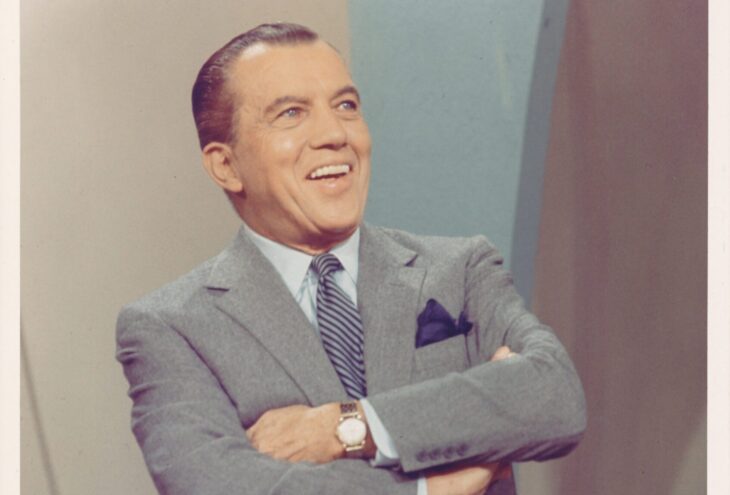
Ed Sullivan was the host of the longest running broadcast variety show in U.S. history bringing icons of music into American living rooms for over 20 pivotal years.
Ed Sullivan will be inducted into the Rock & Roll Hall of Fame Class of 2026 on November 14th, to be held in Hollywood at the Peacock Theater. Outside of the performers, Ed Sullivan will be posthumously honored with the Ahmet Ertegun Award, which is reserved for non-performing industry figures for their influence on music. More than 75 artists who made their debut or early appearances on The Ed Sullivan Show have now been inducted into the Rock & Roll Hall of Fame.
The Ed Sullivan Show (1948), broadcast live Sundays at 8 p.m. on the CBS television network from 1948 to 1971, charmed prime time TV viewers for the last time when it wrapped its final episode on June 6, 1971.
Host Ed Sullivan, a celebrated 1940s New York sports and entertainment newspaper reporter and columnist, became a pioneering TV broadcaster who presented a stunning variety of entertainers and pop culture figures in the show’s twenty-three-year run: singers, musical performers, comedians, film stars, sports figures, jugglers, tumblers, plate spinners, and emerging talent of all kinds. Longtime director John Moffitt helmed nearly 1,000 hour-long episodes.
The Sullivan library houses 1,000 hours and more than 10,000 performances in black and white and color (the first show broadcast in color was on October 31, 1965, in the eighteenth season). For almost two and a half decades, it was a Sunday night ritual for American families to gather in front of the TV and welcome Sullivan into their living rooms to watch the impresario introduce the guests on his “really big show.”
Broadcast in front of a studio audience mostly in CBS’s Studio 50 (renamed “the Ed Sullivan Theater” in 1967) at 1697-1699 Broadway in Manhattan, between West 53rd and West 54th Streets, and sometimes originating from CBS Television City in Hollywood, The Ed Sullivan Show was a weekly snapshot of what was happening at that moment.
The shows and guests were often topics of conversation on Monday mornings at work or school. As the years rolled on, the series eventually documented American pop culture from the post-World War II era all the way into the Nixon years. By then, Sullivan was an icon. From the outset, when television was in its infancy, Sullivan was personally involved in his show’s bookings and known to have said he wanted to “entertain all of the people some of the time”—from providing grandparents with glimpses of vaudeville, to offering parents top-tier Hollywood personalities and athletes, to bringing teenagers their next poster idols, and youngsters the Italian mouse, Topo Gigio. Sullivan cast aside racial, political, and cultural boundaries to ensure his audiences witnessed the best and the brightest talent.
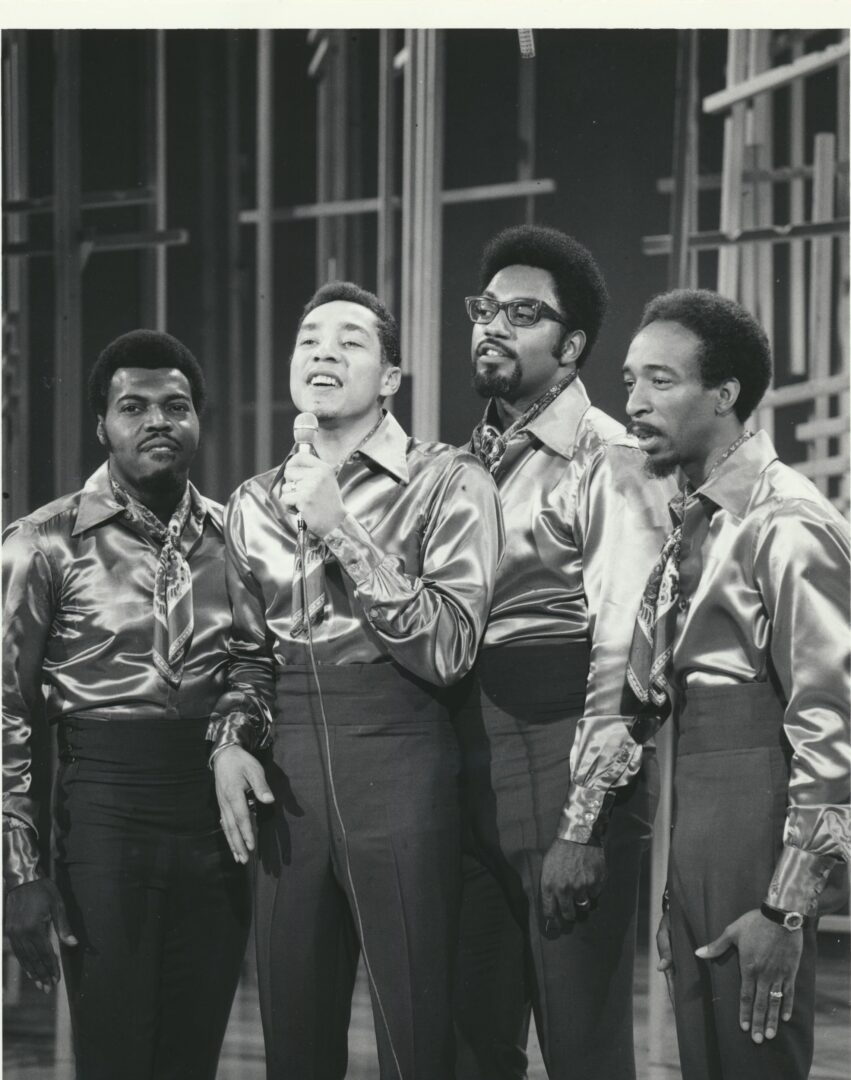
The Ed Sullivan Show spotlighted history-making music per formances by Elvis Presley, the Beatles, the Rolling Stones, the Animals, the Doors, Diana Ross & the Supremes, Gladys Knight & the Pips, Marvin Gaye, the Turtles, Neil Diamond, Smokey Robinson & the Miracles, the Beach Boys, and the Jackson 5, for example.
Hollywood stars Julie Andrews, Elizabeth Taylor, Peter Sellers, Gregory Peck, Steve McQueen, Sophia Loren, and Marlon Brando all appeared. Sullivan introduced comedians such as Joan Rivers, Rodney Dangerfield, Carol Burnett, Lucille Ball, George Carlin, Johnny Carson, the Smothers Brothers, and Stiller and Meara. Athletes who guested included Mickey Mantle, Willie Mays, Joe Namath, and Arnold Palmer. Stage greats from the casts of Oliver!, Hello Dolly, and South Pacific performed scenes. Opera singers Maria Callas and Beverly Sills were featured, as were artists Salvador Dalí and José Greco, dancer/choreographer Rudolf Nureyev, and political figures including Presidents Dwight D. Eisenhower and John F. Kennedy. In a time of racial segregation, Sullivan was an influential advocate of civil rights. He invited African-American actors (Pearl Bailey, Dorothy Dandridge, Diahann Carroll), athletes (Muhammad Ali, Jackie Robinson), comedians (Godfrey Cambridge, Richard Pryor, Flip Wilson), and musicians (Harry Belafonte, James Brown, and Motown artists such as the Four Tops, the Temptations, and the Supremes), to name just a sampling.
For them, and indeed, for artists of all racial and ethnic back grounds, a performance on The Ed Sullivan Show represented a pivotal career milestone, bringing their talents to mainstream America and catapulting them to the top of the charts with breakout success.
Sullivan was the first to bring country music’s brightest stars (Chet Atkins, Johnny Cash, Loretta Lynn, Jimmy Dean, Brenda Lee, Buck Owens) to network television viewers. The show also booked international talent from the UK (Julie Andrews, Cliff Richard, eighteen British Invasion singers/ groups), France (Johnny Hallyday, Edith Piaf, Brigitte Bardot), Italy (Sophia Loren, Gina Lollobrigida), Spain (Andrés Sego via, Salvador Dalí, José Greco), Germany (Obernkirchen Children’s Choir), Japan (the Blue Comets), Ireland (Peter O’Toole, the Clancy Brothers, the Dubliners), and Israel (Prime Minister David Ben-Gurion). Firmly entrenched in the mainstream, The Ed Sullivan Show’s ongoing attempts to draw younger audiences were not without controversy.
When Elvis Presley debuted on September 9, 1956, and encored on October 28, his hip-swiveling gyrations generated so much uproar from parents and “squares” that for his third appearance on January 6, 1957, the cameras shot him only from the waist up.
On May 12, 1963, when CBS’s censors and Columbia Records lawyer Clive Davis asked Bob Dylan to perform something other than his choice, “Talkin’ John Birch Paranoid Blues,” Dylan declined and walked off the set, never to return. The Rolling Stones and the Doors were also banned from further live appearances on the show after they resisted demands for changes in their lyrics supposedly referencing sex and drugs. Rolling Stones lead singer Mick Jagger was ordered to change “Let’s Spend the Night Together” to “Let’s Spend Some Time Together,” which he did during the live performance on January 15, 1967, but over-emphasized singing the word “time” while roll ing his eyes. (The Stones’ final Sullivan appearance on November 23, 1969, was taped.)
The library remained in the Sullivan family’s possession for almost two decades after The Ed Sullivan Show wrapped. In 1990, documentary filmmaker-producer Andrew Solt formed SOFA Entertainment Inc. and acquired the library from Sullivan’s daughter and son-in-law for an undisclosed sum.
The Los Angeles-based production company became the copyright holder of the original programs and, eventually, more than 150 hours of newly created programming. Solt is one of those American kids who grew up watching Sullivan on Sunday nights. Along with his aforementioned theatrical documentaries, his filmography includes the longform TV special Heroes of Rock ’n’ Roll (1979), an early collaboration with Malcolm Leo; and the miniseries The History of Rock ’n’ Roll (1995).
SOFA Entertainment has produced approximately 400 programs for television and home video, including Elvis: The Ed Sullivan Shows (2006). In 2023, UMe inked a deal with Solt and SOFA and secured the global digital rights to The Ed Sullivan Show. The terms were not disclosed. That officially brought complete shows and special guest segments to streaming platforms worldwide for the first time via the show’s official YouTube channel and website at edsullivan.com.
UMe upgraded many of the individual performances to high- resolution clips as part of the agreement. With five years of digital content experience at Google, Josh Solt, SOFA Entertainment’s president, has been overseeing the production. “Sullivan knew how to give a show that was for every generation that might be watching,” Andrew Solt explained during a September 2011 interview with me.
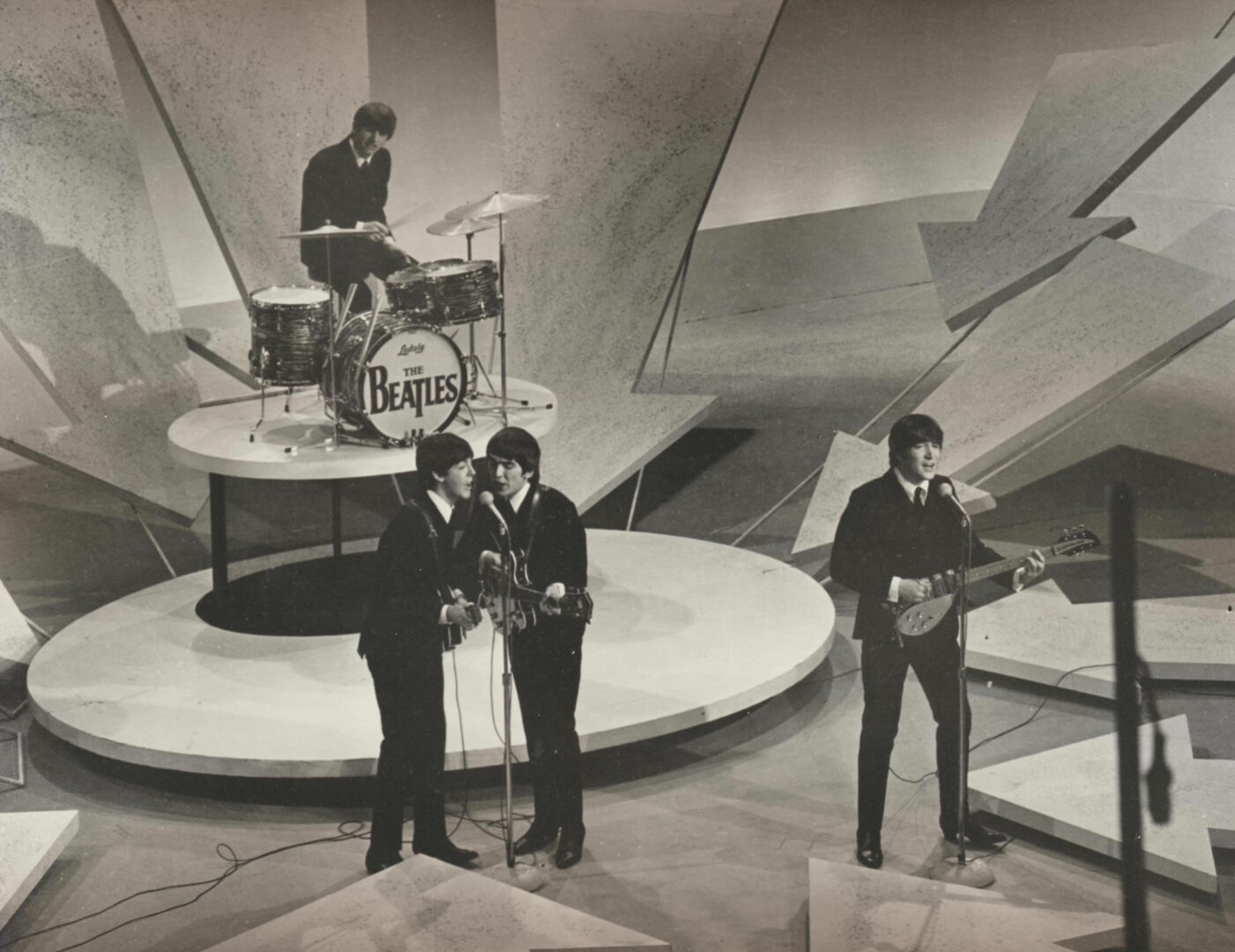
“The show was such a launching pad for such great, important, iconic moments, whether it’s Elvis or Bo Diddley. When the Bea tles stepped onto Ed Sullivan’s New York stage on Sunday, Feb ruary 9, 1964, to make their American TV debut, 86 percent of all TVs on at that hour—73 million Americans—were tuned in. It was the most-watched program in history to that point and remains one of the most-watched programs of all time. To some, The Beatles debut on The Ed Sullivan Show, February 9, 1964. It will always be remembered by his introduction: ‘Here they are— the Beatles!’”
Solt commented about the pre-1965 black and white film that captured the monumental, televised appearances of the Beatles in America.
“I think because the footage is black and white it takes you back even more into an era in which, to today’s generation, nobody understands why anything was ever in black and white. I think what really comes across is [the Beatles’] excitement, their charisma, their talent, and when you start to think those haircuts were considered revolutionary, weird, and long hair, that those Beatles boots they wore were different, so unusual. And in retrospect, it’s humorous, but that is Day One of the evolution of rock and roll post-Elvis.
“That era of the 1960s starts February 9, 1964, in America. And it is the first time rock and roll ever comes to us. Before that, it was an exported item, never imported. They reinvent it and bring it back, and it changes the face of American pop music completely. That happened [in New York] and the city goes mad, the country goes wild, the whole place is affected. The beauty is watching the faces of these four young guys, knowing they’ve waited for this moment. They came to America with a number one record. They had it all lined up. They told that to Brian [Epstein, their manager and it happened.
“For those of us who remember the music arriving around Septem 1963, by the time they get to February, it’s after the John F. Kennedy assassination, and we had been through the doldrums of a very horrific time where everything was questioned. Bomb shelters. I never thought I would see grown-ups running around, crying as the world had ended. I didn’t know what was going on it was so severe.
“Ten weeks later or less, these guys land on our shores, and euphoria reigns. And [February 9] is the moment, and this can now be enjoyed by people around the world in a way that matters.”
“John F. Kennedy had hair, he had erotic charisma, he had TV stardom and a great voice—and then, as it must with all Dionysus stories, tragedy struck,” suggested Dr. James Cushing, writer and pop culture scholar.
“Author Don DeLillo wrote that Dallas ‘broke the back of the American Century.’ End of this Dionysus cycle? Apparently so. And then, seemingly out of nowhere (Liverpool?), on The Ed Sullivan Show, two months and two weeks after November 22, 1963, on the same TV that gave you JFK, we get—who could have predicted it?—four Dionysian heroes who wear the garb of the singer Orpheus!
“My God, the hand of fate traded Kennedy for the Beatles! And so, they blended Dionysian ecstatic energy with Orpheus’ romantic loyalty to Euridice for an erotically unbeatable moment.”
Sullivan initially became aware of the Beatles when arriving on a flight at London airport (subsequently known as Heathrow) on Friday October 31, 1963. Having witnessed the hysteria of fans at the airport to greet the group’s arrival home from a Swedish visit – he made note of the pandemonium. He was thus aware of the group when he was approached for a meeting by their manager, Brian Epstein.
On November 5, 1963, immediately following the band’s historic Royal Command Performance, Epstein flew to New York with Billy J. Kramer in order to huddle with the all-important editor of 16 magazine, Gloria Stavers. On his visit to New York, Brian met twice with Ed Sullivan in order to negotiate appearances by the Beatles on The Ed Sullivan Show.
At first, Sullivan offered Epstein and the Beatles only a spot during one broadcast. Epstein, who had his strategic eye on the prize of TV exposure did not focus as most managers would do on the fees. He even offered to pay travel, lodging and expenses, after Sullivan first declined a headline date.
Then Epstein countered with a guarantee for two different headline appearances. Sullivan was rather surprised by Epstein’s firm demands. They settled on two principal shows on successive Sundays – live on February 9th in New York and live on February 16th in Miami. With a third performance to be taped in New York to be shown at a later date.
As it happens the third performance was taped on the afternoon of the first show (Feb 9th) and then aired on Sunday Feb 23rd. Meaning that the Beatles appeared on three successive Sundays – though that third airing date was not initially scheduled. It was after the first appearance that Sullivan realized that he could capitalize on his good fortune by airing that additional performance to make it three consecutive weeks of the Beatles.
Epstein then skillfully used the fact that he now had a commitment for three Sullivan TV spots to finalized an already in-discussion negotiation with Capitol Records president Alan Livingston for US releases of the Beatles. He got Capitol to commit to a vast promotional budget for his group.
Writer/producer/humorist Martin Lewis – who was a protégé of former Epstein assistant (and subsequently key Beatles publicist) Derek Taylor – instigated and ran the successful campaign to get Epstein into the Rock and Roll Hall.
Lewis was a consultant and involved in producing The Criterion Collection’s Director-Approved digital restoration 4K UHD & Blu-Ray 2021 DVD A Hard Day’s Night with numerous special edition features. Martin is an acclaimed scholar on the Beatles, and his account of the Beatles/Sullivan partnership is remarkable.
In 2023, Lewis emailed me the real blow-by-blow description on why we first saw and were bitten by the Beatles in February 1964.
“When I launched the [Epstein] campaign in 1998, I had a couple of meetings with Alan Livingston.
“He told me that Brian Epstein had played a brilliant game of poker with him. Brian had phoned Livingston in mid-November 1963 – hustling to get Livingston to commit to releasing the Beatles in the US. His underlings at Capitol had already rejected the group on four occasions in 1963.
“When Livingston played coy and refused to commit, Epstein acted dumb. ‘I understand that TV is very important in your country. Would it help if I could get my Boys a slot on one of your American TV shows?’ Livingston said that it would. ‘What about a program which I think is called err… ‘Ed Sullivan’ – if I could get them on that show – would that help?”
“Livingston was convinced that the Englishman on the other end of the phone was a naïve loser. When Epstein said ‘well if I can get them an appearance on the Sullivan show – THEN will you commit to release my group in the US?’
“Livingston agreed. Then Epstein went for the kill. ‘And if I could get them THREE appearances on Sullivan – would you commit to a large promotional budget to launch them?’
“Certain he was dealing with a fantasist, Livingston readily agreed. What did he have to lose? A totally unknown manager representing a totally unknown British music act with strangely long hair and no US record deal - had no chance getting his act on the Sullivan show once – let alone three times.
“Livingston immediately gave his word and hung up.
“With his trap sprung, Epstein waited a couple of days – so that he could create the illusion of having had sufficient time to negotiate such an improbable deal. Then he called Livingston and told him the Beatles had got a commitment for three Sullivan appearances!
“Livingston told me that at that point he was certain that Epstein was crazy. He said he’d have to call Epstein back. He then phoned Bob Precht, the producer of the Sullivan show – certain that he’d be told that the show had never heard of the Beatles.
“To his astonishment he learned two things. Firstly, that the Beatles indeed had got a contract for three Sullivan appearances. And secondly – that the contract had been signed two weeks earlier! That Epstein had the signed contract in his back pocket when he first phoned Livingston and had asked if getting a US TV show might help him get a record deal!
“Livingston told me, ‘I realized immediately that I had been played. Out-played. Brian had bluffed me brilliantly. I wasn’t mad. I was thrilled. If this guy was that skillful and that passionate about out-smarting me. If he was that skillful and that passionate to get Sullivan to commit to showcasing his group on three shows – I knew I was dealing with a promotional genius. I’d already given my word for a generous deal if Brian delivered. And as he had delivered, I committed to the deal for the Beatles on that phone call. I wasn’t sure yet about the Beatles. But I WAS getting in business with the guy who was sure…’”
The Beatles would have TV dates on The Ed Sullivan Show three more times: the following Sunday live from Miami, the show taped on the afternoon of their first appearance aired on February 23, and finally on September 12, 1965. In all, the Fab Four performed 20 songs (15 different ones), from “All My Loving” and “I Saw Her Standing There” (twice each) to “I Want to Hold Your Hand” (three times), “Yesterday” and “Help!”
Along with millions of other teens, I felt the emotional and musical impact of the Beatles’ Sullivan debut. Two other Sullivan guests transformative for me were Little Anthony & the Imperials on March 28, 1965, with Anthony’s mesmerizing lead vocal on “Hurt So Bad,” and soul singer/dancer James Brown singing a medley of his hits on May 1, 1966.
“The relationship between Berry Gordy’s Motown label and The Ed Sullivan Show also made music and television history,” Solt reinforced.
“Soon after the Supremes’ debut on Sullivan (December 1964), it was clear that showcasing the latest Motown releases on CBS on Sunday nights (thirty-five million viewers was average) until 1971 was a way to expose the record company’s newest hits and boost the show’s ratings.” Solt and I discussed Sullivan’s influence on the world of African-American entertainment.
“Ed had a fascination with African-American culture. He loved talent. He stood up for Harry Belafonte and Marian Anderson. Mahalia Jackson sang on the show, and one of the very first shows W.C. Handy sang on was The Ed Sullivan Show. He is considered the father of the blues.
“For one, a Harlem DJ, Dr. Jive, introduced R&B artists to America in late 1955. ‘Rock Around the Clock’ was blasting out of every transistor radio and the main titles of Blackboard Jungle. Ed loved introducing African Americans on his stage, and most of all he enjoyed giving people big breaks and the most desired gift, national TV airtime. Ed liked his role as showbiz kingpin, and he knew he was very fortunate to be such a powerful arbiter of American taste. He took pleasure in influencing our culture and [presenting] acts that would make us gasp and swoon. He was an unlikely hero.”
“For us, being on The Ed Sullivan Show was so much more than record sales,” Mary Wilson of the Supremes emphasized when we spoke in 2016.
“It wasn’t about promoting us. It was about that we had grown up watching The Ed Sullivan Show. We had grown up watching The Supremes . shows where you didn’t see a lot of Black people starring on those shows. We were like every other family in America who spent hours watching Ed Sullivan. So, for us, being on the show was such a great honor, because we were there to see the world changing. To see America changing. We were excited! We’re on The Ed Sullivan Show.
“We came from a time when a whole family of all different colors didn’t sit around watching Black people on television. The Dick Clark Caravan of Stars tours were before us and there were segregated hotels.
“For us, that is what it was all about. We were part of that change. We were part of helping America to see Black people, Black women, being proud, beautiful, and successful. It wasn’t just us. Many people before us. But they didn’t have the television to expose them to that wide range of people as we did. We were lucky. We stood on a lot of shoulders. But we were there when the doors opened.
“The other thing was that we were seen in color after our initial appearances were in black and white. Recently, my granddaughter was watching a DVD collection of the Supremes. And she said to me, ‘Grandma! What happened to the color?’ Because she has never seen a black-and-white TV!”
In November 1974, for Melody Maker, I interviewed Bobby Rogers, a member of the Miracles and a Motown fixture since their inception in 1958, when Bobby joined up with his sister Claudette, Ronnie White, Warren “Pete” Moore, and Smokey Robinson.
The Beatles appeared on The Ed Sullivan Show nine times (three live, six pre-taped or on video), and the Rolling Stones on six occasions (the last pre-taped).
“Ed Sullivan was a true American phenomenon,” observed Andrew Loog Oldham, the Rolling Stones’ record producer-manager from 1963-1967.
“Every country has one: a seemingly untalented nebbish with strictly local/national appeal. But say what you will, and we did, his musical booking decisions opened the eyes and ears of America and created a legacy/library for all future generations. And he’s the only dude I know who made the Rolling Stones change their lyrics.
“When the Beatles played The Ed Sullivan Show, [it was] that moment when American youth [were] feeling the subtext, feeling the great unspoken hurt of a nation still traumatized by the assassination of its president just a few months before. It’s an incredible moment: Suddenly, American youth had its own music, a reason to be alive.
“Barney Ales—the jewel in the crown. His efforts on behalf of Mr. Gordy and the artists were the primary reason the ‘Sound of Young America’ graduated all over the world.” Ales was Berry Gordy’s right-hand man and Motown’s ultimate insider, whose job was to get the records played and the company paid. He rose to become executive vice president and general manager but remained in Detroit in 1972 when Gordy moved Motown to California. Ales became its president in Los Angeles during his return to the firm from 1975 to 1978.
“It was really a battle in those days to get Black artists on network television in prime time,” Ales emailed me in 2016.
“Sammy Davis Jr. and Nat Cole were about the only ones—anyone else, they just weren’t accepted. But when the Supremes broke through, we knew we had an opportunity. They looked so great, as well as sounding great. And Harvey Fuqua and Maxine Powell did a wonderful job, grooming the girls, getting them ready for prime time.
“The Ed Sullivan Show was the real breakthrough: Sunday nights, millions of people watching. Once Sullivan took to the Supremes, we knew we were on the right track. And album sales picked up like crazy whenever they were on, so we always made sure to tell the distributors they needed to check their inventory.
“After the Supremes, we got everyone on Sullivan’s show: Stevie, Gladys, the Temptations. We had a good relationship with the producer, Bob Precht. He liked Motown, and Esther, Berry’s sister, used to take the dressing room keys afterward as souvenirs. They’re probably somewhere in the Motown Museum to this day.”
“Of course, Canada has always enjoyed extremely close-knit ties with Britain,” Toronto-based writer and musician Gary Pig Gold told me.
“Canucks already blessed with their own drum kits and guitars were busy learning and adding the latest Pacemakers and Billy J. B-sides to their sets, thrilling local audiences with this strange new sound and style which, when it finally hit Stateside big-time on the 2/9/64 Ed Sullivan Show already seemed somewhat old-hat to with-it kids in Winnipeg. “Meanwhile,” Gold added, “in the fab fervor which engulfed all of America immediately post-Sulli-vision, it was none other than good ol’ Capitol Canada who came to the rescue of Yankee press ing plants already swamped with ‘I Want to Hold Your Hand’ and Meet the Beatles back orders, by exporting down to key New York retailers and tens of thousands of Canadian ‘Roll Over Beethoven,’ ‘All My Loving,’ and ‘Twist and Shout’ forty-fives.”
(Harvey Kubernik is the author of 21 books, including 2009’s Canyon Of Dreams: The Magic And The Music Of Laurel Canyon, 2014’s Turn Up The Radio! Rock, Pop and Roll In Los Angeles 1956-1972, 2015's Every Body Knows: Leonard Cohen, 2016's Heart of Gold Neil Young and 2017's 1967: A Complete Rock Music History of the Summer of Love.
Sterling/Barnes and Noble in 2018 published Harvey and Kenneth Kubernik’s The Story Of The Band: From Big Pink To The Last Waltz. In 2021, they wrote Jimi Hendrix: Voodoo Child for Sterling/Barnes and Noble.
Otherworld Cottage Industries in 2020 published Harvey’s Docs That Rock, Music That Matters. His Screen Gems: (Pop Music Documentaries and Rock ‘n’ Roll TV Scenes) was published in February, 2026 by BearManor Media. Kubernik is currently working as Creative Director on a book on the Beatles for a UK publisher scheduled for a 2027 publication date.
Harvey spoke at the special hearings in 2006 initiated by the Library of Congress held in Hollywood, California, discussing archiving practices and audiotape preservation.
In 2017, he appeared at the Rock & Roll Hall of Fame in Cleveland, Ohio, in its heralded Distinguished Speakers Series, and as a panelist, where he discussed the forty-fifth anniversary of The Last Waltz at the Grammy Museum in Los Angeles in 2023.
During 2025, Kubernik was interviewed in the Siobhan Logue-written and -directed documentary The Sound of Protest,airing on the Apple TVOD TV broadcasting service. The film also features Smokey Robinson, Hozier, Skin (Skunk Anansie), Two-Tone's Jerry Dammers, Angélique Kidjo, Holly Johnson, David McAlmont, Rhiannon Giddens, and more.
Harvey was an interview subject along with Iggy Pop, the Beach Boys’ Bruce Johnston, Love’s Johnny Echols, the Bangles' Susanna Hoffs, Victoria, Debbi Peterson, and founding members of the Seeds for director/producer Neil Norman’s documentary The Seeds: Pushin' Too Hard. In summer 2026, the GNP Crescendo company will release it on DVD/Blu-ray.)
Photos (attachments) Courtesy of SOFA Entertainment, Inc.