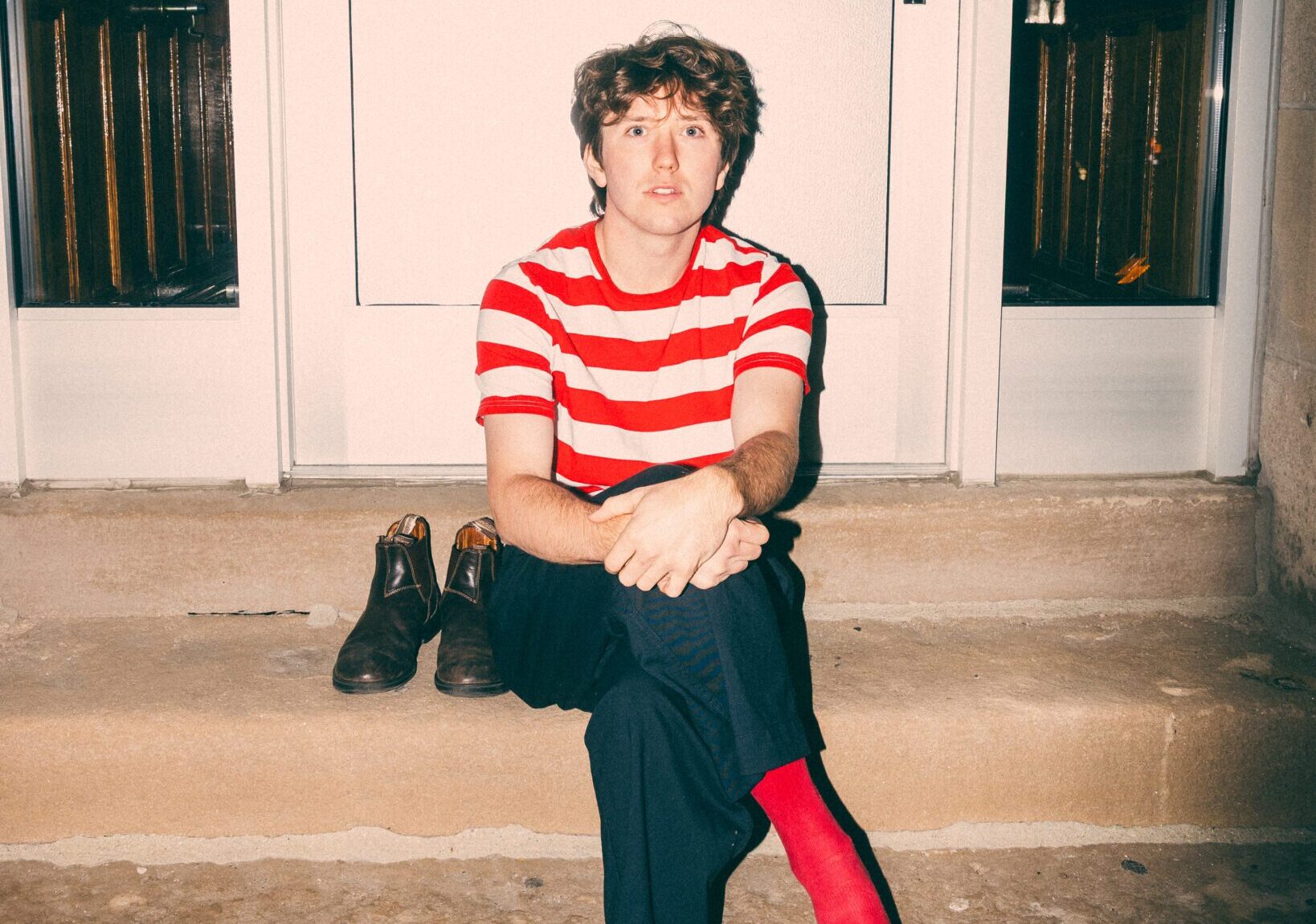

Singer-songwriter Robert Deeble told us about his appreciation for Don Falzone Suzanne Vega, and The Beatles...
Robert Deeble:
A line: I’ve never claimed to be a bassist—though there was one night in a Greenwich Village bar when, after far too many drinks, I was persuaded to play for someone I had just met. I admit it felt pretty badass for a moment… until the video surfaced. Whoops.
But speaking of bass lines, there’s one that has always vexed me: Don Falzone’s bowed bass line on “The Pink Room,” recorded with Stephen Hodges, David Jaurequi, and Andy Armer (later known as Fox Bat Strategy) for David Lynch’s Fire Walk with Me soundtrack.
I remember Hodges played it for me while we were working on my first record, and I was floored by the guttural tone of the bowed bass against his open drum tones and Jaurequi’s guitar work. It wasn’t so much the line itself—David Lynch actually came up with three-note line and hummed it to Don—but it was Don’s approach: digging in with the bow to draw out the darkest tone possible, as if Mark Sandman himself had came back to life with an upright.
A riff: While countless rock riffs have shaped our musical consciousness, it feels almost counterintuitive to trace that influence to a folk song. Yet one such piece has always grabbed me was: Suzanne Vega’s “Cracking.” Not so much a riff as it is a simple finger picking progression—descending bass notes paired with rhythmically insistent top strings—for whatever reason it gets me every time. There’s a stark simplicity to it, edged with tension, perfectly framing Vega’s unassuming, Lou Reed–like lyrical prose and melodic delivery. Much like the hypnotic pull of Lennon’s fingerpicking on “Dear Prudence,” the song draws you inward, inviting you to sink deeper into its spell and into Vega’s quietly remarkable mind.
The progression has surfaced unconsciously in my own work at times as well, most notably in the post-chorus of “Thread” (Earthside Down), which echoes a similar progression.
A Beat: I was born in 1966—the same year the Beatles released Revolver, a record that remains a pivotal influence on me. And the drum track on “Tomorrow Never Knows” has always blown my mind.
I took to the drums when I was just 10 years old. Initially, I gravitated toward extroverted drummers like Neil Peart and Buddy Rich, but once I began to write songs, I developed a deeper appreciation for the subtle pocket Ringo Starr inhabited. Always understated, he treated his kit like a color palette, serving the song above all else. He was truly a songwriter’s drummer.
Engineer Geoff Emerick wrote that Paul and Ringo collaborated on that beat in the studio. Still, the core pattern would have already felt intuitive to Ringo— as you can hear its foundation in “Ticket to Ride.” But what makes “Tomorrow Never Knows” so striking is a rhythmic skip that opens up the pattern, creating space and a subtle, almost hypnotic swing. Part of that feel may come from Ringo being left-handed while playing a right-handed kit—a trait that gave his drumming its distinctive character. Where many drummers might lead a fill with the snare on the right, Ringo often led with toms on the left.
The pattern feels like a loop, yet it was played straight through. George Martin later added backward tape loops, and Emerick aggressive used a Fairchild compressor on Ringo’s cymbals, heightening the track’s hypnotic quality. The result is one of the most mesmerizing drum performances ever recorded—and one that still blows my mind.
Robert Deeble's The Space Between Us album is out now.