Sony Music has sued A.I. startup Udio for copyright infringement for a second time. Sony asserts Udio used over 30,000 recordings it copied without permission in order to train it’s A.I. models.
The lawsuit was filed by Sony on July 20, 2026, in the U.S. District Court for the Southern District of New York. Sony had tried to add this belated claim to its first copyright case against Udio, but the court denied the motion.
The first lawsuit was filed two years ago and was coordinated by the Recording Association of America and included claims by Sony as well as Universal Music Group and Warner Music Group. However, Universal and Warner settled and entered into licensing deals with Udio. Sony is still pursuing that lawsuit. Sony claims in the first action that the 30,117 recordings are “only a small portion” of what Udio used without authorization.
The complaint in the second action states “Udio’s belated embrace of licensing only underscores the unlawfulness of its decision to copy Plaintiff’s copyrighted sound recordings, without a license in the first place.” The complaint further states “that a functioning market exists for licensing sound recordings for use in connection with generative A.I.” and that “Udio recognizes that using copyrighted sound recordings for this purpose requires permission.”
Sony is now the sole major label that has not entered into a licensing deal with Udio.
At the present time, there is a lot of uncertainty about the legality of A.I. companies using copyrighted material. Under federal law, Sony could request damages over $4.5 billion, consisting of up to $150,000 for each infringed work. Consequently, Udio has a good reason to try and settle and enter into a licensing deal. Sony also has some incentive to settle since if they lose at trial, it could establish a bad precedent.
Sony also claims Digital Millenium Copyright Act violations for allegedly stream-ripping tracks off of YouTube using such tools like YT-DLP (this is a command-line program used to download audio and video from YouTube and many other websites).
Udio will argue as a defense that copying music for A.I. training is a “fair use” under federal law and consequently, no permission is necessary.
Fair use is a legal doctrine in the U.S.A. that allows for certain uses of copyrighted material. It is a common defense in a copyright infringement case. It seeks to balance the copyright owner’s interests with the public interest in the wide distribution and use of original works by allowing it as an affirmative defense in copyright infringement cases. It provides for limited use of copyrighted works without the permission of the owner.
In determining fair use the court considers:
• The purpose and character of the use
• The nature of the copyrighted work
• The amount used as compared to the whole work
• The effect of use on the value of the work
Time will tell if a fair use defense prevails.
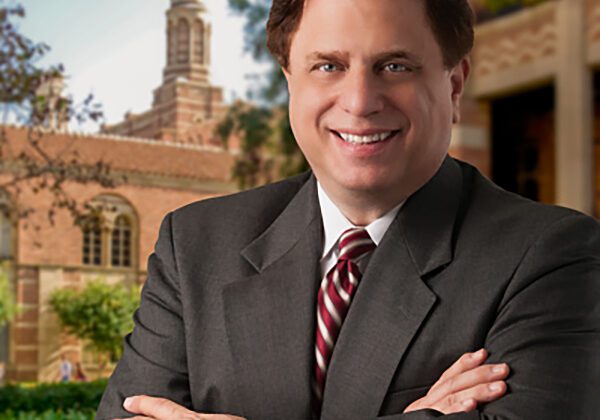
GLENN T. LITWAK is a veteran entertainment attorney based in Santa Monica, CA. He has represented platinum selling recording artists, GRAMMY-winning music producers, hit songwriters, management and production companies, music publishers and independent record labels. Litwak is also a frequent speaker at music industry conferences around the country, such as South by Southwest and the Billboard Music in Film and TV Conference. Litwak has been selected as a “Super Lawyer” by Super Lawyer magazine for 2022-2025. Email Litwak at gtllaw59@gmail.com or visit glennlitwak.com.
This article is a very brief overview of the subject matter and does not constitute legal advice.