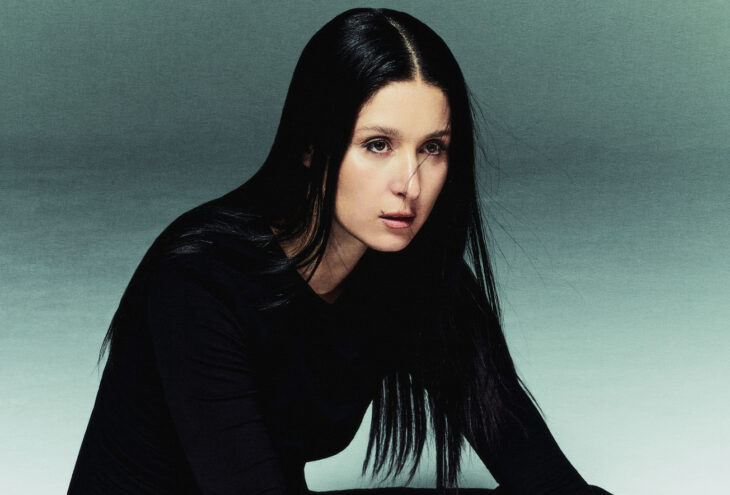
Some albums are made in studios. MALDITA was made in a "messy bun, a hoodie stained with breastmilk and most likely baby vomit, between naps and bottles and diaper changes." That's Francisca Valenzuela's own description, and it's one of the most honest album bio you'll read this year.
The Chilean singer-songwriter and Latin GRAMMY® nominee has dropped her new record via Frantastic Records, alongside a music video for the title track. And "dropped" feels almost too casual a word for what MALDITA actually is: a full-on exorcism of new motherhood, feminine rage, and the fantasy of what motherhood is supposed to look like versus what it actually feels like at 3 a.m.
The title says it all. "Maldita" means doomed, damned, cursed. Valenzuela isn't being coy about it. The title track is built around the line "maldigo el día en que nací / maldigo el día en que parí"—"I curse the day I was born, I curse the day I gave birth." It's a gut-punch of a lyric wrapped in what the press materials call an "irresistibly infectious melody," dressed up in dramatic, cinematic strings that turn the chaos into something closer to catharsis than confession.
Valenzuela didn't set out to make a concept album about matrescence. She set out to survive it.
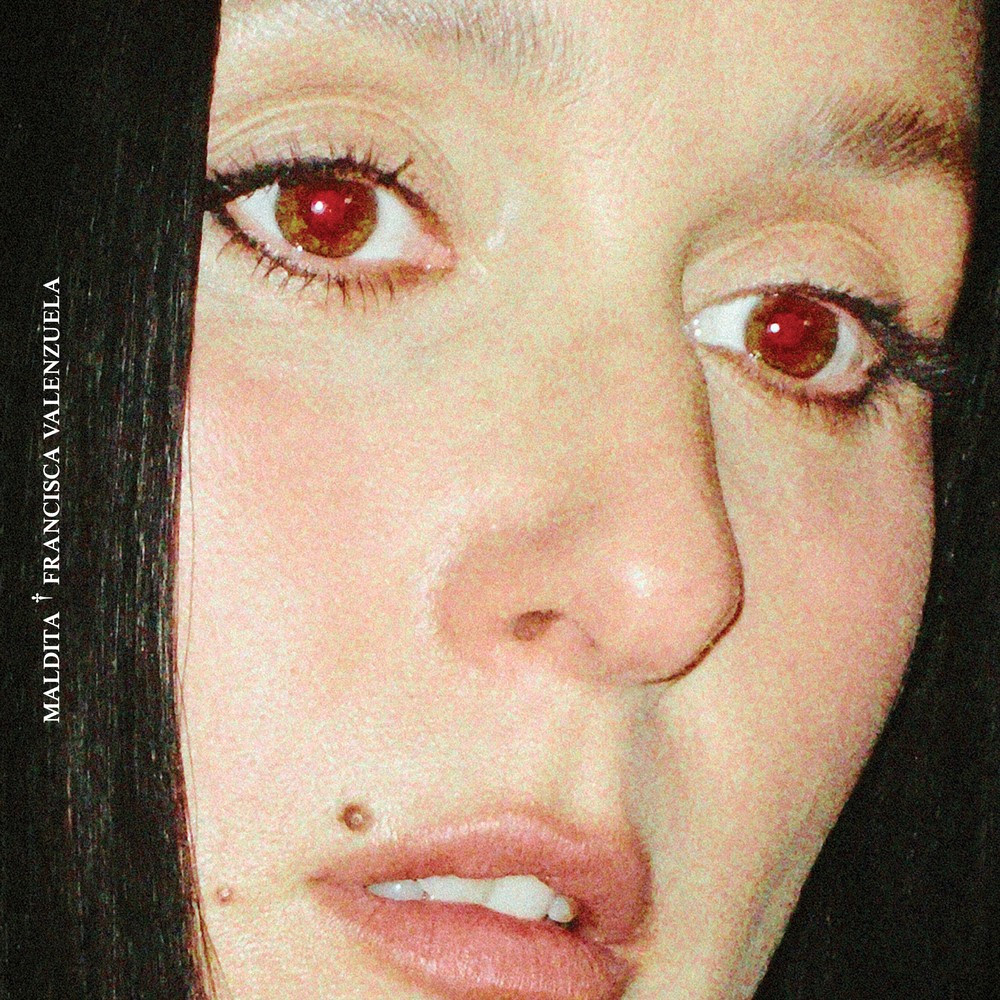
"MALDITA is a testimonial, raw, personal exploration of female hysteria, rage, terror, and tenderness—all triggered by the delirious, maddening, beautiful, wonderful, horrible, confusing, postpartum era," she says. "This album is the house you are trapped in—the journey of your reality being ripped apart—and the journey of putting yourself back together."
She's not interested in softening any of it, either. "It destroys the fantasy, the performative, patriarchal one-sided story to motherhood. It touches on the taboo."
And if you're picturing a stripped-down, precious record about babies, recalibrate. Valenzuela describes MALDITA as "unapologetically vulnerable, stylish, energetic, dark, moody, edgy, elegant catharsis." Her own inventory of what's actually on this record reads like a fever dream in the best way: "It is piano, voice, drums, screams, kicks, cries, laughter. It is poetry, strings octet, desperation, desire. It is google searches, imperfections, lactation journals, midnight dancy parties in pj's and midnight thoughts that cut like a knife."
Google searches and lactation journals as source material. Say what you want about pop music being disconnected from real life—this one absolutely is not.
The origin story here is as unglamorous—and as real—as the subject matter. There was no grand studio retreat, no months of pre-production. There was a new mom, bits and pieces of songs, and a producer willing to show up.
"MALDITA was not the album I planned, but the album I needed to make," Valenzuela explains. "I began to write bits and pieces of songs, showed them to my producer—Francisco Victoria—and he came and stayed with me for two weeks and we workshopped, wrote, produced, and recorded. Everything raw, immediate, homemade."
She credits Victoria's patience directly: he "kindly came to my home and patiently worked around my erratic schedule. The album is very raw and very live," she said in a statement. From there, the pair traveled to Buenos Aires to record a string octet—the same strings that give the title track its cinematic edge—proof that "homemade" and "elegant" aren't mutually exclusive when you know what you're doing.
The urgency wasn't just artistic, either. "Motherhood was a new reality and a challenge," she says. "The paradox of no time and other priorities made me make an album under a new sense of urgency, efficiency and focus." Turns out constraint can be its own kind of producer.
MALDITA didn't arrive out of nowhere. Valenzuela has been laying the groundwork with three previews: "BUGAMBILIA," built on her signature piano work and taut strings, which digs into the contradictory emotions that surface in new motherhood; "MALACARA," a theatrical, feminist art-pop track that channels strength and frustration in equal measure; and "SOS," which plays with the shame and longing that can trail behind ambition.
Together, they read less like singles and more like chapters—each one circling a piece of the bigger, messier picture MALDITA completes.
If you're looking for where to start on the full album, Valenzuela has a few nominations of her own: "Nací Necesitándote" (Born Needing You), "No te aburras de mí" (Please Don't Get Bored of Me), and "Komorebi."
Ask Valenzuela what she wants people to walk away with, and she doesn't reach for anything vague or self-congratulatory. She wants company.
"It is an album that explores issues and topics that are important and underrepresented. Not talked about," she says. "I am excited about how confessional, raw and unique it is. I am excited and hopeful that it offers companionship and comfort to other women struggling, exploring or feeling issues or themes such as the ones that are in the album."
She sees MALDITA as part of something bigger than her own catalog—a continuation of the women whose work got her through her own hardest moments. "I would only wish that this album adds to the moving, fundamental body of work made by women whose stories—about motherhood, no-motherhood, female rage, survival—have nurtured me and have kept me company and have been my lifeline. Yesterday, before, now and tomorrow."
At its core, this is an album about doing two impossible things simultaneously: "I made it to understand and connect with the process—the fact that I am learning how to be a mother and learning how to still be me. All at the same time, all for the first time."
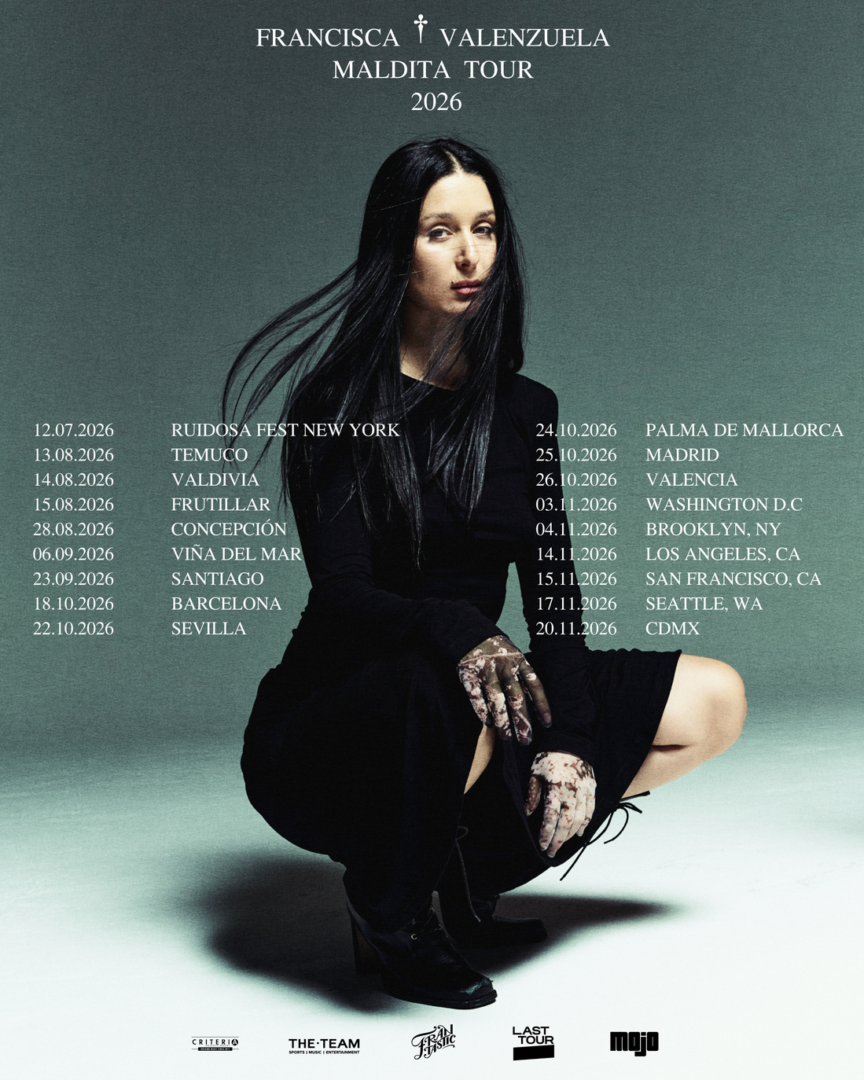
Valenzuela isn't stopping at the record. "TOUR!!!" she says, with exactly that much enthusiasm—her first solo tour across the U.S. and Spain, plus dates through Latin America. A Fall U.S. tour is set to follow her long-running feminist platform and festival, Ruidosa, which she founded in 2016. Ruidosa just wrapped its third consecutive year at Lincoln Center as part of Summer for the City on July 12, and will celebrate its 10th anniversary in Santiago, Chile this October 10 and 11.
She's also staying "fully dedicated" to Ruidosa's mission of gender equity in music—which, after an album like this one, feels less like a side project and more like the other half of the same sentence.
MALDITA is out now, listen here.
Photo credit: Francisco Finat