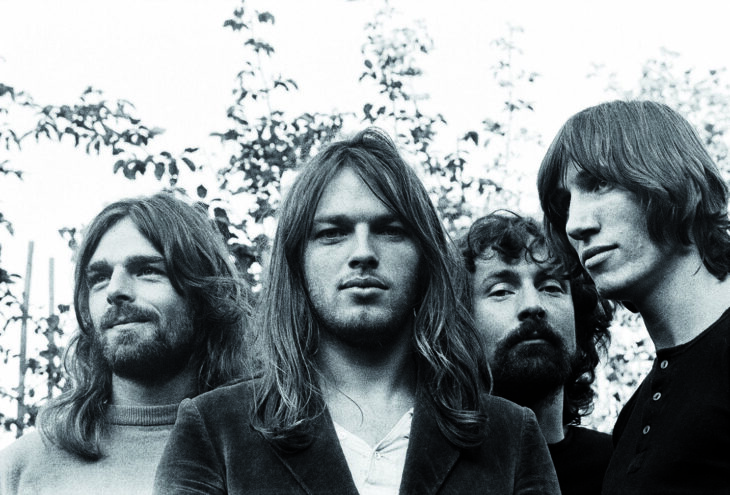
Main photo by Storm Thorgerson
Pink Floyd has recently released the 50th anniversary edition of their era-defining album Wish You Were Here out via Sony Music.
Wish You Were Here 50 gives fans an exciting new perspective into one of Pink Floyd’s most iconic and best-loved records.
The 50th anniversary edition features multiple discs of rarities - at the core of this special collection are six previously unreleased alternate versions and demos presenting Pink Floyd's eighth studio album in a brand- new way that demands repeat listening.
Wish You Were Here 50 is released to widespread acclaim, with critics celebrating both the renewed energy of the mixes and the emotional weight of the album that continues to endure half a century on.
Rolling Stone wrote, “Wish You Were Here is Pink Floyd’s most humanistic album, and thanks to this box set you can now feel the way they all tapped into the same spirit and developed it into one of their finest moments,” in a five-star review. Vulture deemed the album “One of the greatest albums in the rock canon, bar none,” in an interview with Nick Mason. Uncut Magazine described Wish You Were Here 50 as “timeless,” while MOJO defined the album “as relevant now as it was half a century ago,” and Record Collector described it as “an exhilarating masterpiece.”
The 50th anniversary of Wish You Were Here has been surrounded by a surge of new creative activity across different mediums
Wish You Were Here 50 is released in multiple formats including 3LP, 2CD, Blu-ray, digital and a Deluxe Box Set. The digital release includes the original 1975 album, featuring a new Dolby Atmos mix by James Guthrie, whose work with Pink Floyd dates back to 1979’s The Wall.
It also includes 25 bonus tracks made up of nine studio rarities, and 16 live recordings captured by the renowned bootlegger Mike Millard at Pink Floyd’s Los Angeles Sports Arena concert on April 26th 1975, now receiving its first official release. The live audio has been meticulously restored and remastered by Steven Wilson. The Blu-ray edition also gives fans the chance to see three concert screen films from the band’s 1975 tour, plus a Storm Thorgerson short film.
The 3LP and 2CD formats include the original album and the nine studio bonus tracks. The Deluxe Box Set includes all 2CD, 3LP (on exclusive clear vinyl) and Blu-Ray material, plus a fourth clear vinyl LP, Live At Wembley 1974, a replica Japanese 7” Single of “Have A Cigar b/w Welcome To The Machine,” a hardcover book including unseen photographs, a comic book tour programme and Knebworth concert poster. Exclusive 50th Anniversary Merchandise along with Limited Edition product releases is also available at PinkFloyd.com.
The 2025 ardent support and fascination surrounding Pink Floyd’s music remains. The newly restored version of their groundbreaking 1972 film Pink Floyd at Pompeii - MCMLXXII stormed box offices around the world, with the live album debuting at #1 on the UK Albums Chart, marking the band’s first UK chart-topper in eleven years and the seventh in their career. The film was praised by critics and audiences the world over, with The Guardian touted it as a "mesmerically peculiar portrait of a band on cusp of greatness." Wish You Were Here remains a mainstay on all-time greatest albums lists. The multi-Platinum-selling #1 hit record was Pink Floyd’s first to reach the top of the charts on both sides of the Atlantic, becoming the band’s fastest selling album.
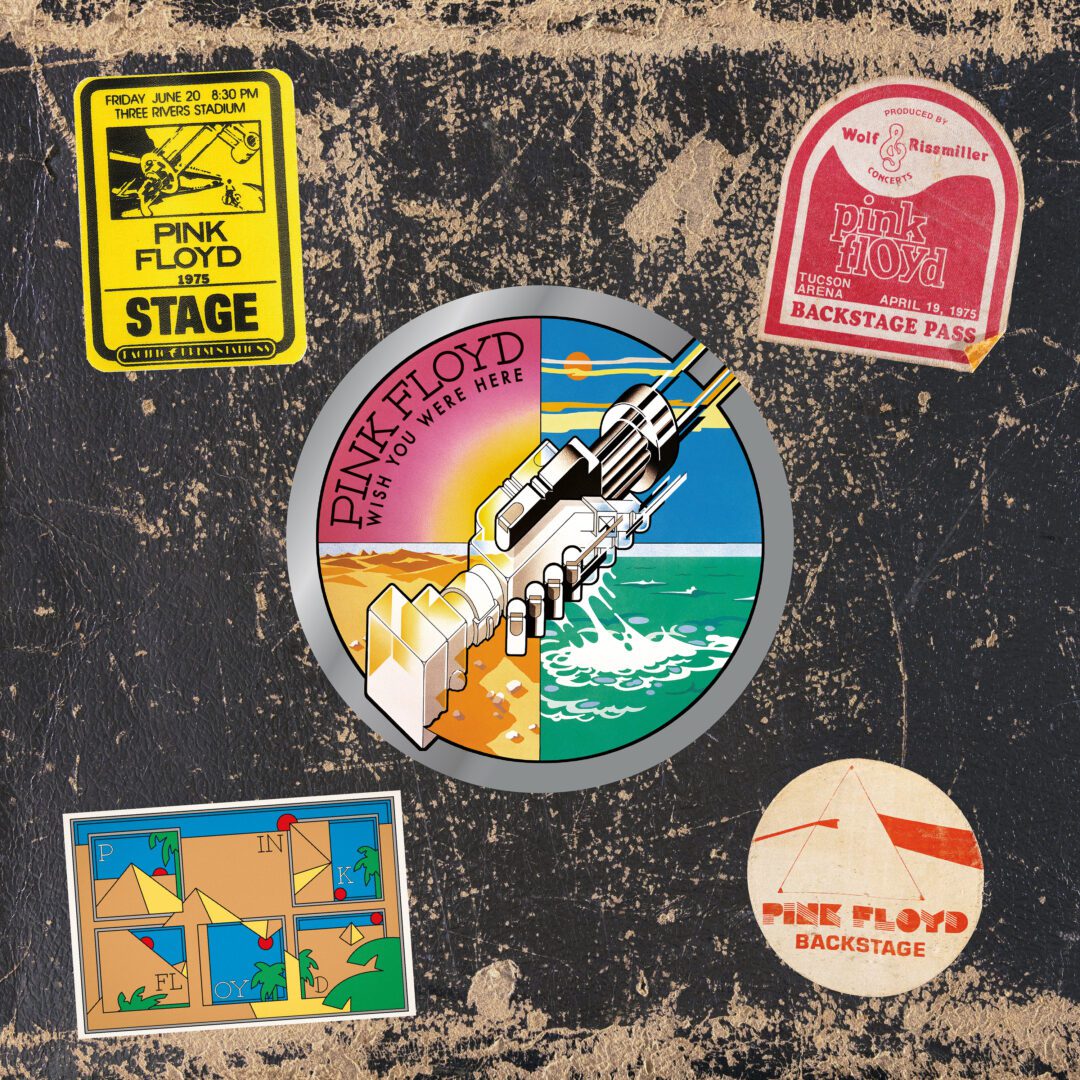
In 1973, The Dark Side of the Moon had taken Pink Floyd from a hugely successful breakout British band to one of the biggest rock groups on the planet. Wish You Were Here was the band’s powerful response to their newfound global fame. 50 years since its initial release, Wish You Were Here sounds as resonant and vital as ever, and in reaching this milestone deserves to be celebrated anew. This special anniversary edition allows fans, for the first time, to delve deeper into a pivotal moment in Pink Floyd’s history.
The record’s themes of absence, isolation, transience, and comment on the insincerity of the music business are embodied in the iconic album artwork. The visual puns developed by Storm Thorgerson and Aubrey ‘Po’ Powell at Hipgnosis remain instantly recognizable visual statements today.
Reflecting on that time, Aubrey ‘Po’ Powell said: “In the 1970s, album covers were equally as important as the music, because the cover helped to sell the record. Record stores would carry 10,000 different images in album sleeves, so what we were doing had to look different and stand out amongst the crowd. I remember turning around to Storm and saying, how are we going to set a man on fire? Because there was no digital way of doing it in those days. He said, Po, you're just going to have to do it for real. That was it.
“One has to remember that Pink Floyd were the only band on EMI and Capitol Records who had the rights to the creative - in terms of album cover - besides the Beatles. That's why we were allowed to do what we wanted. It was brilliant. Just the same way that Pink Floyd were a very inventive band at the time, so were Hipgnosis. We were determined to keep that abstract, enigmatic image alive and hence, we were able to do that for Pink Floyd.”
I attended one of the April 1975 Pink Floyd concerts at the Los Angeles Sports Arena recorded by Mike Millard on his 550 Nakamichi battery-operated 550 tape recorder and a pair of 451E microphones.
A lead story in the April 26, 1975 issue of The Los Angeles Times reported chaos and disruption owing to police arrests of 350 fans at the first three nights for marijuana and liquor possession, and ticket scalping.
“My childhood friend Mark and I were both freshman at Los Angeles Valley College, recent grads of Grant High in Van Nuys,” reminisced Lonn Friend, author of Life On Planet Rock.
“We were frequent visitors of the Moby Disc record store used and import vinyl bins. Mark had scored flawless copies of Atom Heart Mother, Meddle and Dark Side of the Moon. He had the killer home and car stereo.

“The day Wish You Were Here was for sale, we both dug deep into our teenage pockets and as the 70s adage goes, ‘wore out the grooves’ on brand new platters. When the band announced their Los Angeles Sports Arena 1975 date, we did more than wish we were there. We WERE there!
“In the very last row of the massive, drafty sports venue, so far from the stage, Messers Waters, Gilmour, Wright and Mason appeared as tiny moving stick figures. Didn’t matter. We were high on sinsemilla and the audio/visual circus kept us shining for two celestial hours.
“As the group launched into their closing Dark Side medley, we sang our parched tonsils out. ‘All that you buy, beg borrow or steal’.
“Then, all of a sudden, I directed my dazed and confused eyes toward the ceiling and almost knocked Mark out of his K Swiss sneakers… I screamed ‘Dude, look!’ Yeah, I was saying dude in ’75. Directly above our heads, almost close enough to touch, a huge, model airplane suspended on a wire began to glide toward the stage.
“From the worst seats in the house to the best! The Crazy diamonds abide. As the final verse soared, ‘And the sun is eclipsed by the Moon,’ the plane crashed into the giant orange sphere suspended on a black screen behind the group. The grandest finale these post adolescent peepers had ever seen,” Lonn marveled.
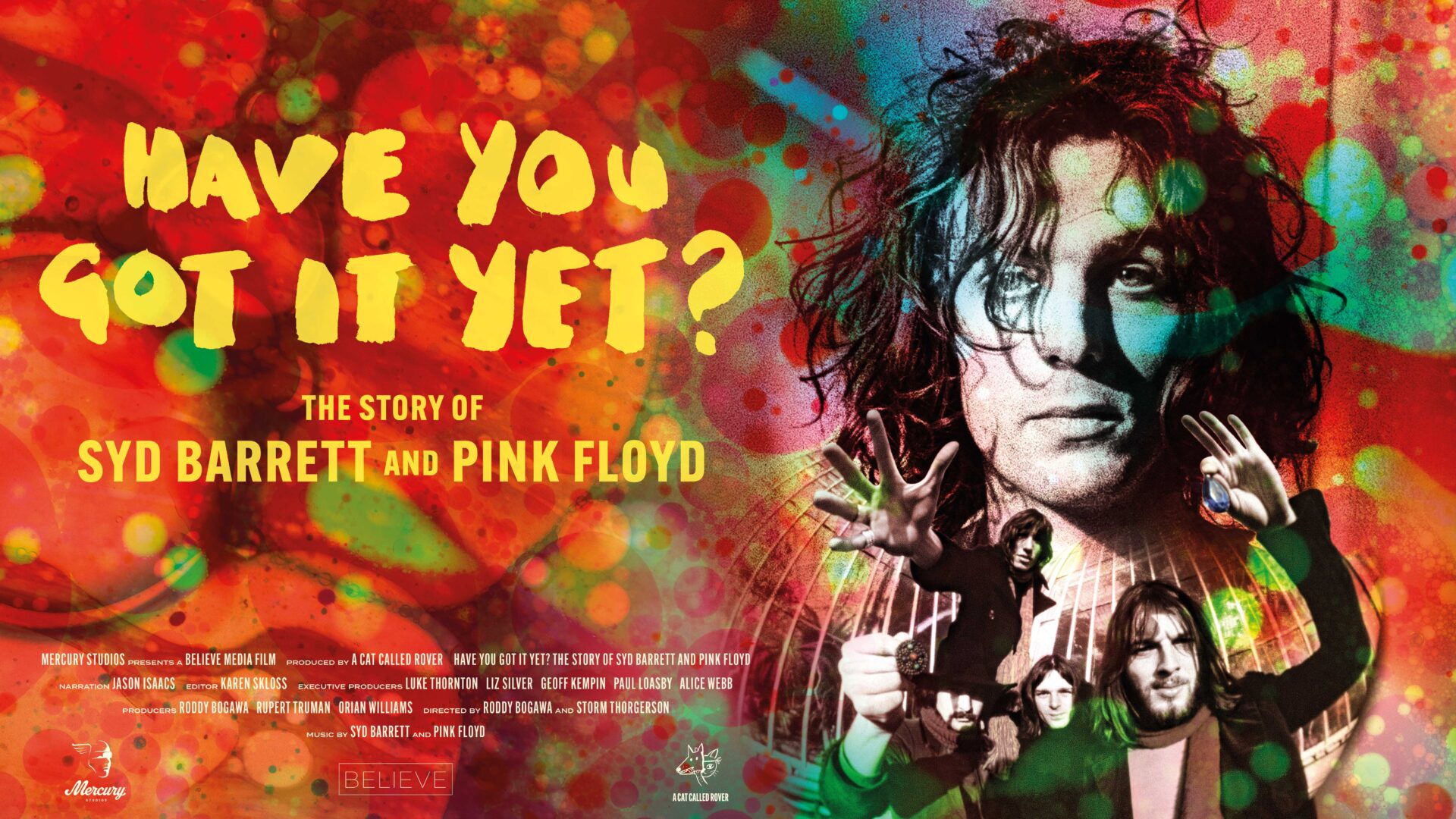
In my upcoming 2026 book Screen Gems: Pop Music Documentaries & Rock and Roll TV Scenes, I interviewed award-winning filmmaker Roddy Bogawa about his 2023 documentary Have You Got It Yet? chronicling the 1965-1968 Pink Floyd and co-founder Syd Barrett.
The film scored a one hundred percent rating on Rotten Tomatoes, with Variety raving:“The Definitive Documentary on Early Pink Floyd,” and The New York Times praising:“As comprehensive and coherent an account of Barrett’s countercultural tragedy as one could hope for.”
Universal Music Group’s Mercury Studios released Have You Got It Yet? on DVD+Blu-ray and digital formats in 2023
Along with the full-length film, the DVD+Blu-ray set includes bonus features. Two poignant live performances of ‘Arnold Layne’ are highlighted—the first features David Gilmour and David Bowie (originally released in David Gilmour’s Remember That Night Live at the Royal Albert Hall in 2007).
The second is a performance from 2007’s The Madcap’s Last Laugh,a tribute concert for Barrett featuring David Gilmour, Nick Mason, and Richard Wright in their final performance as Pink Floyd. The DVD+Blu-ray has an interview with Bogawa and director and producer commentary of the film with Bogawa, Rupert Truman, and Julius Beltrame.”
As a filmmaker, Roddy Bogawa is known for investigating history and culture via lyrical low-fi means and innovative narrative structures. He has made five acclaimed feature films: I Was Born, But… (2004); Junk (1999); Some Divine Wind (1992); Taken By Storm: The Art of Storm Thorgerson and Hipgnosis (2011), about the work of the prolific record cover designer; and most recently Have You Got It Yet? The Story of Syd Barrett and Pink Floyd.
Bogawa grew up in the coastal Los Angeles community of Marina Del Rey. He studied art and played in punk bands before turning to filmmaking. He earned his MFA degree from the University of California San Diego. He is now based in New York City and is a professor of Media Arts at New Jersey City University.
In December 2025, Bogawa emailed me some reflections on Pink Floyd and Wish You Were Here.
“Back in the day, Pink Floyd, was an enigma. It gets harder to recall pre-internet life but yes there once was one and the only way to get information on your favorite band was music and fan magazines or for some of the more obsessive, every little detail on the record cover, inner sleeve and the etching sometimes around the label. Pink Floyd didn’t like to do press so there wasn’t even much written to glean details.
The first live concert I ever went to was at Anaheim stadium seeing Pink Floyd on the ANIMALS tour and though years later I had started listening to punk music, my friends and I did go and see two nights of THE WALL at the sports arena in Los Angeles.
When WISH YOU WERE HERE got released, I did run out and get it probably at Tower records in Hollywood and I remember trying to decipher the opaque dark blue shrink wrap with a small circular sticker of a robot hand, a bit of a letdown in the record displays.
The cover for DARK SIDE OF THE MOON already was minimalist but at least it had some color, this one was even more reductionist. But…getting home and finally ripping off the blue plastic (oops) and seeing the ‘burning man’ shaking hands with ______ (fill in the blank) was surely one of the most dramatic reveals I can recall. The deal was so ‘hot’, a character was already ablaze and had come out of the picture onto the edge of the image setting a corner on fire.
The back of the cover had a mysterious traveling salesman alone in the desert, faceless with bits of his arms and legs peeking out from his suit erased to show sky and sand behind. Holding a clear vinyl version of a record with the robot sticker image, this the only identifiable signifier that this in fact was a record you were holding in your hands. One foot resting on a suitcase adorned with tour stickers as well as one of the ones included in DARK SIDE OF THE MOON, this well-dressed mirage of a character seemed to be offering up ‘Here you go. The new LP by Pink Floyd is out in a vast desert of nothingness.’ WELCOME TO THE MACHINE. And as on the front cover, the desert sand was so voluminous that it had ripped a hole in the cover and was leaking from the tear.
The inner sleeve continued the narrative with one side showing a sheer orange veil floating adrift in front of trees bent by the wind’s force in a field, so strong that the left- hand side of the image was curving, not straight edged like the others. And the flip side to the inner sleeve had a smaller image of the lower half of a figure diving into a lake with strange rock formations in the background though the ‘diver’ hadn’t made any ripples on the surface of the water so he couldn’t have been in motion. A puncture towards the bottom of the sleeve had water leaking from the image onto our laps. Ah ha! Fire and water. Earth and sky? Maybe…maybe not. There were the lyrics from the songs printed but NOT ONE image of anyone in the band.
There was a total of four characters portrayed but did Storm Thorgerson, Aubrey Powell and later member Peter Christopherson, the creative team Hipgnosis, want us to try and match Roger Waters, David Gilmour, Richard Wright and Nick Mason to any of them? Maybe…maybe not.
Thinking back, I would probably have been devouring these visual cues before putting on the music, having to concentrate on both the images and music separately though I most likely would not have read the lyrics too closely just yet (more drama…).
And then…putting the record on the stereo! WISH YOU WERE HERE has got to be one of the most beautifully crafted records of all time, the band in perfect equilibrium of tone and texture, the studio production ethereal and cinematic. There is countless writing about the songs on WISH YOU WERE HERE so I won’t go deep into them but it is hard to describe this record. Melancholic? A bit groovy? In listening to it again on vinyl so I was forced to flip from side one to side two as by design, it has remarkably seemed to have aged very little. Pink Floyd has been one of the rare musical groups that somehow are able to jump from generation to generation and after doing a film on Storm’s creative process.
I’ll give you some insider information here though. For Storm, his vision of WISH YOU WERE HERE was all about loss. If you were to use Storm’s thinking strategy of horizontal riffing of ideas, you’re there. Not only was the record contemplating the loss of Syd Barrett, the crazy diamond as so eloquently described, but it was loss of the band’s direction after the success of DARK SIDE OF THE MOON, loss of loved ones as relationships shifted, loss of innocence, loss of childhood, loss of the plot once success has been achieved, loss of an image for cover with the shrink wrap (haha).
The irony is that both the band and their visual counterparts were writing about all this while still crafting a beautiful record with some of their most memorable songs.
Oh, and in case you didn’t know, the burning man image was shot outside on the Burbank film studio lots between various sound stages. What kind of devil’s work must be going on inside there?”
In my 2024 Screen Gems-themed correspondence with Bogawa, he discussed Have You Got It Yet?
“One of the first questions I always get asked is, ‘How the hell did this film get made?’ I should note that we made the film independently without funding from the band or their record label and didn’t have any money until the very end of the process. All the music in the film is my own choice and I had full creative control, so audiences recognize it’s not a vanity project or hagiography. The first thing I told Storm was that I wasn’t interested in the idea of a film on Syd if we couldn’t do something from the inside out.
Ultimately, I was drawn to the idea of making the film because of the years when no one really knew what was happening in Syd’s life. I joked to Storm that this was for my filmmaking, ‘a dramatic premise,’ and as Pete Townshend says in the film, ‘Syd defined the whole of the 1960s, the colors, the psychedelic freedom.’
It’s the story of Brian Wilson from the Beach Boys, Roky Erickson, maybe Brian Jones from the Rolling Stones and Peter Green from Fleetwood Mac, or more recently Daniel Johnston and I even think of Kurt Cobain—creative people who found a way to express whatever was inside themselves and needed to get out, and then with some success couldn’t adjust to the pressure or business of it all.
So many musicians revere Syd’s music and lyrics to this day I think because of the exposed rawness or freedom in his writing. Graham Coxon from Blur once said that Syd was using his guitar as a ‘sonic paintbrush.’ I always liked that image.
The Hipgnosis sleeves were interesting as a body of work and perfect to stare at while you listened to the music with your friends. They almost never had an image of the musician on the cover, and if they did, it was usually crumpled, hidden, painted over, or burnt. They also used top-of-the-line photographers (Po was an amazing photographer as well), and the best in illustration and graphics, so there was a real slickness to their covers.
It dawned on me then that for a band like Pink Floyd who didn’t really jump about on stage, the album cover image or graphic was even more important because it was the image that audiences would visualize seeing them as the music was happening live. Sound and picture!”
(Harvey Kubernik is the author of 20 books, including 2009’s Canyon Of Dreams: The Magic And The Music Of Laurel Canyon, 2014’s Turn Up The Radio! Rock, Pop and Roll In Los Angeles 1956-1972, 2015's Every Body Knows: Leonard Cohen, 2016's Heart of Gold Neil Young and 2017's 1967: A Complete Rock Music History of the Summer of Love. Sterling/Barnes and Noble in 2018 published Harvey and Kenneth Kubernik’s The Story Of The Band: From Big Pink To The Last Waltz. In 2021 the duo wrote Jimi Hendrix: Voodoo Child for Sterling/Barnes and Noble.
Otherworld Cottage Industries in 2020 published Harvey’s Docs That Rock, Music That Matters. His Screen Gems: (Pop Music Documentaries and Rock ‘n’ Roll TV Scenes) is scheduled for early 2026 publication from BearManor Media.
Harvey spoke at the special hearings in 2006 initiated by the Library of Congress held in Hollywood, California, discussing archiving practices and audiotape preservation.
In 2017, he appeared at the Rock & Roll Hall of Fame in Cleveland, Ohio, in its heralded Distinguished Speakers Series and also a panelist discussing the forty-fifth anniversary of The Last Waltz at the Grammy Museum in Los Angeles in 2023).