Music Connection has been in publication since 1977, and in that time, we’ve made a concerted effort to cover all musical genres and make everyone feel welcome. MC is for everyone! That said, we must admit that we’ve rather neglected the classical arts. Orchestral music, classical, and even big band have scarcely been in these pages, and we’re going to be putting that right moving forward. That starts right now, with the exceptional people and productions of the LA Opera.
Since its formation in 1986, the LA Opera has become renowned worldwide for its innovative productions while simultaneously, in their own words, “honoring the great historical legacy of opera.”
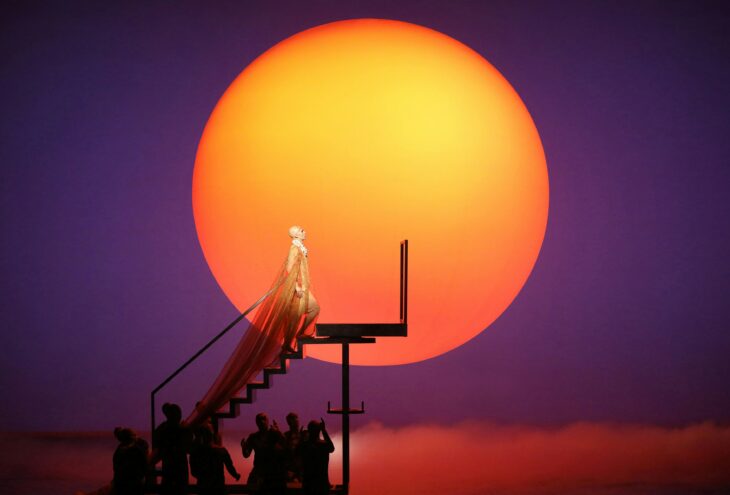
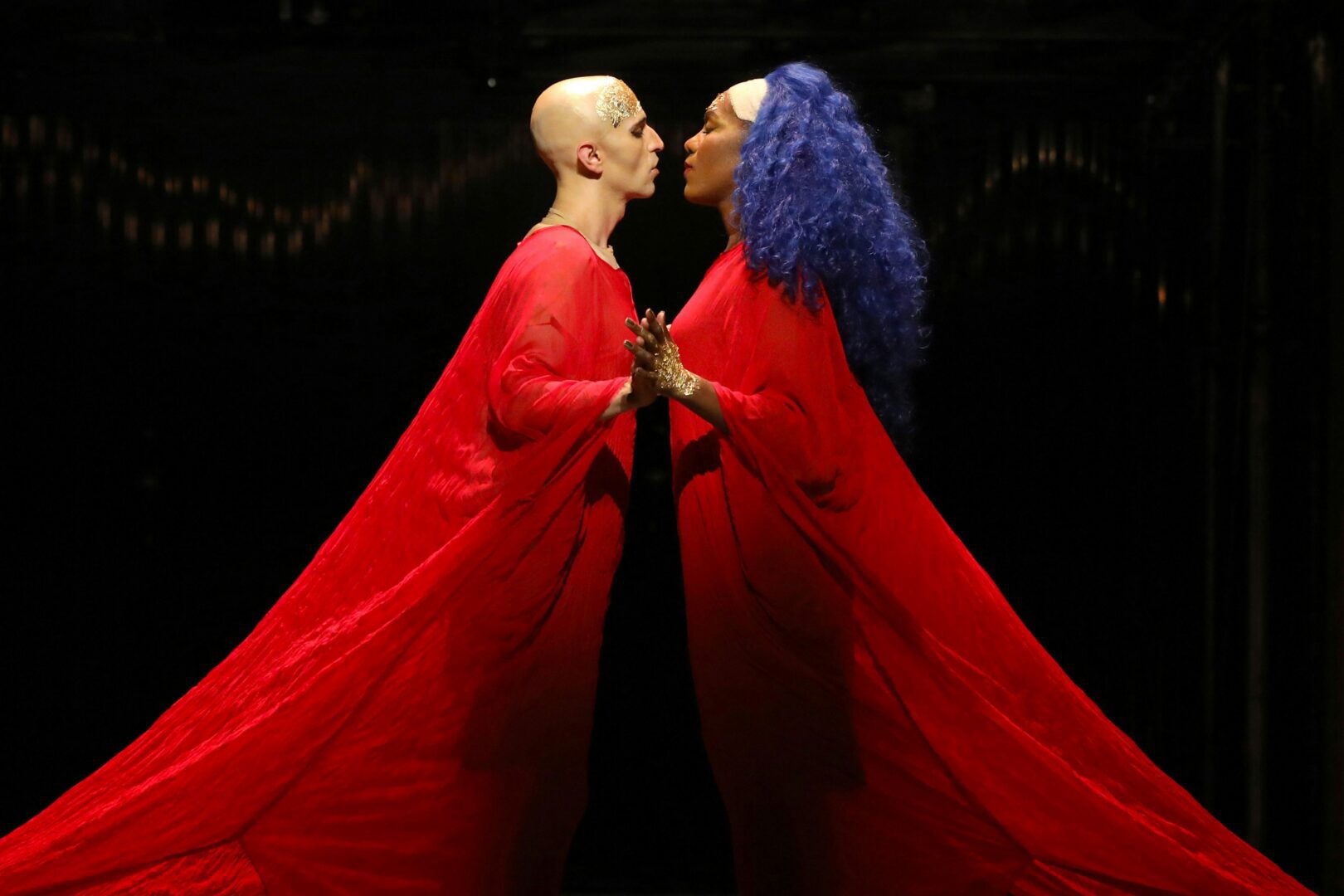
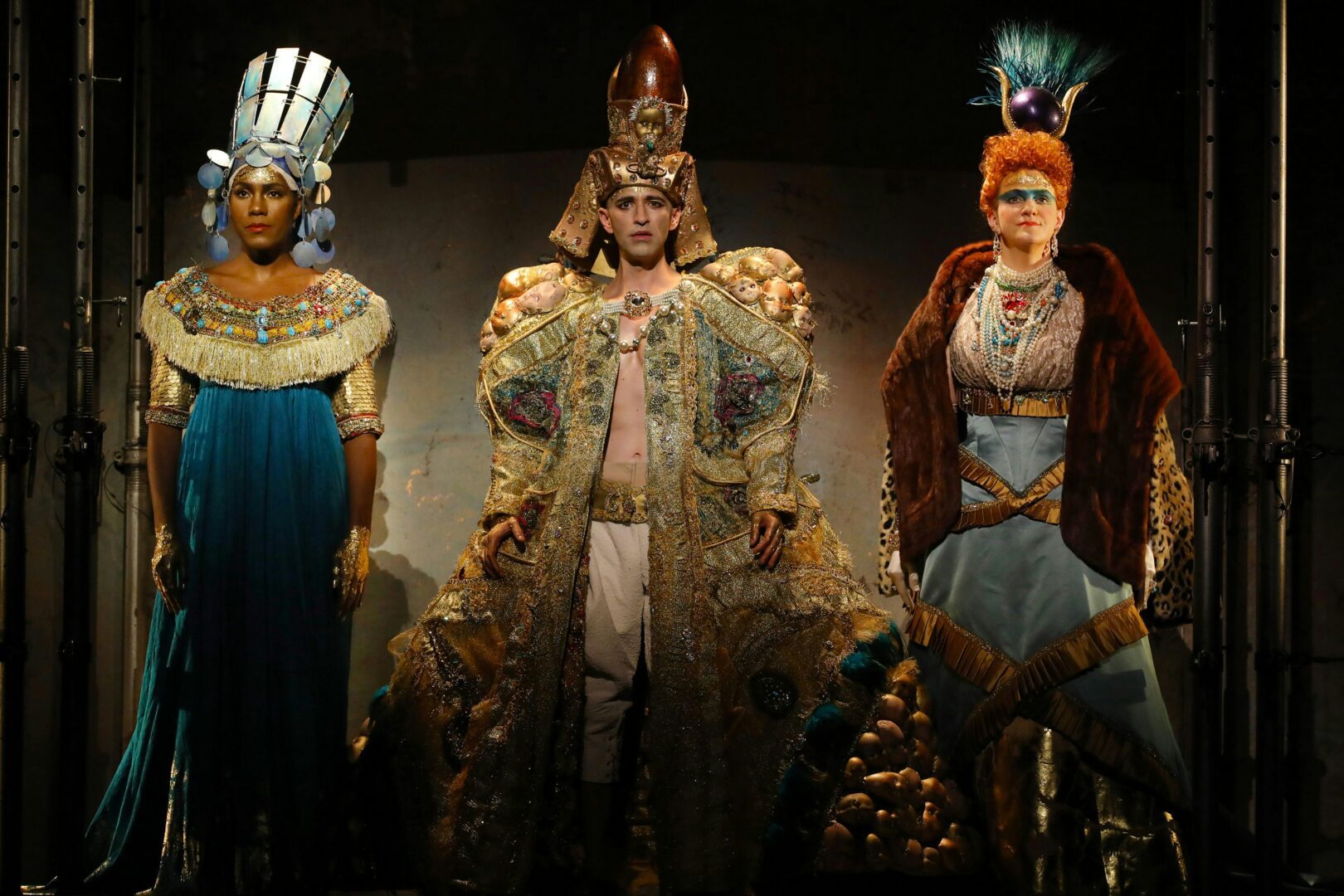
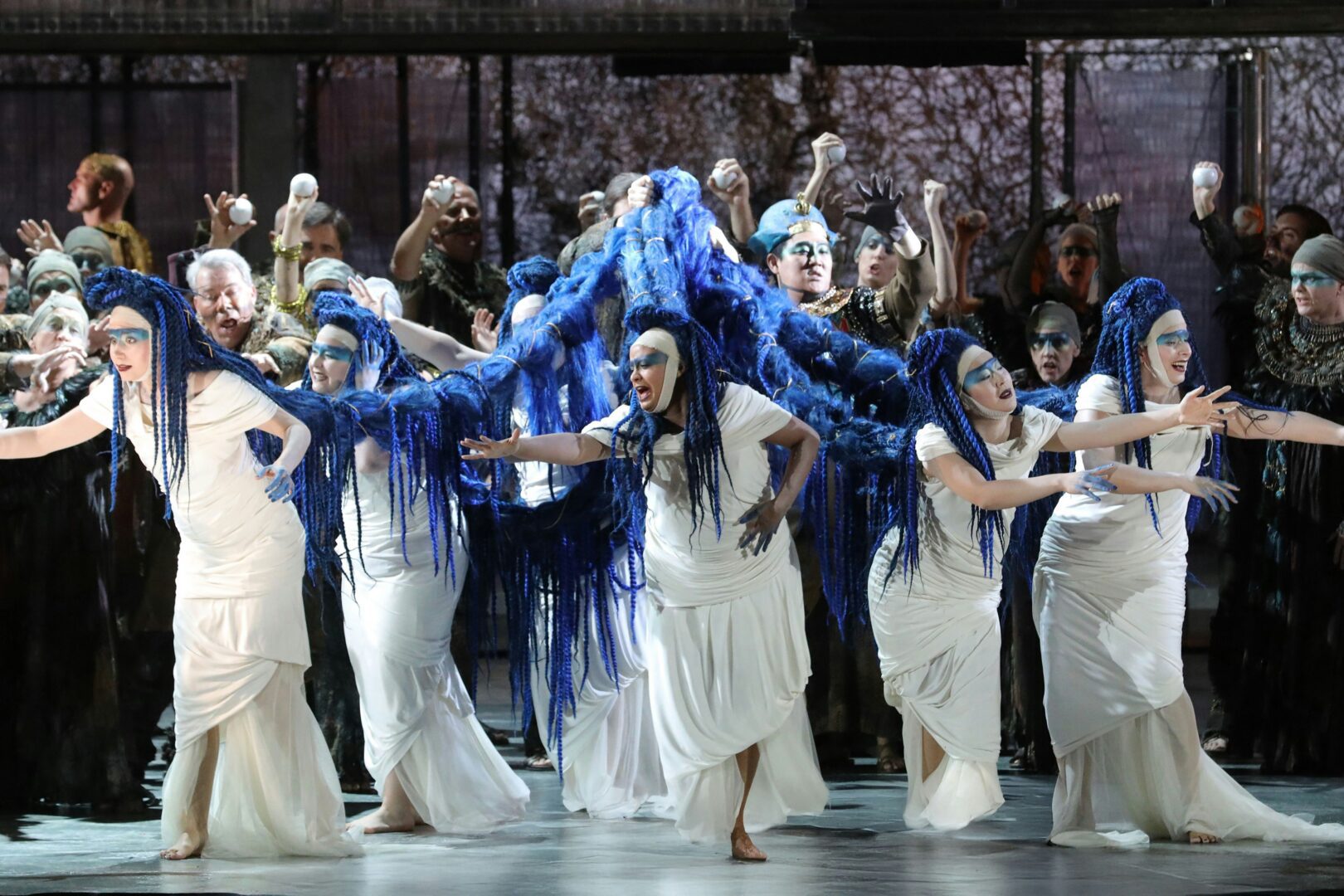
In 2026, the LA Opera will host Verdi’s Falstaff in April and May, and Mozart’s The Magic Flute in May and June, as well as recitals from some of opera’s leading vocalists and musicians. The program for the 2026/27 season was just announced as we were going to press, with Carmen, Turandot, and The Marriage of Figaro standout shows. There’s something incredibly special happening on February 28 to March 22, however—a production of renowned minimalist composer Philip Glass’ contemporary opera set in ancient Egypt, Akhnaten.
MC spoke to LA Opera president and CEO Christopher Koelsch, and three members of the Akhnaten team—director Phelim McDermott, conductor Dalia Stasevska, and countertenor John Holiday (in the role of Akhnaten himself)—about what goes into an enormous, magnificent endeavor such as this…
Christopher Koelsch
LA Opera, president and CEO
Could we get a little background on what you’ve done before coming to the LA Opera?
I’ve been at the LA Opera for most of my adult life. I started in 1997 and before that, I was company manager for Opera Pacific, which is a now-defunct opera company in Orange County, CA. Before that, I was in graduate school, and during that period, I was running the rehearsal department for an international arts festival called Spoleto Festival USA in Charleston, SC. But I joined the artistic staff of LA Opera in 1997 and have been running it since 2012.
Can you remember your introduction to opera? What drew you in?
Yes, it came relatively late. I was studying abroad in London in the early ‘90s, and I was assigned a production of Handel’s Xerxes at the English National Opera—that was my first experience. I grew up in Boston at a time in which we didn’t have an opera company, and frankly, even if we did, I’m not sure that I feel confident that I would have gone because that was not the milieu in which I grew up. But I was a trained musician and a theater kid, and the scale of the endeavor was the thing that really seduced me. I was really amazed at the emotional and aesthetic spectacle of it and was almost immediately drawn to it because of that.
What style of music did you grow up on?
I was a public school kid, so I was given a violin when I was six years old and told to learn it. But I grew up on ‘80s pop music.
Some people have pre-existing ideas of what the opera is and who it’s for, that it’s for the upper classes only… What are your thoughts on that? And is it part of your remit, to open it up to a wider audience?
Well, precisely. My raison d’être really is the democratization of both access to and perception of access to opera. There are many barriers, and most of them, frankly, are perceptual or psychological—an idea of what it is and who it’s for, and what you need to know in advance of you going. We’ve really tried to radically diversify the program and diversify the number of entry points, and then to try to upend people’s expectations about what the opera is and what stories it tells. I often say that opera, in the end, is music and storytelling, and there isn’t a human being in the world that doesn’t respond to those two things. We try to surprise people with what we’re bringing to them.
What does the CEO of an opera company do day-to-day?
Every day is a little bit different. I’m in charge of all of it, meaning that I must figure out what we should be doing, artistically, creatively, and then figuring out a way to create a business model that supports that. So a lot of work with creatives, a lot of work with philanthropists, a lot of governance with the board. Work on public relations, marketing and education, and government officials and our landlords. All of it is relationship management, basically. Trying to figure out how to connect the work of an artist that inspires us with an audience member and a structure that can support that.
Have you been to many other upper companies worldwide, and how do you think L.A. compares?
I’m in Brussels right now. Every opera company has its own weather and ecosystem. They’re radically different in the way that they operate. Most European companies get most of their funding from the government, and so that changes what relationships they’re building, and changes the nature of the product. But also, it’s a 400-year-old art form, and it’s a 40-year-old company in Los Angeles. So the remit is quite different. I would say an American audience doesn’t always have, for good and for bad, the cultural context for how to receive it. Whereas for an opera company that’s been going on for 150 years, every production is in dialog with the last version of that piece. So it’s sort of chalk and cheese, but at the same time, fundamentally, I think everyone’s after the same thing, which is how to create great musical and theatrical endeavors. The extremes of the human experience are fundamental and universal, and so theoretically, it doesn’t always work this way, but a production that works in Brussels should work in Los Angeles. Part of my job is to cut the wheat from the chaff, and to figure out which of those collaborations could work in a different context.
How do you feel about this season’s program?
I’m very proud of this year. I’m excited. This is the final season of our music director James Conlon, who’s stepping down after 20 years. And so the season was mostly curated around the productions and the pieces that he loves the most. As always, we’re looking for the greatest variety we can manage, both in terms of the aesthetic, but also in terms of the nature of the storytelling. With Akhnaten, you’ll see something radically different from what you experienced in La Boheme.

Dalia Stasevska
Akhnaten, conductor
Could you tell me your career highlights to this point, and what you’d done before this production?
I think this is professionally my 10th year in my career. I mostly work in the symphonic repertoire, but I try to do an opera once a season. It’s been a big passion for me throughout my life. I discovered that I want to become a musician through opera when, in my early teens, I heard Madame Butterfly. That was a big game changer for me. It was a mind-blowing experience, because I’d never seen or heard anything like that. I became quite the passionate opera nerd in my early teens, when everybody was listening to pop music like Backstreet Boys and Spice Girls. I was really into opera, but also not classical opera. I used to listen to contemporary stuff. I recall listening to Philip Glass’ music fairly early. So it’s been a big part of my life.
I heard Akhnaten, and especially this production, way before COVID. I saw this production in a movie theater in Helsinki, where I’m based in Finland, and I remember that I was so blown away. It’s been my dream ever since. When LA Opera approached me more than a year ago, I had to conduct Missy Mazzoli’s new opera, but unfortunately it fell apart. I couldn’t believe my luck when they suggested that I do Akhnaten. It was a dream come true.
How did you become a conductor?
Of course, I chose an instrument first. I’m a trained violinist and violist, and I also used to play professionally in a symphony orchestra. It was my biggest dream, to be an orchestra musician. But then I saw a female conductor when I was 20 years old, and that was pre #metoo time—there were not many of them around. I used to go and sneak to look at the conductive scores and try to understand the music really deeply. So when I saw a role model, I approached her, and I was like, ‘Wait a minute. Can I do this too? How can you get into conducting?’ And then she was really helpful. Maybe half a year later, I found myself in a conducting master class with a legendary Finnish conducting teacher, Jorma Panula, who is still alive. He’s 97 years old, and a teacher of all famous Finnish conductors like Esa-Pekka Salonen. He took me under his wing, and it was, for me, a second game changer. When I held the baton in my hands, I knew that I can’t let this go. It was a feeling that I’ve never experienced while playing an instrument. It was so challenging and so motivating, and I knew then that I will do anything and everything to be able to at least try to become a conductor, and I’ve been on that path ever since.
How much work goes into a production like this? For the conductor, I assume you must know everybody’s parts, not just your own…
I think that’s one of the most fun parts, and also why I became a conductor—I’ve been always fascinated about everything, and I want to know about the history behind it. There’s a fair amount of work behind the scenes before you come to the first rehearsal. So you not only have to learn the music, you must understand the aesthetics of the music. And then you prepare yourself, of course, with the story, with the history. You must understand the production you’re going into. It’s self-preparation. We are working for five weeks before we go on stage, so it’s a lot of work, and we work from Monday till Saturday every week. It’s a very intense period.
What’s going to surprise people about Akhnaten?
What I would say is the reason Philip [Glass] is such an exceptional composer and opera composer is his music, and actually the music is center of it all, more than in any other opera that I know. The music features endless time loops and cycles. It gives us something deeply connected to the human soul. The whole opera becomes like a mantra through music. And even though every voice is important, every voice is also part of the music. So nobody has a leading role. Everybody is as equal as possible. Through these endless loops, Philip is trying to take us into another time. He’s trying to make us forget that we are here. He tries not to stick to single melodies or a single psychology, but step out of it. To see an architectural construction. I don’t know any other composer of an opera that is capable of doing what Philip does. And this makes it such an exceptional opera, and it makes Philip, in my opinion, not only a genius but a groundbreaking visionary.
What are your plans after Akhnaten?
I’m actually doing quite a lot of opera now. Right after this project finishes, I move to Berlin for the next one and a half months, and I will be working there on a fabulous opera by Benjamin Britten, A Midsummer Night’s Dream at the Deutsche Oper Berlin. Otherwise, I’m around 200 days on the road. So this is my life.
Phelim McDermott
Akhnaten, director
Can you tell us of your career up to this point?
I formed a theater company in 1985 when I left college. I went to Middlesex Poly and did a performing arts degree there. We took a show to the Student Drama Festival, then we took it to Edinburgh, and then we got a gig at the Almeida Theater in London. And at that time, our major theater was run by Pierre Audi, who went on to run Netherlands Opera, and then he ran the Armory. Pierre Audi was an extraordinary guy, and he ran that venue in Islington as both a theater venue and he basically brought over all the new music people at that time. So he brought John Cage over. He brought over Robert Wilson, he brought over Glass, and they had an extraordinary music festival there. So when I was performing there at the Almeida in the ‘80s, Philip Glass and his band played there. That, weirdly, is the very beginnings of me making theater, but also loving Philip’s music.
I went to see Akhnaten at the Coliseum, and I spotted Philip in the street. I was like, ‘it’s Philip Glass. Oh my god.’ I followed him around, and he went into a sushi restaurant. Nobody had sushi then. I wanted to say hello or ask for his autograph, and I wasn’t brave enough. All his music’s always been a big, important part of my life. I guess for some people, it’s challenging but also incredibly commercial. Most people know Philip’s music, they just don’t know that it’s Philip’s music, or that it’s had such an influence on the mainstream.
What I like about opera is it’s live, but it’s not amplified. It’s still vulnerable. And a lot of the time you see Broadway shows or whatever, and they amplify them to oblivion. It’s slightly because they’re worried that the audience isn’t going to be interested. With opera, you get these moments where you get this extraordinary sound, but it’s still got vulnerability to it. With Akhnaten, LA originally commissioned it. They’ve got these elements where you go, ‘Geez, these sounds are really being made by human beings.’ Or at certain points, there’s a single voice making this extraordinary, beautiful sound.
What does your role as director entail?
It’s about 12 years, probably more, since the premiere. I’d already done two of [Glass’] operas. I did one about Gandhi—Satyagraha—and then I did another one called The Perfect American about Walt Disney, which they were too scared to do in America because of the mouse, and because some of it was about the not so nice side of Walt Disney. So I’d already done two of his operas, and then I got asked to do Akhnaten, and I was like, ‘I can’t do another Philip Glass opera.’ But the music’s so brilliant. It’s an extraordinary sound. It’s very different from other operas. It’s more like a big ritual.
There is a theory that Akhnaten was the first monotheist. In ancient Egypt, there’s all these different gods, and he said, ‘No, no, enough of that. Enough of the multi-God stuff. There’s just going to be one God, and it’s the sun.’ So he replaced all the other gods with this idea that the sun is the God and that he was the embodiment of this. God on earth. He had this reign of, I think it was only 14 years where he built this whole city, and then they got rid of him, and then Tutankhamun came in. So the opera is about ideas. They’re about musical meditations on the idea.
What else do you have planned this year?
What’s weird about opera is you make a show, and very often, with a modern opera, you get like, five or six goes to see it, and then very often, they don’t happen again. But Philip has got this extraordinary audience where people come and see them. It’s site-specific work, where you go, we’ve only got a week. The orchestra comes in, and then the set. It’s not like Broadway, where you get weeks and weeks of previews. Everything has to come together really fast, which is also what’s exciting about it. So to get the chance to do those more than once, and to get the chance to do them with different performers and so on, is a real, real gift. It’s exciting to come back to L.A., and I’ve always had a great time at the opera house there. They’re very supportive of my shows and the way that I work, because it tends to be very kind of ensemble and collaborative. So it’s great when a house kind of gets that, and they definitely do at the LA Opera.
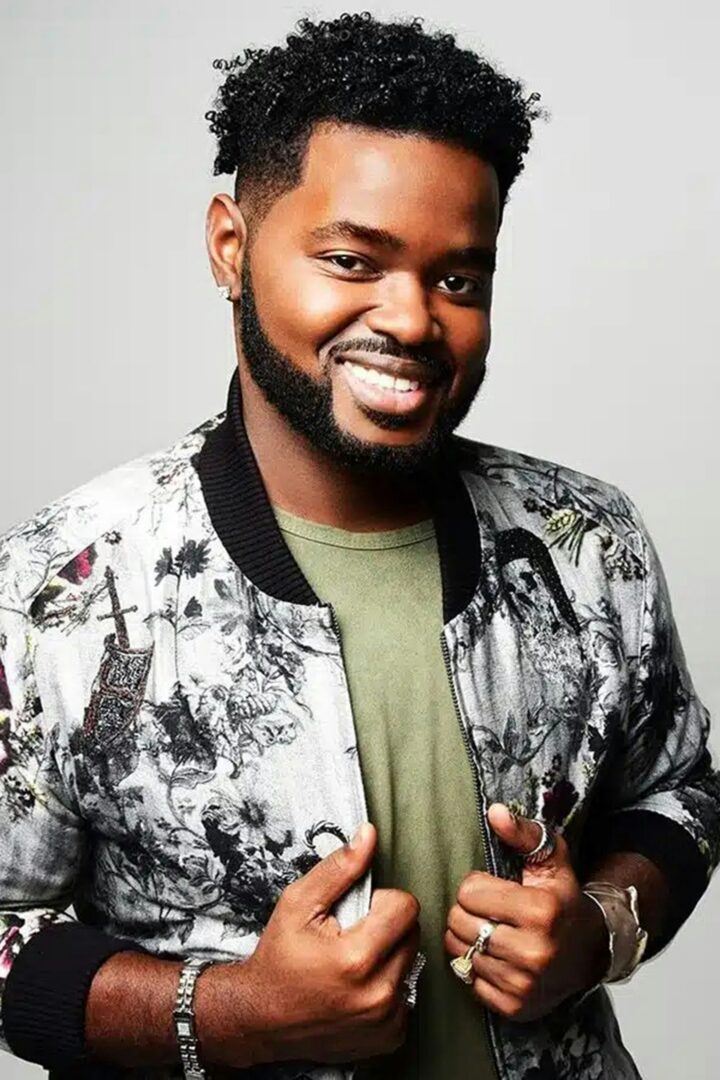
John Holiday
Akhnaten, countertenor
Could you give us a little background of your career highlights prior to Akhnaten?
My debut at LA Opera was in 2014. This is my third production here, and my first title role here. As far as my career, I’ve done many things up to this point. I’ve sung Julius Caesar, I’ve sung Xerxes, the title role of Xerxes at Glimmerglass. I’ve done Cato and Utica at Glimmerglass as the role of Cesare as well. I just finished doing my first ever Cherubino in Le Nozze di Figaro at the Washington National Opera, which is one of my favorite operas. I did the role of Oberon in Midsummer Night’s Dream. But I will also say, I don’t just sing opera, I do a lot of jazz and gospel. I grew up playing the piano at my home church in Houston, Texas, so there is a big part of me that is very much a church boy, and happily so.
How were you introduced to opera?
Well, I was in a boys’ choir growing up. It was called the Fort Bend voice choir of Texas, under the direction of William R Adams, who was the founder and the artistic director. I remember my teacher, Dorothy Arnold. I’ll never forget her. She took a strong interest in me, and she said to me, ‘I think you should audition for this boys’ choir.’ So I auditioned for this choir, and it was through this choir that I really became acclimated to and introduced to choral music and classical music. And then in 1997 I was in the tour choir, and we were doing a production of Faust, and Denyce Graves was singing Berlioz. I was 12 years old, and out walks this beautiful black woman. I hadn’t even heard her sing yet, and she was just stunning. Then she opens her mouth, and she starts to sing, and I’m just like blown away by what is coming out of this human being’s mouth.
How familiar were you before starting work on Akhnaten with Philip Glass’s work?
I was very familiar with Philip Glass. If you’re paying attention to all the things that are going on around you, Philip Glass’s music is very noticeable. And that’s one of the things I love about his music. I’ll be watching a commercial, and I’ll be ‘Oh, it’s Philip Glass.’ Or watching films like The Hours. My very first operatic professional engagement was at Portland Opera singing in Galileo Galilei, by Philip Glass. There are two roles that are written for the countertenor, and that’s what I did.
There aren’t many people like Philip that have such an influence on opera, and mainstream and pop…
Yeah, he has an insane, cult-like following. I mean, at every show. Every show in Berlin was sold out and people had flown in. They show up just to hear his name, music, and I understand it. And then there are people too who don’t like his music, but I think it’s very beautiful.
Maybe they just need time…
Maybe, but do you know what? Everything isn’t for everybody and that’s okay. Doesn’t mean that it’s not beautiful. Doesn’t mean that it’s not important.
Do you prefer to sing contemporary or traditional opera?
I like both. I’ve been really lucky that I’ve been oftentimes the first to sing a role when it’s written. And I take great pride in that most composers will ask me to do it. So yeah, I do like singing all of it. They’re different muscles that you flex in in both genres, as it were. What I think I enjoy more about the contemporary, if I were to say that I enjoy it more, is that no one’s stamp is on it. I find that contemporary opera lends itself more to a little improvisation, and I love that. But then I also enjoy Baroque music very much, because in a strange and cool way it lends itself to my gospel upbringing, where you do lots of riffs and runs, which is also in jazz.
What does preparation for the role of Akhnaten involve?
Well I’ve done the role, so I didn’t have to do a lot of preparation for it this time around, but when I did it the first time, I took at least two months to really delve deeper into it. Some study of the character and who Akhnaten really was, and what was his contribution to the world. But I will say my physical work for this one is very different because there are different demands in this production that were not in the other, so I would say I started working out for this role on December 15 of 2024—I still remember the date.
A lot of people who haven’t been to the opera before are surprised to learn that it’s not miked up. It’s not amplified.
That’s something that we all, as opera singers, are working on, and I am also a professor of voice. It’s something that you’re always working through with your students, to understand how to cut through an orchestration, because we don’t have microphones, and we don’t have the privilege of being miked up and over some of the amplification. Because, actually, it’s written in this orchestration that some of the instruments are amplified, and normally you would have a microphone for such a thing, but because it’s not all the music, then you don’t have to worry about it.
What will surprise people about Akhenaten if they’ve only previously experienced traditional opera?
I would think that one of the most beautiful things that they would experience, but they may not be looking for, is that this is a type of music that is very transcendental. It transcends the current time. It transcends what they’ve been used to, because there are so many patterns in it. One can be kind of low in it. It becomes very meditative. And what I, as a singer, have to remind myself is that you can’t phone it in. You have to pay attention. And because there are so many patterns, people can, it also lends itself to ear worms. But I think that people are going to find that there is a meditative aspect of it, and I, as a singer, really love that.
What are your plans after Akhnaten?
I have some recitals that I am doing. I’m being honored by my alma mater, my graduate school, the University of Cincinnati. I am the most outstanding alumni of this year, which I can barely talk about. I’m honored by that, to know that my work has meant something. Then I release my debut album on July the 17th, through Pen to Tone record label, called Over My Head. My prayer to God is always that he uses me, or she uses me, to be an instrument of joy, peace, and love. And I hope that people get that when they come to this opera, when they hear my album. There’s this beautiful quote by Maya Angelou, which I will paraphrase because I’m not going to say it word for word, but she says, in essence, ‘One of the most beautiful things that we can do as artists, is to, in the face of adversity, keep making your art.’ Because it is that thing that will make the world better.