
Mohammad Reza Shajarian and Kayhan Kalhor
Night Silence Desert (Traditional Crossroads)
Iranian-born, California-based singer Bahar Movahed told us about her love for a gem from Mohammad Reza Shajarian and Kayhan Kalhor...
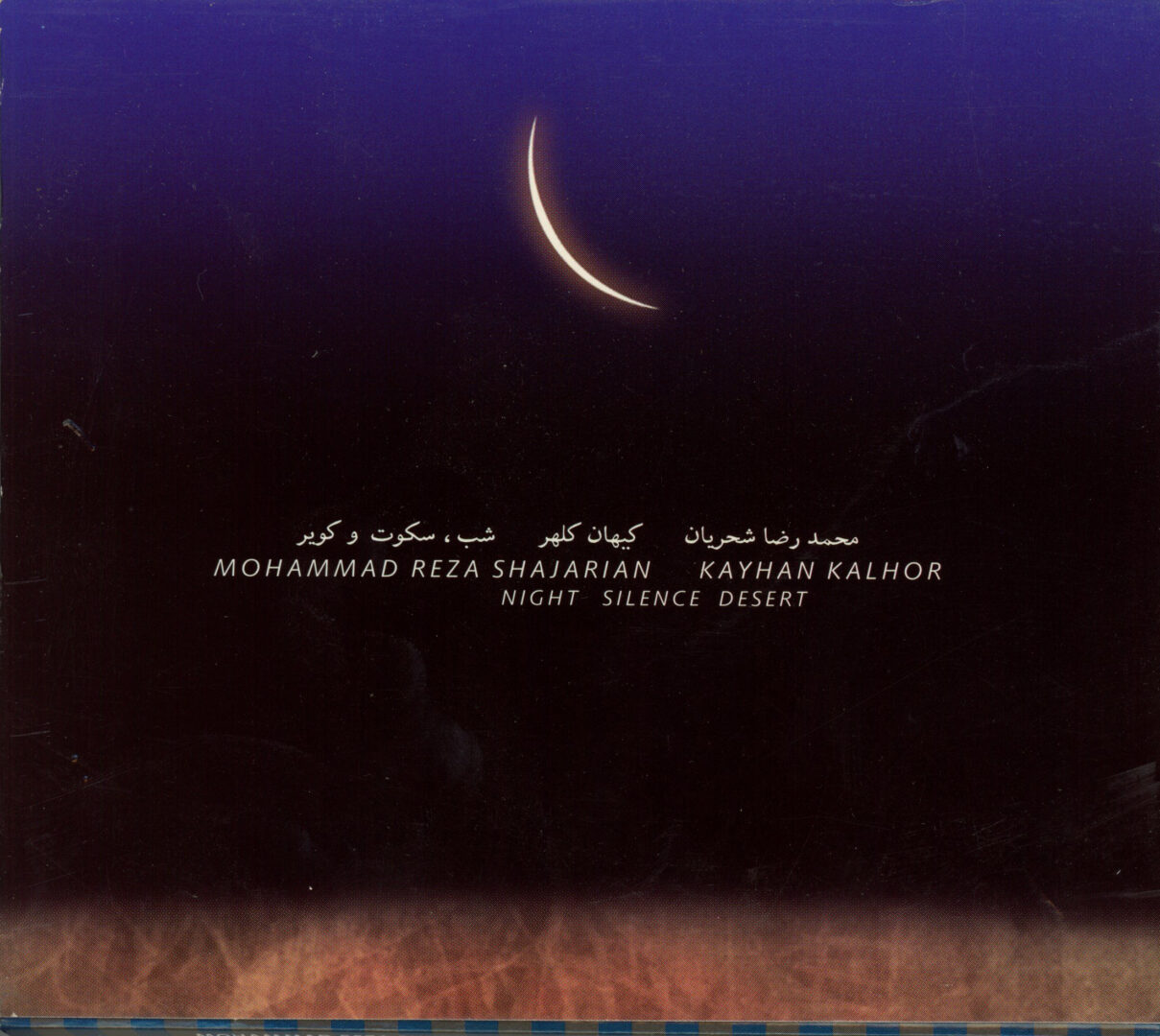
Bahar Movahed: For me, one album that has remained deeply woven into my memories is Night Silence Desert by two great Iranian musicians: singer Mohammad Reza Shajarian and kamancheh player Kayhan Kalhor. The album was released in the U.S. in 2000 on Traditional Crossroads, the New York label that would later release my 2012 U.S. debut, Goblet of Eternal Light.
I was born and raised in Tehran, in a home shaped by both Kurdish and Azeri roots and culture. Music was always present around me, and from a young age I became consumed by Persian classical music. Like many young music lovers, I was endlessly searching for more: more recordings, more voices, more discoveries. Every month, I would visit my favorite music store "Beethoven" in Tehran, eagerly asking what new albums had arrived. I collected recordings by M.R. Shajarian, Hossein Alizadeh, Mohammad Reza Lotfi, and many others, carrying stacks of CDs home like treasures. Looking back, it is bittersweet to remember how overwhelmingly male that musical world was -- and in many ways still is -- since women in Iran have long faced restrictions on publicly releasing and presenting their music.
In Iran, dentists and physicians are required upon graduating to complete two years of mandatory public health service in underserved regions before they are allowed to practice in major cities like Tehran. I chose a tiny desert town called Anarak, with a population of around 1,500 people at the time, where I became the town’s only dentist. Reaching Anarak itself felt like entering another world. At that time, the overnight bus from Tehran to the nearby city of Naeen departed only once each evening around 9 p.m., and the journey took nearly six hours through long stretches of desert roads. From Naeen, a kind elderly driver would pick me up from the town square and drive me another 75 kilometers into the desert to Anarak. The driver’s car was so old it could only play cassette tapes. So I carried my portable CD Walkman with me and listened to music alone in the darkness as we drove deeper into the silence of the desert, beneath a sky full of stars, until I finally arrived at the small dormitory I shared with the town’s doctor and nurses.
During that chapter of my life, Night Silence Desert became the album I returned to again and again. There was something about that album that felt inseparable from the landscape around me. It carried an almost elemental feeling, as though it belonged to the desert itself; the silence, the stillness, and the feeling of becoming part of something larger than yourself. The emptiness was not lonely; it felt infinite. Looking out at those endless stretches of land, I often felt as though I had arrived at the edge of the world.
The kamancheh (spiked fiddle) has always been my favorite instrument in Persian classical music. There is something deeply human in its voice, something that aches, remembers, and speaks without words. Many years later, after moving thousands of miles away to California and creating my new project, Together Yet Alone, with the wonderful Tehran composer and kamancheh player Navid Dehghan, I have often found Navid’s kamancheh suddenly carrying me back to those desert roads and midnight journeys. I may be driving along California highways yet, somehow, I am back in Anarak again.
Perhaps that is one of music’s greatest powers, its ability to collapse time and distance. Together Yet Alone is an album about connection despite separation and, in a way, hearing Navid’s kamancheh in these new songs made me understand that even more deeply. I’m brought back to what I first experienced with Night Silence Desert: the feeling of being far away and yet, somehow, completely home.
"Together Yet Alone" is out now.
Photo by Michael Roud