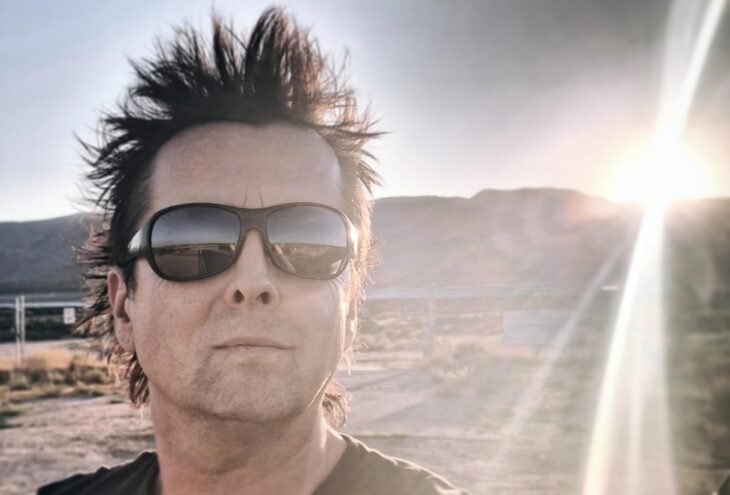
I’ve been a bassist since the mid-1980s, mostly at a semi-professional level (i.e., earning money but not making a living from music). I’ve toured across multiple continents, recorded in world-class studios, and realized many of my adolescent dreams. Since arriving in L.A. in 2000, I’ve also been a music journalist. On occasions, I’ve acted as manager, booking agent, and/or publicist for my bands, so I have experienced many facets of the industry.
At age 52, with an all-original band (I’ve never done the cover/tribute thing), I signed to a prominent indie label, and we released an album regarded as a genre classic. My most recent gig, at age 59, was a rapturous sold-out show in Mexico City last month, with all the trimmings. My playing is better than ever; I’ve never enjoyed it more; and most of my friends are former bandmates.
Accordingly, my strictly subjective tips below are aimed at those seeking longevity—and maximum joy—as a semi-pro musician playing original music rather than someone wanting to “make it big” or survive as a session or tribute player (though these ambitions can certainly overlap).
Know Your Craft
In a business which places heavy emphasis on “who you know,” networking can start taking priority over actual musicianship. Unless you have absolute rock star talent/looks/charisma, this is a mistake. Think of practice (with a metronome!) and lessons as investments in future fun, creative satisfaction, and maybe a career. Because, sooner or later, the recording light will come on and you’ll need to deliver. I once read that after age 25, all a musician has to offer is their chops—an exaggeration but grounded in truth. This doesn’t mean you have to be a virtuoso unless the gig explicitly requires it. I’m a competent bassist, nothing more, but often get gigs specifically because I keep things simple, solid, and play for the song.
Be A Good Hang
A few years ago, we hired a pro drummer for an Australian tour. He explained that, as he put it, “being a good hang” is crucial to working consistently in the music business. Because, with countless great players to choose from, especially here in L.A., artists are looking for those who’ll also be fun (or at least amiable) when sandwiched together in a van, studio/rehearsal space, or shared hotel room. Most music making will involve one or more of these situations, so “playing well with others” applies on and off stage. (I once heard of a fantastic guitarist who was fired mid-tour because he kept masturbating on the bus and would hog all the fruit on backstage riders!)
Prepare
“Practice for rehearsal, not at rehearsal,” the old saying goes. No one wants to battle traffic for 45 minutes then stand around in silence at an expensive lockout while one member of the band listens to the material and figures out their parts. Do that stuff at home! Of course, this is infinitely more important when auditioning. Humans are naturally lazy and so are inclined to hire the person who walks in knowing their parts without instruction. For example, I was once asked to learn three songs from an album before auditioning for a signed singer. I learned the entire record. We played it front to back at the audition and, while the last notes were still ringing out, the drummer declared, “Right—let’s books some shows.” A year of fantastic international touring followed.
Get a Flexible Job
Making music the only thing you do doesn’t make you a musician. Because for most of us, being unemployed will only make you a liability to a band: unable to maintain a reliable vehicle or gear and too broke to contribute to rehearsal/recording costs. Plus, it’s hard to practice if you’re living in your car in a CVS parking lot (I knew a drummer who did just that). So, a day job should be embraced as an intrinsic part of being a semi-pro musician rather than resented as a detriment to that pursuit. Flexibility is key: a job or business that will allow you time off to tour. This is precisely why, when I realized I had appropriate ability, I worked feverishly to build a freelance writing career. And if that job can be complementary to your musical dreams, all the better (I’ve learned so much from interviewing rock stars that applies to my own musical efforts).
Get Out There
In an ideal world, we’d all form our dream band with our best mates at high school and spend adulthood touring the world together. In reality, most musicians are making creative compromises most of the time. But it’s important to stay out there playing rather than just sitting at home scouring Craig’s List and waiting for the perfect opportunity. Even if it’s not entirely your style, joining a band will develop your chops and put you around other musicians with whom, or through whom, more apt situations can evolve. If you can really play and are the aforementioned “good hang,” word-of-mouth often does the rest. But you need to be “in the shop window,” demonstrating what you can do. This doesn’t mean a hardcore punker joining a Barry Manilow tribute act—seek out situations that check at least some of your boxes but be ready to be flexible.
Be A Team Player
This should go without saying but is depressingly common. Don’t be that band member who insists on being loudest in the mix or on rehearsals being scheduled/rescheduled around their whims. Musicians exhibit diverse motivations for playing in bands and, counterintuitively, these sometimes don’t include simply contributing to making the best sound possible. I’ve met folks who’ll join a band mostly so they can live rent-free in its lockout or who are lonely and simply seeking a captive audience. Be a team player and seek out team players, because music is almost always a collective endeavor. This will not only yield better creative outcomes but will also make the process way more enjoyable. Because making music, even in the darkest and angriest genres, is supposed to be fun.