
While the official line is that bluegrass music was born in 1939 when mandolin maestro Bill Monroe called his band the Blue Grass Boys, the reality is that musicians were playing mandolin, fiddle, acoustic guitar, banjo and double bass, or at least some combination of them, in the Appalachian Mountains and beyond, for years before that.
It’s up there with the rootsiest of rootsy music, and it’s tough to paint bluegrass as fresh. Think bluegrass, and you think Monroe, Lester Flatt, Earl Scruggs and, for a pop culture reference, Oh Brother Where Art Thou. Mountains and countryside. Moonshine and overalls. That said, Alison Krauss and even Dolly Parton brought bluegrass into the modern era. Enter Molly Tuttle.
From her 2019 debut solo album When You’re Ready, right through to her brand new So Long Little Miss Sunshine acoustic EP (which features six stripped-down tracks from the full-length album of the same name), Tuttle has been one of bluegrass’ brightest lights. She’s not the only one–friend and collaborator Sierra Hull has played her part too–but Tuttle has certainly shone as bright as anyone.
MC spoke with Tuttle via Zoom for this interview and found her to be an engaging conversationalist. She opened up about everything from her relationship with the bluegrass genre to her work raising awareness of alopecia (a condition Tuttle lives with), and spoke eloquently with charm, intelligence and authenticity. Even when speaking, and Tuttle is considerate with her answers, there’s a songlike quality to her voice.
A Bay Area woman, Tuttle was introduced to bluegrass by her dad. “He’s a music teacher, and he moved out to the West Coast in the ‘70s,” Tuttle says. “He started teaching bluegrass music. He plays all the different bluegrass instruments, so banjo, fiddle, mandolin, guitar, and bass. He’s been a music teacher out there for many years. And he was my guitar teacher growing up.”
With her passion instilled, Tuttle was able to see several artists around the Bay Area, including Laurie Lewis.
“She’s a wonderful singer-songwriter and leads her own bluegrass band,” she says. “So I saw her a lot growing up. Another woman named Kathy Kallick is someone I got to know when I was a kid, and they were both great mentors to me when I was just starting out. We listened to a lot of bluegrass around the house, and some of my favorites were Hazel Dickens, and I loved Gillian Welch a lot. She’s still one of my biggest heroes. So yeah, those were some of the folks that I listened to when I was first learning to write songs and sing and play the guitar.”
Those local shows, and a bunch of Northern Californian bluegrass festivals, forged the beginnings of a career which has seen Tuttle pick up a bunch of International Bluegrass Music Awards, winning Guitar Player of the Year on numerous occasions. She twice won the Grammy for Best Bluegrass Album–in 2023 for Crooked Tree and in 2024 for City of Gold.
Her latest release, the acoustic EP, could better be thought of as a “stripped back” EP, as bluegrass is largely an acoustic artform anyway. Regardless, Tuttle took six of the best-suited songs and recorded them as a trio.
“So I was on acoustic guitar, and then my bass player Vanessa [McGowan], who’s been on the road with me the past year and a half, she plays bass and sings,” says Tuttle. “And then Mary [Meyer], who up until recently was on the road with me as well, she plays the mandolin and fiddle and sings. We had been working on these songs for the live shows, and there were a couple of radio shows, to not have the full band–we’d go in and just play them as a trio, and it was so fun to hear the song stripped back into these just more simple versions with the three instruments. I felt like it gave everyone room to do a little extra. Like for me, my guitar playing is more of a centerpiece than in the original versions that have more production, have percussion, keys, and a bunch of different instruments and sounds that we’re experimenting with in the studio, the fully produced versions off the original album. I feel like they’re really exciting, and in our live show we play them pretty true to those versions as well. But I also wanted to show people how the songs sound in a more simplified way, leaning into that rootsy bluegrass side of what I do on these songs.”
Neither McGowan nor Meyer were on the original, full-length So Long Little Miss Sunshine album; Tuttle started performing with the pair 18 months ago, and they toured the album with her. The musical relationship blossomed.
“I liked recording this EP last fall because we recorded it after we played the songs a bunch of times on stage, and I always feel like when you first record an album, you’re all still learning the material,” she says. “You’re getting used to it, coming up with the arrangements on the spot, and then you can have a really fun, spontaneous, new, exciting energy in the studio. But then you go and play them live a bunch of times, and you settle into the songs in a different way, and you might play them a little differently than you did when you first recorded them. So I liked capturing that. That was fun for me, to get to go back and sing them slightly differently, because I’m so used to singing them now. I approach my guitar playing slightly differently. Some of the arrangements are a little different than on the original recordings, because we would come up with different arrangements for the live show.”
The five songs chosen for reinvention on the EP are “The Highway Knows,” “Rosalee,” “Easy,” “Old Me (New Wig),” and “Story of My So-Called Life.” Tuttle says they were chosen simply because they’re the songs that worked well with the simple instrumentation of bass, guitar and mandolin. Plus, she admits, they’re some of her faves from the album.
“Some of them were ones we perform all the time, like ‘The Highway Knows’ is one we perform a lot,” she says. “Same with ‘Rosalee’—those ones also worked really well with the stripped back instrumentation. And then a couple of songs off the new EP were ones we hadn’t performed live that much, like ‘Story of My So-Called Life.’ I felt like I wanted to give that song a moment on the EP, because we hadn’t played it live as much, and it wasn’t one of the first singles, but it was one of my favorite songs off the record. So, I just wanted to highlight that on the new EP. It has this indie-folk kind of rock vibe to it, but it also worked really well as a totally acoustic track that has really different instruments on it than on the original recording.”
Tuttle self-produced, while Steve Burns engineered the EP. That said, the songs were just played and allowed to breathe.
“We’d played them a lot, so it was easy,” Tuttle says. “We just went in and played them as we’d been playing them live, and playing them in our trio configurations whenever we got a chance to do that. So yeah, it was really natural and a lot different from when you first start recording new songs and you haven’t played them a million times–this was more like, ‘okay, we know how it goes. Let’s go in and do it.’”
As mentioned, Tuttle’s journey to this point has seen her release five albums, and win a ton of awards including those two Grammys. Her sound and style has grown and evolved as she’s taken different paths.
“My first record was called When You’re Ready, and that one was more in the singer-songwriter vein,” she says. “I was exploring what I did on the guitar, still, and figuring out how it would fit into my songs in different ways. After that, I made a cover record [But I’d Rather Be With You] during the pandemic, and continued to explore those more contemporary sounds. But it was all cover songs that I liked to play. Some of them I covered live, or some I learned for that record.”
Covering artists as diverse as the Rolling Stones, Rancid, Harry Styles and Cat Stevens, the covers album really showcased Tuttle’s expansive musical vocabulary. But following But I’d Rather Be With You, she went back to her bluegrass roots.
“I wanted to make an album [Crooked Tree] that really stayed true to the tradition of the music I grew up playing with my dad, with my family,” she says. “Honor my grandfather who was a banjo player, and started that tradition in my family. I’m the third-generation bluegrass musician. Then my follow-up to that was called City of Gold, and that was another bluegrass record. But it took a few more left turns with the songwriting, pushed into some slightly more uncharted territory, but still was a totally bluegrass record in some ways. It has the five-piece bluegrass band. My live touring band, Golden Highway, was on that record, and that was our first band record we ever made. With this new album, I wanted to go back to my solo sound and just explore what it would sound like for me to write songs that didn’t really fit into any specific box genre-wise, and push myself as a guitar player, and a singer and songwriter. Not feel like I had any constraints around what sound I was going for.”
Bluegrass is a very traditional genre, with hardcore fans who will often insist on authenticity. Tuttle loves the music, but doesn’t feel constrained.
“No matter what, I’m always going to be playing a lot of bluegrass,” she says. “I do a lot of bluegrass in my show. I’m always getting together with other bluegrass musicians for this and that. It’s just a constant in my life. So when my new record came out, some of my fans were like, ‘Oh, you’re not doing bluegrass anymore,’ and I’m like, ‘Well, it’s just such a big part of who I am that I’m never gonna not do that.’ It’s never not gonna be part of what I do. But I like to have all these other facets to my art as well, and explore different sounds. It really just boils down to what my songs are calling for, and what kind of style I’m feeling inspired by.”
With the new EP out, Tuttle has already been writing for her next album. She says, in fact, that she’s always writing.
“I’ve got a new batch of songs that I’m excited about,” she says. “I love recording with the people I play shows with. I didn’t do that on my last album. I think that would be really fun because, now I’ve gotten together with these great players out on the road and we’ve toured so much, I feel like it would be fun to bring some of them in on this next project.”
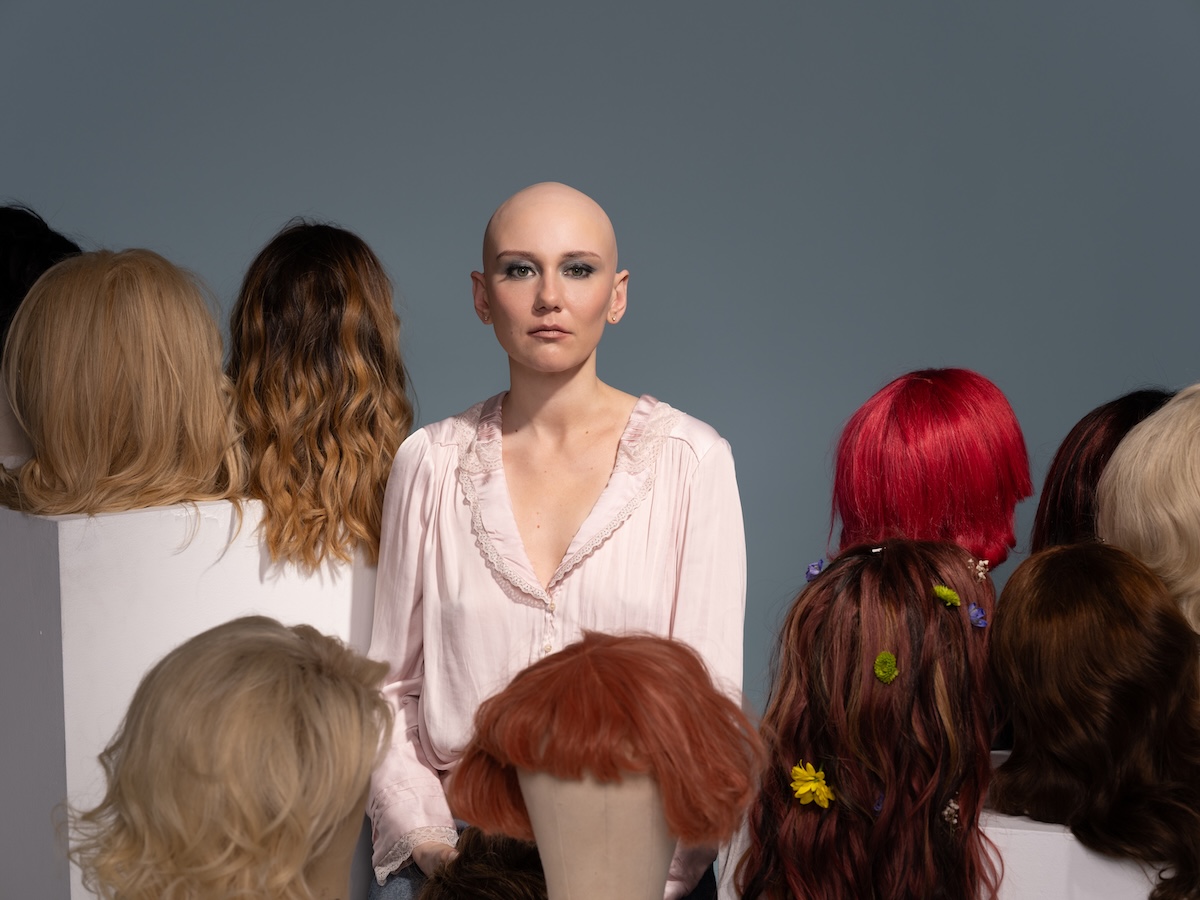
Tuttle says that she tends to write with her partner and husband, Ketch Secor (of the Old Crow Medicine Show). “We actually just got married a couple weeks ago, but we write together all the time,” she says. “The new album, we wrote most of it together, and same with my last couple records. My first album we ever wrote for was Crooked Tree, and we wrote about half that record together. And then the next one we wrote a little more. This last one, we wrote almost everything together except for a couple of tracks that I wrote with my friend Kevin Griffin, who’s a great songwriter. But yeah, I’m just comfortable writing with Ketch, and then I have a few other friends in Nashville that I write with. I’ve done so much more co-writing than I ever did starting out. When I first started writing, I only wrote by myself because I didn’t really know any other songwriters, and then moving to Nashville, everyone likes to collaborate. I really like writing with other people because it can help you get out of your rut. It helps you bounce ideas off someone else who might have a good outside perspective.”
MC saw Tuttle perform with the aforementioned Sierra Hull at Eric Clapton’s Crossroads festival, and the pair have collaborated in the past. Tuttle says that she’s been open to more.
“I would love to do more with Sierra,” she says. “We talk about it every so often, and I’m sure it’ll happen eventually. I just don’t know when because we’re both so busy with our own projects all the time. But I would love to get into the studio with her. You know, work on something, or if it’s not a recording, maybe do some shows together. I’ve known her for so long, and I just love anytime I get to play music with her.”
Naturally, we have to ask Tuttle about her current must-haves when it comes to gear: “On stage, I use my Felix preamp,” she says. “That’s been kind of my trusty preamp that I run my guitar through. With my guitar, I have a short clip-on mic inside the guitar and my Can KA pickup. So I use the Felix to blend those two channels together. And my front-of-house guy JoJo, he’s really awesome at just kind of mixing in just a just enough mic to make it sound still like an acoustic guitar while relying on the pickup for a lot of the volume and beefiness to the tone when we play live, and he’s got a lot of fun new effects and toys he’s been playing with out on the road. I don’t know exactly what they are, but my rig is pretty simple. I run the two channels, and just go through my preamp and tuner pedal, and it’s pretty simple for me. But I do have a new double neck Martin I’ve been playing out on the road, which is fun. It’s like a 12-string on one neck and then a six string on the other one. So I’ve been bringing that out with me in the studio. I defer to the producer or whoever I’m working with, and or maybe we test out a few different mics and see which sounds the best. It’s always a work in progress with my live tone, but I’m in a place where I’m pretty happy with it now.”
At the time of writing, Tuttle was preparing for some shows with Lukas Nelson, after which she was hoping to get into the studio for a bit. Perhaps play some solo shows in 2027.
“My band tour, touring with my full band, wraps up in mid-October,” she says. “We have some more festivals, some headline shows, then some shows with Lucas Nelson co-headling. That’s going to be super fun. So then around the holidays, I’m planning to go back home to California, maybe do a holiday show or two in my hometown. Then to kick off the new year, I’m teaching at a camp called the Pickin Party that’s run by the McCurries, Del McCurry’s family, and Jerry Douglas. My real focus is going to be my next record, probably towards the end of this year, going back and starting to work on that. So, my touring usually slows down a little bit around the holidays.”
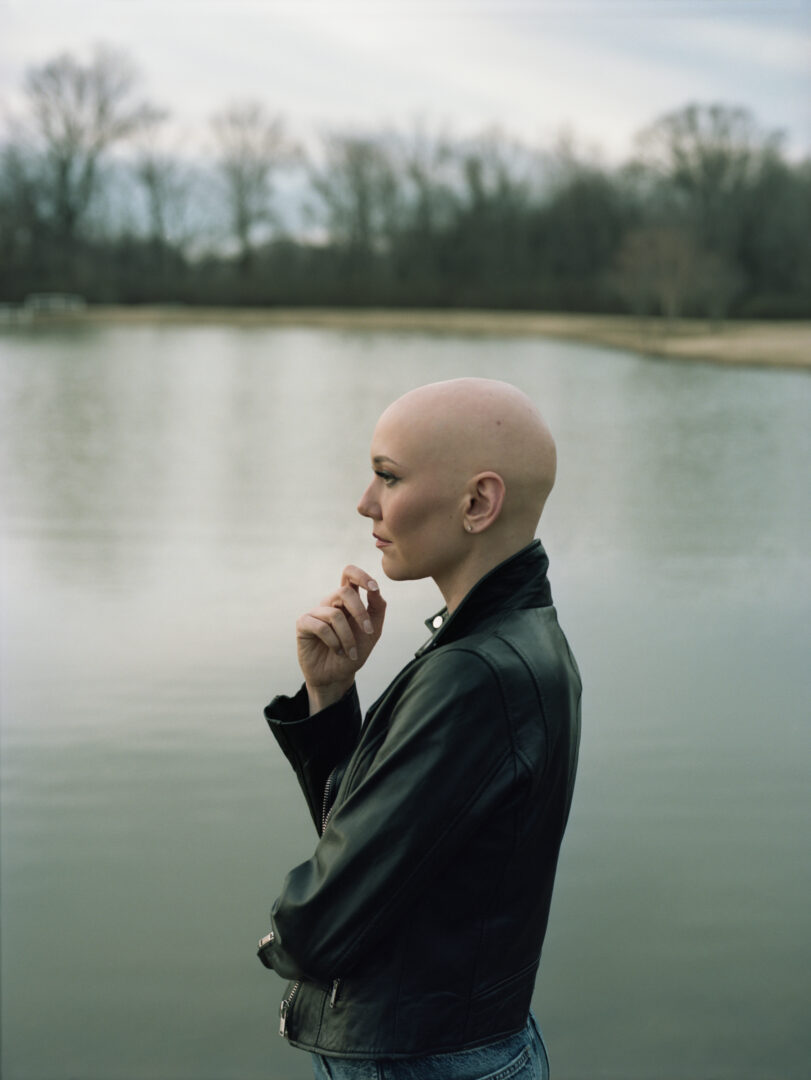
Despite the fact that she apparently never stops working, Tuttle finds time to work with and advocate for the National Alopecia Areata Foundation (NAAF).
“They’re awesome,” she says. “They raise awareness. They offer all sorts of different support. So if people are interested in treatments, they connect you with the latest research or doctors in your area who are specialists. If people don’t really want to pursue treatment and just want to meet other people who have alopecia or join the local support group, they can do that for you. They work with schools. But yeah, they take all these different approaches depending on what people need, and they work every month. September is Alopecia Awareness Month, so they always do a big campaign to raise awareness. And they do an annual conference in June, where people from all over the country get together. They go to different cities, and it’ll be a few hundred people. They do support groups throughout the weekend, and have specialists come in and talk about new developments and what we’ve learned about it, because it’s an autoimmune disease that people don’t know a ton about. They’re an awesome foundation, and were super helpful for me getting involved with them because I needed to have that community and that support system.”
Of course, she needs to find time to enjoy being a newlywed too. “We had a little time after the wedding, but only a few days,” Tuttle says. “So I want to go on an official honeymoon at some point next year. I don’t know when, but it feels like we both went right back on tour after the wedding, so we haven’t had a lot of downtime to soak up the newlywed vibes.”
Conveniently for “something old, something new and something borrowed,” the grass is blue.
Check out Tuttle's just-released cover of Dolly Parton's "9 To 5" here: