

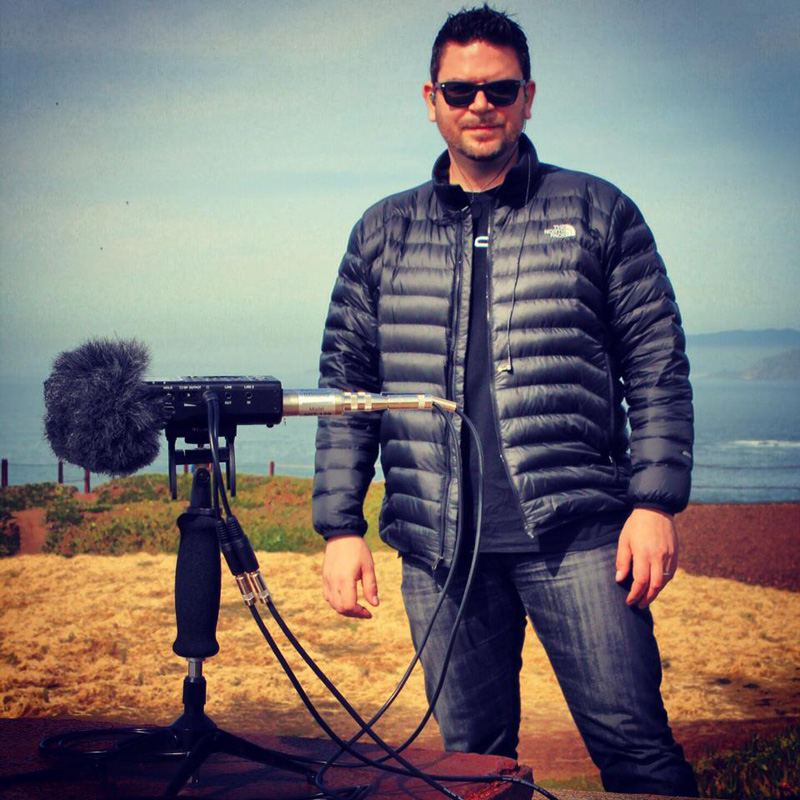
 Ivo Ivanov
Campus Director
SAE Institute - San Francisco
i.ivanov@sae.edu
Ivo Ivanov’s 30 years as a musician and audio engineer prepped him for a later career in teaching at SAE Institute in San Francisco, CA. When he arrived at the school, he had little teaching experience, but with his audio expertise he singlehandedly put together the electronic music production curriculum for the first couple years, going on to teach every class in the audio program.
How did you become a teacher
It was a fluke. I went back to audio engineering school roughly 15 years after doing all kinds of music production and audio projects. My wife encouraged me to go back and get a Bachelor’s Degree in my field after I got out of Ex’pression College for Digital Arts in the Bay Area. I realized a lot of opportunities I was looking for were out of my reach. I was getting entry-level opportunities that I had already worked past. I wound up at SAE in San Francisco while they were still building the facility. I taught exclusively and got offered opportunities to teach classes more advanced, like the audio tech program. I excelled at that very quickly and started to educate myself more on the act of teaching and the technicality of that.
Is there a learning curve to teaching audio engineering
I interview every person interested in becoming an instructor. What I see is a certain level of proficiency in the field of audio engineering but a lack of experience in teaching itself. There’s a big difference there. A lot of engineers who simply aren’t good teachers had to look online for resources to point them in the direction of what it means to teach and understanding the dynamic of a lot of people in a room who learn information differently and have multiple attention spans and skill levels. A good instructor can speak to all those people equally and have a lot of different teaching styles. I think the challenge is in bridging the gap between the technical aspect of the craft and the execution of teaching people never exposed to it.
Is a formal education in audio engineering necessary for success
It’s always good to have formal training, but I don’t think its 100 percent necessary to go to school to accomplish that. I come across people all the time who were self-taught and work professionally in the industry. On the other hand, there are students who need the structure of education to learn the intricacies of the field and craft that they would otherwise have missed, because they’re not the type of person who can learn in that sense. What we offer at SAE is developing the foundation of knowledge people can build off of. We don’t offer a one-stop shop from not knowing anything to getting a job.
What is the most rewarding aspect of teaching
The most satisfying is when I can tell the class is really engaged and interested in what I have to say. You’re sharing information, and they’re there for that information. You really feel like everyone is on the same page, when it’s almost like the students are part of the whole experience, and I’m not just delivering information.
What is the most challenging aspect
When the students don’t understand the value of the material being taught, even though it’s a building block in understanding the elaborate aspect of the craft. Since they don’t understand that aspect, they don’t see how the information will tie into it later down the road, and they become resistant to it. It’s really difficult for the instructor. You’re trying to lead them to the light at end of the tunnel, and some people know that in the back of their mind, but when they experience it they’re more focused on the tactile, practical, creative side. But there’s a different side that’s challenging, and the instructor has to work against that. I find a way to make it fun for people, and not everybody can be on that train, but for the most part, I’m successful in finding a balance.
What is the most difficult type of student
Some students just won’t show up to class. If you pay a lot of money or your parents pay a lot of money, or if you made a decision to do this as a career, why wouldn’t you attend classes to learn critical information that will make it possible? There are people who get through the course and their grades turn out okay, but they’re out there looking for work in a competitive market against people who have paid attention, who have come to all the special events, who have developed skills outside the program, and it’s possible for them to compete. Another way they squander opportunities is that they don’t understand the importance of networking. People get hired on skills, but those are a prerequisite. It’s about how you present yourself, who you know, what kind of connections you make and how well people like you––unless you’re just really lucky.
Does SAE stay up to date on technology
Software and hardware is up to date. We try to have the latest. We’re always doing updates on a national level so facilities can teach the latest versions. The hardware in studios is on par with current technology. Nothing is outdated or not happening in the real world.
Can you teach someone to have pitch
Some people who are able to learn it already have the skill; they were just never taught to harness it. It’s definitely possible to teach people to have a better ear for sound in that you can really explain to people how sound works in the frequency spectrum. Our students have to complete an ear-training course to understand where sound frequency is in the spectrum of human hearing. It’s how they understand how the equipment works, the equalizers and compressors. In that regard, it is possible to teach people to have pitch.
What were you most surprised to learn through teaching?
One thing that continues to be a surprising experience is how much I learn by teaching. I think we’ve all heard, ‘If you don’t do, teach.’ That’s false. Most people I know who teach know a lot more about the intricacies of their craft than people that don’t. There are a lot of people who want to teach here that have a whole list of amazing credits, but you ask them some fundamental audio question that would have to be presented to the classroom and therefore fully understood by the professor, and they don’t know it. That’s something to think about.
For me, it’s surprising how much I learn, even after 20-plus years working with audio. It’s not only because I’m delivering the course materials, but I’m also interacting with students who flip concepts on their side and allow me to think about them in a new way just because it’s new to them, and they’re looking at it from a standpoint I’ve never considered.