For All The Jailhouse Masters the latest release from Man’s Body is the Chicago/LA band’s most overtly political work. The advance single, “American Firesale”, became available on all streaming platforms and as a Bandcamp download on Friday March 13th. The accompanying video is by filmmaker Steve Hanft, the acclaimed indie auteur behind Beck’s “Loser”, which garnered nominations in three categories at the MTV Video Music Awards and nearly a quarter-billion views on YouTube. (Hanft has also made videos/films for Elliott Smith, The Cure, Primal Scream, Beth Orton, Phoenix, Prince Jazzbo and Grandaddy – as well as the video for “40 Oz. Kid”, from the Man’s Body album A Set of Steak Knives, 2021.)
“American Firesale” is a scathing indictment of the dystopian shitscape we as Americans now fully and unwillingly inhabit,” suggests Greg Franco of Man’s Body.
A press release describes the single: “Grinding automaton guitars give way to an incongruously bubblegum, sing-along three-word chorus to enflame all our fellow countrymen/women: HANG. THAT. MAN. Perhaps a sardonic play on the echoes of old chants to lock her up, though in this instance, a little patience and due process under law shall with providence deliver their own inexorable final curtain. Names are never named, but the sentiment is unmistakable, and too catchy to unhear. A novel graffito to scrawl on guitars. A brand-new chant and anthem to restore the pissed and dispossessed.”
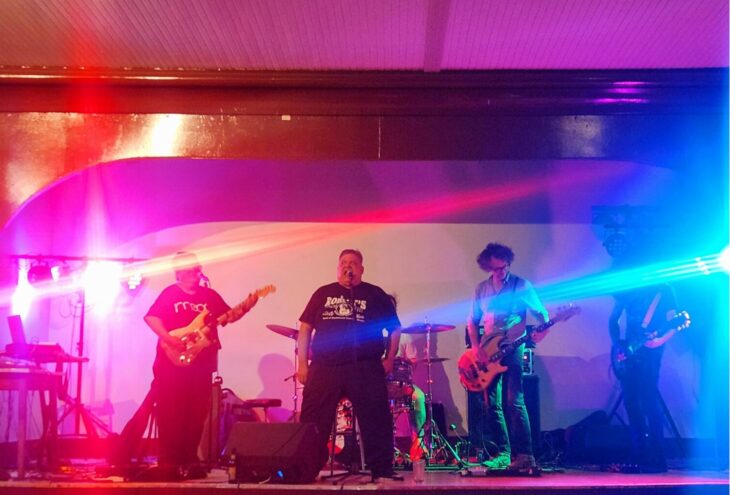
Man’s Body is Greg Franco, vocalist, J. Niimi on guitars and vocals, Marco Obaya on guitar, Jim Shapiro on bass and vocals, and drummer Andrew “Goose” Giese. Franco and Niimi also selected additional musicians from Chicago and Los Angeles to bring their sonic vision to fruition.
“Right now, I’m the only California/LA guy in Man’s Body. Everyone else lives in Chicago,” Franco offered in a March 2006 interview with me. “In the last decade, Man’s Body plays a few times a year in Chicago at a place called Montrose Saloon.”
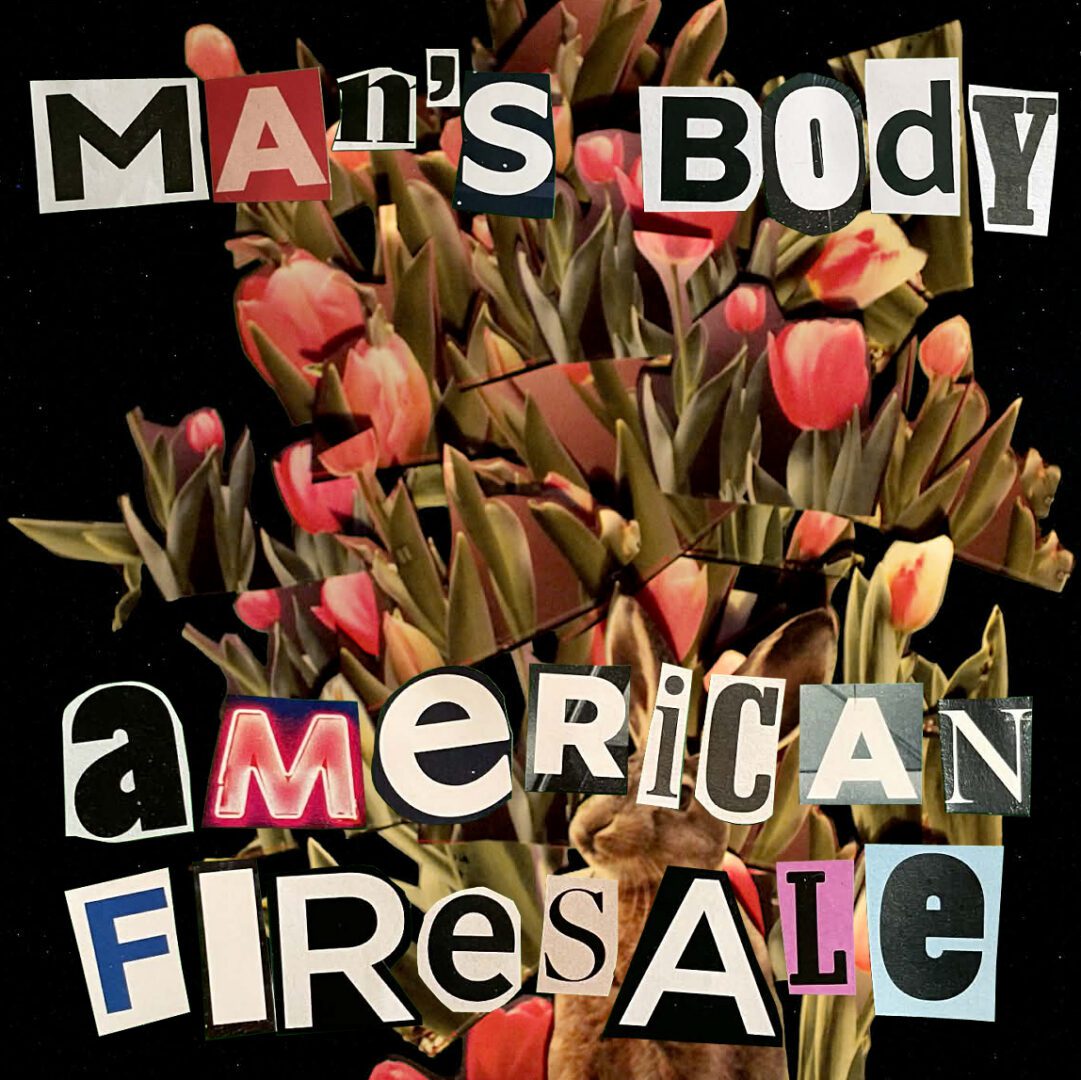
From the press release: “In April, we will be celebrating the release of our six-song 12” vinyl EP, For All the Jailhouse Chess Masters, on my label Beautiful Workhorse Recordings. This one-time pressing is limited to 100 hand-numbered copies, in gorgeous matte Euro jackets, with a double-sided full-color insert. The EP will also be available on all streaming platforms and as a Bandcamp download. The vinyl will be unveiled at the record release show in Chicago on April 10th at Montrose Saloon. It will also be available at that time for order from Bandcamp.”
The six songs on the self-produced EP are “American Firesale”, “Crazy Person’s Song”, “Artless and Working Blues”, “Tea & Sympathy”, “Highway Hypnosis” and “Community Bass Content”.
Greg Franco recalls the genesis of Man’s Body: “In 2014, our dear friend Andy Creighton of the World Record was playing in this band with drummer and Chicagoan J. Niimi called Ashtray Boy. They played a show at a venue I was booking on Sunset Blvd called Taix, that opened in 1927. I was really interested in getting my band Rough Church a show in Chicago, so I got to know J., and started thinking of how we could work something out. J. was working in Chicago as a guitar tech and luthier.
“Finally, in 2015, the plan was made for us to fly out, rehearse at his house in Berwyn for my 50th birthday, record a Daytrotter session in Rock Island, Illinois, and play a show the same night at Schubas on September 11th. J. also made a custom Telecaster guitar for me in celebration. I fell in love with Chicago so much that later in the story, in 2021, I rented an apartment with J. in Irving Park where I still stay sometimes.
“It was a good match between J. and I. We also played a show in New York City. So, we decided to put together our own project, with J.’s coworker, 18-year-old bassist and guitarist Marco Obaya, and book some time at the world-famous Electrical Audio, with LA engineer Manny Nieto. So, in September 2016, we decided to call the band Man’s Body, and recorded at Steve Albini’s studio. I have a lot of respect for the legendary Steve Albini. He knew how to make things sound amazing. And he wanted to work with great artists and not overcharge them. He had a defined indie ethos, didn’t fool around with shitty pop music. His work with Pixies, the Breeders, Nirvana, and PJ Harvey, for instance, and his own bands like Big Black and Shellac, will stand the test of time.
“Manny, our East LA engineer buddy, was the contact for the project. He was mentored by Steve and was really close friends with him. He recorded us, not Steve, but Manny was great. We felt the Steve vibe and used his gear. The resulting EP, called Found, was very successful, and we made it in a day or two.
“As the years went by, the band kept working, touring, and recording and releasing music. J. had a 30-year-long standing relationship with Chicago engineer Mike Hagler, who then became our main guy for recording Man’s Body. He worked with Wilco on the album Summerteeth and tons more at his studio, King Size Soundlabs. Mike recorded, mixed and mastered For All The Jailhouse Chess Masters. He is so easy to work with, and knows all his amazing gear. He’ll also throw down on keyboards or whatever we need. He’s heard on ‘American Firesale.’ We steer the ship with him, and he is Johnny-on-the-spot. He makes it happen.”
Greg also has some revealing observations comparing the Los Angeles and Chicago music communities. “I think that the clubgoers in Chicago are different than in Los Angeles. In LA, people are first interested in what other people are interested in. So, they gravitate to what a friend of theirs said, or what a critic said or an influencer said about a band. Whereas Chicago, their whole thing is, ‘I define myself by what I like.’ When you go and see a band, you are kind of defining what your taste is.
“You do it sort of independently. It’s a very important part of Chicago culture. And you don’t just go to shows in your twenties and thirties. People come out to our gigs that are over 50, 60, 70. They’re committed to live music, and going out to venues is part of their identity, and it’s really super important to them.
“Since the late sixties, many bands and recordings from Chicago have made a huge impression on me. The Shadows of Knight, the Ides of March, the Buckinghams, Cheap Trick, Urge Overkill, Liz Phair, Curtis
Mayfield and Lou Rawls, Muddy Waters, all of the Chess Records catalog. My father was a big fan of the Doors. Ray Manzarek was from Chicago, and graduated from DePaul before he went to the UCLA School of Film and met Jim Morrison.
“It’s impossible to think of American music without Chicago being there,” underscores Greg. “A few years ago,” remembers Franco, “when I was booking monthly music at TAIX, not one local newspaper mentioned or touted my schedule of local and visiting bands. Chicago respects their regional musical history. L.A. tends to shun it.
“LA and Hollywood are company towns. Clubs like the Whisky-a-Go-Go now are pay-to-play policy, where bands have to sell and guarantee ticket sales. As far as I know, I don’t think that sort of thing exists in Chicago. So, Chicago became my second home. And I like the deep-dish pizza at Pequod’s. And they have a healthy Mexican community too, and amazing Mexican food.
“I’m a lifelong Dodgers fan,” adds Franco. “I was born in August 1965 the week the Dodgers clinched the pennant in the National League. And it was a former Cub, outfielder Lou Johnson, who was traded to the Dodgers in May of ’65 when the regular outfielder, Tommy Davis, broke his ankle that May. Johnson became the starting left fielder, and late in the season hit a crucial homerun that helped the team win an important game.
“My three favorite stadiums are the three oldest ones: Fenway Park, Dodger Stadium, and Wrigley Field. Visting Wrigley Field for the first time was like Mecca for baseball. Because everything is old and unchanged. It’s also in the middle of the city. So, the people, the bars and the restaurants are right there. Whereas Dodger Stadium is up on the hill, and sort of away from the city. It was a great experience going to Wrigley Field. I felt my whole life was trying to get there, and to Chicago.”
Franco is also a bandleader in the Los Angeles-based band Rough Church.
“It’s a whole different collaboration than my life and songs with Man’s Body. In Rough Church I write songs with Dante Pascuzzo and Alfredo Ortiz, a drummer and percussionist who’s played with the Beastie Boys and Gogol Bordello, and now tours with Los Lobos.
“In Rough Church I’m the captain of the ship. Whereas in Man’s Body, sometimes we’re doing J.’s songs – his music, my lyrics – or maybe his songs and his lyrics and I’m just singing, or it’s my music and lyrics. J. is co-captain of the ship. For Rough Church, I make all the big decisions. In Man’s Body, It’s J. and I equally making decisions. When Covid happened, we had to write songs over the phone or internet, and that worked, too.
“On certain songs in Man’s Body, J. is slated to sing. He has a song on our last record, called “Talkin’ to Larry”, that I love. He has an ability to capture the atmosphere of Chicago, a feeling that I can’t. When I think of J. I think of him as an ideas guy. He’s a writer and a music critic too, and has written a book for the 33 1/3 series on R.E.M ‘s album Murmur.
“He knows how to create lyrics that are very incisive and interesting – atmospheres, emotions and places – on top of being a great guitarist. He also has more of a punk rock background than I do. I also come out of that same world, but I embrace and have a fondness for classic rock and indie pop. He does too, but he comes out of the eighties and harder stuff like Husker Du, Naked Raygun and the Fall, for instance.
“Man’s Body song choices are more aggro in character. I present songs and ideas to J. I can mostly guess if he’d like these songs, as opposed to others that work as Rough Church songs. We choose songs that make sense to Man’s Body.
“On For All the Jailhouse Chess Masters we did veer into some sociopolitical areas. I always liked the Clash and Jello Biafra. They have always been in my record collection. Peter Garrett from Midnight Oil. Minutemen, because D. Boon was right on it politically. I was a history major at UCLA. I know my history and politics. I was a young person during the Reagan administration. At UCLA I protested over apartheid and divestment in South Africa. I’ve always been anti-racist. Having a Hispanic background, I’ve always been on the side of the little guy and labor. My dad was a left-wing writer on politics.
“I’m around the same age as Obama. I know he was speaking out against racism. Where I live is pretty close to the campus of Occidental College in Eagle Rock, where he attended from 1979 to 1981 and has acknowledged mentors and professors at the school. One professor was invited to the White House,” he emphasizes.
“In Man’s Body, bassist Jim Shapiro is an architect of sound,” explains Franco. “He has a great, curated bass tone. He knows how to get inside of a song. The bass can be a beautiful, talkative instrument. He makes his voice heard in his decisions on what to play.
“Guitarist Marco Obaya. He’s different because he’s quite a bit younger than J. and I. He was enthusiastically willing to jump in and play bass and guitar for us. He worked at Guitar Center with J. Marco learned about making our kind of music. He plays a lot of leads and parts that are different than anything in indie rock. It’s almost more classic rock, more metal and blues. That’s a very interesting combination, maybe not done before in an indie rock band.
Andrew “Goose” Giese is our drummer. When we needed a drummer and had some live shows coming up, it was Mike Hagler who suggested Goose. He’s closer to Marco’s age, and those guys have a vibe. They have sincerity and energy which I like, and they are critics. If they don’t like something they speak up. After many shows and tours, it’s exciting to us that this record is the first studio recording we have done with Goose.
“All the time I’m asked about the name of our group,” admits Franco. “Since it’s a Chicago band, I had in my mind a cartoonish version of the mob in Chicago, Al Capone, and a headline in the daily newspaper: ‘Man’s Body Found in the Chicago River.’ Kind of what the photographer Weegee would shoot at a crime scene. I had an idea we would kind of vibe on that. And during the MeToo movement, the name Man’s Body took on a different thing where it became a bit more provocative in another way. It just stuck when I said it to J. He liked it. We wanted attention, and we got it.”
For more info on Man’s Body, contact jniimi@gmail.com