
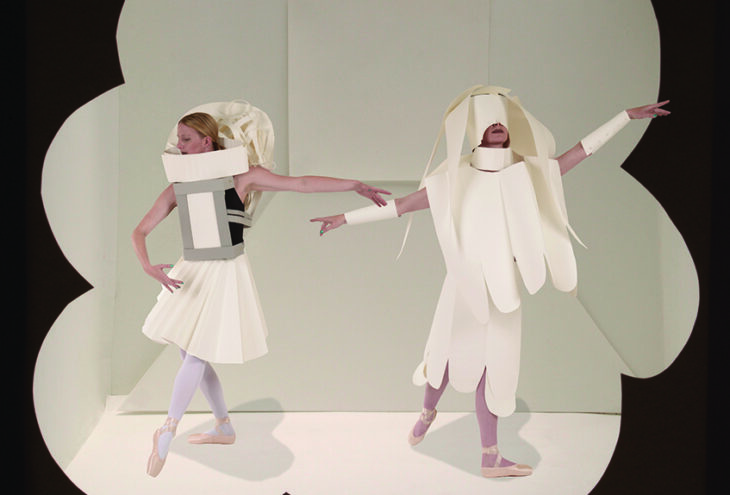

Multidextrous artist Julie Green’s recent exhibition at Keystone Art Space in Los Angeles did something rare—it made the invisible mechanics of sound feel solid. Where the Field Begins to Sing transformed the ephemeral nature of sonic frequency—especially in vocal and instrumental music—and froze it into enduring forms belonging to the physical world. This is even more intriguing, as it culminates a line of inquiry Green has tracked for decades. The conceptual origin points back to 2013, when she used the title Patterns and Tones to anchor an online archive documenting her history fronting the ‘90s San Francisco punk band Cameltoe—a high-decibel era of raw performance that continues to inform her visual studio practice. In fact, Green’s prior exhibition, Patterns and Tones for A Paper Ballet, approached this sonic crossover through a silent, monochromatic lens, using white paper-pulp instrument reliefs and elements of performance that relied on cast shadows to trigger the psychological echo of sound. In both cases, though the path from musicality to works of art may seem ethereal, for Green it is incredibly direct.
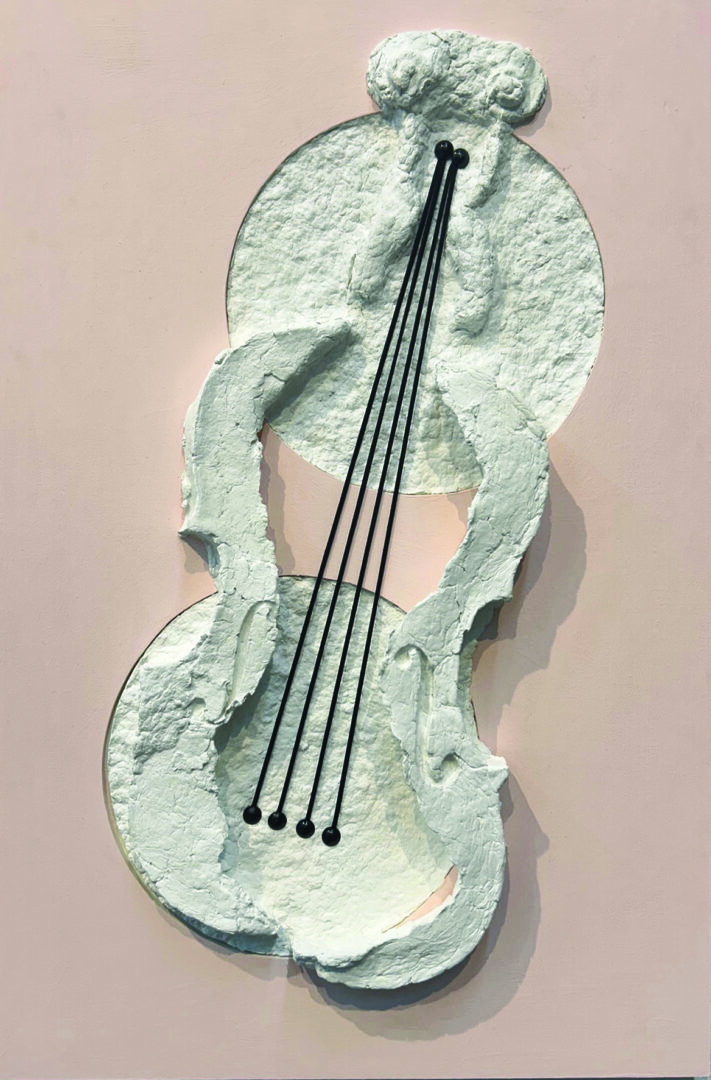
The shift from those quiet, white ghost-shapes to the hyper-saturated colors and finely finished surfaces of her latest work represents the phenomenology of sensory transformation driven by her intense, involuntary chromesthesia. When Green sings, she doesn’t just interpret a melody; she optically perceives translucent, volumetric bubbles of prismatic color projecting out of her body, a somatic translation where pitch dictates hue. (Fun fact, she first experienced it in the middle of a live performance, but kept singing.) In the gallery, this phantasmagorical event, visible only to herself, is externalized, remade, and fixed in appealing, inventive, curious objects made of painted birch, copper wire, and occasional chunks of alabaster. Pieces like Yellow Koto String Relief, Blue Cello String Relief, and Red Guitar String Relief are physically tensioned with playable instrument strings and steel tuning pegs. When a viewer plucks them, the aural note matches the exact color Green sees when singing that tone.
This sophisticated and unconventional handling of material and color is the result of a lifetime spent in close proximity to monumental visual practitioners. Between family ties to Ruth Asawa, assisting David Ireland at Capp Street Studio in the early ‘90s, and a 20-year tenure running reproductions for the late great David Hockney, Green developed a meticulous expertise in how color theory, craft, and physical structure coalesce at the intersection of the evidentiary and the inexplicable.
juliegreen.net
patternsandtones.blogspot.com/2013/07/cameltoe_27.html