Music can be an incredibly positive influence that sets kids on a constructive path, and David Moss is highly aware of this. As cofounder of the Watts Conservatory of Music, he’s on a quest to use the sonic arts as a conduit toward bettering the future.
His journey began with another nonprofit, the Harold Robinson Foundation. Moss’ family owns an overnight summer camp situated in the Angeles National Forest deep in the mountains of northern L.A. Because it caters to affluent kids, he created the org so that those less fortunate would also have a chance to enjoy the great outdoors. His search for underserved youth took him to Watts, CA, one of the country’s most impoverished areas and infamous for its gang violence.
For those living in Watts, home addresses determine gang affiliation. To even go for a casual stroll a few streets away can mean risking your life. Explains Moss, “We had kids who had never been two blocks from their house or school.” Much of the conflict that was present in their everyday lives disappeared during the time they spent immersed in camp activities. “It was overwhelming how monumental it was for everyone,” the WCM chairperson reports.
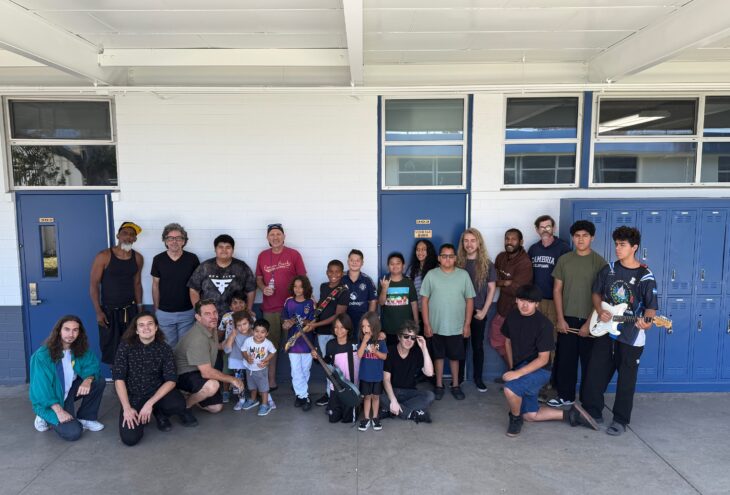
But music was Moss’ true passion. Having attended high school with Norwood Fisher, founding member and former bass player for underground legends Fishbone, he’s a friend to some of the world’s most legendary musicians. Fisher, Moss, and Flea of the Red Hot Chili Peppers were hanging out one day when they dreamed up the idea of a youth conservatory in Watts. They piloted the program at Markham Middle School where Moss had built his own nonprofit summer camp. There, they taught 50 students per season how to play, culminating in a live performance.
After three years in existence, COVID hit and everything shut down. The search began for a permanent location. Red tape and other factors prevented them from continuing the mission. After numerous starts and stops, they approached Verbum Dei Jesuit High School. The high school’s principal and president of the board immediately got the vision and handed over the keys to a few classrooms.
Although Flea no longer works with the school, Fisher remains closely involved with the institution. Drummer Stephen Perkins of Jane’s Addiction is a board member. So is Becki Barabas, who works for speaker manufacturer JBL, and Julie Harelson, who has been with Moss since the Harold Robinson days. Fernando Pullum, the brains behind the eponymous Fernando Pullum Community Arts Center, is one of the teachers. All the pieces had finally come together.
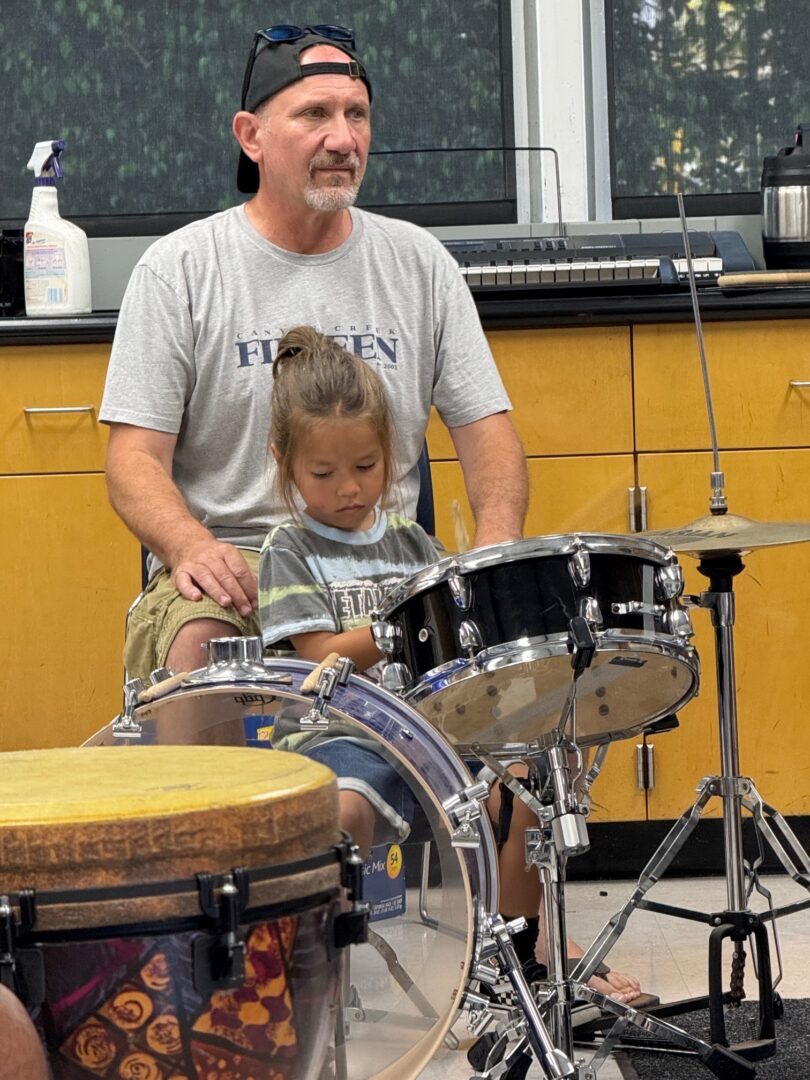
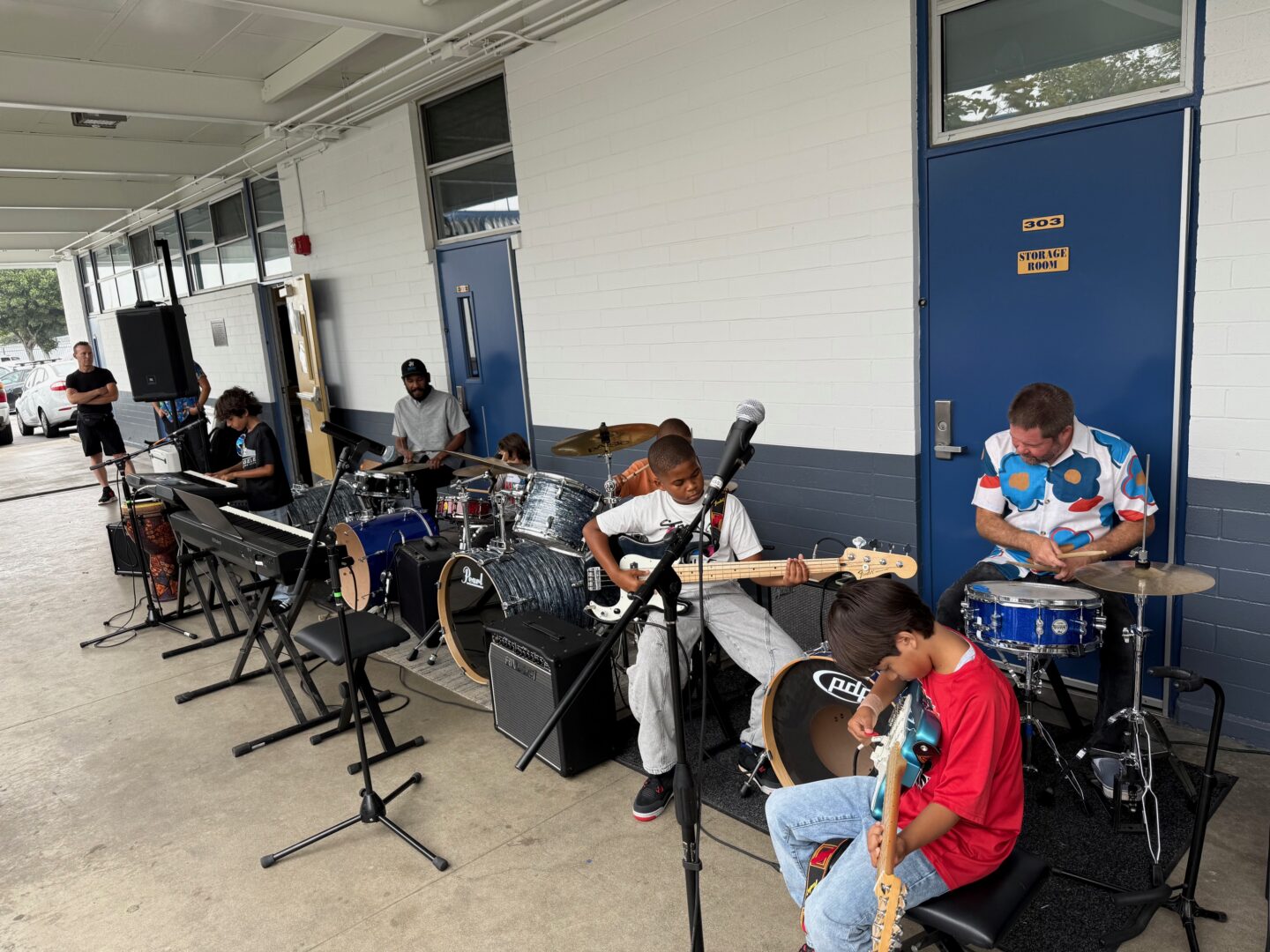
The school officially opened in June of last year. Enrollees are between five and 17 years old. Adults are welcome to attend, though they haven’t had any such pupils to date. WCM currently offers instruction in bass, guitar, drums, and keyboards, though there are plans to expand. Lessons take place on Tuesdays, Wednesdays, and Thursdays between 4 and 7 p.m., with each session lasting approximately 45 minutes.
While group lessons are most common, everything remains flexible. Private instruction remains a possibility depending on who shows up. Occasionally, the teachers revert back to focusing on music appreciation. “We’re finding that a lot of these kids aren’t super familiar with music,” discloses Moss. “They know, like, two songs. So we’ll put on Sly and the Family Stone or Parliamentfunkadelic or Jimi Hendrix.” They’ll tell the students to pay attention to the parts that match their chosen instruments. Children may be asked to follow the beat and raise their hands on the “one.” Says Moss, “We’re focusing on teamwork and how important timing is.”
Plans exist to create lessons for the under-five demographic, which will likely concentrate on rhythmic clapping and drumming. Little ones lack the size, strength, and cognitive development to play most instruments but love foot stomping. “We have a great teacher named Louis Oliart,” praises Moss. In addition to being an instructor, he’s a professional singer and guitarist who has been entertaining terminally ill children for 22 years. Continues Moss, “He’s incredible with the kids.”
In most cases, the instruments stay put, though exceptions are made. Moss tells the tale of one shy learner he let take away a bass, provided he brought it back. “It is absolutely our goal to let kids take instruments home,” Moss declares. “But we’re not quite there yet.” They’ve had many donations not just from individuals but also manufacturers including Fender, Schecter, and DW. Moss is particularly thankful for the guitars, basses, and amps that The Guitar Center Foundation has gifted. The dream of letting every young scholar go home with an instrument may soon be a reality.
The school is accepting of everyone regardless of gender identity, race, or ethnicity. There are even accommodations toward students who exist on the autism spectrum. Moss talks about one such attendee who has been greatly impacted by WCM’s teachings. “He couldn’t count and play at the same time,” recalls Moss. “So we got him to stop counting. We said, ‘Just feel it.’ Three or four weeks in, he’s going, ‘One, two, three, four…’ I’m like, ‘Dude, you’re counting and playing.’ His face lit up. ‘Yeah, I am.’ ‘You just had a breakthrough.’ ‘Yeah, I had a breakthrough.’”