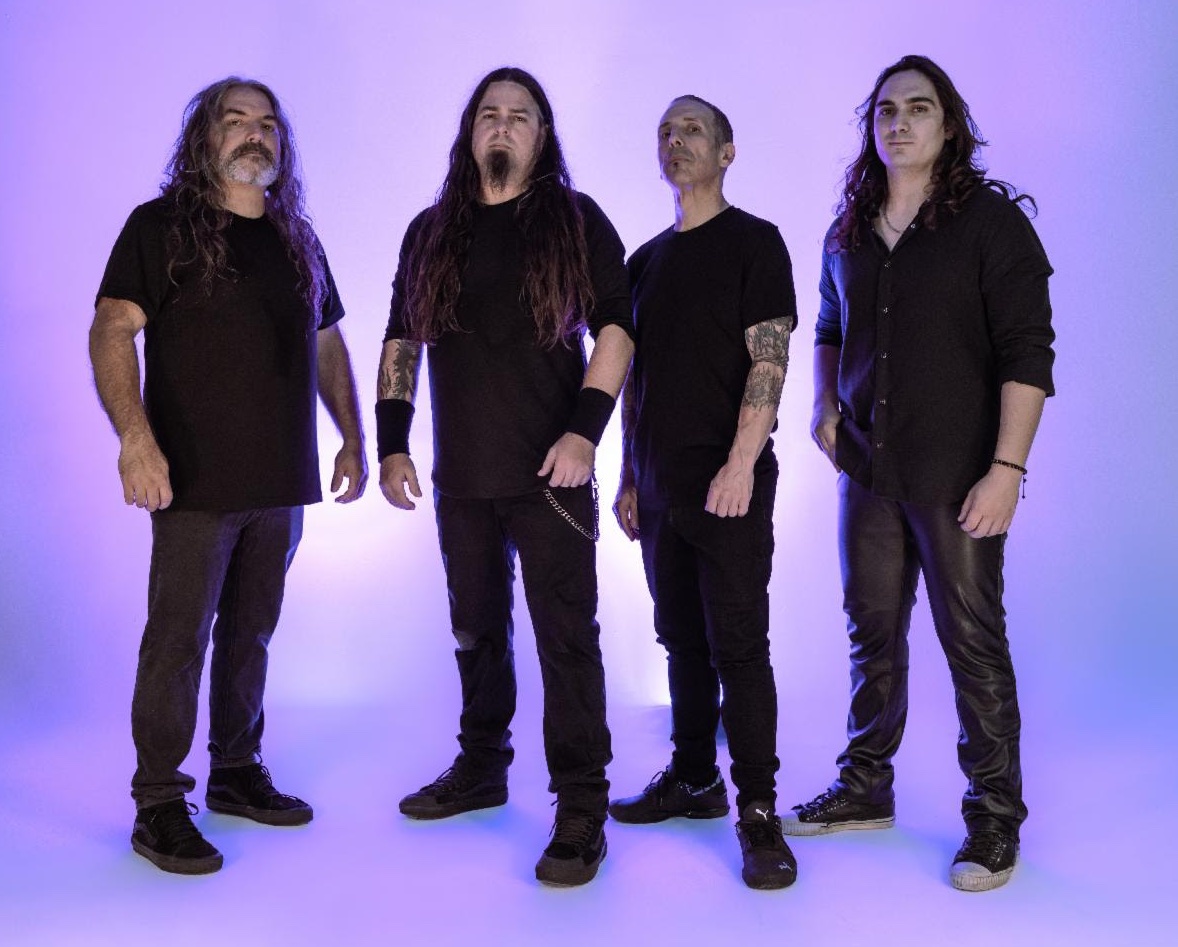

The Members: Russ Rankin, vocals; Luke Pabich, guitar; Chuck Platt, bass; Sean Sellers, drums.
The Origin: Emerging through the brume of Santa Cruz’s oft-overlooked yet resolutely alive, wave-to-wheel punk scene, Good Riddance carved out a reputation for fast, defiantly disciplined, melodic hardcore. From the start, the band’s style thrived beneath the coastal fog and on the hard concrete skate streets, eventually catching the attention of Fat Mike (Mike Burkett) of the ever-influential NOFX and founder of the punk label Fat Wreck Chords.
This partnership proved pivotal. Good Riddance’s first album, For God and Country, paired Russ Rankin’s pointed lyricism with the band’s precise chord attacks and tightly wound rhythms. Their official debut with the independent powerhouse helped launch the band into wider prominence, solidifying their place within the label’s intense, loyal following and earning them recognition as one of the most influential fixtures in the punk scene. Over the years, across nine full-length releases and spurts of constant touring, the band’s razor-sharp musicianship and incisive prose have created a dynamic soundscape that is as explosive as it is thoughtfully observed, marked by keen societal insight.
Now, with the release of their tenth album, Before the World Caves In, Good Riddance channels decades of punk heritage to deliver a dark, strident set of songs. Rankin discusses the creative approach and methodology behind writing thematic material and refining the band’s latest body of work.
The Production: While the new release leans into shadowed, caustic energy, its tone and intensity are the product of careful cultivation, even as the band’s raw power drives the music forward. Every release begins with a familiar yet evolving, deliberate process: Rankin first identifies core lyrical themes, which become the structural spine — the ‘rebar grid’ — upon which each song is built. From there, he lays down guitars, bass, and vocals in Logic Pro.
“Early stages saw me thinking about what kind of theme or feel I wanted to shoot for the album as a whole,” He continues, “Once that was done, I began writing the songs, rendering more or less complete demos. I go track by track — rhythm guitars, leads, bass, vocals, harmonies — until the song feels fully formed.
These first-phase demos are then shared with the rest of the band, allowing each member to rehearse, refine, and internalize the material. “Only the songs that all three of them were enthusiastic about went into the hopper. “If even one guy was like ‘meh – maybe,’ I’d toss that song,” Rankin says. At the same time, the tracks are sent to longtime producer Bill Stevenson — the drummer known for Black Flag and Descendents — at his Colorado-based recording studio, The Blasting Room. Having worked together for years, the band has developed a near-telepathic understanding with him, often anticipating many of the changes he might suggest and streamlining their studio time.
“Between demoing and all of the rehearsals, there wasn’t really much that we needed to change once we got out there,” Rankin explains.
By the time the band arrived at The Blasting Room, much of the structural composition had been mapped out. Rather than discovering the songs in the studio, Good Riddance arrived with arrangements refined through rehearsal and pre-production. The sessions instead became a place to strengthen performances and capture the specific energy the band wanted to achieve, helping them fully realize the “dark, strident, angry” character they envisioned for this release.
This process — from thematic planning to structural foundation — still left room for purposeful elaboration even after the drums were tracked. As Rankin describes, “Once the drums are done, it’s a free-for-all. Everyone is kept regularly busy.” He adds, “There are scratch instruments along with the drums that I could sing to, so I didn’t have to wait until the end. This way is great because there’s never just one person being hammered on while two other guys are bored out of their minds.”
Stevenson’s role goes beyond engineering. “Bill is great for our band because he’s an adept and exacting engineer and producer… It’s more about his knowledge of how we work and how best to motivate each one of us to get the best performances. He is the Final Word, and we all defer to him; in case there are any disagreements or musical crossroads, he can steer us in the right direction, we follow his lead.”
Rankin also notes the importance of working with a meticulous studio team dedicated to achieving top-tier results. “When you record at The Blasting Room, you’re getting Bill, but you’re also getting a whole team who go to work on your project like a well-tuned machine.”
This combination of pre-production, rehearsal, and focused studio work creates a cohesive workflow while still leaving room for energy and spontaneity. “I was able to knock out two or three songs a day without losing my voice, which was fantastic,” Rankin says. Additionally, once tracking wrapped, longtime collaborator Jason Livermore handled the mixing, sending rounds of audio to the band for feedback until everyone was satisfied. This final layer of polish ensured the band’s energy, intensity, and precision fully translated to the final recordings.
In the end, the process mirrors the same tempered planning that has defined Good Riddance since their earliest days: lyrical themes are mapped, melodic structures and blistering speeds reinforced, and performances sharpened until fully realized. The result is a release that cuts through coastal fog, delivering fast, focused, and emotionally charged catharsis for the punk community.
Photo Courtesy of Big Picture Media