“Few artists have influenced both jazz and dance music the way Ronnie Laws has.” – SoulTracks.
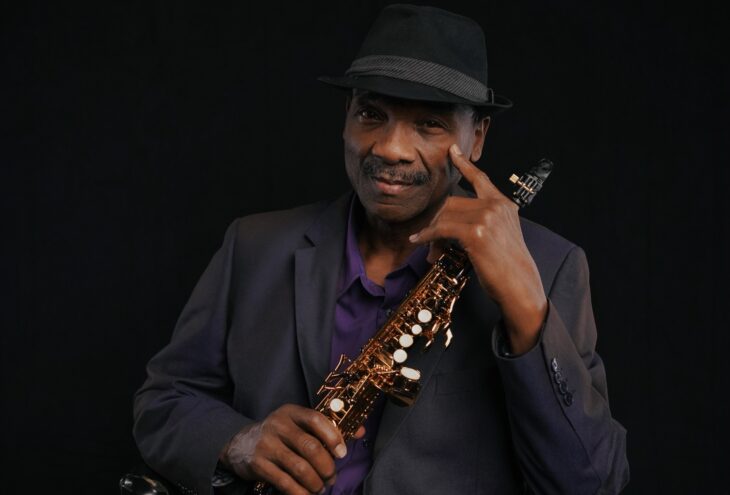
Ronnie Laws — saxophonist, composer, producer, and musical visionary, stands as one of the most dynamic and influential figures in modern music. With a career spanning more than five decades, Laws has redefined the sound of contemporary jazz, funk, and soul, creating melodies that became the blueprint for much of today’s popular music.
“Ronnie Laws defined the sound of modern jazz-funk and created the melodic foundation for what became house music.” – Contemporary Music Journal
Ronnie is being honored on May 2, 2026 at the Edison Arts Foundation’s Tutus & Tuxes Gala in Houston. It’s an evening gala recognizing him as a Houston-born saxophonist and celebrating his contributions to jazz, soul and contemporary instrumental music. The nonprofit operates the Robert & Bertha Edison Cultural Arts Center, a major cultural hub serving the Houston and Fort Bend County communities. The evening recognizes “Super Heroes for the Arts,” honoring artists whose work has had a lasting impact on music and culture. The event is being organized by Crystal B. Edwards, who is coordinating the tribute and the honorees for the evening.
From his Houston, Texas roots under his mother Miola Laws’ spiritual guidance to his legendary Blue Note recordings, Laws has bridged worlds fusing melody, rhythm, and spirit in ways that shaped the evolution of popular music. Today, he remains a living blueprint of innovation, inspiration, and creative legacy.
“My history with Houston is so deep,” underlined Laws in a March 2026 interview I conducted with him.
“My mother and father and whole family are part of the journey. My sister Eloise introduced me to Kenny Rogers when I was like 13 years old. She was a background singer with Kenny Rogers. Late sixties. Kenny was doing the whole club circuit in Houston. I was self-teaching myself on alto saxophone.”
Laws grew up in a deeply musical household guided by his mother, Miola Laws who was a choir director and organist whose love of gospel, harmony, and spiritual expression shaped the creative foundation for her children.
From that nurturing environment came one of music’s most talented families including Hubert Laws, Eloise Laws, and Debra Laws. Each of whom has made significant contributions to jazz, R&B, and popular music.
Surrounded by world-class musicians, Ronnie discovered not just his talent, but his calling a passion for melody and performance that would define his life’s journey. After high school he attended Stephen F. Austin State University in Nacogdoches, Texas for two years
“Before I moved to LA in late 1970, into my sisters’ place in Inglewood, in the summer times in my mid-teens I would hang out with my brother Hubert in New York and New Jersey and go to all of his recording sessions. That is where I first met Quincy Jones. I was at the dates for Walking in Space [the 1969 studio album collaboration by Quincy Jones with producer Creed Taylor.]
“All the guys were there in front of me and I’d sit there and watch Roland Kirk, Jerome Richardson, Ray Brown on bass, Paul Griffin, Freddie Hubbard, Hubert on flute and tenor sax and Benny Golsen, was there at [engineer] Rudy Van Gelder’s studio in Englewood Cliffs, New Jersey. There would be lunch breaks at a local delicatessen.”
In 1971 Ronnie Laws immersed himself in the L.A. music scene, receiving formative training with jazz pianist Walter Bishop Jr.
Bishop in the very late forties was part of Art Blakey’s band and recorded with Stan Getz and Milt Jackson. In the fifties he played with Charlie Parker and Miles Davis. During the sixties Bishop moved to Los Angeles and was a popular music theory instructor.
“When I came to Los Angeles, I did a lot of freelancing and trying to get established in the music circles. Session work. Walter heard about me and we connected, and he brought me on board on what he was doing. Walter was a mentor. So were the Crusaders’ Joe Sample, Wayne Henderson, Donald Byrd, Hugh Masekela and Maurice White.
“My brother Hubert recommended me for my first professional gig in Los Angeles in 1971 a big Quincy Jones concert with Roberta Flack at the Greek Theater. I subbed for Pete Christlieb in the horn section because for some reason he couldn’t make the gig. And I ended up being in the saxophone section with Ernie Watts, Hubert, Tom Scott and Jerome Richardson. I was like 21. My first big Los Angeles debut and having the privilege of being part of that concert.
“I also had the privilege as my first solo appearance when I opened for B.B. King around the same time at The Coconut Grove for four nights. As a little kid, my mother would play B.B. King and Muddy Waters in our home. B.B. King and I became very good friends. A beautiful man aside from his talent.”
Laws then joined Earth, Wind & Fire. He’s on 1972’s Last Days and Time from Columbia Records.
“That came from a connection with Doug Carn of the Black Jazz label with Walter Bishop Jr,” recalled Laws. “They had a relationship. Maurice White heard I was in town, and put the word out he was looking for a saxophone player. Doug recommended me. When I hooked up with him, Maurice had a vision a little different than the traditional R&B. Not a full horn section, just one horn. ‘That’s it.’ ‘Cool.’ Larry Dunn was there, one of the guys from Denver, along with Philip Bailey. Larry was 17.”
In Earth, Wind & Fire, Laws’ tone and melodic sensibility became part of the band’s early foundation. During those sessions, he composed the melody to “Power” in a single inspired take. Though founder White invited him to remain with the group, Ronnie Laws chose to pursue a solo vision that soon elevated him to international acclaim.
After leaving Earth, Wind & Fire, Laws toured with South African trumpeter Hugh Masekela. An experience that broadened his global perspective and introduced new rhythmic influences.
“My friend trombonist Wayne Henderson toured with Hugh as a drummer. Hugh was looking for a sax player and I auditioned. And I had to learn two albums of material in one long day. He was impressed and I got the job. And, as you know, a sax with Hugh is the front line. Very intricate parts. When I was with Hugh, he gave me his full life story. Growing up in South Africa. I had the first-hand experience with him. We became very close. I loved him dearly. He gave me so much love. I was the only married guy in the group and he treated me differently (laughs)…Even in high school I loved Hugh’s records. I would tell my classmates ‘One day I will play with him.’”
Laws did freelance work with multi-instrumentalist/pianist/organist Doug Carn, best known for his 1971-1973 classic albums on the Black Jazz label, and provided sax and flute when he recorded with singer/songwriter Gene Daniels, the former Gene McDaniels, when he was signed to Ode/A&M Records for the 1973 album Natural Juices.
The major breakthrough for Ronnie came with Blue Note Records after being championed by Donald Byrd, leading to the release of Pressure Sensitive (1975), produced with Wayne Henderson of the Crusaders. The album featured the timeless hit “Always There,” which propelled the album to marking the first solo artist Gold album in Blue Note records history. And giving rise to a timeless anthem that continues to inspire generations of musicians and producers across jazz, funk, hip hop, and electronic dance music.
Ronnie Laws’ creative partnership with drummer and jazz musician/composer William Jeffrey also produced defining albums such as Friends & Strangers, Every Generation, and his sister’s Debra Laws’ album Very Special, blending soul and sophistication in equal measure.
“As a kid anything that came out on Blue Note label I wanted to have and went to the record store,” emphasized Laws. “They were an iconic label.”
Laws albums on Blue Note, distributed by United Artists, established him as a major player: Pressure Sensitive (1975, Blue Note), Blue Note Live at The Roxy (1976, Blue Note), Friends & Strangers (1977, United Artists), Every Generation (1980, United Artists).
“[Tenor saxophonist] Eddie Harris would come see me and sit right in the front row when I performed at the Roxy Theatre. That was the highest compliment. He and his wife were there when I did a live Blue Note event. He was one of my heroes and I was sweating because I knew I had to bring it.”
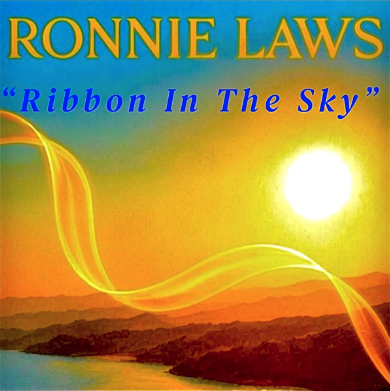
David Chatfield’s Harmony Records in March 2026 has released a breathtaking reimagining of Stevie’s 1982 classic, “Ribbon In The Sky.” Ronnie Laws joins forces with an all-star cast—including Stevie Wonder, Howard Hewett (Shalamar), Larry Dunn (Earth, Wind & Fire), and Debra Laws. Laws is joined by lead vocalists Debra Laws and Howard Hewett with writer and arranger Stevie Wonder on harmonica along with featured artist Larry Dunn on synthesizer and keyboardist Rob Mullins. Production and engineering on “Ribbon In The Sky” is by co-producer Laws, Craig T. Cooper, and mixing engineer Mecca Agoh. David Chatfield served as co-mixing engineer, digital editing engineer and mastering engineer.
A deeply personal tribute to Ronnie’s late wife Karmenel, the single has already ignited a wave of organic momentum, amassing nearly 500K video viewsacross social media. The release features two distinct mixes: a radio-ready main version (3:29) and an immersive extended version (6:09) showcasing additional solos.
DSP Stream Link: https://orcd.co/ronnie_laws_ribbon
In our interview, I asked Ronnie about why he decided to cut a version of Wonder’s “Ribbon in the Sky" that was first featured in 1982 on the greatest hits album, Stevie Wonder's Original Musiquarium I.
“First of all, I love Stevie’s body of work. I speak for millions. That particular song had a special meaning and connection to my wife and I. Like an anthem in our marriage. When she passed it had a deep emotional attachment with it. That’s why I decided to do that as a tribute to her. Stevie is a very close and dear friend of the Laws family. We’re like brothers.
“I reached out to him and told him I wanted to a remake as a tribute to her. He said ‘let me know when you want to do it,’ and added ‘I can’t do a vocal part but I can put harmonica on it.’ So, that’s how it happened. Larry Dunn has always been part of my projects. Larry is my family. I reached out to Howard Hewett as I was thinking a male and female vocal situation. Decades ago, I was featured on his album that George Duke produced. I thought of doing the vocal part. Howard and I were on some concert packages together back in the day. I brought my sister Deborah back on board.
“The initial track was put together by Craig T. Cooper at his studio and we sort of took it from there. Stevie did his harmonica at his studio in Hollywood. He called me on a Sunday and said ‘I’m on my way to the studio.’ ‘I’ll be there, man.’ I came over and we sent the whole day. It was beautiful.”
Over the last 42 years, you’ve heard Ronnie’s saxophone for many recording artists on the radio, on disc or streamed including the Ramsey Lewis album Les Fleurs, and Deniece Williams’ Let’s Hear It for the Boy.
Laws also made guest appearances on Howard Hewett’s Forever and Ever, and Earth, Wind & Fire’s Millennium. He is on Hubert Laws’ My Time Will Come, and the Crusaders’ 2006 live album Alive in South Africa.
Laws performed on the Guru hip hop and jazz album Jazzmatazz, Vol. 4: The Hip Hop Jazz Messenger: Back to the Futureand contributed to musician/producer Brian Culbertson’s Bringing Back The Funk.
With a catalog sampled over 270 times and counting, Ronnie Laws stands as one of the most quietly influential architects of modern music. His melodic structures, signature horn voicings, and rhythmic sophistication have been mined, reshaped, and reintroduced by hip-hop producers, neo-soul artists, and contemporary jazz innovators for decades.
Signature compositions such as “Always There”—now widely regarded as a modern jazz standard and a staple in live performance repertoires, jam sessions, and conservatory study, have been reinterpreted by countless jazz artists across the globe. Alongside works like “Friends & Strangers,” “Tidal Wave” (sampled by Usher and reimagined by Butcher Brown), and “Very Special” (created with Debra Laws and later reinterpreted by Mary J. Blige and Jennifer Lopez), these recordings have cemented Ronnie Laws’ influence across generations and genres.
During our conversation we discussed sampling. “I consider it a complement when a sample is requested,” underscored Laws.
“They are looking at your body of work and heard something they appreciate and like. The motivation for doing that. On the other hand, it is a tool for exposure. My only critique is the intent and motivation in writing has to be done right. I consider it a complement as long as it is done with respect. And there are financial benefits that come with it as well. That’s secondary to me. The music has always got to be handled with respect. That’s what it is all about.”
In 2026 Laws plans to continue working with David Chatfield and his Harmony Records collaborating on more songs. “In the future 80 percent of my time will be setting up my own podcast. It will be a very broad platform interviewing people I’ve interacted with and sharing my history.”
From jazz-funk and classic R&B to hip-hop and neo-soul, his musical DNA continues to circulate through today’s soundscape. Making it an enduring testament to an artist whose work does not merely endure but continually renews itself.
“His tone is pure, his grooves timeless.” – JazzTimes.
Official Website: http://www.ronnielaws.com
Facebook: https://www.facebook.com/lawsronnie
Instagram: https://www.instagram.com/ronnielaws
YouTube: https://www.youtube.com/@RonnieLawsOfficial
Apple Music: https://music.apple.com/us/artist/ronnie-laws/1006075
Spotify: https://open.spotify.com/artist/4yh5g0DWkL6kRlCH1FPAvC
(Harvey Kubernik is the author of 20 books, including 2009’s Canyon Of Dreams: The Magic And The Music Of Laurel Canyon, 2014’s Turn Up The Radio! Rock, Pop and Roll In Los Angeles 1956-1972, 2015's Every Body Knows: Leonard Cohen, 2016's Heart of Gold Neil Young and 2017's 1967: A Complete Rock Music History of the Summer of Love.
Sterling/Barnes and Noble in 2018 published Harvey and Kenneth Kubernik’s The Story Of The Band: From Big Pink To The Last Waltz. In 2021 they wrote Jimi Hendrix: Voodoo Child for Sterling/Barnes and Noble.
Otherworld Cottage Industries in 2020 published Harvey’s Docs That Rock, Music That Matters. His Screen Gems: (Pop Music Documentaries and Rock ‘n’ Roll TV Scenes) was published on February 6, 2026 by BearManor Media.
Harvey spoke at the special hearings in 2006 initiated by the Library of Congress held in Hollywood, California, discussing archiving practices and audiotape preservation.
In 2017, he appeared at the Rock & Roll Hall of Fame in Cleveland, Ohio, in its Distinguished Speakers Series and as a panelist discussing the forty-fifth anniversary of The Last Waltz at the Grammy Museum in Los Angeles in 2023.
During 2025, Kubernik was interviewed in the Siobhan Logue-written and -directed documentary The Sound of Protest,airing on the Apple TVOD TV broadcasting service. The film also features Smokey Robinson, Hozier, Skin (Skunk Anansie), Two-Tone's Jerry Dammers, Angélique Kidjo, Holly Johnson, David McAlmont, Rhiannon Giddens, and more.
Harvey was an interview subject along with Iggy Pop, the Beach Boys’ Bruce Johnston, Love’s Johnny Echols, the Bangles' Susanna Hoffs, Victoria and Debbi Peterson, and the founding members of the Seeds for director/producer Neil Norman’s documentary The Seeds: Pushin' Too Hard. In summer 2026, GNP Crescendo will release the film on DVD/Blu-ray). Author Miss Pamela Des Barres narrates.