In May 1969, while psychedelia was peaking, Crosby, Stills & Nash’s self-titled debut quietly redefined rock with its flawless three-part vocal arrangements, sharp lyrics, and intricate, acoustic-driven songs. Today, new audiophile editions are available on reel-to-reel and vinyl from Rhino High Fidelity.
Crosby, Stills & Nash (Rhino High Fidelity R2R) was duplicated in real time from a 1:1 copy of the original flat analog master tape. The result is a master-quality listening experience that captures the full dynamics of the recording. The 15 i.p.s. half-track 1/4” tape is produced to the IEC equalization standard on premium RTM LPR90 tape stock and stored on a 10.5” metal reel. The Reel-to-Reel edition is limited to 500 copies worldwide and available exclusively at Rhino.com.
Crosby, Stills & Nash (Rhino High Fidelity) was cut from the original master tapes by Kevin Gray and pressed on 180-gram black vinyl at Optimal in Germany. It comes in a glossy gatefold sleeve with newly edited liner notes. The album is limited to 5,000 individually numbered copies and available exclusively at Rhino.com and select Warner Music Group stores internationally.
“To listen again to Crosby, Stills & Nash’s self-titled first album is not so much to take a trip back in time but a voyage into timelessness,” author Raymond Foye wrote in the album’s liner notes. That transcendent quality was forged under great secrecy at Wally Heider Studios in Hollywood, where the group imposed a strict no-visitors policy while tracking with engineer Bill Halverson. The music from those intense sessions helped define an era, delivering some of CSN’s most legendary tracks like “Suite: Judy Blue Eyes,” “Long Time Gone,” and “Marrakesh Express.” A few weeks after the album was released, the trio took these songs to the stage for their historic live debut at Woodstock, performing for half a million people.
After peaking at #6 on the Billboard 200, Crosby, Stills & Nash went on to sell over four million copies in the U.S., and in 1970, helped the trio win the GRAMMY® Award for Best New Artist. The album was inducted into the Grammy Hall of Fame in 1999 and ranks among Rolling Stone’s list of “The 500 Greatest Albums of All Time.”
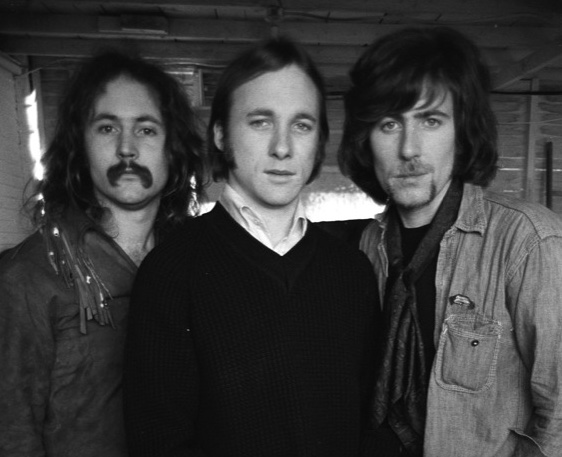
My dear friend, collaborator, and neighbor in Southern California, Henry Diltz, in February 1969, took photographs at graphic artist Gary Burden’s house in West Hollywood of the CS&N members, and Henry snapped their front cover album picture just before they agreed on a name for their group.
The resulting portrait on the front sleeve, left to right, parades Nash, Stills, and Crosby in the reverse lineup of the subsequent LP title.
The location was an abandoned house in West Hollywood at 815 Palm Avenue. Following the shoot, the outfit finally settled on their name, Crosby, Stills and Nash. Immediately afterwards, they had some concerns about the selected cover image, and quickly went back to the same house to re-shoot the cover but this time in the correct order. When everyone arrived for the re-scheduled session, the house had already been leveled.
In the last week of August 1969, my brother Kenneth and I sat up front at the Greek Theater in Los Angeles. We’re teenagers, but even we recognize that this particular concert has a gravity that distinguishes it from previous rock 'n' roll shows we’ve attended, where little was at stake beyond experiencing a dizzying euphoria. This night's music insisted on our undivided attention, that we sit up and listen, really listen.
A beguiling young singer/songwriter from Canada strolled onstage. Accompanying herself on guitar, Joni Mitchell's unerring command of mood, of tempo, of temperament, her reverence for the deeply personal as a means to explore the universal, showcases a talent of a higher order. The audience was now suitably primed. She was followed by the headliners, fresh off a tumultuous success at Max Yasgar's upstate New York farm - Crosby, Stills, Nash and Young.
What Ken and I recall most clearly were, of course, those exquisite vocal harmonies; the finely-wrought arrangements, as well-calibrated as an Oyster Rolex; all those gleaming guitars - acoustic and electric - lined up like a phalanx of artillery ready to rumble; Neil, sitting at a Hammond B-3, smearing chords while "Sea of Madness" crackled like thunder.
We’d seen Neil Young and Stephen Stills on April 29, 1967 in the Buffalo Springfield, once with them opening for The Supremes (!) at the Hollywood Bowl.
In June 1966, Nash and the Hollies met the Mamas and the Papas. After a Hollies’ press party event was held at Imperial Records. Rodney Bingenheimer invited Graham Nash to attend a nearby Mamas and Papas recording session of “Dancing Bear” at Western Reorders on Sunset Boulevard. Graham then met and talked at length with group member Cass Elliot.
During September 1966, Cass Elliot introduced the Hollies to the Lovin’ Spoonful in New York. Henry Diltz was shooting the Lovin’ Spoonful, and he did a Hollies’ photo session which became Henry’s second album cover The Hollies-For Certain Because.
In February 1968, the Hollies played a special Saint Valentine’s night gig at Hollywood’s Whisky a Go Go.
Owner Mario Maglieri at the Whisky let me in to take a quick peek when Micky Dolenz introduced the show. I was underage, and then politely escorted away from the venue. Stills and Crosby were in the audience. On April 27, 1968, Crosby subsequently connected Nash to Stephen Stills, and then Crosby, Stills and Nash were formed.
By the end of 1968, the Hollies’ co-founder and co-lead vocalist Graham Nash took leave, content to consider his future from the restorative oasis that was Laurel Canyon.
With Crosby and Stills, they unleashed a musical juggernaut that has, for fifty years, remained an ineffable presence in the cultural firmament. Given the grandiosity of his partners’ personalities and the swirl of melodrama that attends them, Graham Nash’s quiet dignity stands out like a beacon of sanity in a sea of madness.
Graham is a gentleman and a candid interview subject.
In September 2013, Nash published his autobiography Wild Tales: A Rock & Roll Life by Crown/Archetype.
Graham and I were guests on the National Public Radio series World Café examining the history of Laurel Canyon, and we were also spotlighted on the BBC Radio 4 program California Dreaming, Laurel Canyon.
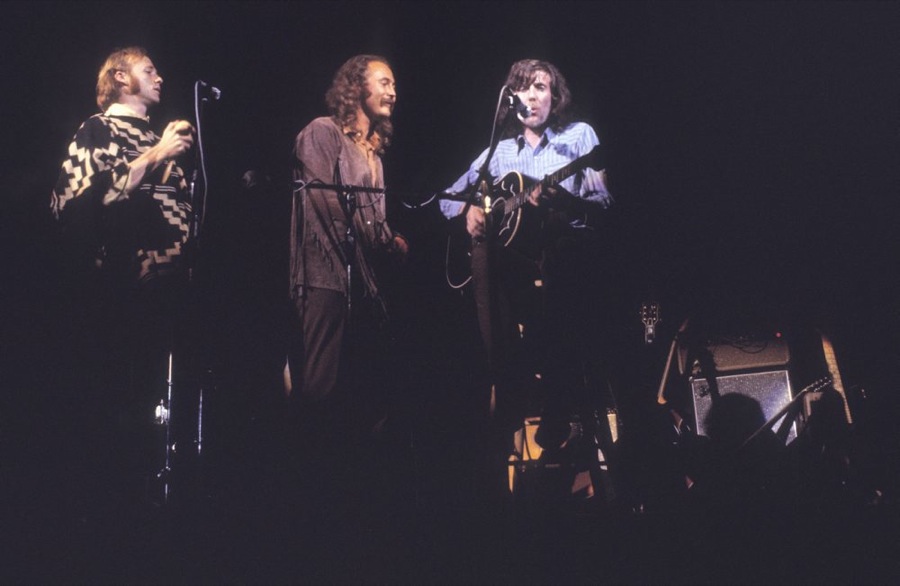
The Graham Nash Harvey Kubernik 2008 Interview
Q. 1969. How was it for you? Where were you living and whom were you hanging out with?
A: I think that my time with the Hollies was done. I knew that instinctively. That was a little tense. I left them on December 8, 1968. On December 10th I was in Los Angeles with David (Crosby) and Stephen (Stills). I ended up at Cass Elliot’s house. Cass’ house was kind of a central point for a huge amount of very bright and very colorful people. Basically, I was hanging out with David and Stephen. And Cass. I didn’t know many people. I knew Henry Diltz, since he took photos of the Hollies in 1966. In terms of friends, I only really had David, Stephen and Cass. And Elliot (Roberts), probably.
Q: And how did it feel being the only Brit in a group with two Americans?
A: I felt pretty good about it. Because, you know, I have a descent sense of humor and I have a descent understanding of how the universe works. And I was faced by these two, and they really were Americans. Crosby was so fucking American. American attitudes. American ego. And Stephen was the same. I must say, I was completely bold over. I admire Stephen and love him dearly, but Crosby is a different animal on this planet. And I recognized it from the very first moment I ever met him. Which of course was through Cass. I was with two real Yanks. Absolutely. I was with two Americans of doom.
I felt fantastic. I know that because of the British invasion and what British music was doing to the American scene, and how admired British groups were by American groups, I felt pretty confident in myself. You know, I happen to believe, and this is not ego talking, I’m pretty good at what I do.
You gotta understand. David, Stephen and I came from harmony bands. I mean, we were harmony freaks. So, although, as I’ve said before, CS&N never had any claim on any of the notes that we sang. It’s just when that sound happened it was instantly recognized by me, David and Stephen as something stunning.
Q: Is it true Rodney Bingenheimer, then writing a music column for a local paper, invited you to a Mamas & Papas recording session at United Western where you met the group? There was a Hollies promotional event, I think at the Whisky. Right?
A: I went with Rodney to see if I could see Michele. But Michele, Denny (Doherty) and John (Phillips) were doing an overdub in the studio, and Cass was outside the studio. I started talking to Cass. She asked me what John Lennon would think of the Mamas & Papas music. ‘What would he think if us?’ And I said, well, knowing John a little, I mean, who did know John, I’d known him since 1959. I told Cass that he would probably put you down at first. And keep you at arm’s length until he said something funny or something bright. ‘OK. I can let my guard down and let these people into my inner circle.
So, I told Cass he’d put them down and not praise them. She started crying…After I had consoled her from crying from my response to her question about John, I didn’t realize that Cass had a big crush on John. Not only did she admire him and love his music. She loved something about him. I didn’t know that. So, when I answered her she started crying. And, I’m going holy fuck. Not the way you want to get off with somebody.
So then in the hallway down there at United Cass said, ‘what are you doing tomorrow?’ “Well, I don’t think we’re doing much.’ We were staying in Hollywood at the Knickerbocker Hotel. And she picked me up around noon in her convertible Porsche. I said, ‘where we going?’ ‘We’ll be there in five minutes. Don’t worry.’ And drove me up to Laurel Canyon and I met Crosby. And once again, my life has never been the same.
It not lost on me that you can be in Laurel Canyon from Hollywood in 5 minutes. Not like in England, where it’s 90 minutes that’s to get to the nearest bus stop. So, I was in heaven. I was free. My first wife and I were getting divorced. I had already separated from Rose. I was a free man. And I must tell you that I took to the Laurel Canyon scene like a duck to water. It was just amazing to me that these bunch of people would be living in this kind of very rural area.
I just felt so free. And more importantly, I felt appreciated. And that goes a long way with me. If you know what it is I can do and you appreciate that, I feel a lot better about things. And it seemed to be the Hollies’ reputation in the Laurel Canyon scene was a big one. I gotta tell you, I spent the first ten years in America kind of trying to separate myself from the Hollies. You know. In all truth, it was a great band. The Hollies were a great band. Somebody just gave me a 60 track CD of the Hollies on the BBC. And, obviously, radio, one take, live, mixed to live for the radio, no second chances, no overdubs later. Completely live. Unbelievable. Bobby Elliot is a fantastic drummer.
Q: What was it like quitting the Hollies and quitting England to pursue this new musical project?
A: A lot of people used to say to me, ‘you’re leaving the bloody Hollies?’ ‘Are you fuckin’ crazy? ‘All those hit records, money and that stuff. They had not heard what I had heard.
Coming to Los Angeles after leaving the Hollies was a geographic re-birth. I think so. I remember the first time I ever came to Los Angeles. It was paid for by Cass. And it went like this. The Epic Records contract with the Hollies was coming up and completed. Cass knew this and she figured that Lou Adler, through his Ode label would want to meet with us. So, Cass paid for first-class tickets for all the Hollies to come to Los Angeles. I get out of the plane, walk down the ramp, leave the United Airlines terminal, and climb the nearest palm tree. And I remember thinking to myself, ‘I’m never going back.’ I just decided for some reason, whatever consciousness is running this planet wanted me to be in Los Angeles. And I was gonna take full advantage. And I wasn’t quite sure what was going on, you know, what my future would entail. But I trusted myself. Because my parents always told me and taught me to trust myself.
I discovered Henry Diltz through Cass and the Lovin’ Spoonful through Cass.
So, pursuing this new musical project, I was in heaven. I’m a musician, first and foremost. I’m a believer in beauty. I’m a believer in the fact that truth and justice will prevail in the end. I’m a believer in all that. I never expect anything. I had friends whose fathers went away to work and would come home and the fuckin’ house was gone. So, English people probably eat everything on their plate because they never knew when the next meal was gonna come. Years previously, food rationing was just a drag. I never starved. I went hungry often, but I never starved. Bit it was basically bangers and mash. Cheap stuff. A cup of tea would really go a long way to calm you down.
The music always kept me going. I don’t know what I would have done. And I don’t know where the fuck I would be if it hadn’t been for my love of music. And thank God, my mother and father appreciated my passion. Appreciated the fact that I would give up everything to be able to play music. And they supported me in that.
Q: Were they able to be on the physical planet to see your success?
A: Absolutely. My mother and father saw my success with the Hollies. For that I’m glad. My father died in 1966. My mother died 20 years later, and she saw all my success.
Q: And leaving the Hollies, wasn’t it something also where the band passed on material and songs you were presenting that later surfaced on CSN&Y albums.
A: They passed on “Teach Your Children,” “Lady Of The Island,” ‘Marrakesh Express” and “The Sleep Song.”
What happened was that I’d written this song ‘King Midas In Reverse,” probably one of my earliest, real songs. You know, I’m talking about myself. I’m talking about what I think about my life. And how fragile it all is. And although we made a great record of that song, which is the third song in my box set, it kind of failed by their standards. I mean every Hollies song that we made kind of went into the Top Ten. “King Midas” didn’t. And at that point they started to lose their faith in the direction that I personally wanted to take the band.
Q: And you performed “King Midas In Reverse” on debut U.S. tours with CSN&Y. An acoustic and vocal version you did is on the 4 Way Street album.
A: Absolutely. And one of the things that used to upset me, although it’s totally meaningless now, I wrote that song. Nobody helped me with that song. Not a group song. That was mine. I really believed in it.
Q: The “King Midas” record and then “I Used To Be A King” on your solo album debut are almost bookends.
A: Not almost. Exactly.
Q: You also left the Hollies partially because of an album they did of Bob Dylan covers. But I’ve heard you are on a track on the disc.
A: My voice is on “Blowin’ In The Wind.” It’s one of the reasons I knew that my time with the Hollies was up. I mean, totally Las Vegas.
Q: You also had, shall we say, maybe a bit of a lifestyle difference with the Hollies. You smoked pot, and they didn’t.
A: Yeah. We were drinkers in the north of England. And in all of England. Because of the unavailability. What we would do is drink. You’d go down to the pub and see your friends. It became sort of a comfort thing that would be taken to access. Of course, people would get blind drunk.
Q: When did you first see reefer?
A: Let me see…Reefer is different than hash. In England you couldn’t get good grass. It was too hard and too bulky to smuggle. And we were so much closer to the hash- producing countries of the world. So, in England it was mainly hash, and I would smoke that. I had a friend who was a William Morris agent, and we shared an apartment in London and got very high. Never mixed it with tobacco. I never smoked cigarettes so it would kill me to try and put it in tobacco. So, I had a bit of a difference in lifestyle. Yes. I think it pushes you in different directions.
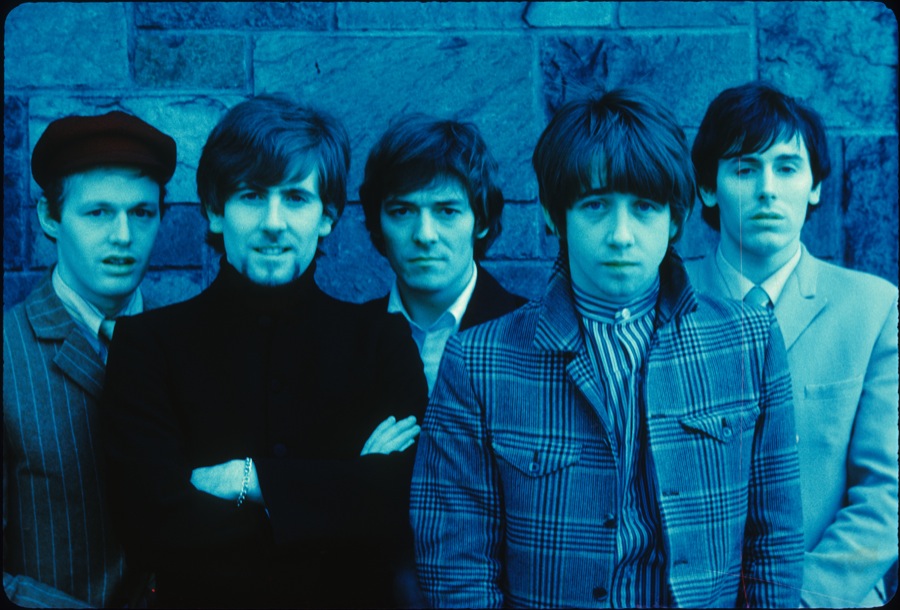
Q: What do you recall about the making of the first CS&N album?
A: Everything. Cass sings on “Pre-Road Dawns.” We found a spot for her to join on us a vocal. “Be sure to hide the roaches.”
“Pre-Road Dawn” starts because of a tuning I had just learned from Stephen that the “Suite” is in from the top strings down. “Four And Twenty” is in that tuning as well. So, I was playing around with that tuning one day at Joni’s house, and I was beginning to realize two things: First of all, she had her own career and she would have to go on the road at some point. Even though we were together right then. And, at some point, this record took off like we knew it was going to do, that we would have to go on the road. And that made me kind of sad. Because I know what the road is. And it can be a lonely place. And so “Pre-Road Dawns” was me feeling down about having to go on the road. We recorded it, and then Stephen said, ‘You know, why don’t we put in roaches and midnight coaches.’ And this is Stephen, which is really unusual because he was not a smoker at all. Crosby and I were the only smokers. He helped me with that chorus. That’s where Cass came in.
Q: Tell me about Wally Heider’s studio in Hollywood that you recorded the debut album in.
A: When I first went in there, I thought. It was small, it was funky. I never met Bill Halverson. We got in Crosby’s Volkswagen van and drove up to the studio and brought our guitars and amps out and started to make the records. We knew that we had fabulous songs. I would never play anybody a song if I didn’t feel two things: One, that it got past me. And two, and I would hope that it would be interesting for you to hear. So, I have those two criteria whenever I’m writing. First of all, it has to get past me. I have to figure out whether the song has a resonate has a reason for existing, and after that, do I want to put this on to somebody else. And the answer to those two questions is yes, then you’ll get to hear the song.
When I first heard ‘You Don’t Have To Cry,” a Stephen Stills song. That’s the brilliance of Stephen Stills, man. When I first heard the “Suite: Judy Blue Eyes,” I couldn’t believe it. As a songwriter and as a performer, I could not believe this song. It was stunning in its composition. It went this way, and then it went that way, then it sped up, then it slowed down and then it peaked. I couldn’t wait to record it. As a matter of fact, when we got to the end of the album, and I think we had mixed three-quarters of it, Stephen comes into the studio and he goes, ‘I wanna re-cut it.’ I said, ‘What?’ ‘Yeah. I’m not sure that we got it.’ Well, forever, I got it. It gets me. If you want to re-cut it, fantastic. Let’s go to it. We spent 22 hours re-recording the ‘Suite’ and never used it.
It’s not lost on me that I am coming from Laurel Canyon into Hollywood to record. And sometimes I would walk from Joni’s house to the studio. I was in heaven. I was a musician making music with incredible people with a bunch of incredible songs and the freedom to keep everybody out of the studio that would fuck it up.
Joni loved Crosby, Stills and Nash as much as we did. She was the very first person on this planet to hear that sound. Just me. We did go and sing for Cass but the very first time was in Joni’s living room.
We knew that we had these songs to do. That if we got as live as possible, and as immediate as possible the very essence of the song down, and the expression is there and the emotion was there, and the slight retards and the slight speeding ups that you need within a piece of music sometimes, once we had that essence down, and we looked at it, and then added more voices to that, and then maybe added a guitar or something it took on a life of its own. This album kind of made itself. We had the songs. We had the energy. We were happy as fuck. All of us, Stephen was going out with Judy (Collins). I was with Joni, and David was with Christine. (Hinton). How better could life be? And Crosby had a lot to do with the best herb. (laughs).
No formal rehearsals before we went into the studio. Our rehearsals consisted of private going through the tune, and then saying, ‘Fuck, let’s go to (Peter) Fonda’s house.’ ‘Fuck. Let’s go to Paul Rothchild’s house.’ ‘Let’s go to Alan Parisier’s house.’ ‘Let’s go and sing them this shit!’ Eventually we could sing that entire album on a couple of acoustic guitars and blow people’s fuckin’ mind.
December 1968, as I said before, I was with the Hollies and by December 10th I was in Los Angeles with David and Stephen. We went to New York to SAG Harbor to our friend’s John Sebastian’s place, and John was being recorded and produced by Paul Rothchild at the time. Which is how I came to be on John’s first record. In fact, John was almost going to be a member. We sang with him. We were in New York and Paul Rothchild was in New York. We had already blown Paul’s mind. Because he was a great record producer and he could really hear a hit. He had one after another of great songs. So he says, ‘Come on. Let’s go into the Record Plant in New York. In December of ’68, CS&N and Paul Rothchild went into the studio and recorded two songs. “You Don’t Have To Cry” and “Helplessly Hoping.” And they’re pretty stunning.
Q: The “Marrakesh Express.”
Q: 1966. I’m in England. I’ve been reading about William Burroughs and Allen Ginsberg with Peter Orlofsky and they’re having a great time. “Boy, that sounds like a great idea. I’m going.” So, I grab my wife, Rose, and a dear friend of ours, Joanne, a friend of Rose’s, and we went to Morocco. And took the train down from Casablanca down to Marrakesh. All my pores were open. I was just soaking in this atmosphere. Soaking in this train. I was in first class with Rose and Joanne and a couple of older American ladies that had blue hair.
I was carrying all these tunes in my pocket just waiting for the right moment. Waiting for the appreciation.
Ashley Kosak was Donovan’s manager, and Donovan was the one who taught me to fingerpick. And it was Donovan that first really gave me my first inkling that I could be an independent artist. I was still in the Hollies, of course, and both Ashley and Donovan encouraged me to keep writing and make a record myself.
Laurel Canyon informed Donovan and me psychologically, spiritually and musically.
One of the first people, apart from Donovan and Ashley was Crosby. In a way, and I’ve said this before, he saved my ass. He saved my life. When I was in the Hollies and writing “Teach Your Children” and Marrakesh Express” and they didn’t want to deal with them, you know, it made me question myself, and that’s the worst thing you can do to an artist. And so, Crosby is looking at me with that impish smile, ‘They’re fucked, man. Don’t even listen to what they are saying. They’re totally fucked. I love those songs.”
Q: It’s quite obvious with all the future rescue work you did with and for David Crosby that it was just as deep for the things he did for you as well.
A: Absolutely. Correct. I will never be able to repay David for what he did when the Hollies were refusing my material and I was incredibly depressed about it. He really saved my life. By supporting me. By appreciating the music that they didn’t want to record. I mean, Crosby has been there for me at the very beginning. When I first came to America I didn’t bring any money. It was months before my money from my bank account and the Hollies made it through all the financial scenes of being transferred to a different country. I borrowed $80,000 from Crosby and he never batted an eyelid.
It was a big ego blow for David to be thrown out of the Byrds. What did he do? He went and bought a boat and started living on it in Florida. His life was pretty cool.
Q: Your first encounter with Neil Young.
A: When we finished the album, we realized that we would have to go out and play live. We knew it was going to be a hit when we walked out of the studio and gave the two-track to Ahmet Ertegun. And I have a photograph of David and Stephen outside the studio with Ahmet at that very moment. We knew it was going to be a smash. We just knew. Ahmet got it immediately. He listened to that music and said, ‘Ah fuck…I want.’ So they worked it out between Geffen and Ahmet. I was on Epic, Columbia wanted Poco, and there was a trade and we all ended up with Ahmet, for which we were incredibly glad. But we realized we would have to go out and play live. OK. So, we’re talking about this. And Stephen says, ‘Man, I really need to spark off somebody. You and David are pretty good rhythm guitar players but man, I wish we had another…Somebody, maybe an organ player that I can jam with and solo. We talked with Stevie Winwood. We talked with Van Dyke Parks. We needed somebody just to keep Stephen on his game and competitive and on fire.
And I think basically that Stephen and Ahmet came up with the idea of or maybe it was Ahmet to Stephen, was getting Neil on board. I was the only one reluctant to bring Neil into the band. And the reason was that we had spent the last few months making this incredible record and developing this beautiful harmonic sound, right. But Neil wanted to be more than a musician for the road show. I can’t commit this. I know who Neil is. One of my favorite songs is ‘Expecting To Fly’ from Buffalo Springfield that he did with Jack Nitzsche. Listen to it. So I knew who Neil was and I loved this fucking song. I was a big fan of the Buffalo Springfield. How could you not? I listened to Buffalo Springfield. ‘On The Way Home.’ That’s a great one. ‘For What It’s Worth.’
But I said I can’t commit to this until I meet Neil. I gotta sit down with this cat. I wanna know who he is. I wanna know if I can go on the road with him. I wanna know if I want him to be a part of my life. And, that made sense to them. So, at a coffee shop on Bleeker Street in New York I went and had breakfast with Neil. After that breakfast I would have made him the President of Canada. He was incredibly funny. He had an incredibly dry sense of humor. He always had a bunch of songs that I loved, ‘Expecting To Fly’ being the primary example. And at the end of that breakfast and walked down to the Village Gate where we were rehearsing, and I said, ‘OK.’
It was obvious that this man was as serious as a heart attack about his music. It was obvious by hanging out with him that he was destined for great things. And it was obvious by hanging out with him that he could put a fire under Stephen that we needed.
We used to start acoustic on the debut tour. We would begin with “Suite: Judy Blue Eyes” and blow their minds. What would happen is that the curtains would open and there would be a line of Martins, and the drums and the bass. And then we’d say, ‘We’d like to introduce you to our friend, Neil Young.’ And the place would go fuckin’ bananas, right. We rehearsed for the first tour on the Warner Bros set of “They Shoot Horses, Don’t They” in Burbank So, it was pretty obvious from the sounds I was listening and the way that Neil was affecting Stephen that this would be a really great thing. And when we got to the Chicago Theater I think on August 12th1969, and there was a young kid in the audience called Danny Folgenberg, who at that concert decided that he wanted to be a songwriter and a player. And we’re so fucked up we had Joni open for us!
The music got better on stage. Because we were actually doing it, and I didn’t know where it was gonna go after they started playing.
Q: Woodstock
A: The rain, and the mud, and the getting together of a half a million people that thought the same way that we did. Hanging out backstage in John Sebastian’s tent. Landing in the helicopter that had a couple of problems. Getting into the tent and of course John breaking out his best stash. And then realizing that nobody there has ever seen our band. And this is the Grateful Dead, The Band, Ritchie Havens, John Sebastian, Santana. None of them had ever seen us. They loved the record and they were all going, ‘well, you know, fuckin’ show us.’ ‘Shit or get off.’
And like on ‘Sea of Madness’ organ kicked into the band. And all of that was pretty spontaneous. And none of this was calculated. And that’s one of the things that has been so fascinating about this band is that there is very little planned. The song is planned, the way we’re gonna do it is up for grabs, and the way it’s gonna get played is up for grabs. But we’ve always been smart enough to realize that in that search in that scent of discovery of what it is about what we’re about to do we don’t bring too much to the equation. We have a song, we know we can play it, we know how it’s going to basically go and the rest is up for grabs. And that’s been one of the great musical things about CS&N. And CSN&Y.
Q: And not to be lost around the songs is the musical playing, particularly things Stills implemented like backward guitar solos that weave in the words and voices on the debut LP.
A: I must tell you that Stephen Stills was an incredibly impressive musician at that point. He played everything. He was an amazing musician. And generous. And one of the things that we loved was that there were no rules. And there have never been any rules. And there will never be any rules in CS&N. It doesn’t matter who sings, maybe we switch in the chorus, ‘you sing the high part and I’ll sing the low part.’ There were never any rules. And so when Stephen said on ‘Forty Nine Bye Byes” and putting his guitar backwards. I sat that and watched him and going “How the fuck does he remember the chords backwards?” So that when you then flip the tape back to play the real way that his guitar, not only would be backwards with this incredible sound, but would change with every chord change. It was an amazing thing to see Stephen do that. To see Stephen do the guitars on “Merekesh Express.” I’d never seen anybody do anything like that.
Q: “Lady of The Island.”
A:. OK. (laughs). Three ladies in my life. My first wife Rose, Joni, and John Sebastian’s wife Laurie. I had it and wanted to do it very simply. I’d already played it for David and he loved it. We sat down. One take. That’s it.
Q: This was a departure from the songs in the Hollies.
A: I was completely free. And it was an amazing to me. Very often I’ve said I’m one of the luckiest men in the world. I know a lot of people think that way about their life, but it’s really true to me. I’m really an incredibly lucky man. I must have done something right somewhere. I don’t know what the fuck it is kid. But I must have done something. It’s an incredible story, isn’t it?
Like, living in Laurel Canyon. There’s no way to describe it. My life was unbelievable on every level. Not only as a musician, but as a lover as a friend, as a songwriter. My life was unbelievable at that point. I would be going and recording ‘Suite Judy Blue Eyes’ with David and Stephen and then bringing tapes home and playing them for Joan. And having her absolutely get it. The neighborhood was Mickey and Samantha Dolenz. They were close. David Blue, he was crashing at Elliot Robert’s house, two houses up from Joan. We would go to the little Italian restaurant at the Laurel Canyon Country Store. We’d go to Art’s Deli, to Canter’s Delicatessen, Joni would cook dinner. We’d go to Greenblatt’s Deli. Musso & Fran’s Restaurant. I was there in late 2008. Flannel cake, kid.
I mean we would do normal stuff. But what was happening is that with Joni writing so much and me writing so much, and with Joni recording and me recording, we didn’t get a lot of time to socialize a lot. But people would come by the studio like Henry Diltz, who had an open invitation to come by at any point, you know.”
(Harvey Kubernik is the author of 21 books, including 2009’s Canyon Of Dreams: The Magic And The Music Of Laurel Canyon, 2014’s Turn Up The Radio! Rock, Pop and Roll In Los Angeles 1956-1972, 2015's Every Body Knows: Leonard Cohen, 2016's Heart of Gold Neil Young and 2017's 1967: A Complete Rock Music History of the Summer of Love.
Sterling/Barnes and Noble in 2018 published Harvey and Kenneth Kubernik’s The Story Of The Band: From Big Pink To The Last Waltz. In 2021, they wrote Jimi Hendrix: Voodoo Child for Sterling/Barnes and Noble.
Otherworld Cottage Industries in 2020 published Harvey’s Docs That Rock, Music That Matters. His Screen Gems: (Pop Music Documentaries and Rock ‘n’ Roll TV Scenes) was published in February, 2026 by BearManor Media. Kubernik is currently working as Creative Director on a book on the Beatles for a publisher in the UK.
Harvey spoke at the special hearings in 2006 initiated by the Library of Congress held in Hollywood, California, discussing archiving practices and audiotape preservation.
In 2017, he appeared at the Rock & Roll Hall of Fame in Cleveland, Ohio, in its heralded Distinguished Speakers Series, and as a panelist, where he discussed the forty-fifth anniversary of The Last Waltz at the Grammy Museum in Los Angeles in 2023.
During 2025, Kubernik was interviewed in the Siobhan Logue-written and -directed documentary The Sound of Protest,airing on the Apple TVOD TV broadcasting service. The film also features Smokey Robinson, Hozier, Skin (Skunk Anansie), Two-Tone's Jerry Dammers, Angélique Kidjo, Holly Johnson, David McAlmont, Rhiannon Giddens, and more.
Harvey was an interview subject along with Iggy Pop, the Beach Boys’ Bruce Johnston, Love’s Johnny Echols, the Bangles' Susanna Hoffs, Victoria, Debbi Peterson, and founding members of the Seeds for director/producer Neil Norman’s documentary The Seeds: Pushin' Too Hard. In summer 2026, GNP Crescendo company will release it on DVD/Blu-ray.)
Photos by Henry Diltz, courtesy of Gary Strobl at the Diltz Archives.