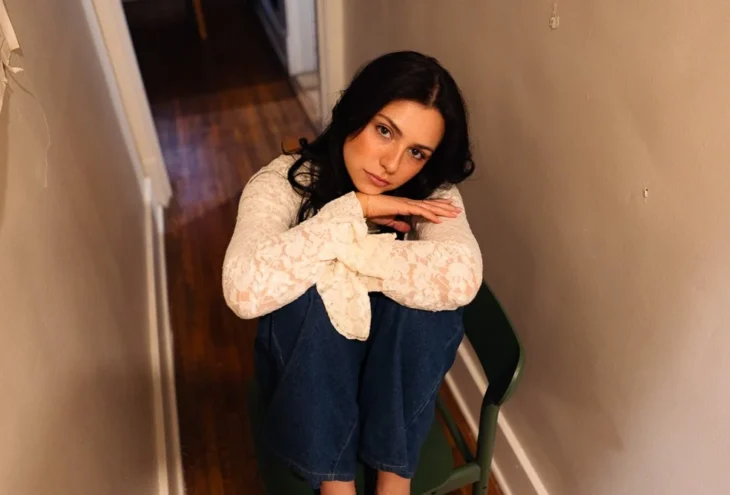
The Storyteller: Savanna Leigh
The Song: The sweeping early-aughts serenade “Somewhere Only We Know" by the British emotive rock band Keane.
The Background: At an early age, Savanna Leigh felt the magnetic pull toward Music City’s one-of-a-kind singer-songwriter community. After initially working as part of a duo, Leigh soon set out as a solo act, recording songs characterized by soaring vocals, delicate accompaniment, and intimate lyricism tinged with indie-pop influences. Following her first full-length release, the way I see it, and the EP reminders of you, Leigh continued refining her craft, opening for Mackenzy Mackay and Ashley Kutcher.
With her most recent release, for your entertainment, Leigh expanded the depth of her songwriting — crafting songs with the understanding that they aren’t static but elastic: living notes and words whose meaning shifts as the listener moves through time.
The Story: Artists often strive to write songs saturated with emotive nostalgia and unforgettable melodies, knowing the combination can trigger memories —snapshots tied to a specific place in time or an emotive space within the mind. Sometimes an interpretation leans literal, other times, metaphorical. Keane’s “Somewhere Only We Know” often taps into both: a longing to return to a familiar place, or a desire to rekindle a lost relationship.
A longtime favorite from her acoustic live performances, the song has always resonated with Leigh for its duality, following her through different stages of life. Recently, the significance of that twofold vision came into sharper focus.
“I'd say the true emotional impact of ‘Somewhere Only We Know’ hit me when I was 25,” Leigh explains, “It showed me over time, the meaning behind a song can – and will- change as we, as humans, grow.”
Taking the time to fully recognize how the song had transformed into something more profound left a lasting impression. “I think in that moment I realized my perception of the song had taken on a much deeper meaning.” She adds, “It felt like I’d been listening to it wrong this whole time. What once felt like a romantic longing began to read differently.”
Leigh reflects, “I used to view it as a love song for a partner, but now I hear it as a love letter to your younger self—your inner child.”
Today, the song still carries the same pull. The emotive music and meaning continue to move Leigh, conveying the notion that songs don’t stay still; they travel within us, “waiting for the moment we’re ready to hear what they’ve been saying all along.” She summarizes its hold: “This song just has a way of capturing you from the minute it starts to the minute it ends — it has a nostalgic feeling no song has ever replicated.”
Photo by Brooke Jennings