Henry Diltz, the legendary photographer who has shot over 250 album covers, has announced a Fall 2026 edition of his Behind the Lens tour. The lensman will present his slide show and storytelling experience “of the photographs that made music history” for a series of dates along the U.S. West Coast in November.
He’ll also do a second installment of Once Upon a Troubadour— a one-night-only immersive slideshow experience on December 9.
As Diltz notes, “It’ll be so special to be back in the very venue, Doug Weston’s Troubadour, in West Hollywood, where my band, The Modern Folk Quartet, started playing in the ‘60’s. I witnessed so many of my dear friends get their start within these historic walls, whose songs have since been sewn into the fabric of our lives. I look forward to telling stories from my fondest memories on a stage where I feel at home.”
Tickets are available at his website
Henry Diltz “Behind the Lens” 2026 Tour
Nov 04 – Menlo Park, CA – The Guild Theater
Nov 05 – Mill Valley, CA – Sweetwater Music Hall
Nov 06 – Grass Valley, CA – Center for the Arts
Nov 07 – Santa Cruz, CA – Kuumbwa Jazz Center
Nov 10 – Portland, OR – Alberta Rose Theater
Nov 11 – Seattle, WA – Triple Door
Nov 12 – Bellingham, WA – Mount Baker
Dec 09 – Los Angeles, CA – The Troubadour
Whether working in conventional film or digital images, photographer/musician Henry Diltz finds the perfect balance of illumination, color, and reportage. Henry and his images are embedded fixtures in rock culture.
Henry Stanford Diltz, born September 6, 1938, in Kansas City, Missouri, has taken photos gracing 300 album covers. Henry’s work secured him cover shots in Rolling Stone, LIFE, Cash Box, MOJO, UNCUT, Guitar World and Acoustic Rock magazines. His photographic endeavors have been published in The Guardian, SPIN, High Times, The New York Times, The Los Angeles Times, Newsweek, People, Billboard, Ugly Things, Record Collector News magazine, Shindig! and on the websiteswww.bestclassicbands.com and www.rocksbackpages.com.
Diltz is very active touring globally and on US college campuses, presenting slide shows of his catalog, touting books and limited edition signed prints. He’s always armed with his faithful Nikon camera. “Usually two Nikons, one for color and one for black and white,” he volunteers.
During 2007, Genesis Publications published a signed limited edition and prized collection of Diltz’s photography, California Dreaming.” (Memories & Visions of LA: 1966-75). The volume incorporates 500 photographs and a 96,000-word text. Contributors include Graham Nash, John Sebastian, Ray Manzarek, Micky Dolenz, Gerry Beckley, Robby Krieger, David Crosby, Stephen Stills, Joni Mitchell and the Kingston Trio.
In 2009, the book Who Shot Rock & Roll, edited by Gail Buckland, and published by Alfred A. Knopf features a Diltz cover shot of Tina Turner.
Taking Aim, by Graham Nash and Jasen Emmons was published in 2010 by Chronicle Books, featuring a plethora of Diltz’s images on the pages.
Henry was the official photographer for the seminal Monterey International Pop Festival, and the official photographer of the Miami Pop and all three Woodstock Music Festivals.
Diltz’s iconic black and white photo of the Doors in Venice, California was utilized as the poster and advertising graphic for their 2010 documentary and DVD, When You’re Strange.
Diltz has self-published Unpainted Faces, abook of black and white photographs which was released via his then co-owned Morrison Hotel Gallery in association with Rare Cool Stuff Unltd. The terrific text and interviews by esteemed journalist Stephen K. Peeples are insightful, memorable, and really complement the images selected.
In February 2023, Henry was honored with a Recording Academy Trustees Award as part of the Academy’s annual Grammy Week festivities. The National Academy of Recording Arts & Sciences (NARAS) presents this Special Merit Award to people who have made significant contributions to the music industry during their careers. Previous honorees include the Beatles, Dick Clark, Walt Disney, and Duke Ellington.
During 2025, Henry appeared as himself in the Rob Reiner-directed Spinal Tap II: The End Continues, photographing the band in New Orleans.
I first met Henry Diltz in 1967 on the set of The Monkees television series. Henry, along with his trusted archivist/librarian Gary Strobl, has been very generous in providing photos to books and published articles I’ve written this century.
I interviewed Henry during 2008, 2010, 2020, and 2024 at his photography studio office in Studio City, California.
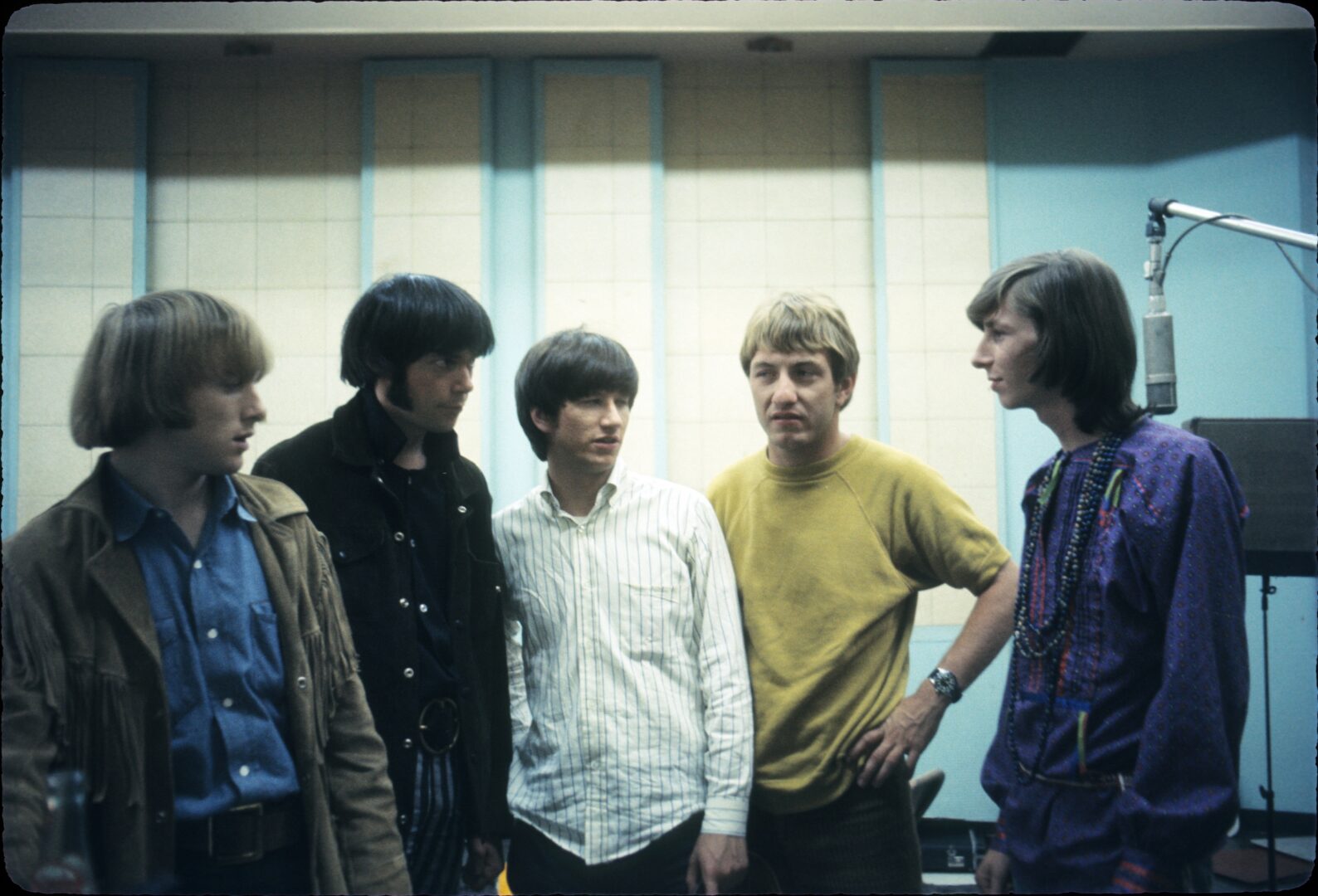
Q: In 1965, you purchased a camera. Initially, you just took photos of friends, and then showed slides of pictures on a wall at parties.
A: After the first slide show, I said to myself, ‘I have got to take more pictures this week.’ So next weekend we can have another slide show.’ And that was the only goal I had in mind. Try to make them interesting with nice colors and angles. Get some moments. Take pictures of my friends. So that when we get together for the slide show, ‘Oh wow! That’s me. I didn’t even know you took that picture.’
After a short period of taking slides of my friends, they began to be used. A Buffalo Springfield shot that I took just for myself got used in a magazine by accident. And they paid me 100 bucks. Wow! That was an epiphany right there. First was seeing the slide on the wall and then getting 100 bucks from someone. I was just photographing my friends and they got used. At some point, some people asked for a black-and- white-head shot. OK. Around 1966 my old friend, Erik Jacobsen, a fellow folk musician, we were on the road together and he became a producer.
We actually shared an apartment in New York City and he worked with The Lovin’ Spoonful. He got them together and called me in California and said, ‘Henry, I know you are trying to become a photographer and the guys need a lot of photos. Spend the summer and go on tour with them. And we need photos for everything.’ So, it was like an apprentice thing and they paid for film and processing and if we use it, we’ll pay you for it.’ It was great. I loved their music. Magic in the blend.
Cass Elliot introduced me to Graham Nash of the Hollies in 1966 in New York and I did some photos and one ended up as a cover of an LP. That lead to the album cover of the first Crosby, Stills and Nash album.
Q: Do you have any philosophy or employ methods in taking photos?
A: I think the technical part is simple. The rest of it is framing. And you want to frame it exactly to the way you want to see it. For me, initially, it was slides, transparencies that I would project on the wall. I could not believe I could re-live these great moments that we had huge on the wall for all our friends to see. Lights shining through the plastic on the wall and its glowing.
As far as shooting musicians live, I prefer being to one side of the stage so the microphone is not in front of the person on stage. And you pick one side or another depending on which way the guitar looks the best. And you sort of get a side front ¾ view from either way. I like to have a nice telephoto lens so I can get them waist up. Guitar up. And that fills the frame generally in a vertical way.
Q: The Beatles arrive in 1964.
A: The Beatles changed everything. They took our Everly Brothers harmony and put it together with that skiffle music and came up with a new joyful thing.
I had seen the Beatles at the Hollywood Bowl and in New York at Shea Stadium. I was with the Lovin Spoonful, and we had to be escorted backstage due to the hysteria, and met and talked to the Beatles for 45 minutes. So, I had seen the Beatles a couple of times, because you could see them but you couldn’t hear them. It was like a swarm of locusts, this metallic chirping sound, all the girls screaming and yelling, and you couldn’t really hear the music at all. When the Beatles played The Ed Sullivan Show in February ’64, like every group the next day, we bought an electric bass and electric guitar. Up until then we had a standup bass. So, we became a psychedelic folk-rock group, wearing beads, striped pants and polka dot shirts, and we got a drummer, Eddie Hoh. Years earlier, we had black and gray suits with ties.
We heard the Beatles and saw them booked on The Ed Sullivan Show. At the time, we were on the road. My memory says we were up in New England on a concert tour doing colleges. We pulled into a motel, rented a room to specifically sit down and watch these guys that everybody was talking about. We saw them and said wow. I had heard little bits of their stuff but never a whole Beatles’ tune. And there they were on the screen. So joyful and having so much fun. That was the main thing. My God! This music is fantastic and here we are singing about the ox driver? And they are singing ‘I Want to Hold Your Hand.’
They had an electric bass. We had a standup bass. We now wanted to make joyful music and we needed to get an electric bass and trade in our upright bass. So did every other folk group like the Byrds and then Buffalo Springfield. The MGQ eventually covered ‘Run for Your Life.’ I sang lead. Years later we sang ‘Yesterday’ in four-part harmony.
In 1964, our band, the MFQ, were in New York. And we were with a big agency, and we did get booked for The Ed Sullivan Show. One of our really good friends, Jimmy Gavin, his father was kind of a psychic guy and had a very intense dream that New York fell into the ocean. And our agent cancelled our appearance. Cyrus and his wife said, ‘We’re outta here. This is real. We’re not going to sit here and die with the rest of New York City. We’re gonna go back to California.’
We would go back and forth between New York and Los Angeles. We’d sometimes play the Troubadour for a week or two weeks in a row. And A Hard Day’s Night was billed at an all-night movie theater on Hollywood Boulevard. Two houses on Hollywood Boulevard had double features and were open to 4:00 am. We went to a screening after a Troubadour show. I had a little reel-to-reel tape recorder, and I sneaked it in under my coat and sat it on my lap and recorded the whole soundtrack to A Hard Day’s Night. ‘Cause I wanted to also hear the dialogue with the songs. I then went back and saw it a second time.
It was around the time I first met Gene Clark. I was at the Troubadour one night when they had tables near the bar. And there were my friends David Crosby and Jim McGuinn, with another guy. ‘Hey Tad. Meet our new friend Gene Clark. He just moved here from St. Louis, and we’re going to start a group and call it the Beefeaters.’ I went, ‘Oh man, that’s great.’ I was Tad at the time, and later changed my name, like Jim later did to Roger, from our belief in Subud. They loved the Beatles and McGuinn would get up on stage at the Troubadour hoot nights doing Beatles songs solo on a Rickenbacker.
I was in the audience as a fan at the Newport Folk Festival. Buffy St. Marie, Judy Collins, and I saw Howlin’ Wolf. Then Monterey Pop in 1967 as a photographer after John (Phillips) asked me to do it. I never thought I was doing something historic. My job was to hang out and take photos of everybody doing what they did because I enjoyed doing it. And it got me around, observing and watching. I was used to hanging out with my friends and just documenting all the things that went on around them. And John Phillips knew that, too. Phillips was full of life and a great idea guy. Very good-natured. In 1966 and ’67 I had photographed Love Ins in Los Angeles, and people just walking around. Shooting random shots of people who looked good and asking them ‘Can I take your picture?’
I saw the principals before they became this musical collective. I watched them grow from young kids to getting better and better at what they do. These were the people in my own life. When I meditate on my own life, I come out realizing that it’s about the people. And I felt in the middle of all these people and not an outsider observing them. ‘Cause I had been a musician and this is my family.
Q: You never had plans or a photography career in mind when you started.
A: No. After the first slide show I said to myself, ‘I have got to take more pictures this week.’ So next weekend we can have another slide show.’ And that was the only goal I had in mind. Try to make them interesting with nice colors and angles. Get some moments. Take pictures of my friends. So that when we get together for the slide show, ‘Oh wow! That’s me. I didn’t even know you took that picture.’
“After a short period of taking slides of my friends, they began to be used. A Buffalo Springfield shot that I took just for myself got used in a magazine by accident. And they paid me 100 bucks. Wow! That was an epiphany right there. First was seeing the slide on the wall and then getting 100 bucks from someone. I was just photographing my friends, and they got used. At some point, some people asked for a black-and-white head shot. OK.
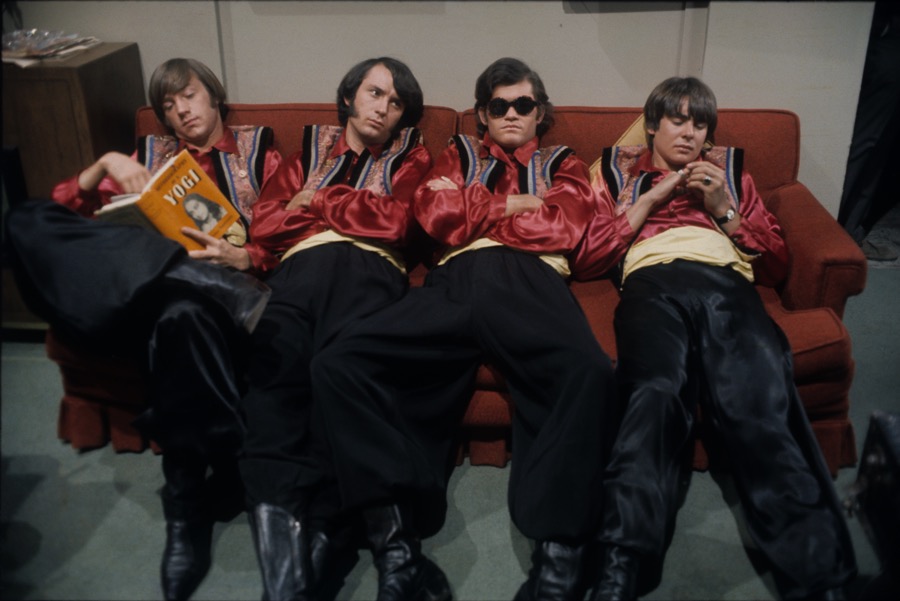
Q: What was your first real photo session?
A: Around 1966 my old friend, Erik Jacobsen, a fellow folk musician, we were on the road together and he became a producer. We actually shared an apartment in New York City and he worked with The Lovin’ Spoonful. He got them together and called me in California and said, ‘Henry, I know you are trying to become a photographer and the guys need a lot of photos. Spend the summer and go on tour with them. And we need photos for everything.’ So, it was like an apprentice thing, and they paid for film and processing and if we use it we’d pay you for it.’ It was great. I loved their music. Magic in the blend.
In the summer of 1966, I went with the Lovin’ Spoonful to see the Beatles at Shea Stadium in New York. We had seats on the side bleachers, and they were popular in their own right. So dig this. They all go in disguise with hoods, one guy with a cowboy hat and sunglasses. And they go so heavily in disguise they had to be somebody famous. And pretty soon as they are sitting in their seats. interest starts mounting from the girls around them as the stands get fuller. Everyone is on a hair-trigger cause the Beatles are gonna be there.
Girls started running over and screaming, ‘It’s the Beatles!’ Somebody on the field said, ‘This way!’ So, the four of them and myself, jump over into the fields, and we were directed into a dugout and went through a series of little tunnels on A Hard Day’s Night level. And we keep running until the guy said, ‘In there.’ And we walk in, the door closes, and we’re in a little dressing room with the four Beatles, and that’s all. McCartney was playing his bass with a harmonica in his mouth, unplugged. Ringo was sitting at a table at one side of the room. Lennon was there. George was on the other side. John Sebastian went and talked to George. I kind of ended up talking to Ringo. I asked him about the stuffed animals that are tossed on stage. ‘I take ‘em home to me son.’
Years and years later I told Paul and Ringo the story. I was a good friend of Linda Eastman before she married Paul. We were fellow photographers. I later did photos for Wings’ London Town sessions that became an inside poster. I spent a week with them in the Virgin Islands on a boat.
One day I got a call from Ringo to photograph his All-Star Band. I asked him if I could stand on the stage as his band played for close-ups. He said, ‘I’m the drummer, you’re the photographer, it’s as simple as that.’ So subsequently for years I would photograph his groups. That was always our motto.
Q: You had photographed all three principals of CS&N. Graham in the Hollies, Crosby in the Byrds, Stephen Stills in Buffalo Springfield.
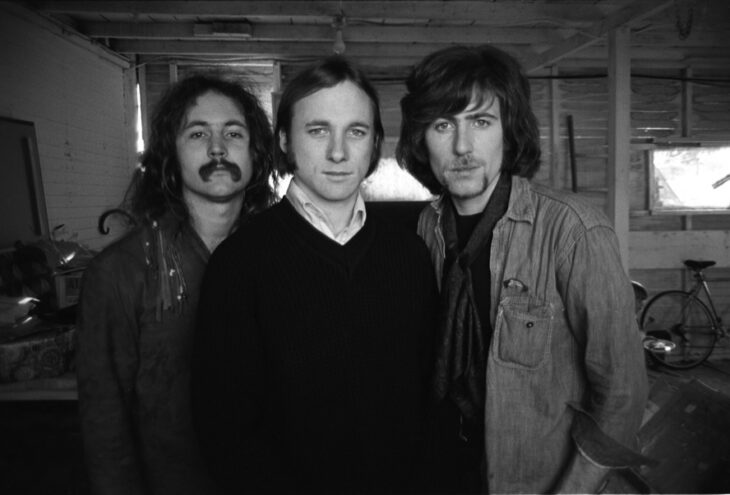
Cass Elliot introduced me to Graham Nash of the Hollies in 1966 in New York, and I did some photos, and one ended up as a cover of an LP. That led to the album cover of the first Crosby, Stills and Nash album.
A: I knew all three of them in their former groups. One day Gary Burden called me. ‘Come on over. We’re gonna take some publicity pictures of Crosby, Stills and Nash.’
We both knew them socially very well. We drove around West Hollywood and took photos in an old antique clothing store. Some photos in Gary’s garage. And then Graham said, ‘a couple of blocks from here I saw this little house that looks kind of nice.’
We went there and took some publicity pictures, really. Then we got that great shot of them on the couch. By the way, they had not yet named themselves Crosby, Stills and Nash yet. Would it be Stills, Nash and Crosby? And then they figured out Crosby, Stills and Nash right about the time we got the slides back. We had a slide show. ‘Well that looks great!’ If we call it Crosby, Stills and Nash. They are sitting Nash, Stills and Crosby. It would be so simple to go back and put them in order and shoot them the right way.
However, when we got there a couple of days later, the house was gone. It was a vacant lot. We decided to stick with the album cover, although there was talk about flipping it. If you did that, they would be in the right order. I remember my comment, ‘Don’t do that. People’s faces are not symmetrical.’ You can tell if one of the pictures is backwards.
The debut Crosby, Stills and Nash album along with The Doors’ Morrison Hotel are the ones I get asked to sign the most. I do them with a brown Sharpie and do it on the back.
Here’s the reason they are fun to sign: Gary Burden came up with the idea of printing the pictures on the backside of the paper. On the rough side. Not the glossy side. All album covers were glossy, the smooth side of the paper. He said for that Crosby, Stills and Nash one to the printer, ‘turn it over and print on the back.’ The printer said, ‘we never do that.’ He said, ‘just do it.’
CS&N were just three different-looking people. And when you have a trio that can work really, really well. It’s a certain balance. An Englishman, sort of a blonde hippie kid, and a Leo young prince. The first year they sang together, they were so thrilled with the sound they made together. They were very close and buddy, buddy. Then things and the friendships got more complex than the sheer joy of the sound they made together.
Neil Young was perfect for them, but he had his own way of wanting to do things. He’s a Scorpio and had a very definite idea about how things had to be done. Stills is a Capricorn, Crosby the Leo, tenacious in his music, and Graham is an Aquarius who embraces mankind. That’s why he is such a lovely chap. Crosby is a bit of an imp. He always had a twinkle in his eye. He liked to get in some digs and tweak people. Sometimes he’d give me some shit about taking his picture, but I knew he was kidding. And he was in a friendly way. Stephen Stills was certainly a musician. First and foremost. He always had a guitar and sang. He was a friendly guy who was more into music than rapping with his friends. He had his head in music and was almost preoccupied with it. He’s a Capricorn. Tenacious. Whatever they do, they get into it, and he was that.
I took a lot of photos of them at studios and rehearsals. I was friends with these people and they trusted me. It was a big house for everyone to spread out or be alone. The rehearsal room was big and it had a recording room. The rehearsal room had carpets up on the walls to soundproof it. It was like being in a tent. A little cocoon of some kind. They had an organ in there and then Neil’s guitar. It was like being in the speakers. They were jamming and playing. It was the soundtrack to my photographing for me. Mostly they would play the songs. Then they’d take a break. There was a swimming pool outside. Places to go. Several patios. They would stand on the driveway just talking, and I would take photos. I pretty much went there to take pictures. It wasn’t a photo session because I would always take pictures of them.
I first met Joni Mitchell at Mama Cass’ home on Woodrow Wilson. David Crosby loved to bring her around to show her to people. Then she’d pull out her guitar, and everybody’s jaws would drop. David loved blowing people’s minds by bringing Joni Mitchell around. That’s what he did. It blew our minds, including Eric Clapton. She was a gentle, intelligent, open soul. A human being and a terrific person.
One day I went up to her house with my partner Gary Burden because she needed a publicity picture. I went up there with photographer Joel Bernstein, who was a young photographer and musician. And he remembered all of her tunings. She didn’t remember them all. So, she would have to call him, ‘What tuning did I use on that song?’ He knew them all. We both were taking pictures. She got her Dulcimer and we went into the brush and field behind her house and sat there in the late afternoon playing this Dulcimer. It was beautiful.
It was the kind of thing that happened in Laurel Canyon. Because you wouldn’t hear traffic or city noises. You would hear a dog bark or a guitar playing somewhere. That kind of thing. And at night, coyotes, owls. A possum would run through your cat door and scuffle across the linoleum floor and eat the cat food. Or raccoons would be out peering through the patio door. Coyotes were fantastic to hear at night.
Q: You took the album cover of the Doors’ Morrison Hotel in downtown Los Angeles at The Morrison Hotel located on 1246 South Hope Street and the back picture at 300 E. Fifth Street in the same area.
A: The Doors were interesting and weren’t a guitar band. They came from a different place. It was that keyboard thing. They didn’t have a bass. Ray Manzarek played bass on a keyboard with his left hand. It was a little more classical and jazz-oriented. And then you had Jim Morrison singing those words with that baritone voice. It was poetic and more like a beatnik thing. It was different. And Jim wrote all those deep lyrics. I took photos of them at the Hollywood Bowl in 1968 when they did a concert.
Jim had lived in Laurel Canyon. So did Robby Krieger and John Densmore. We were all friends in the area. I knew him as a musician just as I was first really taking photos.
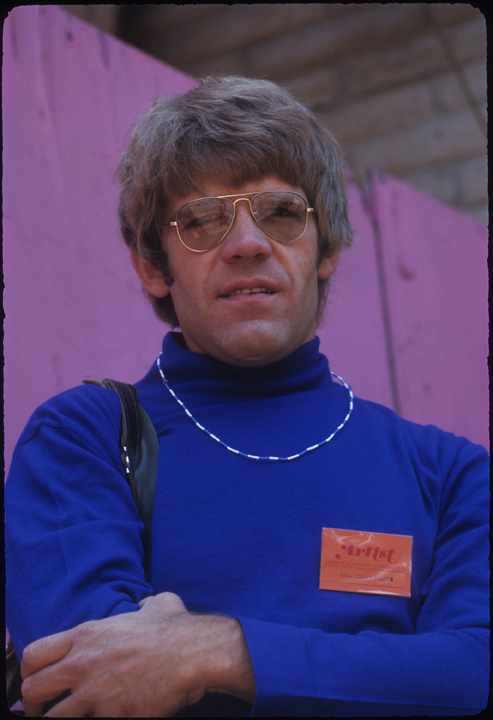
“I did one day with the Doors in downtown L.A. for Morrison Hotel and got that cover LP picture. Then two days later they needed some black and white publicity pictures, and we walked around the beach in Venice.
Before I shot the cover of Morrison Hotel, we had a meeting at the Doors’ office on Santa Monica Blvd and La Cienega. They had an office in a little funky building, and various ideas were discussed, and no one really had any. And then Ray Manzarek just said, ‘My wife Dorothy and I were driving through downtown L.A. the other day as we do and we saw this funky hotel.’
And my partner Gary Burden, he was a graphics artist, and I thought, ‘Fuck! Morrison Hotel. That’s great. Let’s go down and look at it.’ We all piled into a Volkswagen van and drove down that afternoon and saw it in all its glory. That front window! And we took some shots. And a week later we came back with the band. The Doors were always very cooperative photo subjects.
I used a Nikon camera and a 35 or 85 lens. Gary Burdon usually said, ‘Back up.’ In this case, he instructed, ‘Get the whole window.’ I went across the street and even shot with a mild telephoto. And it was slide film. [Kodak] Ecktachrome ASA. We got the transparencies back from the lab.
Gary then looked at them first, lays it out on a slide board at night, reviewed them and made choices. And then he picked the one. He had unerring taste for picking ‘the one’ that really said it. And I totally trusted him to do it. He was very good.
He always had exquisite taste. Gary would set up kind of a situation for me to photograph the whole thing, ‘film is the cheapest part,’ he would always say. He would review them all and tell the record company after we’d show the group first. ‘Yeah! Fantastic man. ‘Here’s the cover.’
Q: In the mid-sixties you were the MFQ. [Modern Folk Quintet] who cut “This Could Be The Night,” a Jack Nitzsche-arranged/Phil Spector production. You played banjo on Spector- produced recording sessions at Gold Star studios in Hollywood: “Paradise” by the Ronettes, and the Righteous Brothers’ “Ebb Tide.”
A: The MFQ was involved with Phil Spector and his Big T.N.T. Show in 1965 in Hollywood, filmed at the Moulin Rouge, which became The Hullabaloo Club and the Kaleidoscope. We played music between the acts booked and recorded the theme song. In 1966, I remember Phil jamming with us at The Trip nightclub.
Q: My brother Kenneth and I collaborated with you and Gary Strobl on a book about the Monterey International Pop Festival. I know various ongoing anniversaries will tout this landmark event. Tell me about the festival.
A: One other thing about Monterey the rotating MC’s and artists introducing everyone like Tommy Smothers, Peter Tork, Chet Helms, Paul Simon, John Phillips, Eric Burdon and Brian Jones. It kept the interest up. I was happy to stand back and observe these things and photograph them. Brian Jones was in the audience, or him walking around, but I didn’t introduce myself. I was in the audience as a fan.
“At the Monterey International Pop Festival in June, 1967, Janis was just totally on fire and sang with every ounce of emotion she had. I’d never seen intensity on a stage before. I also saw her in 1969 at Woodstock and the Hollywood Bowl on my birthday.
Ravi Shankar was our hero. All you ever heard in Laurel Canyon before the festival in the afternoon was his music and incense burning. It was just the soundtrack to our lives. To really see him was great. That was very special. At Monterey, everyone was in a trance. Not just the audience, but the other artists in the crowd, like Michael Bloomfield and Hendrix, were really getting into it, too.
“Being a rock photographer, you get the best seat because you are in front of the front row. I remember nothing was between Otis and me. The warmest, most wonderful music and so different than the rest. A different flavor of music. It came from a whole other place, not these things, bands that emerged out of folk music. I just basked in this amazing sound. Warm and tender delicious tension. The feel of his voice. The edge of it.”
The dressing rooms were underneath the stage on dirt floors. Like a basement. The Mamas & Papas were backstage grabbing their tongues and doing various vocal exercises like holding the tip of your tongue with your two fingers and sorta chanting sounds and making all these scales. OOO-AAAH. So, the group is backstage, all holding their tongues, preparing to perform, and Jimi Hendrix, who had just finished playing was on the other side of the room, sitting in a chair, eating a piece of fried chicken, people all around him, and checking out these ‘other’ hippies, the Mamas & Papas doing their ‘unique’ chant harmony, and Jimi was chewing on this chicken breast.
Michelle Phillips was very sweet as far as I could see. The camera loved her. A beautiful young girl, the ideal sprat flower child. This sweet blonde little girl. She had energy and did phones.
Mama Cass was a force of energy. She really was an earth mother and a great spirit at that time. Mama Cass was very intelligent, very funny, and she was very hip, and those three things together were amazing. And she was warm and open and wanted everybody to be friends. She and the group had the first money, big success. Many people came through and stayed at her house. You could go up there anytime and not know who would be there, you know. But that’s the way the Sixties were. People hung out for the afternoon, and then all go off somewhere else to a club. I loved the Mamas and Papas.
I knew the Byrds as fellow musicians. I was with the MFQ, did some sessions with Phil Spector, and I also played on Bob Lind’s “Elusive Butterfly” that Jack Nitzsche arranged. I know that Al Kooper has said that during the Byrds’ Monterey set you could see the group breaking up on stage and there was a lot of tension between McGuinn and Crosby. Roger was really steamed when David sat in with Buffalo Springfield. It was a different sort of Byrds set from what I’d seen over the two years before. To stand there and watch McGuinn play that Rickenbacker 12-string was mesmerizing. It just put me into a place, and the harmonies those were the songs we heard every day driving down Sunset Strip on the radio. So, to me it was magic.
I didn’t see the Byrds play a lot in 1965 and 1966, except once in 1966 in downtown L.A. because I was working with my own group, The MFQ. I do know at Monterey there was tension in that group. Crosby was rubbing them (McGuinn and Hillman) the wrong way somehow. Well, Crosby is a Leo, the royal sign. He’s like a young crown prince of rock ‘n’ roll. He’s a great harmony singer and wrote some fantastic tunes. And Crosby has kind of a naughty boy thing. Holding up the guitar at Monterey with an STP sticker and doing his rap about the Kennedy assassination. I remember Crosby earlier, maybe 1965, at the Trip, on Sunset Blvd., walking through there with his Barcelino hat, and a whole box of bamboo rolling papers. And at point, you couldn’t get them or buy those. I got a pack and he was handing them out to people. And I thought that was the coolest thing. Another night. Another night I saw him walking through there with a whole arm full of blue 8X10 cards, and on there was a drawing of a girl’s face, but if you looked really close but when you really looked at it said LSD. And he was just handing them out left and right to people. He was giving presents to people.
Q: Your career journey wasn’t planned.
A: I am amazed at the accumulation of images that has resulted, simply by doing what I love to do, day after day after day. It’s a result of being with countless people over the years, waiting at the sidelines for the moment to happen. Photography has been my passport, and I have arrived in the present, where I have always been, camera in hand. There! That says it best for me!
And it never occurred to me back in the ‘60s and ‘70s when I was really shooting all these things that it would ever be an archive and that it would be a piece of social history. That’s what it has turned out to be. And that was a total accident. The thought never occurred to me.
The 12-inch album cover was an art form. It became a real art form. It was the perfect size to hold in your hand while you heard the record and stared at it, read the back, and looked at the pictures. Now, it’s really too small to do that. So, nobody sits there and stares at the CD cover.
(Harvey Kubernik is the author of 21 books, including 2009’s Canyon Of Dreams: The Magic And The Music Of Laurel Canyon, 2014’s Turn Up The Radio! Rock, Pop and Roll In Los Angeles 1956-1972, 2015's Every Body Knows: Leonard Cohen, 2016's Heart of Gold Neil Young and 2017's 1967: A Complete Rock Music History of the Summer of Love.
Sterling/Barnes and Noble in 2018 published Harvey and Kenneth Kubernik’s The Story Of The Band: From Big Pink To The Last Waltz. In 2021 they collaborated on Jimi Hendrix: Voodoo Child for Sterling/Barnes and Noble.
Otherworld Cottage Industries in 2020 published Harvey’s Docs That Rock, Music That Matters. His Screen Gems: (Pop Music Documentaries and Rock ‘n’ Roll TV Scenes) was published in February 2026 by BearManor Media. Kubernik is researching a multi-voice narrative study on the Beatles scheduled for a UK publisher with a planned summer 2027 publication date.
Harvey spoke at the special hearings in 2006 initiated by the Library of Congress held in Hollywood, California, discussing archiving practices and audiotape preservation.
In 2017, he appeared at the Rock & Roll Hall of Fame in Cleveland, Ohio, in its Distinguished Speakers Series and as a panelist discussing the forty-fifth anniversary of The Last Waltz at the Grammy Museum in Los Angeles in 2023. Kubernik attended the 1976 event celebrating The Band).
Photos by Henry Diltz, courtesy of Gary Strobl at the Diltz studio.