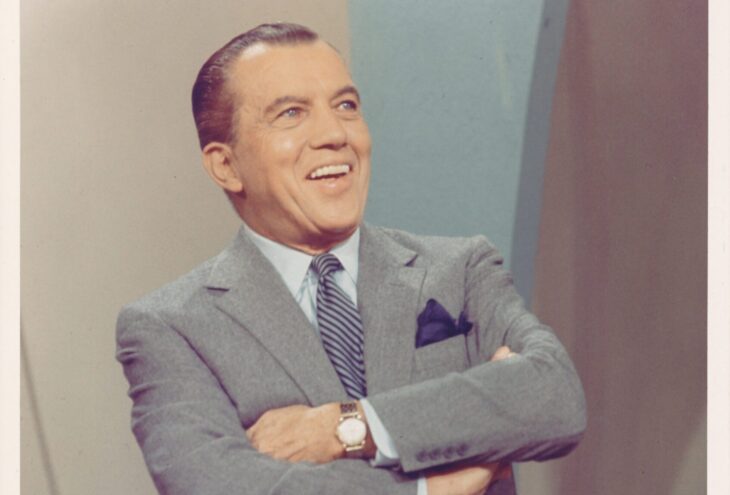
The Rock & Roll Hall of Fame has just announced they have given Ed Sullivan the Ahmet Ertegun Award in the non-performing industry professionals who, through their dedicated belief and support of artists and their music, have had a major influence on the creative development and growth of rock & roll and music that has impacted youth culture.
The most powerful man in the history of television, Ed Sullivan is widely revered for connecting generations of Americans through his seminal show that ran for 23 years and launched the careers of now-legendary superstars like Elvis and The Beatles.
Sullivan served as the ultimate tastemaker and catalyst for the Rock and Roll revolution. By hand-picking the acts that would define the century, from the raw energy of Elvis to the global phenomenon of the British Invasion, he used his platform to legitimize a genre that much of the establishment initially dismissed. This same bold instinct fueled his most courageous legacy: a relentless commitment to racial integration. In an era of deep national division, Sullivan did more than just invite Black icons into the spotlight; he insisted on their prominence, ensuring the Black artists who pioneered the soul of Rock and Roll were recognized as the cultural heavyweights they were.
A record-setting 73 million witnessed the most seminal moment in music and cultural history – The Beatles’ television debut on February 9th, 1964. At the time, the country had a population of only 191 million. About 60% of television sets in the country were tuned to The Ed Sullivan Show that night. It is still considered to be one of the largest viewing audiences ever in the United States.
60 million (82.6% of the U.S. television audience) tuned in to see Elvis Presley’s first appearance in 1956.
His show and its timeless 10,000 performances by so many of the world’s greatest artists (1,045 hours of “The Ed Sullivan Show” are archived) live on and to this day his name and all he accomplished still reverberates in both television and rock ‘n’ roll history.
An announcement from Universal Music Enterprises provides further details on the legacy of Ed Sullivan.
“The recent film produced by Margo Precht Speciale (Ed Sullivan’s granddaughter), Sunday Best: The Untold Story of Ed Sullivan,is now streaming on Netflix and was directed by Sacha Jenkins. The film begins in 1955, from the dawn of civil rights – from Rosa Parks' heroic stand, Emmet Till’s murder, and the Montgomery bus boycott to 1964 with the signing of the Civil Rights Act. Simultaneously, the film tracks Ed's story over the next nine years from the debut of Toast of the Town, the show that Ed hosted, and became The Ed Sullivan Show, one that was his in every way. While remaining in this timeline, the documentary also bounces back and forth to significant moments in Sullivan’s childhood, early life, and career that shaped his television personality, his innovative perspective, and defined who he was as a person. A project that the Margo had been working on for years, the filmmakers had complete access to the Ed Sullivan Estate and Ed's personal archive, which includes never-before-seen home videos, photos, scrapbooks, personal letters, and documents. Sunday Best: The Untold Story of Ed Sullivan was recently nominated for an Emmy and a Peabody award.
“After a fortuitous meeting between Andrew Solt and Bob Precht, in 1990 the archive was purchased from Elizabeth Sullivan Precht, the daughter of Ed Sullivan and wife of longtime Ed Sullivan Show producer, Bob Precht.
“The long-running variety show expanded its reach via a 2020 global digital rights agreement between UMe and SOFA Entertainment Inc., owner of the Sullivan archive. The Ed Sullivan Showhas found an entirely new digital audience where its collection of celebrated TV moments has amassed more than 3 billion views across digital platforms, 1 million YouTube subscribers, 1 billion views on Facebook. More than 100 million views of “I Want You Back” by the Jackson 5. The library encompasses the show’s historic 23-year primetime run on CBS. A number of rarities have been made available digitally for the first time including renowned entertainers and influential figures from just about every category of cultural relevance, including music, sports, film, dance, opera and Broadway. Longform shows and documentaries are streaming on Roku, Amazon, Pluto TV, and more.”
I’ve championed the legacy of Ed Sullivan for over half a century in print, books and online platforms.
Ed Sullivan was my Sunday School teacher.
In my book Screen Gems: Pop Music Documentaries & Rock and Roll TV Scenes, published in 2026 by Bear ManorMedia, I devoted an entire chapter to Ed Sullivan.
The Ed Sullivan library remained in the Sullivan family’s possession for almost two decades after The Ed Sullivan Show wrapped. In 1990, documentary filmmaker-producer Andrew Solt formed SOFA Entertainment Inc. and acquired the library from Sullivan’s daughter and son-in-law for an undisclosed sum. The Los Angeles-based production company became the copyright holder of the original programs and, eventually, more than 150 hours of newly created programming.
Solt is one of those American kids who grew up watching Sullivan on Sunday nights. Along with his aforementioned theatrical documentaries, his filmography includes the longform TV special Heroes of Rock ’n’ Roll (1979), an early collaboration with Malcolm Leo; and the miniseries The History of Rock ’n’ Roll (1995). SOFA Entertainment has produced approximately 400 programs for television and home video, including Elvis: The Ed Sullivan Shows (2006).
“Sullivan knew how to give a show that was for every generation that might be watching,” Andrew Solt explained during a September 2011 interview.
“The show was such a launching pad for such great, important, iconic moments, whether it’s Elvis or Bo Diddley. When the Beatles stepped onto Ed Sullivan’s New York stage on Sunday, February 9, 1964, to make their American TV debut, 86 percent of all TVs on at that hour—73 million Americans—were tuned in. It was the most-watched program in history to that point and remains one of the most-watched programs of all time. To some, it will always be remembered by his introduction: ‘Here they are—the Beatles!’”
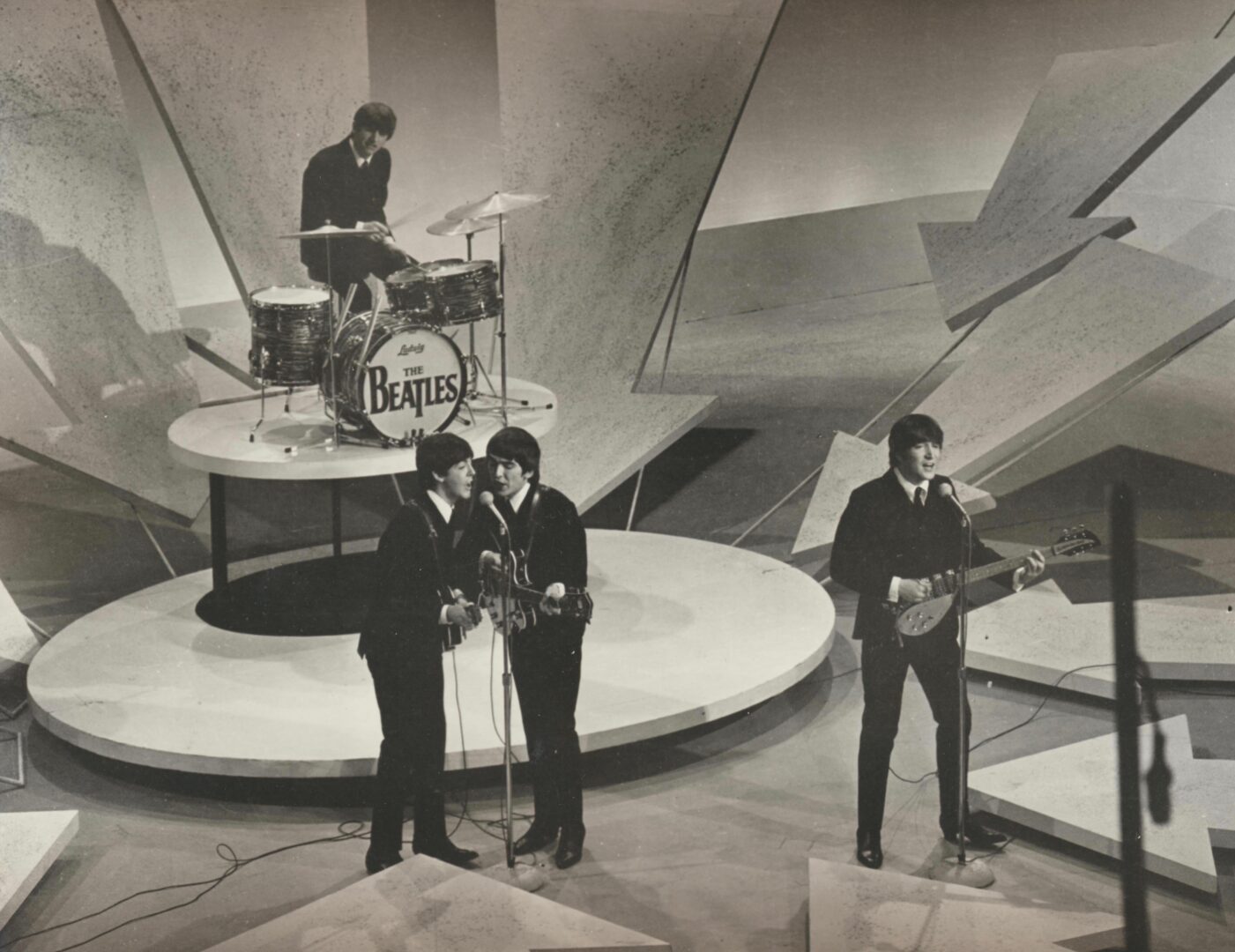
Solt commented about the pre-1965 black and white film that captured the monumental, televised appearances of the Beatles in America.
“I think because the footage is black and white it takes you back even more into an era in which to today’s generation, nobody understands why anything was ever in black and white. I think what really comes across is [the Beatles’] excitement, their charisma, their talent, and when you start to think those haircuts were considered revolutionary, weird, and long hair, that those Beatles boots they wore were different, so unusual. And in retrospect, it’s humorous, but that is Day One of the evolution of rock and roll post-Elvis.
“That era of the 1960s starts February 9, 1964, in America. And it is the first time rock and roll ever comes to us. Before that, it was an exported item, never imported. They reinvent it and bring it back, and it changes the face of American pop music completely. That happened [in New York] and the city goes mad, the country goes wild, the whole place is affected. The beauty is watching the faces of these four young guys, knowing they’ve waited for this moment. They came to America with a number one record. They had it all lined up. They told that to Brian [Epstein, their manager], and it happened.
“For those of us who remember the music arriving around September 1963, by the time they get to February, it’s after the John F. Kennedy assassination and we had been through the doldrums of a very horrific time where everything was questioned. Bomb shelters. I never thought I would see grown-ups running around, crying like the world had ended. I didn’t know what was going on, it was so severe.
“Ten weeks later or less, these guys land on our shores, and euphoria reigns. And [February 9] is the moment, and this can now be enjoyed by people around the world in a way that matters.”
Along with millions of other teens, I felt the emotional and musical impact of the Beatles’ Sullivan debut. Two other Sullivan guests transformative for me were Little Anthony & the Imperials on March 28, 1965, with Anthony’s mesmerizing lead vocal on “Hurt So Bad,” and soul singer/dancer James Brown singing a medley of his hits on May 1, 1966.
“The relationship between Berry Gordy’s Motown label and The Ed Sullivan Show also made music and television history,” Solt noted.
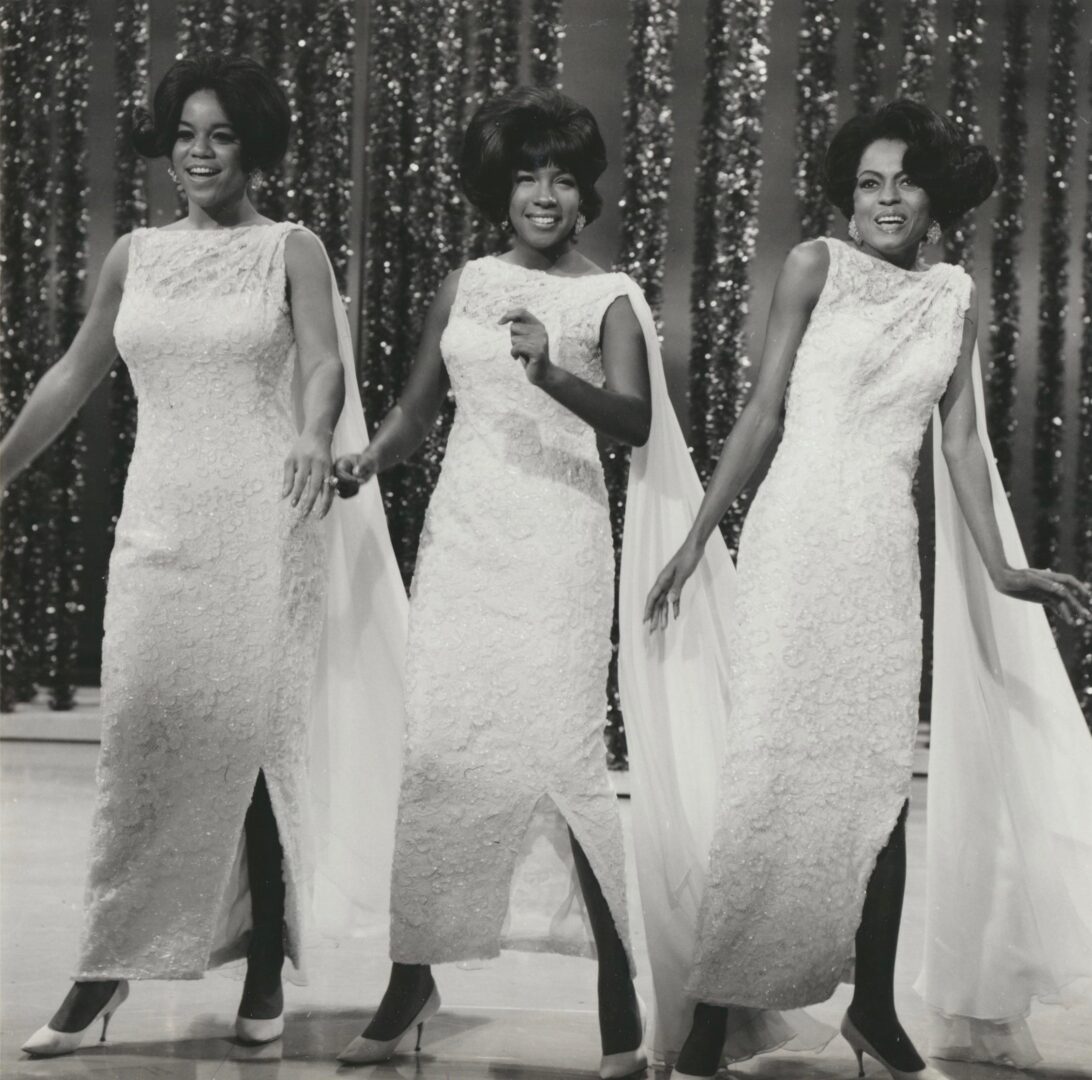
“Soon after the Supremes’ debut on Sullivan (December 1964), it was clear that showcasing the latest Motown releases on CBS on Sunday nights (thirty-five million viewers was average) until 1971 was a way to expose the record company’s newest hits and boost the show’s ratings.”
Solt and I discussed Sullivan’s influence on the world of African-American entertainment.
“Ed had a fascination with African-American culture. He loved talent. He stood up for Harry Belafonte and Marian Anderson. Mahalia Jackson sang on the show, and one of the very first shows W.C. Handy sang was on The Ed Sullivan Show. He is considered the father of the blues.
“For one, a Harlem DJ, Dr. Jive, introduced R&B artists to America in late 1955. “Rock Around the Clock” was blasting out of every transistor radio and the main titles of Blackboard Jungle. Ed loved introducing African Americans on his stage, and most of all he enjoyed giving people big breaks and the most desired gift, national TV airtime. Ed liked his role as showbiz kingpin, and he knew he was very fortunate to be such a powerful arbiter of American taste. He took pleasure in influencing our culture and [presenting] acts that would make us gasp and swoon. He was an unlikely hero.”
“For us, being on The Ed Sullivan Show was so much more than record sales,” Mary Wilson of the Supremes emphasized when we spoke in 2016.
“It wasn’t about promoting us. It was about that we had grown up watching The Ed Sullivan Show. We had grown up watching shows where you didn’t see a lot of Black people starring on those shows. We were like every other family in America who spent hours watching Ed Sullivan. So, for us, being on the show was such a great honor, because we were there to see the world changing. To see America changing. We were excited! We’re on The Ed Sullivan Show.
“We came from a time when a whole family of all different colors didn’t sit around watching Black people on television. The Dick Clark Caravan of Stars tours were before us and there were segregated hotels.
“For us, that is what it was all about. We were part of that change. We were part of helping America to see Black people, Black women, being proud, beautiful, and successful. It wasn’t just us. Many people before us. But they didn’t have the television to expose them to that wide range of people as we did. We were lucky. We stood on a lot of shoulders. But we were there when the doors opened.
“The other thing was that we were seen in color after our initial appearances were in black and white. Recently, my granddaughter was watching a DVD collection of the Supremes. And she said to me, ‘Grandma! What happened to the color?’ Because she has never seen a black and white TV!”
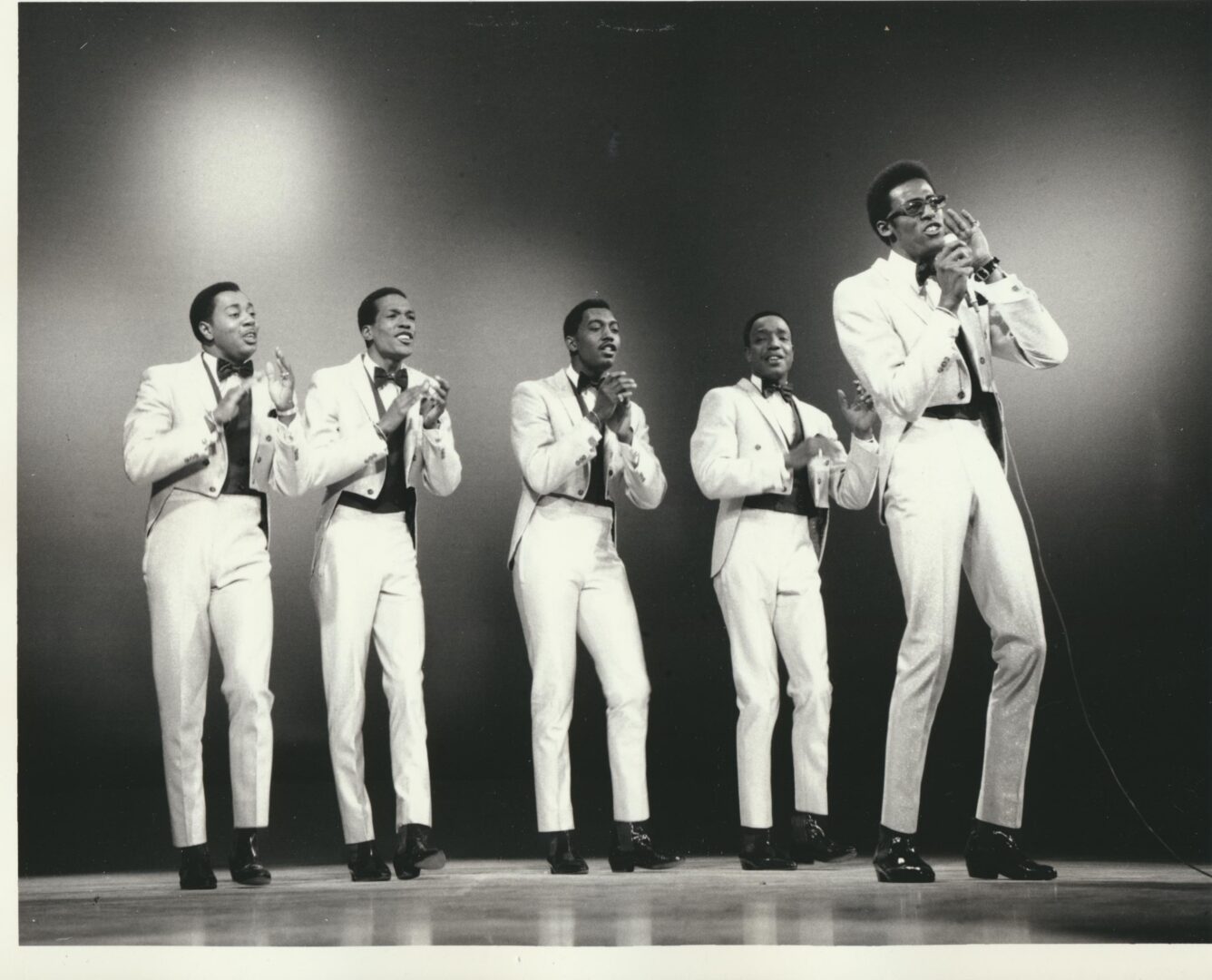
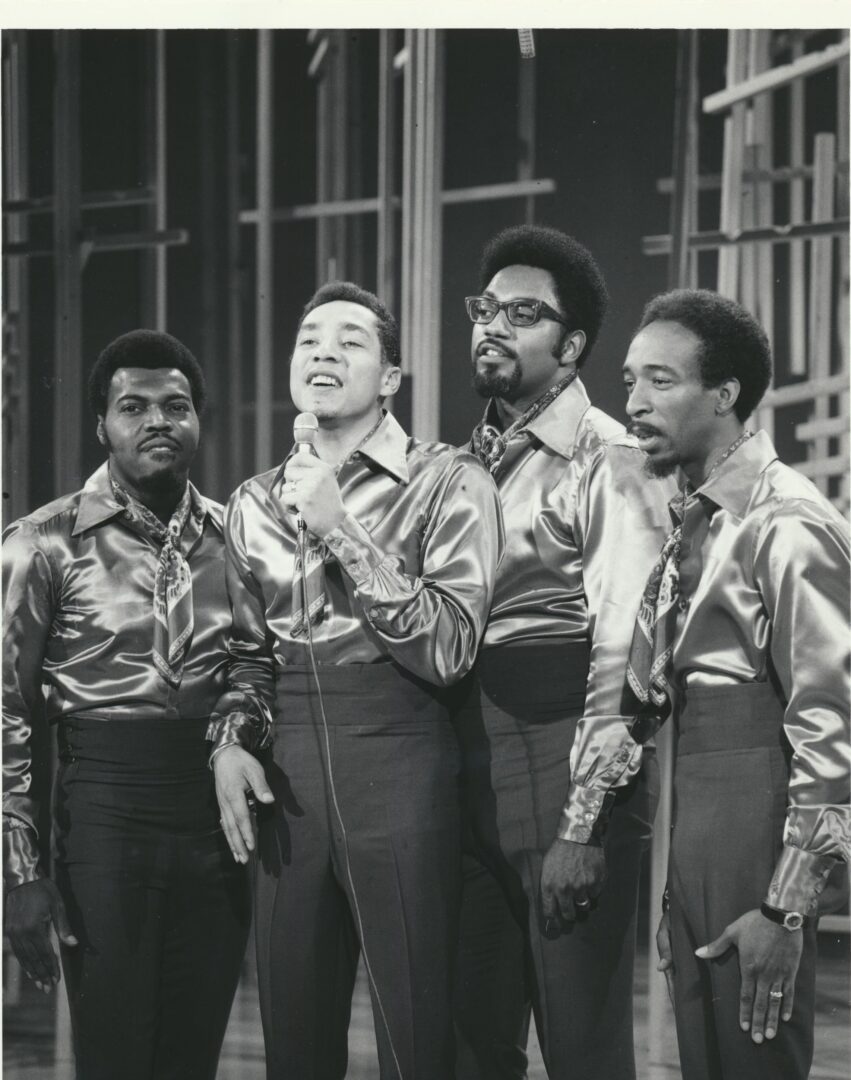
The Temptations were among the most popular and influential Motown vocal groups to perform on The Ed Sullivan Show, four young Black men singing so fine, dressed to the nines, making smooth moves in unison. David Ruffin, a former member of the group, spoke with me for a story in the February 21, 1976, issue of Melody Maker.
“The Temptations were individuals who happened to sing together,” Ruffin emphasized. “To this day, I always meet people and musicians who tell me how much the Temptations influenced them. It makes me feel good that others learned from us and a lot of the younger groups always acknowledge the Tempts in interviews.
“I never regretted any of the songs we did, and even the choreography on stage has been widely copied. I liked the dancin’ part of that group. Then you couldn’t just stand there and sing. The audience was moving, and you just reflected what was goin’ on. I’d like my association with the Temptations to be remembered as that we gave something. We helped young artists get in a position.”
While the Temptations were topping the pop charts with “My Girl” in 1964, they were also subjected to racial discrimination and harassment during tours.
“Some cats had to buy us food ’cause restaurants wouldn’t serve us, mostly in the South,” Ruffin lamented. “Things are much better today, but I can think of the times when I was driving independently of the group in my Cadillac, and the police, who didn’t like Black people with money or any fame, made me get out of town. They wouldn’t even let me stay overnight. I was visiting my mother, parked the car outside, and the cop said, ‘You can’t park it here.’
“Yet we always had respect from the musicians, and later, all kinds of kids went to our shows. We would rap and sing on the bus ride between concerts, and it was a lot of fun.”
In November 1974, for Melody Maker, I interviewed Bobby Rogers, a member of the Miracles and a Motown fixture since their inception in 1958, when Bobby joined up with his sister Claudette, Ronnie White, Warren “Pete” Moore, and Smokey Robinson.
“We used to tour with the Rolling Stones and people like Georgie Fame,” Bobby recalled. “During the breaks from touring, a lot of the groups would ask questions about certain songs on our albums. I remember when we filmedthe T.A.M.I. Show in ’64. Mick Jagger asked me about what I’d thought of the album James Brown Live at The Apollo, which was his favorite LP.
“Man, those early tours were a trip. Endless hours of bus rides and all these skinny English dudes asking us about the Tamla-Motown sound. I never realized how important or influential we were on groups like the Beatles and Stones.”
The Beatles appeared on The Ed Sullivan Show nine times (three live, six pre-taped or on video), and the Rolling Stones on six occasions (the last pre-taped).
“Ed Sullivan was a true American phenomenon,” observed Andrew Loog Oldham, the Rolling Stones’ producer-manager from 1963-1967. “Every country has one: a seemingly untalented nebbish with strictly local/national appeal. But say what you will, and we did, his musical booking decisions opened the eyes and ears of America and created a legacy/library for all future generations. And he’s the only dude I know who made the Rolling Stones change their lyrics.
“When the Beatles played The Ed Sullivan Show, [it was] that moment when American youth [were] feeling the subtext, feeling the great unspoken hurt of a nation still traumatized by the assassination of its president just a few months before. It’s an incredible moment: Suddenly, American youth had its own music, a reason to be alive.
“Barney Ales—the jewel in the crown. His efforts on behalf of Mr. Gordy and the artists were the primary reason the ‘Sound of Young America’ graduated all over the world.”
Ales was Berry Gordy’s right-hand man and Motown’s ultimate insider, whose job was to get the records played and the company paid. He rose to become executive vice president and general manager but remained in Detroit in 1972 when Gordy moved Motown to California. Ales became its president in Los Angeles during his return to the firm from 1975 to 1978.
“It was as really a battle in those days to get Black artists on network television in prime time,” Ales emailed me in 2016.
“Sammy Davis Jr. and Nat Cole were about the only ones—anyone else, they just weren’t accepted. But when the Supremes broke through, we knew we had an opportunity. They looked so great, as well as sounding great. And Harvey Fuqua and Maxine Powell did a wonderful job, grooming the girls, getting them ready for prime time.
“The Ed Sullivan Show was the real breakthrough: Sunday nights, millions of people watching. Once Sullivan took to the Supremes, we knew we were on the right track. And album sales picked up like crazy whenever they were on, so we always made sure to tell the distributors they needed to check their inventory.
“After the Supremes, we got everyone on Sullivan’s show: Stevie, Gladys, the Temptations. We had a good relationship with the producer, Bob Precht. He liked Motown, and Esther, Berry’s sister, used to take the dressing room keys afterward as souvenirs. They’re probably somewhere in the Motown Museum to this day.”
(Harvey Kubernik is the author of 21 books, including 2009’s Canyon Of Dreams: The Magic And The Music Of Laurel Canyon, 2014’s Turn Up The Radio! Rock, Pop and Roll In Los Angeles 1956-1972, 2015's Every Body Knows: Leonard Cohen, 2016's Heart of Gold Neil Young and 2017's 1967: A Complete Rock Music History of the Summer of Love.
Sterling/Barnes and Noble in 2018 published Harvey and Kenneth Kubernik’s The Story Of The Band: From Big Pink To The Last Waltz. In 2021 they collaborated on Jimi Hendrix: Voodoo Child for Sterling/Barnes and Noble.
Otherworld Cottage Industries in 2020 published Harvey’s Docs That Rock, Music That Matters. His Screen Gems: (Pop Music Documentaries and Rock ‘n’ Roll TV Scenes) was published in February 2026 by BearManor Media.
Harvey spoke at the special hearings in 2006 initiated by the Library of Congress held in Hollywood, California, discussing archiving practices and audiotape preservation.
In 2017, he appeared at the Rock & Roll Hall of Fame in Cleveland, Ohio, in its Distinguished Speakers Series and as a panelist discussing the forty-fifth anniversary of The Last Waltz at the Grammy Museum in Los Angeles in 2023.
Harvey was an interview subject with Iggy Pop, the Beach Boys’ Bruce Johnston, Love’s Johnny Echols, the Bangles' Susanna Hoffs, Victoria and Debbi Peterson, and members of the Seeds for director/producer Neil Norman’s documentary The Seeds: Pushin' Too Hard. In summer 2026, GNP Crescendo plans a release for the film on DVD/Blu-ray). Author Miss Pamela Des Barres narrates).
Photos courtesy of SOFA Entertainment, Inc.