

SING YOUR HEART OUT
The singer is the focal point of any recording. No matter how great the rest of your band, the audience usually recognizes you by the sound of your singer. On your recording, the sound, style, personality and performance of the vocal must be of utmost quality. –Jeannie Deva, singer, vocal coach, Feb.
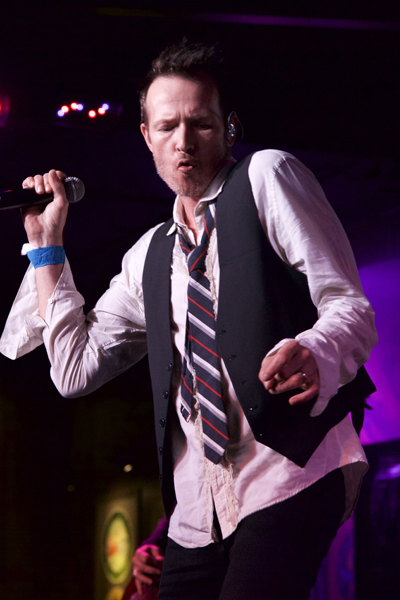 Cheese or dairy products create mucus. I have a warm-up tea that coats my throat. It has lemon, apple cider vinegar, apple cider, honey and cayenne pepper. I use it for every show, but it’s really important when you have a cold. –Scott Weiland, Artist, May
The entire focus of the singer should be on the performance, not on technique. –Jeannie Deva, singer, vocal coach, Feb.
The most important thing is to not stay up late. And you’ve got to drink lots of water all day. Keep your vocal chords wet at all times, don’t let them dry up. I sleep with a humidifier on the bus. –Brittany Howard, Alabama Shakes, Aug.
If your voice isn’t working, it’s best to cancel the show. People are going to be bummed, but not as bummed as going into a venue and seeing you not perform well. –Matt Skiba, Alkaline Trio, Blink-182, May
GOING LIVE
— Performance —
When they come to see you perform, they want a show. Entertain them! [Don’t be] obsessed with chord changes, making sure you don’t hit a wrong note, go out of key or break a string on stage. Focus on the crowd and don’t get in your head too much about the sound and technical details. –Jennifer Yeko, President, True Talent Management, Feb.
Consider going after high-paying wedding or corporate gigs. On an hourly basis they can pay much better than day jobs. –Mark Steiner, Co-Founder/CEO, GigSalad, March
Even superstars will occasionally cover a well-known classic in their set. Throw one in toward the end of your show. People will appreciate a new arrangement of a popular song. –Jennifer Yeko, President, True Talent Management, Feb.
Your audience, no matter how big or small, wants to be engaged and like you. Pretend you’re in a huge arena (it’s good practice) and give them a reason to root for you…Audiences want to see you—not you as “perfect”—but you as an artist they can relate to. How you get to a moving performance is by letting go of having to be great and perfect. –Teri Danz, vocal coach, artist, Oct.
Look at the tops of people’s heads. It will seem like you are looking at them, but will be far less distracting to you. We’ve all been to a show where the lead singer did not look at the crowd. That gets boring pretty quickly. –Jennifer Yeko, President, True Talent Management, Feb.
 It’s important to add to the [live] experience. If I wanted to hear a band play their songs perfectly, I would just listen to the CD. A big thing has always been, “Hey let’s play our songs, but we’re here in this room with all these people, let’s make it an experience.” It’s about interaction with the crowd and making it something more than just hearing a band play their music. –Alex Gaskarth, All Time Low, April
Rather than thinking of gigs as a way to pay rent or a stepping stone to the next bigger opportunity, it is better to think of them as unique moments where you and your band mates come together in fellowship. –Kyle Crane, drummer, May
— Touring —
You need to think one step ahead all the time. So if you’re booking a show now, right before you book that show you need to know what your next step is going to be in that market down the road…It’s more about the long-term picture than short-term gains. –Adam Brill, agent, Agency for the Performing Arts, June
There were no opportunities. We had to email thousands of bars, clubs and promoters just to get on the bill for one show. Booking for yourself is a nightmare. But we put our heads down and asked people if we could play. There was never a bill that we turned down. We played every show offered to us. We created the opportunities by pouring everything we had into every live performance. –Tyler Joseph, twenty one pilots, Sept.
Initially focus on where a demand is. If there’s little or no demand, start by doing small regional tours around home base and expand from there. The college market is a regional market. Plan to return to the places where [you] were most successful––every two to three months––or the fans will forget [you]. –Chris Fletcher, CEO, tour coordinator, Coast to Coast/The Cool School, June
If you’re buying on to a giant tour, it could get expensive. And, if they put you on at 6:30––hours before the headliner—you’re wasting money. –Chris Maggiore, president, agent, Artists Worldwide, June
It can take a while––a year or two––before [you] start to make real money. You have to be established [in a market] to command large fees. Always book an “anchor” gig first––one that will cover most of your expenses––and plan a route around it. –Chris Fletcher, CEO, tour coordinator, Coast to Coast/The Cool School, June
It doesn’t sound very rock & roll, but save partying for when the tour is done or when your job is done. –Matt Skiba, Alkaline Trio, Blink-182, May