The Grateful Dead Movie is a documentary concert film which captures the band, their associates, and their (extremely) passionate fanbase during a historic 1974 five-night run of concerts at the Winterland Auditorium in San Francisco, CA. Which, at the time, were to be the group’s last shows ever. These recordings capture the Dead at the height of their mid-70's predominance and effectively marked the end of the first act of the group's 30-year career, as a yearlong hiatus immediately followed.
The Grateful Dead Movie soundtrack now holds legendary status among Dead Heads. Not just for the group's superb playing, but it also documented the last shows where their infamous "Wall of Sound" sound system was captured to tape, as well as the return of drummer Mickey Hart to the band's lineup. It is now regarded as a pivotal moment in the Grateful Dead's long strange trip.
Available for the first time in any format since 2005, and on vinyl for the first time ever, Mondo is proud to offer our first collaboration with the Grateful Dead featuring stunning audio and visual reproduction. This box set features the full 44-song track list originally featured on the 2005 CD release, configured for the vinyl format.
Pressed on 10x solid color, audiophile quality discs by Optimal Media, mastered by David Glasser at Airshow Mastering with lacquers cut by Chris Bellman at Bernie Grundman Mastering, and Plangent Processes tape speed correction by Jamie Howarth. This premium set also includes a 42-page hardcover book featuring an extensive liner note essay by Nicholas G. Meriwether, alongside rare and previously unpublished photos courtesy of Retro Photo Archive. Original illustration, design and art restoration by Madalyn Stefanak and book design by Justin Goers and Chris Minicucci.
In my just published Screen Gems: Pop Music Documentaries & Rock and Roll TV Scenes I devoted an entire chapter toThe Grateful Dead Movie.
The Grateful Dead Movie (1977), directed by Jerry Garcia with Leon Gast and produced by Eddie Washington and Ron Rakow, premiered in theaters in June 1977. I caught a screening at the Wilshire Theater in Beverly Hills.
The movie featured highlights and love lights from the Dead’s five night “farewell” run at San Francisco’s Winterland Arena, booked by longtime Dead associate and concert promoter Bill Graham from October 16-20, 1974. The Grateful Dead lineup at the time was Jerry Garcia, lead guitar, vocals; Bob Weir, rhythm guitar, vocals; Phil Lesh, bass; Bill Kreutzmann, drums; Keith Godchaux, acoustic piano and electric piano; and Donna Godchaux, vocals. Additional musicians were Ned Lagin on electric piano and synthesizers and Mickey Hart on drums. Hart was not yet back in the band. He sat in on the very last night, which Deadheads usually cite as the point when he rejoined, having been away since February 1971.
Gast, who had helmed the music documentary Our Latin Thing (1972), about the Latin music scene and concert by Fania Records artists filmed at the Cheetah nightclub in New York City, directed the Winterland shoot, filming with six cameras. A pair of sixteen track machines caught all the audio on tape. Garcia did the editing, assembly, and sound synchronization.
It took him nearly three years. The insider role Garcia played gave viewers a documentary aspect to The Grateful Dead Movie, as we witnessed him during the run’s planning stages and selecting the cast of characters he wanted to see in the audience. The film’s release was also artist-controlled: The band booked the initial playdates, rented the theaters, and even bankrolled the rental of good sound systems for the screenings.
Among the cast of characters in the Winterland audiences was music journalist and author Jeff Tamarkin, editor of BestClassicBands.com. Tamarkin attended all five nights, and in August 2024, emailed his first-person account.
“We knew going in they were filming the shows for a documentary, and that this could very well be the end of the band, so there was a bit “All the shows were excellent, capped by the return to the band of drummer Mickey Hart, who’d been on hiatus for a few years. It was all very celebratory, in the best Grateful Dead sense of the word, and although they only played a handful of gigs in 1975, they returned to touring in 1976, so the 1974 shows seemed like old news by the time the film finally arrived in 1977.
“That aside, The Grateful Dead Movie didn’t take long to assert itself as one of the most enjoyable and technically advanced concert films to date. Gary Gutierrez’s introductory animation sequence captured the vibe of the band beautifully, and once the music kicked in with ‘U.S. Blues,’ it was off to the races, just like being in the front row of a Dead concert during the heady Wall of Sound era.
“I’ve watched it a bunch of times since that initial theater run and it still brings a smile. Not only because seeing a 1970s-vintage Dead show is such a musical and visual treat, but because it truly captures the joy of classic rock and roll in general. It may have happened fifty years ago, but that movie puts me right back in that space, as if I were at Winterland last night.”
“I saw the Grateful Dead for the first time at one of the last shows of their five-night ‘farewell’ run at Winterland,” said Phil Bunch, who along with Franck Balloffet, is a part of the production duo Tea.
“It was a cold, rainy day, and Bill Graham came out on the side walk and let all of us who were shivering in line into Winterland at one in the afternoon before the night’s concert. I saw Graham at the ticket office and thanked him for all he had done for the music scene, and for us. He graciously acknowledged the compliment and motioned us in. We took the free apples from the usual barrel, right after entering Winterland, and proceeded to manage our states of mind throughout the day, along with the thousands of other similarly affected Deadheads.
“As the sound engineers walked around the arena, testing and calibrating the Wall of Sound’s incredible sound system, the floor began rumbling, and the test tones rose from unheard depths, all the way to unheard highs. Which was the theme of the evening in more ways than one.
“I’d never heard ‘Scarlet Begonias’ and ‘Eyes of the World’ before and was absolutely transfixed and transported. Bill Kreutzmann was the single drummer, playing without Mickey Hart, and was completely brilliant on his own. I had no idea there had been, and would be again, a second drummer. I experienced the sensation that many others have noted, of sensing what Jerry Garcia seemingly telegraphed, hearing the notes before he played them, hop ing that he would play what I was already hearing. And he did, time after time. I was told I did a great job as conductor that night.
“My musical world, and life, were changed forever, realizing the extent and power and feelings of what great music played by great musicians, and a fantastic sound system could offer, beyond anything I had heard and felt before. Absolute state of the art in every respect.”
Nicholas G. Meriwether has published widely on American cultural history, the counterculture, and the Grateful Dead. He is the executive director of the Grateful Dead Studies Association and the editor of the Duke University Press series Studies in the Grateful Dead. George Wallace from High Moon Records introduced me to Meriwether, who reflected on The Grateful Dead Movie in an August 2024 email exchange.
When the movie finally debuted in 1977, Meriwether wrote, “Moviegoers didn’t know what to expect—neither hardcore fans nor avid rock aficionados. Cinephiles were curious: it was already known that the band had sunk enormous time and money into its production, with Grateful Dead lead guitarist Jerry Garcia person ally undertaking the editing and spearheading the direction.
“The results were dazzling. What audiences saw was nothing short of groundbreaking: not only was The Grateful Dead Movie a real film, rather than a typical concert documentary, it also was a unified work of art, one that took advantage of the form to present a deeply thought-out evocation of the Grateful Dead experience. More than forty years later, the movie still stands as a milestone achievement for the band and a hallmark in the genre of rock films.
“The opening animated sequence makes that clear. A wildly stylized skeletal figure dressed as Uncle Sam cavorts and capers to the Dead’s ‘U.S. Blues,’ capturing the whimsy and sense of adventurousness fun that was always a defining motif in the Dead—this was rock music as celebration, after all. But already, the underlying seriousness is there: ‘U.S. Blues’ is a statement that the Dead’s claim to America is as authentic, deep, and enduring as that of conservatives, either political or cultural, then or now.
“But the point of the film is celebratory, and that ethos deliberately includes the audience. The Dead always made it a point to say that Deadheads were an integral part of the concert—Bill Kreutzmann famously called the audience a member of the band. In the film, fans are front and center, often literally.
From the blissed-out hippies bouncing at the edge of the stage to the stoned poets declaiming tributes in the hallway to the irritated diehards confronting film crews over the intrusive cameras, Deadheads are treated as essential, not just extras but full-fledged cast members. When Garcia finally finished, he commented that he had spent so much time with some Deadheads he sought them out—and even got their autographs.
“That sense of history infuses the movie. The decision to film the shows was driven by a sense of finality: the band had announced that they would be taking a break from touring after the shows, and no one was sure whether they would even return, not even the band. That prompted some powerful touches, most notably a benign conspiracy between staffers and crew that lured Mickey Hart to sit in for the final show, which set the stage for his return to the band after a three-year break.
“That sense of urgency drove Garcia as well: although he was a cinema buff who had a serious visual artist’s sensibility, he had never tackled anything like this, which would have been daunting for even a seasoned professional.
“The band’s performance was equally accomplished. Musically, the movie showcases the band at a peak of their prowess, still young and hungry, even if tired by the rigors of the road and especially the challenges of touring with the Wall of Sound, their fabled, groundbreaking (and backbreaking) PA. It looms above and behind the band in the film as it did in life, a presence that quietly defines the context even as it presents the music.
“That did not carry over into the soundtrack, at least at first. The antipode to the sonic excellence of the theatre experience was the disastrous live album culled from the tapes, Steal Your Face. Defective tapes and an impossible timeline produced that debacle, which was finally remedied in 2005 by the superb box set of the soundtrack.
“The five-CD set captured all the sweep and scale of the music, and the fire and nuance of the performances that fans heard at the concerts and in theaters after. The Dead were always about graceful recoveries, and that put the bow on a document of a seminal era in the Dead’s history.
“Today, The Grateful Dead Movie offers a superb introduction to the Dead’s music and the phenomenon it spawned; it remains a highwater mark in the band’s ambition and achievement, an enduring statement of what the band had built at a time when it was not at all clear if there would be another chapter.”
A 1976 Jerry Garcia and Harvey Kubernik Interview
On an August 1976 visit to Mill Valley, California, just north of San Francisco, I interviewed Graham and Garcia at the promoter’s home. At the time, I was not a big Deadhead: I only had a few of the Dead’s albums and didn’t trade tapes of their shows. I had only seen them a handful of times in the early- and mid-1970s, but was fascinated by Garcia. I enjoyed his solo shows, especially a 1973 gig at the Ash Grove club in Los Angeles. I made no secret of my slender Deadhead resume and Garcia appreciated my honesty.
Our conversation was wonderful: Wide ranging and free-flowing, it just jammed, the way he plays music. He was so accessible and seemed genuinely interested in my story: who I dug, which books I had read, the kind of comics I collected. We talked briefly about the Acid Tests in L.A. in the spring of 1965, and he lit up when I complimented him on his pedal steel playing and work on Jefferson Airplane’s 1967 album, Surrealistic Pillow. A decade and a half later, in 1990, Garcia repaid the compliment by providing liner notes at my request when I was serving as a project coordinator on The Jack Kerouac Collection, a box set on the Rhino/Word Beat label.
The Mill Valley interview began with Graham and me, and then Garcia arrived. Carlos Santana was also a part of the encounter, but this edit reflects only the conversation with Bill, Jerry, and me.
“There is something that they’ve [Grateful Dead] always had in common from the beginning, something hardly spoken about in the media after all these years,” offered Graham. “The San Francisco bands, starting with the Dead, always went to the gigs with the intention of putting it out there. It was the lack of professionalism at the beginning that made that possible. It wasn’t that the contract said 45 minutes and ‘that’s what we’ve got to play.’ They were the first one who asked to play longer. They wanted to extend the relationship between the audience and themselves. And that prevails to this day. You can’t get them to play shorter sets.”
Garcia and I talked casually for another hour, about San Francisco, poetry, the beat scene, Kerouac, and the 1969 Woodstock music festival. Portions of this interview originally appeared in the August 21, 1976, issue of the now defunct Melody Maker.
HK: Is there a reason for your longevity?
JG: We’re serious. One of the things you could say about all the bands that came from San Francisco at that time was that none of them were very much alike. I think each of us has dealt with it in various ways. For me, I know what I’m supposed to do, and I’ll do what I’ll have to do to be able to play. I think almost all the people I’ve known around this area, involved around the music scene, have been faithful to that thing.
HK: Didn’t you ever feel you represented something special to the music community?
JG: I always did. I think that the world has changed. I think the United States has changed very visibly in the last ten years. A lot of it had to do with what happened in San Francisco. I can’t say how or why, but I also think it’s affected everything.
HK: Like how?
JG: Just all the interest in things like ecology. All the interest in the sense of personal freedom as expressed by all kinds of movements. All these things were designed to free the human. Social overtones. All that stuff. The communal spirit.
HK: Jerry, have you always liked playing live? You strike me as a workaholic.
JG: I like the live experience. That’s where it counts. That’s when music is real. It’s real in that situation. That’s the situation that I feel I have the greatest sense of personal responsibility about. I don’t mind putting out a bad record, but I really hate a bad concert. That really is depressing.
HK: You get into other musical avenues with solo projects away from the Grateful Dead. Has there ever been any conflict or com promise in doing a tune for the Dead or keeping it for future solo endeavors?
JG: It’s not judgmental. You can’t deal with it in a yes/no kind of fashion. For example, my band is a band that could best be described as consonance and harmony. Conceptually, everybody in the band thinks pretty similarly. In the Grateful Dead, it’s a situation in which almost no two people have the same conception musically, which makes it harder. Nobody gets their way. However, what we all respect about that situation is that there is a potential for a larger central viewpoint which none of us, individually, are capable of perceiving, but which we all add to because of the diversity and the conflict.
HK: Did you ever think ten years ago that the Grateful Dead would get beyond the ballroom circuit and that rock and roll would be presented in large indoor arenas and baseball and football stadiums?
JG: When the Acid Tests were happening, I personally felt, “In three months from now the whole world will be involved in this.” So, as far as I’m concerned, it’s been slow and disappointing. Why isn’t this paradise already [laughs]? My personal feeling has been one of waiting around.
HK: How long do you feel you can continue the hectic pace of going on tour?
JG: I’ve learned that it requires a certain discipline for me personally. And I know I’ll approach it in a certain way. I’ll definitely burn out, and I wouldn’t survive a tour, for example. For me, it’s a matter of surviving. This is the set of givens. You’re gonna be in airports, motels, exposed to any number of strange drugs, strange experiences, intensity of this sort, and so forth. Within that frame work, how do you stay even? What you do is learn so it becomes a thing of pace, Vitamin C, protein.
You try and stay alive. That’s a fundamental problem. I’m just the sort of person who deals with things on that level. Once I know things that I have to cope with, it’s just a matter of adjustment. I just hate personal failure, being on stage and going through the changes and playing bad because I’m either not well, tired, too stoned, whatever. To me, it’s an aversion therapy thing. It’s the reason I’ve been able to survive.
HK: Do you have high and low points looking back over the last ten years?
JG: Well, I can get into that really easy. The worst for us and for me personally was Woodstock: the ultimate calamity. First, we were really stupid in the way we dealt with it. It was raining and we went on just after it got dark. There was maximum confusion going on, sound logistics. Really weird. Plus, I was high, of course. And I went on stage in a state of confusion. Huge crowds of people over the stage.
The stage had sheet metal and stuff on it, it’s wet, and I’m getting incredible shocks from my guitar. Pretty soon, I started hallucinating a ball of electricity rolling across the stage jumping off my guitar. Meanwhile, [there were] all the little citizen band radios and walkie-talkies and things with the amplifiers, so weird voices are coming out of the amplifiers.
It’s dark, and you don’t see any audience, but you know there’s 400,000 people out there. Then somebody leans over across the stage, since everyone is ganged up, and says the stage is about to collapse. I’m standing there in the middle of this trying to play music. Then they turn on the lights, and the lights are a mile away. Monster super troopers. Totally blinding, and you can’t see anything at all. Here’s this energy, and everything is horribly out of tune ’cause it’s all wet, damp, and humid. It was just a disaster. It was humbling [laughs].
(Harvey Kubernik is the author of 20 books, including 2009’s Canyon Of Dreams: The Magic And The Music Of Laurel Canyon, 2014’s Turn Up The Radio! Rock, Pop and Roll In Los Angeles 1956-1972, 2015's Every Body Knows: Leonard Cohen, 2016's Heart of Gold Neil Young and 2017's 1967: A Complete Rock Music History of the Summer of Love. Sterling/Barnes and Noble in 2018 published Harvey and Kenneth Kubernik’s The Story Of The Band: From Big Pink To The Last Waltz. In 2021 they wrote Jimi Hendrix: Voodoo Child for Sterling/Barnes and Noble.
Otherworld Cottage Industries in 2020 published Harvey’s Docs That Rock, Music That Matters. His Screen Gems: (Pop Music Documentaries and Rock ‘n’ Roll TV Scenes) was published on February 6, 2026 by BearManor Media. Harvey spoke at the special hearings in 2006 initiated by the Library of Congress held in Hollywood, California, discussing archiving practices and audiotape preservation. In 2017, he appeared at the Rock & Roll Hall of Fame in Cleveland, Ohio, in its Distinguished Speakers Series and as a panelist discussing the forty-fifth anniversary of The Last Waltz at the Grammy Museum in Los Angeles in 2023.
During 2025, Kubernik was interviewed in the Siobhan Logue-written and -directed documentary The Sound of Protest,airing on the Apple TVOD TV broadcasting service. The film also features Smokey Robinson, Hozier, Skin (Skunk Anansie), Two-Tone's Jerry Dammers, Angélique Kidjo, Holly Johnson, David McAlmont, Rhiannon Giddens, and more. Harvey was an interview subject along with Iggy Pop, the Beach Boys’ Bruce Johnston, Love’s Johnny Echols, the Bangles' Susanna Hoffs, Victoria and Debbi Peterson, and the founding members of the Seeds for director/producer Neil Norman’s documentary The Seeds: Pushin' Too Hard. In summer 2026, GNP Crescendo will release the film on DVD/Blu-ray). Author Miss Pamela Des Barres narrates).
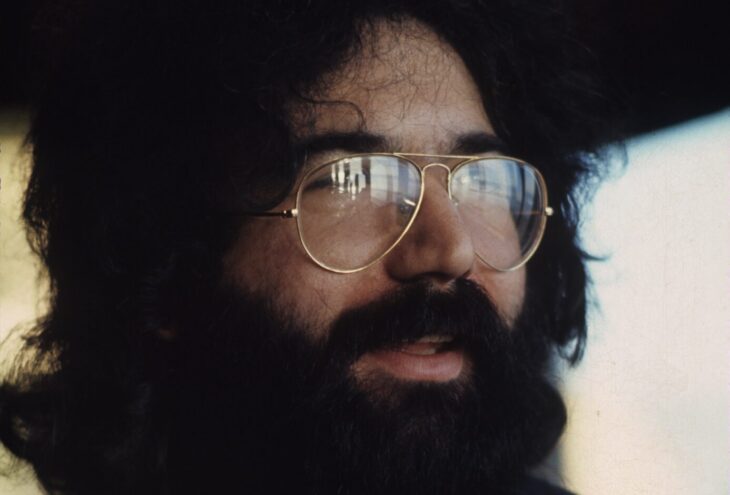
Jerry Garcia photo by Henry Diltz, courtesy of Gary Strobl at the Diltz Archive.