825 RECORDS, STUDIO & PRODUCTIONS
Brooklyn, NY
825records.com
Matty Amendola - Owner, Producer
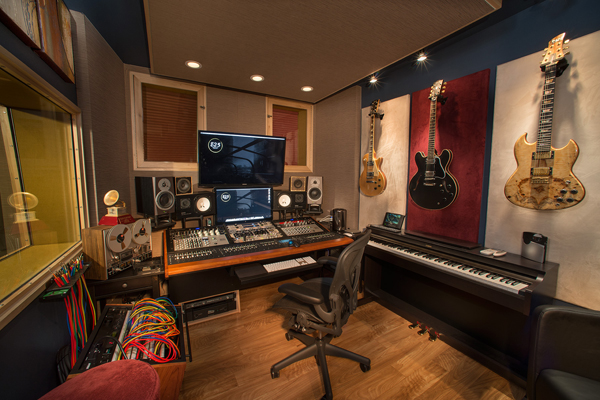
825 Records’ studio facility is a state-of-the-art, full-service production operation. It is home base for Grammy-winning engineer Butch Jones and producer Matty Amendola. With significant upgrades, including a classic SuperAnalogue SSL sound complemented by modern and boutique outboard gear, the studio is a true modular hybrid design. The facility also provides room and board for out-of-town clients, with a kitchen, bathroom and private bedroom.
Amendola is the founder/owner of 825 Records, Studio & Productions. He is known for artist development, as well as his work with some of the biggest names in the industry.
Amendola can be heard on over 130 commercial releases and has written, composed and performed for special events and national commercials for companies such as MetLife, IBM and Nike.
What’s the most common time waster you’ve seen?
Way too many artists overlook pre-production. They tend to stop working when they think they have the songs. In fact, very few even think about recording a demo to analyze their material and performance. And there’s no excuse for that—they’re either clueless or lazy.
Why is a demo necessary?
You’ll waste valuable studio time without a demo. Today you can record a demo with your iPhone, iPad or computer. That will at least give you an idea of what you sound like. You need to be critical and analyze the songs, arrangements, performances and sounds—especially the vocals. If you do that, you won’t have to deal with those things in the studio.
Should artists hire a producer?
Hiring a producer can be helpful, especially in pre-production, but only if it’s the right producer. Too often artists will choose a big name over a producer that actually cares about their music and could really help them. Most important, there has to be a level of trust in the relationship for it to work.
What should be considered when hiring a producer?
Producers wear lots of hats. Some like to co-write with artists, while others sit back and simply give advice. You need to know how much involvement you want and what the producer expects.
The only way you’ll find out is by talking about it before you get to the studio. If you don’t address those issues it could cause confusion or misunderstandings and end up wasting time.
Do artists need a clear idea of the sound they want before recording?
Knowing what you want to sound like can be helpful, but only if it’s realistic. Sometimes artists get so caught up with certain ideas they no longer have an open mind. Recording is a creative and collaborative process, so you should be open to suggestions.
Are reference recordings useful?
Reference recordings can be useful. But you have to be honest with yourself as to whether or not you’ll able to sound like your reference. For example, if you want an orchestra, you need a budget for that. And, some artists are unclear about who they are and are just going with what they feel. But, trying to achieve something that’s impossible—because of limited skills or budget constraints––will cause frustration and waste a lot of time.
Should regular breaks be taken during recording?
Most artists do not manage time well. That’s why it’s important to have a recording plan that schedules time, including breaks. It’s a good idea to take a 15 to 20 minute break whenever you need it to recharge your energy and refresh your ears. If you run into a performance problem, you might want to take a bigger break, or move on and go back to it later.
Do you have any advice regarding the mixing process?
Mixing is a specialty, and artists need to remove themselves from the process during the initial mix. Let the mix engineers do their job first. Then you can make suggestions.
When an artist is involved with the initial mix it takes way longer. And bands are even worse––everyone wants their part to stand out, and that can get crazy.
How about listening to and evaluating the mix?
The best place to listen is in the studio. You have to understand that unless the mix is mastered (or pseudo-mastered) it may not sound as good on all devices, especially mobile ones. And that can be very misleading.
Bottom line—what’s the worst time-waster?
If you’re not decisive, it can waste a LOT of time while you debate the pros and cons. Someone has to make the decisions and roll with them.
For Music Connection’s exclusive nationwide Directory of Recording Studios updated for 2015--see musicconnection.com/industry-contacts.
By Bernard Baur