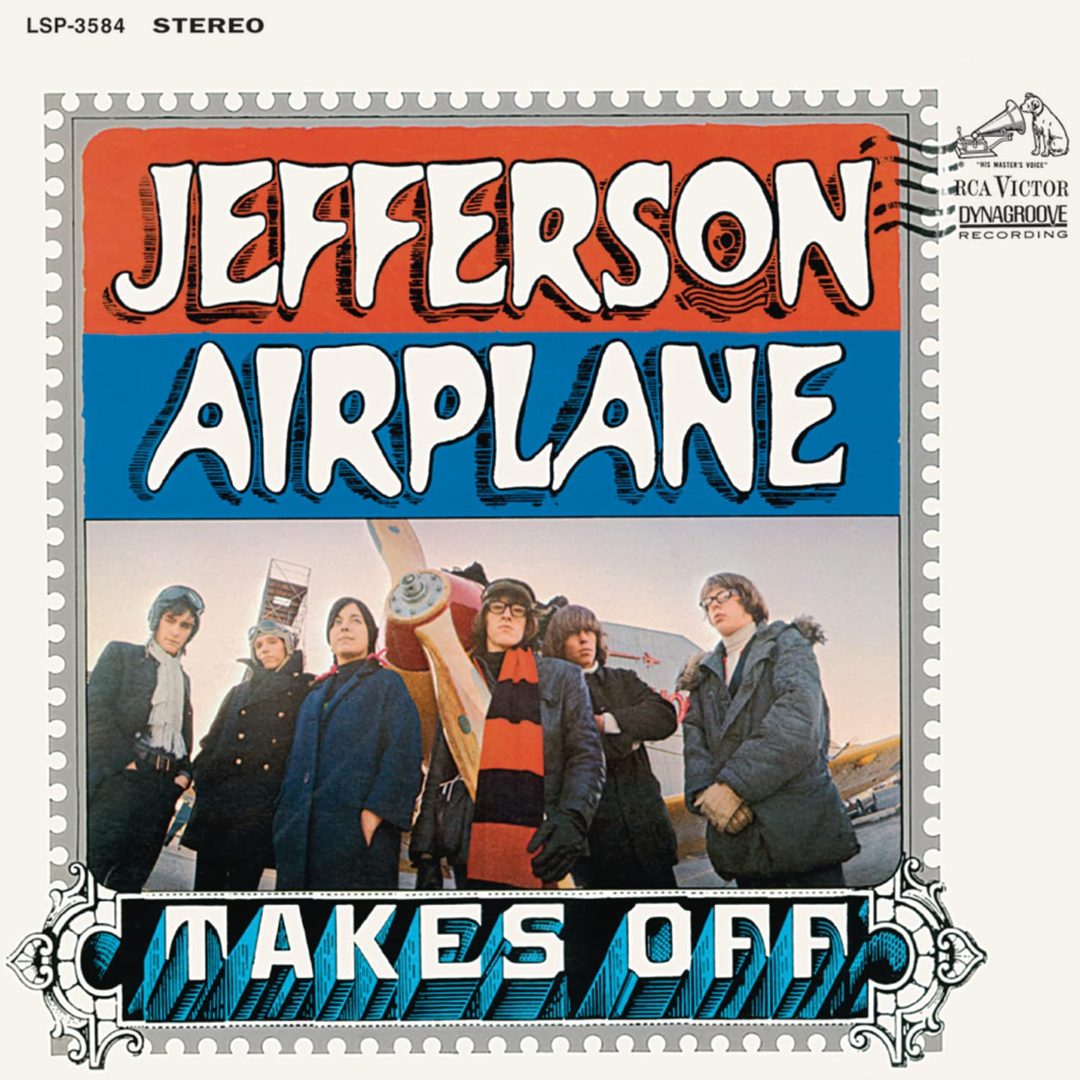
Jefferson Airplane Takes Off 60th Anniversary Edition celebrates the debut album from Jefferson Airplane. For the first time, the expanded edition is presented on vinyl as a 2-LP set, featuring 9 bonus tracks. Initially released in August 1966. “It’s No Secret” and “High Flying Bird” in the heyday of FM radio were popular turntable items.
Often hailed as one of the greatest debut albums by an American band - and a crucial chapter in the story of the San Francisco music scene, Jefferson Airplane Takes Off offers the raw sound of a new band, full of fire and energy, not having a clue what is right around the corner. Jefferson Airplane ultimately became one of the most important bands in rock history and a significant cultural force. Their music made a difference. And this is where it all began.
Previously available as a 2003 expanded CD edition, this anniversary release is now available for the first time on vinyl featuring alternate versions, liner notes, and rare photos, offering a deeper look at the album and the band's early years.
Available exclusively at independent record stores for Record Store Day Black Friday, this 2-LP set pressed on blue marble vinyl marks the expanded edition's first appearance on vinyl. The LP was recorded at RCA studios in Hollywood with producer Tommy Oliver and engineer Dave Hassinger.
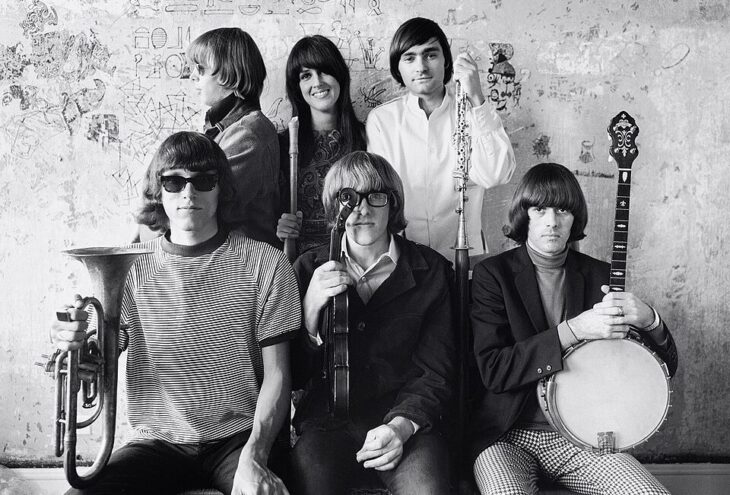
The San Francisco-based Jefferson Airplane showcased three master instrumentalists (Jorma Kaukonen, guitar; Jack Casady, bass; and drummers Skip Spencer and later Spencer Dryden) and three vocalists: Grace Slick (replacing original singer Signe Anderson in 1966), Marty Balin and Paul Kantner.
The unit created a total of eight studio albums and released numerous live albums, including 1969’s Bless Its Pointed Little Head.
KEBF-FM DJ and poet Dr. James Cushing has touted Jefferson Airplane’s 1966-1968 era as “psychedelic chamber music.”
Cushing also offers an opinion about the Balin and Slick vocal team presented in these concert and club settings: “You have Marty Balin, initially a folk singer with a high-pitched voice, and this pleading and desperate hysterical, almost feminized tone,” underlined Cushing. “And then Grace Slick, with a lower voice, and her tone that is very severe. So, you have a pleading man and a severe woman. And those are two different sides. And never overlook Paul Kantner in the combined vocal harmony department, songwriting or his occasional lead vocal expedition. Paul is a fine rhythm guitar player along with the background duties within the Marty and Grace show. Spencer Dryden is a terrific drummer for this group. Guitarist Jorma is using the wah-wah pedal in a very creative way. And bassist Jack Casady.
“We’ve never heard anything like this in pop music. The closest being Jack Bruce in Cream. Both created deep and dark bass lines. And Casady’s bass is well recorded on this tape source,” he reinforces.
“Jefferson Airplane is no longer nostalgia for stoners. On the West Coast, a six-piece band that did it all. They combined folk, jazz, rock, and art music elements into a blend that sold a lot of records, inspired a lot of people, and epitomizes a lot about the era. And that today you can listen to as an organic live performing band on these discs and be astonished at just how good things were.
“The circumstances that brought Jefferson Airplane into being no longer exist,” Cushing observed.
“The Jefferson Airplane, like The Doors, The Beatles, or Bob Dylan could never get signed by a major record company today. There’s no way. This would be dismissed as much too weird. And yet there are still enough people, fans, consumers and collectors, who remember when that was not the case.
“What albums like these present is a sense of being able to participate in the spontaneous enactment of the cultural revolution no matter when you were born.”
Born Martyn Jerel Buchwald in Cincinnati, Ohio, on January 30, 1942, Balin moved to the Bay Area at age four by parents, Joe and Jean Buchwald. Joe was a lithographer and printed more than 200 different posters for music shows at the Matrix club, the Fillmore and Avalon ballrooms.
He briefly attended San Francisco State University, initially pursuing a career as a painter. He then turned to music with the encouragement of his good friend Ralph Mathis, brother of singer Johnny Mathis.
In 1962 Marty renamed himself Marty Balin and began recording with Challenge Records at the Gold Star studios in Hollywood with the area’s top session players, cutting “Nobody But You” and “I Specialize in Love.”
He subsequently became lead singer of a folk music quartet called the Town Criers, followed by a brief stint with the Gateway Singers in 1965.
Marty then mulled over an electric folk sound. “I wanted to play with electric guitars and drums,” he told me in a 2012 interview, “but when I mentioned that notion in clubs that I played, the owners would say, ‘We wouldn’t have you play here. Not with drums and electricity. This is a folk club.’ So, I decided to open my own club.”
Balin opened the Matrix on August 13th 1965, featuring his new band Jefferson Airplane. Over the next two years, Big Brother & the Holding Company, the War Locks, and the Doors would play inside his venue.
“Back in those days Marty was quite the businessman,” stated Jefferson Airplane’s Paul Kantner. “He was the leader of the band on that level. He was the one who pushed us to do all the business stuff, orchestrating, thinking ahead, looking for managers and club opportunities. He was very good at it,” emphasized Kantner in a 2010 interview with me.
“We had the fortune or misfortune of discovering Fender Twin Reverb amps and LSD in the same week while in college,” revealed Kantner. “That’s a great step forward. (laughs). We later named a music publishing company Ice Bag, which had nothing to do with cocaine. It was good marijuana. The best of the year if not the decade.
“FM radio was one of the many things that showed up and was going on in those days. So many things were going on you didn’t take that kind of notice of them. You just assumed that was going on. All right! And go with it.
“We didn’t analyze it. We didn’t think to wonder about it. It was just another thing that was going on along with the music, the clothes, the bookstores, the poets, the artists there was a plethora of things, and you did not have time basically to take it all in. It existed. It’s part of a whole. In San Francisco, we had no restrictions. All we had to do was roll with it. I liken it to white water rafting. There was so much going on you didn’t worry about what was around the next curve. Or what are you going to do on the third curve. ‘Cause you are right in the river.”
During 2015, I interviewed Marty about Jefferson Airplane.
Q: Living in San Francisco in the fifties and sixties, you saw a lot of local music before Jefferson Airplane really started flying.
A: I grew up and got to see all the beatniks and all the jazz cats in the clubs. I was a friend of Ralph Mathis, Johnny Mathis’ brother. They had a house in San Francisco. I’d go over with Ralph and Johnny would have Erroll Garner in there. Nancy Wilson, the Jazz Crusaders. And they’d just perform. And then Ralph and I would go downtown, ‘cause he was Johnny Mathis’ brother, we could get into any club. I saw John Coltrane. Man, I saw Miles Davis. I saw Thelonious Monk. Plus, I saw all the great writers and poets. This is a world before 1967 and the Summer of Love. It started with the beatniks and poets.
“I think San Francisco was full of all these people who were talented and who were expressing themselves or their rights or playing music. And I think San Francisco has a lot to do with that. I don’t know if it’s the geomagnetic forces of the earth and the ocean, but something went on there. It’s a lot different than the rest of the world.
Q: Tell me about the Matrix Club.
A: I opened the Matrix Club in 1965 in San Francisco. Booked bands in 1966 and ’67. As a solo performer in 1964and ’65, I started to use a 12-string guitar with a pickup on it and wanted to use drums. I had played The Hungry I, The Purple Onion, The Jazz Workshop as a folk band group. I went back to get some jobs and no one would hire me because I was too loud. So, after being turned down by everybody, I was playing a folk club.
“In the evening I would perform and these four nurses used to come who liked me. Then they started coming with their boyfriends and during the break I was sitting and talking to their boyfriends, and they were all talking about investing this money they had together and didn’t know what to do with it. So, I said, “Well give it to me.” And I said, ‘I’ll build a nightclub, and I’ll put a band in it. and you can have the nightclub and you can have the band.’ ‘OK.’
“I roamed around and went into this bar down on Fillmore that looked empty on a Friday night. Not many people in it. So, I came back Saturday night, and there were very few people in the bar. So, I went and told these guys I thought we could get that bar because it’s not doing great biz. So, they went and they got the license from that guy and we started fixing it up and making it into the Matrix. As we were doing that people, you know, people were comin’ in lookin’ for places to play. The infamous Warlocks. Janis [Joplin]. All these other people were looking for places to play, too. So, I had an immediate influx. And besides that, I had jazz guys playing, there, blues guys, cats from The Committee. They would do stand-up. It took off right off the bat.
Q: Jefferson Airplane replaced Signe Anderson, the original female vocalist in the band, and Grace Slick joined the expedition.
A: Grace Slick was really popular at the time with her own band, The Great Society. She had her brother and her husband in that band. When we needed to get a new girl, because Signe [Anderson] was pregnant and she didn’t want to tour outside San Francisco, so we needed the new girl.
“There were only three girls around singing: Janis in Big Brother, Grace with the Great Society and Lydia Pence of Cold Blood. Janis.
“I have heard people sing ‘Summertime’ by the thousands. I have never heard anybody do ‘Summertime’ like Janis. She sent chills up my spine and I’m standing on stage watching her do it. It was just amazing. I thought she was a great entertainer and just a fun person. People loved her.
“And I told the guys when we had this meeting I said, ‘Who can we ask? They all have big popular bands.’ So, Jack [Casady] said, ‘I’m gonna ask Grace Slick.” I kind of chuckled at that. She was pretty popular. But you know, Grace used to come to the Matrix and sit out in the audience, right in front of the stage and watch me. She would stare me down. She would just sit there. And Jack asked her that afternoon and that evening she left her band and joined us. Can you believe that? That’s amazing.
“It’s funny. When we were looking for a girl singer we actually auditioned [topless dancer] Carol Doda. We did. I cracked up. She came in and had this thing on Broadway as a topless star, and I was amazed she actually came and auditioned. She couldn’t sing very well.
Q: “It’s No Secret,” on Jefferson Airplane Takes Off debut RCA LP.
A: In 1966 and ’67, and all through Jefferson Airplane, we did my tune “It’s No Secret.” I originally wrote it with Otis Redding in mind. It was for him. I used to hang out with Otis and follow him around like a little puppy dog and watch his shows. Hang out with the band and him. I just wanted to write him a song that had his kind of groove thing I thought. But Otis never did it. He did write his own songs. I didn’t discover Otis at the Monterey International Pop Festival.
“In fact, I was the guy who took the 45 record of Otis’ ‘These Arms Of Mine’ to Bill Graham. ‘Hire this guy. I want to see him.’ And Bill Graham did. December of 1966. He would listen to the bands of who to book and as support or lead acts. Otis was the most powerful person I’ve ever seen perform. Outside of anybody you name. I’ve seen a lot of people play and on TV. I’ve never seen anybody handle an audience like him and rock the joint. The energy level was amazing with this guy. He had that great horn section.
“For me, a highlight of the Monterey International Pop Festival was Otis. I had been around and, he knew who I was. We went on before he went on. And nobody got the crowd moving but when the Airplane came on, we got the crowd moving. We got them excited and got ‘em up and dancing. And I walked off and Otis Redding was standing there, and he said, ‘Hey man. It’s a pleasure to be on the same stage with you.’ For me, that was it, baby. Right there. He staggered the crowd.”
In my 2004 book, This Is Rebel Music, I interviewed Grace Slick in 2002 about the Fillmore Auditorium and promoter Bill Graham.
“The audience and the bands were not that separate,” Grace remembered. “In other words, a large amount of the audience was the other bands at the time. There were lots of bands that were working in San Francisco. And we played with each other on the stage sometimes. Somebody would walk up from the audience and play guitar for a while with somebody. Another band. So, it was casual, and not that separated.
“As a rock ‘n’ roll force,” Slick recalled, “I mostly liked Bill’s energy. Both physical and mental. He was able to keep an awful lot of balls in the air. He could organize, and do business, whereas most of us were on the artistic side, which is a positive thing, but also we would not have been able to deal effectively, I don’t think, with the business end of it. Which he did. And without that, we would not have had what we did. A venue to express ourselves.”
In 2010, when I interviewed Paul Kantner, he reflected on the Fillmore, Slick, the 1966-1970 studio recordings of Jefferson Airplane and the landmark 1967 Monterey International Pop Festival.
“The reason that people came to the Fillmore was not the band,” explained Paul.
“People came to the Fillmore much like a Harvest festival. The same reason they came to the Human Be In. To be there. And if there was food, bands playing, that was an added plus. But not many people were coming as fans of the band. Not many. Some. That wasn’t the draw of the Fillmore and the Avalon. I went to the Human Be In.
“The summer before the summer of Love I always mention. Everything was possible. And plausible, even. And we got away with it all. More or less. Mostly. You went to the park, the Fillmore, Monterey, to get absorbed in the whole whatever it was going on. FM radio was one of the many things that showed up and was going on in those days. In San Francisco we had no restrictions. We never thought about being in an independent record label for cred. It came to us. All we had to do was roll with it.”
Kantner also detailed Jefferson Airplane’s sonic excursions and recording studio process.
“On our earlier songs, it was sort of a comment on the state of affairs, not news-driven so much as situation-driven. I wrote just regular songs and then got a little out there like we all did on After Bathing At Baxter’s.
“We put it out in the universe and see where it lands. Sometimes you keep a little control over where it lands more often than not. I like things going out, connecting with other things. I’m very much on collaboration as a writer and a player. I like collaborating. I wouldn’t want to be a solo artist, for example. It wouldn’t be enough for me. I like the friction that happens and the fire that occurs as a result of that friction that comes out in music in other way that comes from collaborating in other levels. There was a message there, but we didn’t blare it out. We just tried to show by example what you could get away with basically. We tried to propose a real alternate quantum. And did. Enjoying our day. And that’s all we tried to put across.”
Photo courtesy of RCA Victor/Wikicommons